
- Release Year: 2008
- Platforms: Windows
- Publisher: Idee Software
- Developer: Idee Software
- Genre: Puzzle
- Perspective: Top-down
- Game Mode: Single-player
- Gameplay: Level editor, Platform
Description
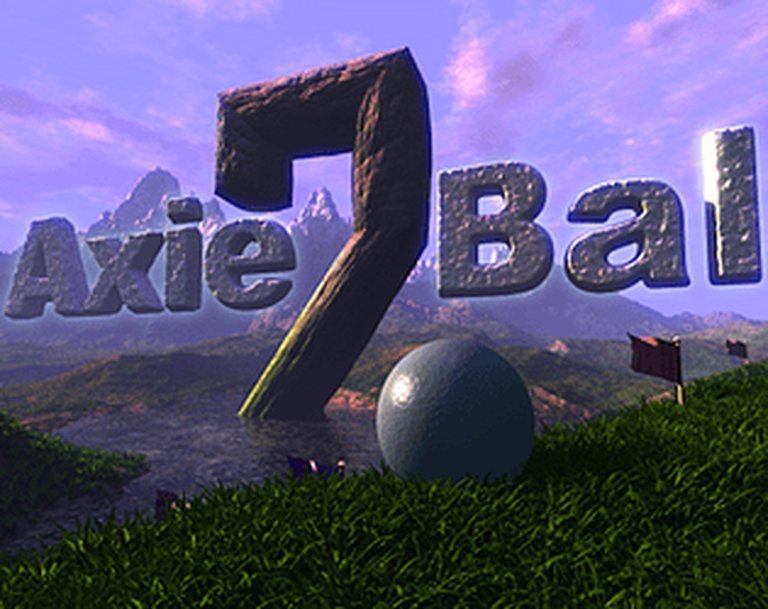
AxieBal 7 is a top-down puzzle action game and the 2008 installment in the long-running AxieBal series. Departing from the series’ traditional side-scrolling format, it introduces scrolling overhead levels with updated visual effects and enhanced sound design. Players must collect flags in each stage while navigating hazards like explosives, traps, and timing-based obstacles. The game also features a built-in level editor for creating and sharing custom challenges, blending skill-based puzzles with fast-paced action.
AxieBal 7 Free Download
PC
AxieBal 7 Reviews & Reception
idee-software.itch.io : awesome game
axiebal-7.en.softonic.com : Players can enjoy hours of entertainment as they progress through the challenges, making it a great addition to any puzzle game collection.
AxieBal 7: Review
Introduction
In the vast tapestry of indie gaming history, few titles embody the spirit of mechanics-first design as defiantly as AxieBal 7 (2008). The seventh installment in Idee Software’s cult-classic axieBal series, this Windows-exclusive puzzle-platformer abandoned its predecessors’ side-scrolling roots for a bold top-down reinvention. Amid the late 2000s surge of digital distribution and browser-based experimentation, AxieBal 7 stood out as a FreeBASIC-powered oddity—a game that fused retro sensibilities with a laser focus on precision gameplay. This review argues that while its ambitions outstripped its reach in places, AxieBal 7 remains a fascinating artifact of indie craftsmanship: a technical tour-de-force hamstrung by its niche engine, yet brimming with joyous, physics-driven chaos.
Development History & Context
Idee Software, a solo-dev passion project helmed by an enigmatic creator known only as Sciere in credits, operated at the fringes of the 2000s indie boom. Developed in FreeBASIC—a then-nascent open-source language championed by hobbyists—AxieBal 7 emerged in 2008, a year bookended by AAA titans like Grand Theft Auto IV and Fallout 3. Yet this was also the dawn of digital storefronts like Steam’s indie pipeline and itch.io’s early precursors. Against this backdrop, AxieBal 7 leaned into modular design: a deliberate pivot from the series’ side-scrolling origins to a top-down, real-time puzzle ethos, leveraging FreeBASIC’s strengths in 2D rendering while circumventing its limitations in complex physics or 3D assets.
Technologically, the game was a marvel of optimization. Designed for Windows XP/Vista (though later archival efforts revealed compatibility struggles with modern OSes), it used scrollable tile-based levels to create illusory depth, a clever workaround for engine constraints. The shift to overhead perspective wasn’t merely aesthetic—it allowed for intricate hazard placement and momentum-based ball control, iterating on classic titles like Marble Madness and Rock ‘n Roll while dodging comparisons to mainstream contemporaries like World of Goo.
Narrative & Thematic Deep Dive
AxieBal 7 is a game blissfully unconcerned with narrative pretense. There’s no save-the-world arc or protagonist backstory: you control a rubber ball tasked with collecting flags across increasingly lethal obstacle courses. Dialogue is nonexistent; lore amounts to environmental vignettes—flames bursting from tiles, spikes retracting with clockwork precision, explosives chaining into kaleidoscopic detonations.
Yet this minimalism belies a thematic richness. AxieBal 7 is a game about mastery through failure, echoing the masocore philosophy of Super Meat Boy. Each hazard—flame jets, collapsing platforms, sentry mines—communicates cause and effect with pixel-perfect clarity. The absence of story becomes a strength, foregrounding the game’s true antagonist: physics itself. Momentum, friction, and bounce angles are your only companions; levels are puzzles less of logic than of kinetic intuition. As FreeBASIC Games Directory noted: “You feel every bounce, roll, and collision.”
Gameplay Mechanics & Systems
At its core, AxieBal 7 operates on deceptively simple rules:
1. Collect all flags in a level.
2. Exit alive while dodging hazards.
3. Master momentum—tilt the ball via arrow keys, with acceleration and weight modeled meticulously.
The genius lies in execution. Levels escalate from serene introductory zones to Rube Goldbergian death traps demanding frame-perfect timing. One standout stage combines ice physics with rotating laser grids, forcing players to “skate” through shifting gaps. Another pits you against explosive chain reactions, where touching one mine detonates an entire grid unless defused via precise jumps.
Character progression is nonexistent—your toolset never expands beyond basic movement—yet skill progression is profound. Early levels tutor players in fundamentals; later ones demand gymnastic feats, like bouncing off walls to bypass bottomless pits. The UI is minimalist but effective: a zoom-out feature (activated by holding Enter) reveals hidden paths, while a 9-skip limit prevents frustration without undermining challenge.
The level editor elevates AxieBal 7 beyond mere novelty. Players could craft and share custom stages, fostering a micro-community of masochistic designers. This feature, combined with time-based scoring and per-stage leaderboards, lent the game infinite replayability. That said, critiques emerged: BASIC Gaming Magazine noted uneven difficulty spikes, while The Daily Click lamented occasional “tiled monotony” in asset reuse.
World-Building, Art & Sound
AxieBal 7’s aesthetic is a paradoxical blend of austerity and exuberance. The 2D, top-down visuals—rendered in 640×480 resolution—oscillate between crisp minimalism and charmingly crude tilework. Environments range from gemstone caverns (alive with prismatic lighting) to industrial labyrinths adorned with whirring gears. While some textures repeat ad nauseam (notably in desert-themed stages), the game compensates with VFX spectacle: explosions ripple with particle showers, water tiles distort ball physics, and warp pads teleport players with CRT-style static blurs.
Sound design is revelatory for its era. The soundtrack—a chipper synthwave amalgam—avoids MIDI-era grating, while audio feedback sells every interaction: mines clink menacingly when touched, flags ching satisfyingly on collection, and the ball emits cartoonish squeaks during impacts. “The music and sound effects are brilliant,” gushed BASIC Gaming Magazine, praising how audio cues replaced traditional tutorials. Voice clips (e.g., a robotic “Excellent!” upon completing stages) add whimsical flair without overstaying their welcome.
Reception & Legacy
Upon release, AxieBal 7 garnered critical acclaim within niche circles. FreeBASIC Games Directory hailed it as “one of the best FreeBASIC games released” (rating it 17/20), while The Daily Click crowned it a “technical masterpiece.” Yet its FreeBASIC roots confined it to obscurity; commercial traction was nonexistent (it was free on itch.io), and mainstream outlets ignored it. Over time, its legacy crystallized in two realms:
1. As a FreeBASIC benchmark: Its physics engine and editor became case studies for the language’s potential.
2. As a proto-indie darling: Preceding the 2010s indie explosion, it foreshadowed design trends like precision-platforming and user-generated content.
Modern reappraisals (via archives like Internet Archive) highlight its historical value, though compatibility hurdles limit playability. Yet its DNA surfaces in successors: Super Monkey Ball’s weighted ball physics, Baba Is You’s modular puzzles, and even Fall Guys’ chaotic obstacle courses owe quiet debts to AxieBal 7’s blueprint.
Conclusion
AxieBal 7 is a flawed zenith—a game that squeezed every ounce of ingenuity from its technological confines. While its FreeBASIC engine creaks under modern scrutiny, and its level design occasionally forgets the “fun” in “frustration,” it remains a masterclass in indie resourcefulness. The pitch-perfect physics, anarchic level editor, and audiovisual polish transcend its humble origins, offering a timeless cocktail of challenge and charm. For historians, it’s a vital relic of pre-AAA indie experimentation; for players, it’s a demanding, dopamine-rich puzzle-platformer that rewards persistence. In the pantheon of cult classics, AxieBal 7 isn’t merely a curiosity—it’s a testament to the audacity of small teams dreaming big. Play it, archive it, celebrate it. Its legacy deserves no less.
Final Verdict: ★★★★☆ (4/5) — A mechanically exquisite, if occasionally uneven, triumph of indie ingenuity. Essential for puzzle-platformer aficionados and gaming historians alike.