
- Release Year: 2017
- Platforms: Android, iPad, iPhone, Macintosh, Windows
- Publisher: Inkline s.a.r.l.
- Developer: Inkline s.a.r.l.
- Genre: Action
- Perspective: Side view
- Game Mode: Single-player
- Gameplay: Adventure, Platformer, Puzzle
- Setting: Africa
- Average Score: 67/100
Description
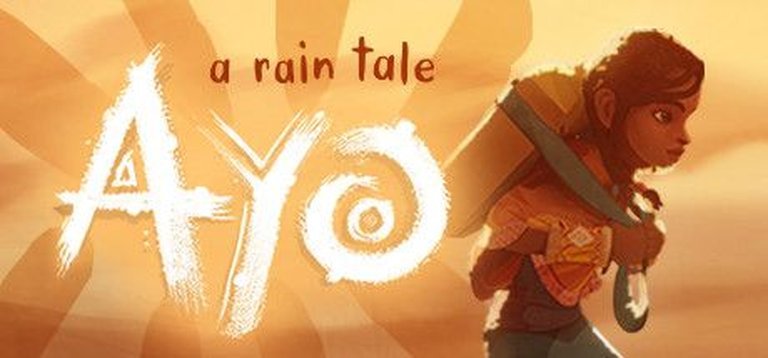
Ayo: A Rain Tale is a 2D side-scrolling adventure platformer set in the Sahara Desert, where players assume the role of Ayo, a young girl tasked with gathering water for her family. Developed by Inkline Ltd., the game combines platforming challenges, environmental puzzles, and encounters with oversized desert creatures like scorpions to highlight the real-world struggles of water scarcity in African regions. Through its atmospheric visuals and narrative-driven gameplay, it explores themes of perseverance and cultural responsibility within an artistic indie framework.
Gameplay Videos
Where to Buy Ayo: A Rain Tale
Ayo: A Rain Tale Cracks & Fixes
Ayo: A Rain Tale Guides & Walkthroughs
Ayo: A Rain Tale Reviews & Reception
opencritic.com (55/100): Ayo: A Rain Tale share a great message with his audience, but fails to entertain the players due to some gameplay issues e bad design choices.
metacritic.com (70/100): Ayo: A Rain Tale is a magnificent game that examines the serious issue of drinkable water transport by children under extreme conditions.
steambase.io (78/100): Ayo: A Rain Tale has earned a Player Score of 78 / 100.
Ayo: A Rain Tale: Review
Introduction
In a medium often dominated by power fantasies and escapism, Ayo: A Rain Tale (2017) dares to confront a harrowing reality: the daily struggle of Sub-Saharan African women and girls tasked with procuring water for their families. Developed by Lebanese studio Inkline Ltd., this side-scrolling platformer blends myth and activism, aiming to translate a humanitarian crisis into an interactive experience. Yet, does its noble intent translate into compelling gameplay and cultural education? This review argues that while Ayo succeeds as a visual and thematic statement, its mechanical execution and narrative depth falter, leaving it a poignant but imperfect artifact in the canon of socially conscious gaming.
Development History & Context
Studio Vision & Social Mission:
Founded as a passion project by Inkline Ltd.—a studio better known for branding and marketing work—Ayo: A Rain Tale emerged from a desire to spotlight the water-fetching plight faced by 319 million Sub-Saharan Africans. Collaborating with Fair Play Laby (a social impact collective), the team sought to intertwine African folklore with real-world advocacy. Executive producers Ghaith Fleifel and Claudio Pinto envisioned a game that was equal parts entertainment and awareness tool, culminating in a month-long fundraising campaign that exceeded its $15,000 goal to construct seven water wells in Mali.
Technological Constraints & Era:
Released in November 2017—a zenith for indie narrative platformers like Never Alone (2014)—Ayo faced stiff competition. Built with a modest team of 36 contributors (including Jorge Emilio Monge Vásquez as lead designer and Javier Alvarez as senior developer), the project leaned into hand-drawn 2D art to circumvent budget limitations. The decision to deploy the game across Windows, macOS, and mobile (iOS/Android) reflected a pragmatic focus on accessibility, though this multi-platform approach may have diluted technical polish.
Narrative & Thematic Deep Dive
Plot & Characters:
Players assume the role of Ayo, a young girl who embarks on her first solo journey to find water during the Sahelian droughts. After a sandstorm strands her in a cavern, Ayo encounters the Asili Twins—mystical guides inspired by African cosmology—who grant her abilities to navigate increasingly surreal biomes, from swamps to lava fields. The journey culminates in a showdown with Ja Thunderstorm, a mythic bull guarding water sources—a metaphor for systemic scarcity.
Themes & Cultural Representation:
Ayo’s core thesis—that women and girls lose 200 million collective hours daily to water-fetching—is undeniably potent. The game juxtaposes environmental decay (blighted forests, drying rivers) with Ayo’s psychological resilience, emphasizing themes of perseverance and communal duty. However, critics like Cyril Lachel (Defunct Games) noted a critical shortcoming: Ayo never delves into the specific cultures or histories of Sub-Saharan peoples, opting for broad archetypes over grounded storytelling. Where Never Alone integrated Inuit voices and folklore, Ayo’s narrative feels allegorical yet anonymized, a missed opportunity for deeper education.
Gameplay Mechanics & Systems
Core Loop & Progression:
As a platformer, Ayo adopts familiar conventions: running, jumping, puzzle-solving via boulder-pushing, and toggle-based color-switching mechanics (e.g., activating blue/yellow platforms). Over its 2-3 hour runtime, Ayo gains abilities—digging tunnels, double-jumping—that gradually diversify traversal. Yet, reviewers universally criticized the implementation:
– Clunky Physics: Movement lacks precision, with floaty jumps and inconsistent collision detection.
– Underdeveloped Mechanics: Puzzles rarely evolve beyond rudimentary block-pushing or lever-flipping, wasting potential for environmental storytelling.
– Camera Issues: A dynamic camera (zooming unpredictably or lagging behind) led to “unnecessary deaths” (BabelTechReviews).
Difficulty & Reward:
With lenient checkpoints and minimal penalty for failure, Ayo skews toward accessibility over challenge—a defensible choice given its target audience. However, the imbalance between its atmospheric tension and forgiving gameplay dulls emotional stakes. Boss fights, like Ja Thunderstorm, impress visually but lack mechanical depth, relying on simplistic patterns.
World-Building, Art & Sound
Visual Aesthetics:
Ayo’s strongest asset is its art direction. Hand-painted backdrops evoke the ochre dunes of the Sahel, thunderstorms, and fungal forests, rendered in a storybook palette reminiscent of Ori and the Blind Forest. Characters blend realism with stylized proportions, though critiques noted inconsistencies—some zones feel richly detailed (lava caves), while others feature repetitive assets (early desert segments). The day-night cycle dynamically shifts lighting but serves little gameplay purpose.
Sound Design & Music:
Ambient soundscapes—wind howls, insect chirps—anchor players in Ayo’s solitude. The score, blending traditional percussion and ethereal melodies, elevates key moments (e.g., confronting Ja Thunderstorm). However, the absence of voice acting—dialogue occurs via text—diminishes immersion during cutscenes.
Reception & Legacy
Launch Reception:
Critics praised Ayo’s intentions but lamented its execution. Aggregated scores reflect this divide:
– Metascore (PC): 58–71%, citing “artful beauty” (Nerdophiles) but “superficial” gameplay (Ragequit.gr).
– Steam User Score: 78% (“Mostly Positive”), buoyed by appreciation for its message.
Notable critiques centered on brevity, shallow mechanics, and the camera’s unreliability. Defunct Games’ Cyril Lachel summarized: “[It] sheds light on a real struggle… [but] would have been better with more context.”
Cultural Impact & Legacy:
While not a commercial hit, Ayo’s legacy lies in its humanitarian footprint. The well-building campaign demonstrated gaming’s capacity for tangible social good—a precursor to titles like Hellblade: Senua’s Sacrifice (mental health advocacy). Mechanically, it inspired few successors, though its focus on water scarcity resonates in games like Terra Nil (ecological restoration). Today, it remains a case study in balancing activism with interactivity—a flawed but earnest pioneer.
Conclusion
Ayo: A Rain Tale is a paradox: a game of profound empathy hamstrung by its own design. Its visual poetry and moral urgency carve a niche in gaming’s conscience, challenging players to acknowledge a crisis often invisible to the global north. Yet, as a platformer, it stumbles—repetitive puzzles, a forgettable progression system, and a lack of cultural specificity blunt its impact. For historians, Ayo epitomizes indie gaming’s potential as a vehicle for change, even when execution falters. It is not a masterpiece, but it is a necessary artifact—a reminder that games can, and should, dare to confront the world’s heaviest burdens.