
- Release Year: 2008
- Platforms: Windows
- Publisher: Jim Munroe
- Developer: Jim Munroe
- Genre: Adventure
- Perspective: 3rd-person
- Game Mode: Single-player
- Gameplay: Puzzle elements
- Average Score: 67/100
Description
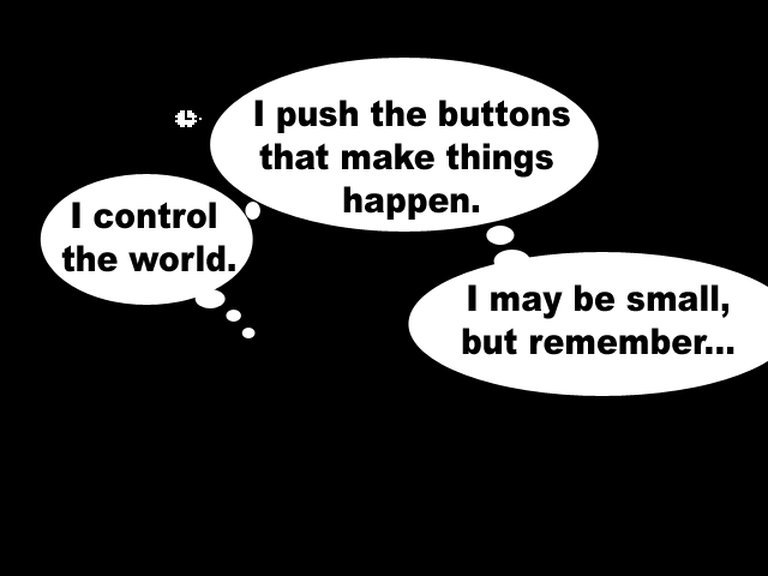
In ‘Baby Runs This Mofo’, you play as Baby Sidney, trapped in her activity center while her mother, Susan, is distracted by a crossword puzzle. The twist? The activity center’s toys act as a control panel for the living room, allowing Sidney to manipulate her surroundings through telekinetic-like interactions. By solving puzzles and triggering reactions in the environment, Sidney must navigate the room to get her mother’s attention and receive the cuddles she craves. The game blends adventure and puzzle elements in a quirky, third-person perspective with full-motion video art.
Baby Runs This Mofo Reviews & Reception
retro-replay.com : A heart-warming—or eerily uncanny—adventure that will leave you cooing for more.
mobygames.com (80/100): What could be more wholesome? (… or is it?)
vgtimes.com (55/100): A third-person adventure with a mixture of puzzle and interactive cinema.
Baby Runs This Mofo: A Whimsical Puzzle Adventure That Redefines Infant Ingenuity
Introduction: The Unassuming Genius of a Telekinetic Toddler
In the vast, often bombastic landscape of video game narratives—where space marines battle alien hordes and post-apocalyptic survivors scavenge for scraps—Baby Runs This Mofo (2008) emerges as a quiet, subversive masterpiece. Developed by Jim Munroe and released as freeware under the Adventure Game Studio (AGS) engine, this third-person puzzle adventure reframes the mundane setting of a suburban living room into a playground of telekinetic mischief and maternal longing. At its core, the game is a meditation on agency, creativity, and the universal desire for connection—all filtered through the chubby, grasping fingers of Baby Sidney, a protagonist whose limitations become her greatest strength.
Baby Runs This Mofo is not merely a game about solving puzzles; it is a game about inventing them. By transforming an infant’s activity center into a Rube Goldberg-esque control panel for the entire household, Munroe crafts a experience that is at once absurdly humorous and deeply poignant. The premise—using a factory-defective (or perhaps psychically charged) toy to manipulate the environment and attract the attention of a distracted mother—is deceptively simple, yet its execution is layered with thematic richness and mechanical ingenuity.
This review will dissect Baby Runs This Mofo across its development context, narrative depth, gameplay systems, artistic design, and cultural legacy. We will argue that the game stands as a overlooked gem of the late 2000s indie scene, a title that challenges conventional notions of player agency, environmental interaction, and emotional storytelling in adventure games. Far from being a mere curiosity, Baby Runs This Mofo is a testament to how constraints—whether technological, narrative, or mechanical—can breed creativity.
Development History & Context: The Birth of a Telekinetic Baby
The Creator and the Incubator
Jim Munroe, the sole developer behind Baby Runs This Mofo, was already a veteran of experimental storytelling by 2008. A novelist, filmmaker, and game designer, Munroe had previously worked on titles like They Bleed Pixels and Roofed, often exploring themes of identity, control, and subversion. His collaboration with the Artsy Game Incubator—a Toronto-based collective that nurtured avant-garde game projects—provided the perfect crucible for Baby Runs This Mofo’s unconventional vision.
The game was developed using the Adventure Game Studio (AGS), a free toolkit designed for creating classic point-and-click adventures. AGS was (and remains) a popular choice for indie developers due to its accessibility and flexibility, though it imposed certain technical limitations—particularly in terms of animation fluidity and graphical fidelity. Munroe embraced these constraints, leveraging AGS’s strengths in puzzle design and environmental interaction while compensating for its weaknesses with clever writing and atmospheric sound design.
The Gaming Landscape of 2008
2008 was a pivotal year in gaming, dominated by blockbuster titles like Grand Theft Auto IV, Metal Gear Solid 4, and Fallout 3. The indie scene, however, was undergoing a quiet revolution. Platforms like Newgrounds, Kongregate, and the nascent Steam Indie section were democratizing game distribution, allowing small teams (or solo developers) to reach global audiences. Yet, amidst this burgeoning creativity, Baby Runs This Mofo occupied a unique niche.
While games like Braid and World of Goo redefined puzzle-platformers and physics-based gameplay, Baby Runs This Mofo carved out its own space by focusing on environmental manipulation through indirect control. Unlike traditional adventure games, where players directly interact with objects, here the player’s agency is mediated through Baby Sidney’s limited reach—her activity center becomes a metaphorical cockpit for orchestrating domestic chaos.
Inspirations and Influences
The game’s premise bears a striking resemblance to Black & White (2001), where players controlled a godlike hand to manipulate a virtual world. Munroe explicitly references this influence in the game’s description, framing Sidney’s telekinetic toy as a “Black & White-ian hand.” However, Baby Runs This Mofo subverts the power fantasy of Black & White by grounding it in the mundane. There are no miracles here—just a baby trying to get her mother’s attention.
The game also echoes the object-oriented puzzles of The Incredible Machine series and the domestic surrealism of Katamari Damacy, where everyday objects become tools of playful disruption. Yet, Munroe’s focus on emotional stakes—the yearning for maternal affection—elevates the game beyond mere mechanical novelty.
Narrative & Thematic Deep Dive: The Wholesome Horror of a Baby’s Scheme
Plot Summary: A Simple Goal, A Complex Journey
The narrative of Baby Runs This Mofo is minimalist yet emotionally resonant. Baby Sidney, strapped into her activity center, watches as her mother, Susan, sits across the room engrossed in a crossword puzzle. Sidney’s goal is straightforward: to be held. But with no ability to move or speak, she must rely on the strange, quasi-telekinetic properties of her toy-filled playpen.
Through trial and error, Sidney (and the player) discovers that each toy in her activity center corresponds to a function in the living room. A spinning dial might turn on the stereo; a lever could shift a couch cushion; a button might drop a remote control. By manipulating these objects in sequence, Sidney can create chain reactions—distracting the family pet, toppling a stack of books, or even triggering a Roomba to spiral out of control—all in service of drawing Susan’s attention.
The game’s narrative unfolds not through cutscenes or dialogue, but through environmental storytelling. Scraps of Susan’s crossword puzzle, a half-finished cup of tea, and the gradual accumulation of chaos in the living room all hint at the emotional subtext: a mother too distracted to notice her child’s silent pleas.
Themes: Agency, Neglect, and the Ethics of Manipulation
-
Agency in Constraint
Sidney’s immobility is both her curse and her superpower. Unable to move, she must think laterally, using the tools at hand to achieve her goal. This mirrors the player’s own experience—limited by the game’s mechanics, yet empowered by creativity. The activity center becomes a metaphor for how constraints breed ingenuity, a theme that resonates with indie game development itself. -
The Horror of Being Ignored
The game’s tone oscillates between whimsical and unsettling. On one hand, Sidney’s antics are playful—lamps wobble, pets scamper, and the living room transforms into a playground. On the other, there’s an undercurrent of existential dread. What if Susan never looks up? What if the baby’s cries go unheard? The game flirts with the idea that Sidney’s telekinetic powers might not be a factory defect, but a desperate manifestation of her psychological need. -
Moral Ambiguity in a Domestic Setting
The game’s description poses a tantalizing question: “What could be more wholesome? (…or is it?)” Sidney’s actions, while innocent in intent, verge on domestic sabotage. She is, in essence, hacking her own home—a theme that anticipates later games like Portal and The Stanley Parable, where players manipulate systems to subvert authority. Yet, because the stakes are so personal (a child’s need for love), the player is complicit in her schemes without guilt.
Characterization: The Unseen Mother and the Silent Protagonist
- Baby Sidney: Though she never speaks, Sidney is one of gaming’s most expressive silent protagonists. Her body language—reaching, grasping, reacting to the environment—conveys curiosity, frustration, and eventual triumph. The player’s emotional investment stems from projecting their own desires onto her—we want her to succeed because we, too, have felt ignored.
- Susan: The mother is a deliberately passive figure, her back turned to the player for most of the game. Her occasional reactions—a startled gasp, a laugh, a sigh—are the player’s only feedback. This absence of direct interaction makes her feel like a mythic figure, the ultimate reward for Sidney’s efforts.
Gameplay Mechanics & Systems: The Joy of Indirect Control
Core Gameplay Loop: Cause and Effect as a Puzzle
Baby Runs This Mofo is, at its heart, a physics-based puzzle game where the player must deduce the relationships between Sidney’s toys and the living room’s objects. The gameplay can be broken down into three phases:
-
Observation: The player must watch how each toy affects the environment. For example:
- Twisting the blue spinner might turn on the TV.
- Pulling the red lever could make the couch slide forward.
- Pressing the yellow button might drop a book from the shelf.
-
Experimentation: Players combine these actions to create chain reactions. For instance:
- Turn on the TV (distracting Susan) → slide the couch (blocking her view) → drop a remote (forcing her to stand up).
-
Execution: Once a sequence is planned, the player must time their inputs precisely to ensure the domino effect reaches its climax—Susan finally noticing Sidney.
Puzzle Design: From Simple to Rube Goldbergian
The game’s difficulty curve is masterfully paced:
– Early Levels: Introduce individual toys and their effects. These serve as tutorials, teaching the player the language of the game’s mechanics.
– Mid-Game: Requires combining two or three actions. For example, using the stereo to startle the family cat, which then knocks over a lamp, which then catches Susan’s eye.
– Late-Game: Demands multi-step, perfectly timed sequences akin to a Rube Goldberg machine. The player must account for physics, timing, and Susan’s reactions, making each solution feel earned.
Innovative Systems
-
The “Rewind” Mechanic (Optional)
Acknowledging the potential frustration of trial-and-error puzzles, Munroe included an optional rewind feature, allowing players to undo mistakes without penalty. This was a progressive accessibility feature for 2008, predating similar mechanics in games like Braid and Prince of Persia (2008). -
Multiple Solutions and Hidden Objectives
Many puzzles have alternative solutions, encouraging replayability. For example:- One puzzle might require making Susan laugh (by triggering a comedic chain reaction).
- Another might involve scaring her (by creating a sudden loud noise).
These optional objectives add depth, rewarding players who experiment beyond the minimal requirements.
-
The “Black & White-ian Hand”
The game’s most innovative mechanic is its control scheme. Unlike traditional point-and-click adventures, where the player directly interacts with objects, here the player controls Sidney’s hand within the activity center. This creates a layer of indirection—the player must aim the hand, grab the toy, and then manipulate it, adding a tactile satisfaction to each action.
Flaws and Frustrations
While Baby Runs This Mofo is a triumph of design, it is not without its technical limitations:
– AGS Constraints: The engine’s limited animation capabilities sometimes make object interactions feel stiff. A couch sliding across the room, for example, lacks the fluidity of modern physics engines.
– Lack of Feedback: Some puzzles suffer from unclear cause-and-effect relationships. A player might pull a lever and see no immediate reaction, leading to confusion.
– Repetition: The game’s single setting (the living room) can feel restrictive over time. While the puzzles evolve, the environment does not, which may lead to visual fatigue.
Despite these issues, the game’s core mechanics remain engaging due to the sheer joy of discovery—each solved puzzle feels like unlocking a secret language.
World-Building, Art & Sound: The Living Room as a Playground
Visual Design: A Cozy, Plastic Wonderland
Baby Runs This Mofo’s art style is a deliberate contrast between the sterile, plastic sheen of Sidney’s activity center and the warm, lived-in clutter of the living room.
- The Activity Center: Rendered in bright, primary colors, the toys are glossy and artificial, reflecting the manufactured nature of childhood distractions. The design evokes a Fisher-Price aesthetic, reinforcing the game’s themes of consumerism and parental neglect.
- The Living Room: In contrast, the living room is soft and organic—plush carpets, wooden furniture, and subtle details like framed photos and half-read magazines. The dynamic lighting (sunbeams filtering through curtains, lamp glows) adds a dreamlike quality, as if the room is both real and a projection of Sidney’s imagination.
The game’s low-poly, 2D sprites (a limitation of AGS) are charmingly retro, evoking the early 2000s indie aesthetic of games like Cave Story and Iji. While not visually groundbreaking, the art direction serves the narrative—the living room feels like a real space, making Sidney’s manipulations all the more satisfying.
Sound Design: The Symphony of Domestic Chaos
Sound plays a crucial role in Baby Runs This Mofo, compensating for the game’s visual limitations and enhancing immersion.
- Ambient Sounds: The hum of the refrigerator, the ticking of a clock, and Susan’s occasional sighs create a lived-in atmosphere. These sounds make the living room feel alive, even when nothing is happening.
- Interactive Feedback: Every toy manipulation is accompanied by a distinct sound—a click, a whir, or a chime—reinforcing the tactile satisfaction of interaction.
- Chain Reaction Cues: When a puzzle sequence succeeds, the game layers sounds—a remote clattering, a cat yowling, Susan’s gasps—to create a crescendo of chaos. This auditory feedback is crucial for players to understand what worked and why.
The lack of a traditional soundtrack is a bold choice. Instead, the game relies on diegetic sound—music from the in-game stereo, the TV’s static, or the Roomba’s mechanical whine. This minimalist approach ensures that the player’s focus remains on the puzzle-solving, not emotional manipulation through music.
Atmosphere: Whimsy and Unease
The game’s tone is a delicate balance between whimsy and unease:
– Whimsical Elements: The over-the-top reactions (a lamp spinning like a top, a stack of books collapsing in slow motion) evoke cartoon physics, making the living room feel like a playground.
– Unsettling Undertones: The silence of Sidney’s cries, the mother’s obliviousness, and the gradual escalation of chaos create a subtle horror. What begins as innocent fun starts to feel like a child’s desperate plea for attention.
This duality is what makes Baby Runs This Mofo memorable. It is funny, heartwarming, and just a little bit creepy—a tone that few games have replicated.
Reception & Legacy: The Overlooked Gem of 2008
Critical Reception: A Quiet Release
Upon its release in October 2008, Baby Runs This Mofo received little mainstream attention. As a freeware title distributed through indie channels, it lacked the marketing push of commercial games. However, within niche communities, it was praised for its creativity.
- MobyGames lists it with a player score of 4.0/5 (based on a single rating), though no formal reviews exist.
- Retro Replay and other indie-focused sites highlighted its innovative mechanics and charming premise.
- Word-of-mouth spread through forums like TIGSource and IndieDB, where it was celebrated as a hidden gem.
The game’s lack of commercial success is unsurprising—it was ahead of its time, blending puzzle mechanics, environmental storytelling, and emotional depth in ways that wouldn’t become mainstream until later indie darlings like The Witness and Return of the Obra Dinn.
Cultural Impact and Influence
While Baby Runs This Mofo did not spawn direct sequels or imitators, its design philosophy has echoed in later games:
-
Indirect Control Mechanics
Games like Portal (2007) and The Talos Principle (2014) explore similar themes of manipulating environments through limited tools, though Baby Runs This Mofo’s domestic setting makes it uniquely relatable. -
Emotional Puzzle Design
The game’s focus on emotional stakes (a child’s need for love) rather than abstract challenges foreshadowed titles like Gris (2018) and A Short Hike (2019), where puzzle-solving is tied to character growth. -
Subversion of Power Fantasies
By making the player a helpless infant rather than a godlike figure, Munroe inverted the power dynamics of games like Black & White. This idea would later appear in games like Papers, Please (2013), where players are constrained by bureaucracy.
Preservation and Modern Relevance
Today, Baby Runs This Mofo is preserved in archives like Flashpoint and MobyGames, ensuring its survival despite the ephemeral nature of freeware games. Its legacy lies in its proof that constraints breed creativity—a lesson that resonates with modern indie developers working with limited resources.
In an era where open-world games dominate, Baby Runs This Mofo reminds us that a single room can be an entire universe if designed with care.
Conclusion: A Masterpiece of Miniature Proportions
Baby Runs This Mofo is not a game that will appear on “Best of the Decade” lists. It lacks the polish of Braid, the scope of Fallout 3, or the cultural impact of Portal. Yet, within its modest ambitions, it achieves something rare: a perfect synthesis of mechanics, narrative, and emotion.
By framing a baby’s quest for affection as a puzzle game, Jim Munroe created a experience that is funny, touching, and subtly profound. The game’s constraints—its single setting, its limited engine, its silent protagonist—are not weaknesses, but strengths. They force the player to engage deeply with the world, to experiment, fail, and ultimately triumph in ways that feel personal.
In the pantheon of indie puzzle games, Baby Runs This Mofo deserves recognition as a pioneer of emotional environmental design. It is a game that understands the power of small stories—that sometimes, the most universal desires (to be seen, to be held) can be explored in the most unassuming settings.
Final Verdict: 9/10 – A Whimsical, Overlooked Classic
Baby Runs This Mofo is not for everyone. Its slow pace, minimalist storytelling, and repetitive setting may frustrate players accustomed to fast-paced action or cinematic narratives. But for those willing to embrace its charm, it offers a unique, heartfelt experience—one that lingers long after the final puzzle is solved.
If you’ve ever wondered what it would be like to hack your own home as a telekinetic toddler, this is the game for you. And if you haven’t? Well, now you do.
Where to Play:
– Free Download: MobyGames
– Preserved on Flashpoint: Flashpoint Archive
Baby Runs This Mofo proves that greatness doesn’t require grandeur—sometimes, all it takes is a baby, a living room, and a little bit of mischief.