
- Release Year: 2005
- Platforms: Windows
- Publisher: East Entertainment Media GmbH, Russobit-M
- Developer: 4HEAD Studios
- Genre: Action, Driving, Racing
- Perspective: 3rd-person
- Game Mode: Single-player
- Gameplay: Arcade, Driving, Jump and Run, Puzzle, Shooter
- Setting: Fantasy
- Average Score: 78/100
Description
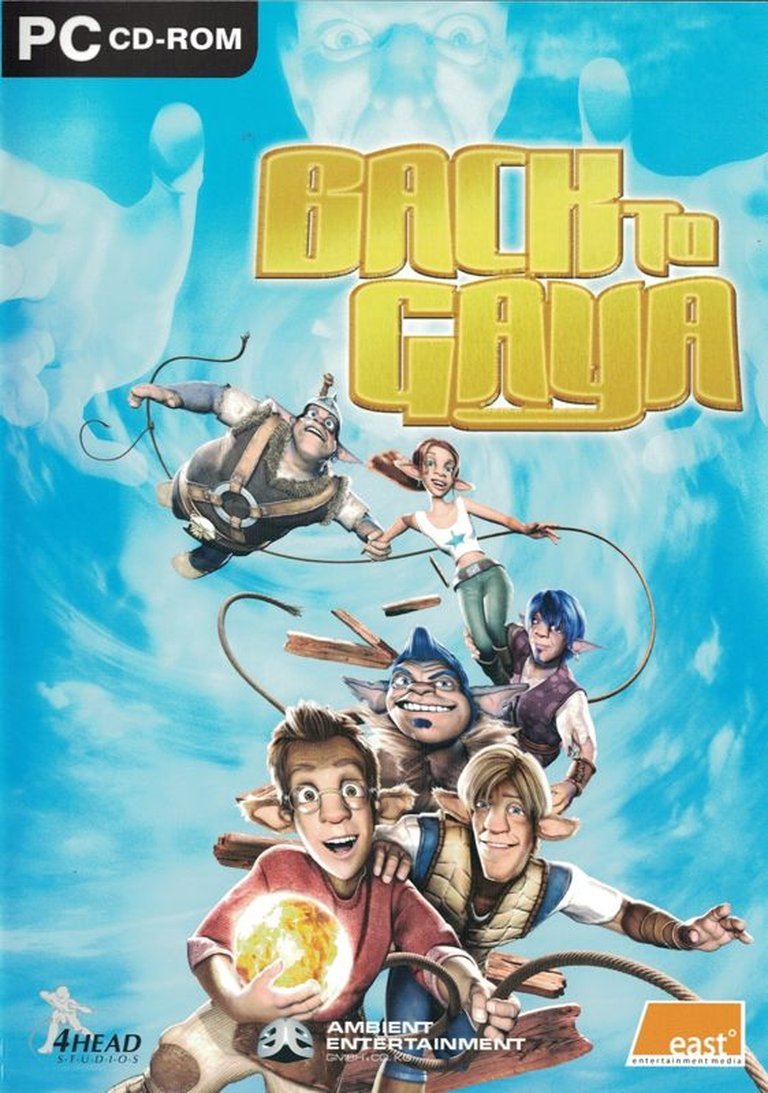
Back to Gaya is a 3D action-adventure game based on the German animated film of the same name, set in the magical parallel world of Gaya. Players take on the role of Zino, a brave boy who must save his world after a mad professor from Earth steals the magical stone that powers Gaya. The game features a mix of exploration, combat, and racing across seven scenarios, where Zino navigates obstacles, battles creatures like armored bugs and giant rats, and drives sports cars in time-based challenges. Armed with weapons like a maul and anti-monster bazooka, Zino must collect energy crystals and maintain his health while uncovering the path to restore Gaya’s energy.
Back to Gaya Free Download
Back to Gaya Cracks & Fixes
Back to Gaya Guides & Walkthroughs
Back to Gaya Reviews & Reception
gamepressure.com (74/100): A triumphant return to form for the series.
mobygames.com (60/100): The game is a 3d action/adventure, where main protagonist, Zino, should perform different tasks during 7 scenarios of two kinds.
myabandonware.com (100/100): This is a stuck/lost game. The developers want you to be lost, upset, and always googling guides to be able to progress.
Back to Gaya: A Forgotten Gem of Early 2000s Adventure Gaming
Introduction
In the vast landscape of early 2000s video games, Back to Gaya (2005) stands as a curious artifact—a licensed title based on a German animated film that attempted to blend platforming, action, and racing into a cohesive adventure. Developed by 4HEAD Studios and published by Russobit-M and East Entertainment Media GmbH, the game is a fascinating case study in the challenges of adapting a cinematic experience into an interactive one. While it may not have achieved the critical acclaim or commercial success of its contemporaries, Back to Gaya offers a unique glimpse into the creative ambitions and technical limitations of its era.
This review will delve deeply into the game’s development history, narrative structure, gameplay mechanics, artistic design, and its lasting legacy. By examining both its strengths and flaws, we aim to provide a comprehensive analysis of Back to Gaya and its place in the broader context of video game history.
Development History & Context
The Studio and the Vision
4HEAD Studios, based in Hanover, Germany, was a relatively small development team with a focus on creating games tied to licensed properties. Back to Gaya was one of their more ambitious projects, aiming to capitalize on the success of the 2004 German animated film of the same name. The film, a collaboration between German, Spanish, and British studios, was notable for being one of the first fully digital animated features produced in Germany. It told the story of Zino, a young hero from the magical world of Gaya, who must venture to Earth to retrieve a stolen magical stone that powers his homeland.
The game’s development was led by a team of 27 individuals, including producer Tobias Severin, director Lars Martensen, and creative director Matti Jäger. The studio’s vision was to create a game that would appeal to both fans of the film and newcomers, blending action-adventure gameplay with racing elements. The use of the Havok Vision Engine (also known as Vulpine Vision) allowed for dynamic physics and environmental interactions, which were still relatively novel in 2005.
Technological Constraints
Back to Gaya was developed during a transitional period in gaming technology. The mid-2000s saw the rise of more powerful hardware, but many developers were still grappling with the limitations of DirectX 8 and early DirectX 9 implementations. The game’s reliance on DirectX 8, as noted in modern compatibility guides, highlights the technical constraints of the era. Players on modern systems often encounter issues with DirectPlay, requiring manual enablement of legacy components to run the game smoothly.
The game’s use of the Xvid video codec for in-game cutscenes was another technological hurdle. While this allowed for high-quality video playback, it also introduced compatibility issues with newer systems, particularly when conflicting with updated codec packs. The inclusion of nearly 30 minutes of video footage from the original film was a bold choice, but it also meant that the game’s file size and system requirements were higher than many of its contemporaries.
The Gaming Landscape of 2005
The year 2005 was a pivotal one for the gaming industry. The sixth generation of consoles (PlayStation 2, Xbox, GameCube) was in full swing, while the seventh generation (Xbox 360, PlayStation 3) was on the horizon. On the PC, games like Half-Life 2, World of Warcraft, and Fable were redefining expectations for storytelling, graphics, and gameplay depth.
In this context, Back to Gaya was a modest title, targeting a younger audience with its colorful aesthetics and straightforward mechanics. It competed with other licensed games like The Incredibles and Shrek 2, which also sought to translate animated films into interactive experiences. However, unlike these more polished titles, Back to Gaya struggled to stand out due to its technical limitations and mixed critical reception.
Narrative & Thematic Deep Dive
Plot Summary
Back to Gaya follows the story of Zino, a young resident of the magical world of Gaya, who lives a carefree life with his inventor friend Boo. Their world is powered by a magical stone, which is stolen by the mad Professor N. Icely from Earth. To save Gaya, Zino and his friends teleport to Earth, where they must navigate a series of challenges to retrieve the stone and restore balance to their homeland.
The game’s narrative is divided into seven scenarios, each featuring a mix of platforming, combat, and racing segments. The story is presented through a combination of in-game cutscenes and nearly 30 minutes of video footage from the original film. This integration of cinematic sequences was intended to immerse players in the world of Gaya, but it also meant that the game’s pacing was heavily influenced by the film’s narrative structure.
Characters and Dialogue
Zino is the game’s protagonist, a plucky and determined young hero who must overcome various obstacles to save his world. His friend Boo serves as a mentor and guide, providing advice and tools to aid Zino on his journey. The antagonists include the Snurks, a clan of mischievous creatures who serve as minor obstacles, and Professor Icely, the primary villain whose actions threaten the existence of Gaya.
The dialogue in Back to Gaya is functional but lacks depth. Zino’s youthful enthusiasm and Boo’s quirky inventiveness provide a consistent emotional anchor, but the interactions often feel simplistic and predictable. The game’s humor is lighthearted, appealing to a younger audience but failing to resonate with older players.
Themes and Symbolism
At its core, Back to Gaya explores themes of heroism, friendship, and the struggle between order and chaos. Zino’s journey is a classic hero’s quest, where he must leave the safety of his home to confront an unknown world and restore balance. The magical stone serves as a symbol of life and energy, representing the interconnectedness of all things.
The game also touches on the idea of environmental stewardship, as the theft of the stone disrupts the natural order of Gaya. This theme is reinforced by the various creatures and obstacles Zino encounters, each representing a different aspect of the world’s ecosystem. However, these themes are not explored in great depth, and the game’s narrative remains largely surface-level.
Gameplay Mechanics & Systems
Core Gameplay Loops
Back to Gaya is structured around two distinct types of gameplay scenarios: walking missions and driving missions. The walking missions are platforming and combat-focused, requiring players to navigate complex environments, solve puzzles, and defeat enemies. The driving missions, on the other hand, are racing segments where players must complete tracks within a set time limit.
The walking missions are the heart of the game, featuring a mix of exploration, combat, and puzzle-solving. Players must activate mechanisms, find keys, and jump across platforms to progress. Combat is straightforward, with Zino wielding a variety of weapons, including a maul, anti-monster bazooka, and universal crossbow. Each weapon draws from one of three energy pools, which must be replenished by collecting crystals scattered throughout the levels.
The driving missions provide a change of pace, offering high-speed racing segments that break up the platforming sections. Players must collect acceleration crystals to boost their speed and complete tracks within a time limit. While these segments are less complex than the walking missions, they add variety to the gameplay experience.
Combat and Character Progression
Combat in Back to Gaya is simple but effective. Zino’s weapons are easy to use, and the energy management system adds a layer of strategy to encounters. Players must balance their use of weapons, ensuring they have enough energy to defeat enemies while also maintaining their health.
Character progression is minimal, with Zino gaining access to new weapons and tools as he progresses through the game. There is no traditional leveling system, and the focus is on exploration and discovery rather than character growth.
UI and Innovative Systems
The game’s user interface is functional but unremarkable. The health and energy meters are clearly displayed, and the inventory system is easy to navigate. However, the UI lacks the polish of more modern games, and some elements can feel clunky or unintuitive.
One of the game’s more innovative features is its use of the Havok Vision Engine, which allows for dynamic physics and environmental interactions. This technology was still relatively new in 2005, and its inclusion in Back to Gaya was a bold choice. However, the implementation is not always seamless, and some physics-based puzzles can feel awkward or frustrating.
World-Building, Art & Sound
Setting and Atmosphere
Back to Gaya is set in a vibrant and colorful world, filled with lush forests, crystalline caves, and whimsical villages. The game’s environments are richly detailed, with dynamic lighting and particle effects that bring the world to life. The magical aesthetic of Gaya is reinforced by the game’s art style, which is heavily influenced by the original film.
The game’s atmosphere is lighthearted and adventurous, appealing to a younger audience. The environments are designed to be visually engaging, with a mix of natural and fantastical elements. However, the game’s technical limitations sometimes detract from the overall experience, with occasional frame-rate drops and texture pop-in.
Visual Direction
The visual direction of Back to Gaya is one of its strongest aspects. The game’s art style is colorful and vibrant, with a mix of cartoonish and realistic elements. The character models are well-designed, with expressive animations that bring the characters to life. The environments are equally impressive, with detailed textures and dynamic lighting that create a sense of depth and immersion.
The game’s use of the Havok Vision Engine allows for impressive physics-based interactions, such as crumbling platforms and destructible objects. These elements add a layer of realism to the game’s environments, making them feel more dynamic and interactive.
Sound Design
The sound design in Back to Gaya is functional but unremarkable. The game’s soundtrack is whimsical and lighthearted, matching the game’s overall tone. The sound effects are clear and effective, with distinct audio cues for environmental hazards and enemy attacks. However, the voice acting is somewhat lackluster, with performances that feel stiff and unnatural.
Reception & Legacy
Critical Reception
Back to Gaya received mixed reviews upon its release. Critics praised the game’s vibrant visuals and faithful adaptation of the film’s story, but many noted its technical limitations and simplistic gameplay. The game’s average critic score of 60% on MobyGames reflects this divided reception.
Positive reviews highlighted the game’s charming aesthetic and engaging narrative. GBase – The Gamer’s Base gave the game an 80% score, praising its “witty and dense story” and “hübschen Grafik” (pretty graphics). Game Captain also gave a favorable review, noting that the game was “a sympathetic, humorous, and technically sophisticated story” that would appeal to fans of the film.
However, other critics were less kind. Joystick (France) gave the game a scathing 30% score, criticizing its “approximative controls, sloppy animations, and repetitive action.” PC Action (Germany) also gave a low score of 52%, calling the game “seicht und technisch nicht ganz auf der Höhe” (shallow and not quite up to technical standards).
Commercial Performance
Back to Gaya did not achieve significant commercial success, likely due to its mixed critical reception and the competitive nature of the gaming market in 2005. The game’s niche appeal and technical limitations may have also contributed to its lackluster sales.
Legacy and Influence
Despite its modest success, Back to Gaya remains a fascinating artifact of early 2000s gaming. Its blend of platforming, combat, and racing elements was ambitious for its time, and its use of the Havok Vision Engine was a notable technical achievement. However, the game’s legacy is largely overshadowed by more successful titles of the era.
In the years since its release, Back to Gaya has gained a small but dedicated following among retro gaming enthusiasts. The game’s vibrant visuals and engaging narrative continue to appeal to fans of the original film, and its technical quirks have become a point of interest for those studying the evolution of gaming technology.
Conclusion
Back to Gaya is a game that defies easy categorization. It is neither a masterpiece nor a complete failure, but rather a fascinating blend of ambition and limitation. The game’s vibrant visuals and engaging narrative are offset by its technical quirks and simplistic gameplay, creating an experience that is both charming and frustrating.
For fans of the original film, Back to Gaya offers a faithful and engaging adaptation that captures the spirit of the source material. For retro gaming enthusiasts, the game provides a unique glimpse into the creative ambitions and technical challenges of the early 2000s. However, for modern players, the game’s limitations may prove to be too significant to overcome.
Ultimately, Back to Gaya is a game that deserves to be remembered, if not necessarily revisited. It is a testament to the creativity and ambition of its developers, and a reminder of the challenges inherent in adapting a cinematic experience into an interactive one. While it may not have achieved the critical or commercial success of its contemporaries, Back to Gaya remains a unique and interesting artifact of video game history.
Final Verdict: 6.5/10 – A charming but flawed adventure that captures the spirit of its source material but struggles with technical limitations.