
- Release Year: 2023
- Platforms: Windows
- Publisher: Desert Fox
- Developer: Desert Fox
- Genre: Adventure
- Perspective: 1st-person
- Game Mode: Single-player
- Gameplay: Puzzle elements
- Setting: Fantasy
- Average Score: 74/100
Description
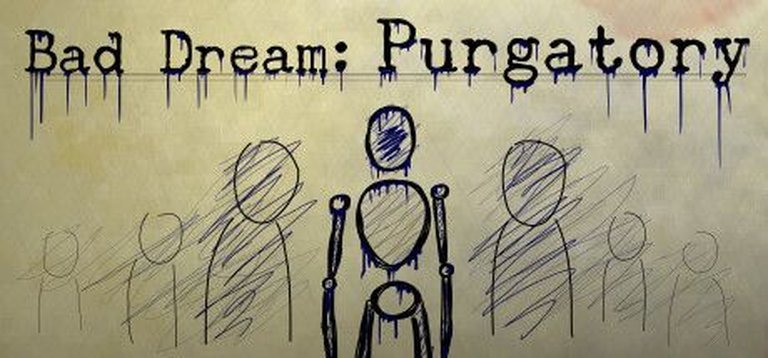
Bad Dream: Purgatory is a first-person adventure game with puzzle elements set in a hauntingly surreal fantasy landscape, where players explore a world filled with unused characters from a cancelled project. As part of the Bad Dream series, it challenges players to interact with these forgotten souls, deciding whether to grant them purpose and potential escape from purgatory or leave them doomed to eternal suffering.
Gameplay Videos
Where to Buy Bad Dream: Purgatory
PC
Bad Dream: Purgatory Guides & Walkthroughs
Bad Dream: Purgatory Reviews & Reception
steambase.io (76/100): Mostly Positive (76/100 from 37 reviews)
store.steampowered.com (73/100): Mostly Positive (73% of 34 user reviews)
Bad Dream: Purgatory: Review
Introduction
Imagine stumbling into a digital limbo, a forsaken canvas where half-formed dreams and discarded ideas languish in eternal suspension—welcome to Bad Dream: Purgatory, the 2023 entry in Desert Fox’s acclaimed Bad Dream series. This indie horror adventure doesn’t just build on the eerie, surreal foundations of predecessors like Bad Dream: Coma (2017) and Bad Dream: Fever (2018); it meta-textually confronts the very act of creation itself, casting players as reluctant gods over abandoned characters from a “cancelled project.” In an era saturated with polished blockbusters, Purgatory stands as a raw, hand-crafted testament to indie ingenuity, blending psychological horror, puzzle-solving, and choice-driven narratives into a haunting experience that lingers like a half-remembered nightmare. My thesis: While its technical rough edges betray its solo-dev origins, Bad Dream: Purgatory elevates the adventure genre through its bold thematic risks and atmospheric immersion, securing a niche legacy as a must-play for fans of surrealist walking simulators.
Development History & Context
Desert Fox, the enigmatic solo developer (and publisher) behind the Bad Dream series, crafted Purgatory as a deeply personal evolution of their vision. Released on June 23, 2023, exclusively for Windows via Steam, the game emerged from GameMaker engine roots—a tool synonymous with accessible indie creation since the early 2000s. This marks a departure from the series’ traditional 2D point-and-click roots, adopting a 2.5D first-person perspective that hints at ambitions teased in prior titles. A Steam community post speculates that Purgatory fulfills creator promises from Bad Dream: Fever, including “3D graphics,” “randomly generated levels,” “expanded crafting,” and even “zombies”—transforming a teased RPG world into this purgatorial limbo.
The 2023 indie landscape was ripe for such experimentation: post-pandemic, platforms like Steam overflowed with narrative-driven horrors (What Remains of Edith Finch, The Stanley Parable: Ultra Deluxe) and walking sims emphasizing atmosphere over action. Technological constraints were minimal—requiring only a 2 GHz processor, 4 GB RAM, and DirectX 9—allowing Desert Fox to prioritize artistic vision over AAA polish. Yet, as a one-person operation, the game bears scars of its origins: community discussions highlight crashes (e.g., post-reset freezes, frequent issues in “Great Escape” areas) and bugs like infinite shovels or unresponsive star doors. Despite this, Desert Fox’s iterative approach shines; bundles like “Bad Dream: Bundle” (including Coma, Stories, and later Afterlife) reflect a bootstrapped ecosystem, fostering a dedicated fanbase amid Steam’s 2023 indie deluge.
Narrative & Thematic Deep Dive
At its core, Bad Dream: Purgatory is a meta-allegory on abandonment and purpose, thrusting players into a “hauntingly surreal landscape” populated by “unused characters from a cancelled project.” These spectral entities—trapped in limbo, devoid of direction—plead for meaning, positioning the player as both savior and executioner. Unlike linear predecessors, the narrative branches via choices: aiding characters (tracked via colored icons in the menu) determines their fates, culminating in multiple endings where benevolence yields redemption, while neglect condemns them (and potentially you) to suffering.
Plot Breakdown: The story unfolds non-linearly across surreal vignettes—an “Open World” of scavenging, a “Great Escape” sequence, and ritualistic encounters (e.g., magic shows, nail fairies). Players gather items like scissors parts, severed hands, soda, nails, broken crowbars, and caged crows, piecing together purpose through interaction. Helping seven characters triggers the “Good Ending,” where they protest your exclusion from heaven, bargaining with overseer “Lucifur” (echoing series motifs of divine judgment) until loneliness compels release— a poignant twist on communal salvation. Fewer aids lead to the “Furever” (1-6 helped) or “Soulless” (0 helped) bad endings: eternal entrapment or a hollow, dice-rolled escape amid resentment. Dialogue is sparse but evocative, delivered through hand-drawn close-ups that humanize these abstractions.
Thematic Analysis: Themes of existential dread dominate—characters embody the indie dev’s plight: created with love, discarded by circumstance. Self-harm, gore, and violence underscore psychological horror, mirroring real-world creator burnout. Choices aren’t moral binaries; “no right or wrong way” to puzzles invites failure as narrative fuel, critiquing player agency in games. This elevates Purgatory beyond horror tropes, into philosophical territory akin to The Beginner’s Guide, questioning: What purpose do we impart on the abandoned? The 1990s-inspired stylization evokes early Flash horrors, reinforcing nostalgia for unfinished dreams.
Gameplay Mechanics & Systems
Bad Dream: Purgatory refines the series’ point-and-click DNA into a first-person puzzle adventure, emphasizing exploration, inventory management, and choice-driven progression. Core loops revolve around surreal puzzles—creative, open-ended challenges like vine-clearing for star doors, crowbar repairs, or fairy-nail rituals—that demand lateral thinking over rote logic. Direct control (WASD movement, mouse look) pairs with point-and-select interactions, fostering immersion in 2.5D environments.
Key Systems:
– Inventory & Crafting: Collect oddities (e.g., nail fairy, soda, hand) for combinatorial solutions; discussions reveal complexity, like multi-part scissors or infinite shovel glitches.
– Character Progression: Aid tracked souls (menu icons colorize upon help), unlocking paths/achievements (17 total, e.g., “SMALLTALK,” “PEEKABOO,” “Magic Show”). Replayability stems from multiple endings and alt-routes.
– UI/Controls: Clean but minimalist—examine objects via clicks, with occasional exam-backout bugs. No combat; tension builds via psychological dread.
– Innovations & Flaws: 2.5D elevates immersion, but crashes (e.g., post-kill resets) and obtuse puzzles (star door woes) frustrate. Achievements guide mastery, with community walkthroughs (translated from Chinese/Russian) aiding navigation.
Pacing blends walking-sim tranquility with puzzle spikes, rewarding curiosity but punishing oversight—innovative for its meta-choice freedom, yet demanding patience.
World-Building, Art & Sound
The purgatory is a masterclass in minimalist surrealism: hand-drawn 2.5D vistas—twisted landscapes, foggy voids, abandoned dioramas—evoke a sketchbook come alive, with simplistic lines belying profound unease. Visual direction shifts from stark whites to gore-flecked shadows, amplifying horror; tags like “Abstract,” “Stylized,” and “1990s” nod to PS1-era dread.
Atmosphere thrives on lore-rich exploration: scavenge surreal pockets (e.g., open-world scavenging, stage-like escapes), uncovering backstories that deepen investment. Sound design is sparse—ambient drones, ethereal whispers, subtle effects—heightening isolation; no bombastic score ensures visuals carry the dread. Together, they forge an oppressive, personal hell: every vine-snarled door or caged crow reinforces themes of stagnation, making Purgatory a sensory poem of despair.
Reception & Legacy
Launched to modest fanfare, Bad Dream: Purgatory garnered Mostly Positive Steam reviews (73% of 34, or 76/100 Player Score per Steambase), praising atmosphere and puzzles but critiquing bugs. No Metacritic/MobyGames critic scores exist—indicative of its niche status—yet 2 curators endorsed it. Commercial traction was humble ($1.74 sales, bundles boosting visibility), collected by few but cherished by Bad Dream loyalists.
Reputation evolved via community: Guides (e.g., sosiskaKi’s achievement walkthrough, Dreamchaser’s maps) and discussions (arachnophobia warnings, origin theories) built grassroots support. Influence ripples in indiedom—echoed in 2023-2025 purgatory-themed titles (Purgatory School, Graywalkers)—pioneering choice-heavy 2.5D horror. As series capstone (pre-Afterlife), it cements Desert Fox’s voice, inspiring solo devs amid Steam’s algorithm.
Conclusion
Bad Dream: Purgatory distills indie horror’s essence: raw vision triumphing over polish, where surreal puzzles and branching fates probe creation’s cruelty. Its hand-drawn purgatory haunts, flaws notwithstanding, marking Desert Fox as a series auteur. In video game history, it claims a footnote as a bold 2020s evolution of point-and-click surrealism—8.5/10, essential for atmospheric adventure aficionados, and a clarion call to nurture the abandoned. Play it, grant purpose, or doom them eternally—your choice defines its echo.