
- Release Year: 2019
- Platforms: Nintendo Switch, PlayStation 4, Windows, Xbox One, Xbox Series
- Publisher: Jestercraft, Ratalaika Games S.L.
- Developer: AnvilBird Interactive
- Genre: Action
- Perspective: Side view
- Game Mode: Single-player
- Gameplay: Arcade
- Average Score: 60/100
Description
Balancelot is a whimsical action game where a poor squire, unable to afford a horse, embarks on a jousting tournament atop a unicycle. Players must balance their way through over 20 challenging levels, battling mythical monsters with a sharpened lance across diverse medieval environments, from fairy grasslands to dark dungeons. The game blends arcade-style gameplay with a humorous twist, featuring in-game cutscenes and a story that parodies classic knightly quests.
Gameplay Videos
Where to Buy Balancelot
PC
Balancelot Guides & Walkthroughs
Balancelot Reviews & Reception
metacritic.com (60/100): Balancelot has a solid aesthetic and a unique approach to gameplay, but even without the awkward combat that originality is hit and miss.
store.steampowered.com (95/100): Balancelot is the Medieval Unicycle Adventure You Didn’t Know You Needed
steambase.io (79/100): Balancelot has earned a Player Score of 79 / 100.
twobeardgaming.wordpress.com : On the whole, Balancelot is just not good.
moviesgamesandtech.com (8/100): This has all been done before, or has it? You are thinking, “This has all been done before. Seen that, done that, got the tee shirt.” Yes, if it was simply a side-scrolling, beat ’em up title I would agree, but this has an almighty frustrating twist.
Balancelot: A Wobbly Masterpiece of Absurdity and Precision
Introduction: The Unlikely Hero of the Unicycle
In the vast, often homogenized landscape of indie games, Balancelot (2019) emerges as a delightfully bizarre anomaly—a medieval unicycle jousting simulator that defies categorization. Developed by AnvilBird Interactive and published by Jestercraft (with Ratalaika Games handling console ports), this 2D side-scrolling action-platformer tasks players with guiding a penniless squire through a demon-infested kingdom atop a unicycle, armed only with a lance and an unshakable (if wobbly) determination. It’s a game that wears its absurdity on its sleeve, blending the punishing precision of Trials with the surreal humor of Monty Python, all while carving out a niche that feels both fresh and nostalgic.
At its core, Balancelot is a study in contrast: a game that is simultaneously frustrating and exhilarating, simple in concept yet devilishly complex in execution. Its legacy, though modest, is one of cult appreciation—a title that resonates with players who revel in the chaotic joy of mastering the unmasterable. This review will dissect Balancelot’s development, narrative quirks, gameplay mechanics, artistic choices, and its place in gaming history, arguing that it is a flawed but fascinating experiment in game design, one that deserves recognition for its audacity if not its polish.
Development History & Context: The Birth of a Unicycle Odyssey
The Studio and Vision
AnvilBird Interactive, a small Finnish studio, conceived Balancelot as a passion project—a love letter to both medieval absurdity and the punishing precision of physics-based platformers. The game’s premise, a squire jousting on a unicycle, was born from a desire to subvert expectations. As the developers noted in interviews and devlogs, the goal was to create something “stupidly fun,” a game where the sheer ridiculousness of the premise would carry the experience. The influence of Monty Python’s brand of humor is palpable, from the game’s whimsical art style to its deadpan delivery of medieval tropes.
Jestercraft, the primary publisher, positioned Balancelot as a “medieval unicycle adventure,” leaning into its niche appeal. The game’s Steam page and marketing materials emphasized its unique selling points: a blend of Trials-like balance mechanics, Getting Over It-style frustration, and a narrative dripping with dark humor. The decision to use Unity as the game engine was pragmatic, allowing the small team to iterate quickly on the physics-based gameplay that would define Balancelot.
Technological Constraints and Design Challenges
Released in May 2019 for PC (with console ports following in 2021), Balancelot faced the dual challenge of refining its physics system while ensuring the controls felt responsive. The unicycle’s balance mechanics, controlled via the left analog stick or keyboard, required meticulous tuning. Early demos, as noted in the game’s itch.io devlogs, revealed a steep learning curve that threatened to alienate players. The team iterated on the weight and momentum of the unicycle, aiming for a balance between punishing difficulty and playability.
The game’s 2D scrolling perspective, while limiting in scope, allowed for tight level design focused on verticality and obstacle navigation. However, the reliance on Unity’s physics engine occasionally led to inconsistencies—players reported moments where the unicycle’s behavior felt unpredictable, a criticism that would dog the game post-launch.
The Gaming Landscape of 2019
Balancelot arrived during a golden age for indie games, a period where titles like Celeste, Dead Cells, and Hollow Knight dominated discussions about precision platforming. Yet, it also entered a market saturated with “difficult for difficulty’s sake” games, a trend epitomized by Getting Over It with Bennett Foddy (2017). While Balancelot shared DNA with these titles, its medieval setting and unicycle gimmick set it apart. The challenge was whether its novelty could sustain player interest beyond the initial curiosity.
Narrative & Thematic Deep Dive: A Squire’s Quixotic Quest
Plot and Characters: The Underdog’s Joust
Balancelot’s story is deliberately minimalist, serving as a loose framework for its gameplay. You play as a nameless squire in the kingdom of Fopdoodle, a land overrun by demonic creatures—floating lion-headed suns, giant snails, and other absurd foes. Unable to afford a horse for the kingdom’s jousting tournament, the squire improvises with a unicycle, embarking on a quest to prove their worth.
The narrative unfolds through brief, hand-drawn cutscenes that channel the aesthetic of Monty Python animations. The humor is dry, the stakes are low, and the tone is unapologetically silly. The squire’s journey is less about saving the kingdom and more about the sheer absurdity of their chosen method of transportation. There’s no grand lore or character development; instead, the game revels in its own ridiculousness, using the narrative as a vehicle for its gameplay.
Themes: Persistence, Absurdity, and the Joy of Failure
At its heart, Balancelot is a meditation on perseverance. The game’s tagline—”Prepare to balance… A LOT.”—is both a warning and a promise. Every death (and there will be many) is a lesson in patience, a testament to the player’s willingness to embrace failure as part of the experience. This aligns with the philosophy of games like Dark Souls or Super Meat Boy, where mastery is earned through repetition and resilience.
The game’s humor also serves as a coping mechanism for its difficulty. The medieval setting, with its jousting tournaments and demonic invasions, is undercut by the sheer silliness of the unicycle. The contrast between the squire’s noble aspirations and their ridiculous mode of transport creates a tone that is both self-aware and endearing. Balancelot doesn’t take itself seriously, and neither should the player.
Dialogue and Tone: Monty Python Meets Dark Souls
The game’s dialogue, sparse as it is, leans into deadpan humor. Enemies taunt the player with lines like “Crush your enemies, drive before them and hear the lamentation of your one-wheeler!”—a riff on Conan the Barbarian’s iconic quote, recontextualized for maximum absurdity. The writing is minimal but effective, reinforcing the game’s commitment to its bit.
Gameplay Mechanics & Systems: The Art of the Wobble
Core Gameplay Loop: Balance or Perish
Balancelot’s gameplay revolves around two primary mechanics: balancing the unicycle and combat. The left analog stick (or keyboard keys) controls the squire’s lean, while the right stick (or another key) adjusts the unicycle’s speed. The goal is to navigate through 20+ levels filled with obstacles, enemies, and precarious platforms, all while maintaining balance.
The balance mechanics are the game’s defining feature and its greatest challenge. Unlike Trials, where the bike’s physics are grounded in realism, Balancelot’s unicycle behaves with a deliberate looseness. The squire wobbles unpredictably, requiring constant micro-adjustments. This creates a tense, almost rhythmic gameplay loop where players must anticipate the unicycle’s movements rather than react to them.
Combat: Jousting on One Wheel
Combat is secondary to navigation but no less punishing. The squire’s lance can be thrust forward to impale enemies, but timing and positioning are crucial. Misjudging an attack can send the squire tumbling, often to their doom. Enemies range from stationary obstacles to mobile foes that must be outmaneuvered. The game’s difficulty spikes come not from complex combat systems but from the interplay between balancing and attacking—each action risks destabilizing the unicycle.
Level Design: A Gauntlet of Frustration
The levels are designed as obstacle courses, with checkpoints scattered throughout. Early stages introduce basic balancing mechanics, while later levels incorporate moving platforms, narrow ledges, and enemies that must be navigated with surgical precision. The game’s difficulty curve is steep, with later levels demanding near-perfect execution.
One of the game’s most polarizing design choices is its lack of a “restart level” button. Players must either retry from the last checkpoint or restart the entire level, a decision that amplifies the frustration for those seeking perfection. The “Hardcore Mode,” which requires completing levels without dying, further tests the player’s patience and skill.
Progression and Replayability
Balancelot offers little in the way of traditional progression. There are no upgrades, no new abilities—just the player’s growing mastery of the unicycle. Replayability comes from chasing high scores on the global leaderboards and attempting to collect all stars in each level. The game’s Steam achievements, including the infamous “The Balancemaster” (completing Hardcore Mode without dying), cater to completionists and masochists alike.
UI and Controls: Simplicity with a Steep Learning Curve
The UI is minimalist, with a focus on the gameplay. The controls, while simple in theory, are difficult to master. The game supports both keyboard and controller inputs, though most players report that a controller offers better precision. The lack of customizable controls is a minor oversight, but the core mechanics are intuitive enough to pick up quickly—even if mastering them is another story.
World-Building, Art & Sound: A Medieval Cartoon Come to Life
Visual Design: Hand-Drawn Whimsy
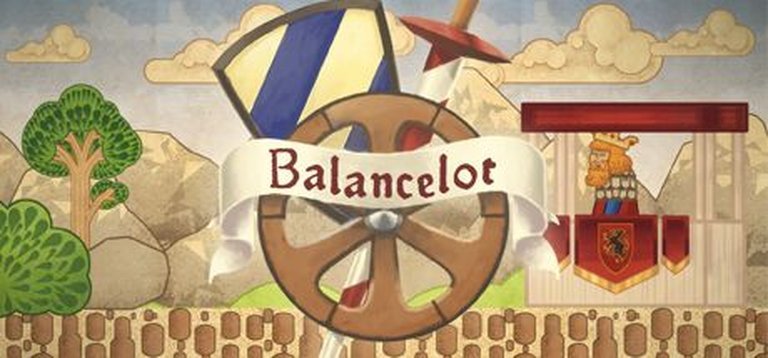
Balancelot’s art style is its strongest asset. The game’s hand-drawn aesthetic evokes the look of a medieval tapestry brought to life, with soft pastel colors and exaggerated character designs. The squire’s unicycle wobbles with a cartoonish elasticity, and the enemies—ranging from snails to floating demonic suns—are rendered with a playful absurdity.
The environments shift from lush grasslands to dark dungeons, each with its own distinct palette. The animation is fluid, particularly in the way the unicycle’s wheel spins and the squire’s body contorts during falls. The game’s cutscenes, though brief, are charmingly animated, reinforcing the Monty Python influence.
Sound Design: A Fanfare of Frustration
The audio design complements the visuals with a mix of whimsical and ominous tones. The soundtrack consists of looping medieval-inspired tunes that, while repetitive, fit the game’s tone. The sound of the unicycle’s wheel squeaking and the squire’s bones crunching upon impact add a layer of dark humor to the proceedings.
Voice acting is minimal, with most dialogue delivered via text. The sound effects, particularly the squire’s grunts and the lance’s thrusts, are exaggerated for comedic effect. The overall audio experience is functional but unremarkable, serving primarily to enhance the game’s absurd atmosphere.
Atmosphere: A Kingdom of Chaos
Balancelot’s world is one of controlled chaos. The medieval setting is familiar, but the game’s commitment to its unicycle gimmick transforms it into something surreal. The juxtaposition of high-stakes jousting and the squire’s precarious mode of transport creates a tone that is both epic and ridiculous. The game doesn’t aim for immersion—it aims for laughter, and in that regard, it largely succeeds.
Reception & Legacy: A Cult Classic in the Making?
Critical and Commercial Reception
Balancelot’s reception was mixed but generally positive among players. On Steam, it holds a “Very Positive” rating (95% positive from 67 reviews), with players praising its unique premise and challenging gameplay. Critics, however, were more divided. Pure Nintendo gave the Switch version a 60/100, noting that “the originality is hit and miss,” while Switch Player scored it a harsh 20/100, calling it “an exercise in frustration.”
The game’s difficulty was a common point of contention. Some players embraced the challenge, likening it to Dark Souls or Super Meat Boy, while others found the controls too imprecise to justify the punishment. The lack of a restart button and the occasional physics inconsistencies were frequently cited as flaws.
Commercially, Balancelot was a modest success. Its $7.99 price point and inclusion in bundles like the Yogscast Jingle Jam helped it find an audience, though it never achieved mainstream recognition. The console ports, released in 2021, expanded its reach but did little to shift its niche appeal.
Influence and Legacy
Balancelot’s legacy is one of a cult favorite—a game that resonates deeply with a specific audience while remaining obscure to the broader gaming community. Its influence can be seen in the growing trend of physics-based platformers that prioritize absurdity over realism. Games like Totally Accurate Battle Simulator and Human: Fall Flat share Balancelot’s commitment to chaotic fun, though none have replicated its unique blend of medieval humor and unicycle-based torment.
The game’s development team, AnvilBird Interactive, has not released a follow-up, but Balancelot’s reception suggests that there is an appetite for more games in this vein. Its Steam community remains active, with players sharing tips, speedruns, and custom levels, a testament to its enduring appeal among those who embrace its challenges.
Conclusion: A Flawed but Unforgettable Ride
Balancelot is not a game for everyone. It is, by design, frustrating, punishing, and often unfair. Yet, it is also a game of remarkable charm, a testament to the power of a ridiculous premise executed with conviction. Its blend of Monty Python humor, Trials-like precision, and Dark Souls-inspired perseverance creates an experience that is as infuriating as it is exhilarating.
The game’s greatest strength is its commitment to its bit. The unicycle is not just a gimmick—it is the heart of the gameplay, the source of both its challenges and its humor. The hand-drawn art style and whimsical sound design further enhance its appeal, creating a world that feels both familiar and surreal.
Yet, Balancelot is not without its flaws. The physics can be inconsistent, the controls occasionally unresponsive, and the lack of a restart button feels like an oversight. For players who demand precision and fairness in their platformers, these issues may be dealbreakers. But for those who revel in the chaotic joy of mastering the unmasterable, Balancelot is a hidden gem.
In the pantheon of indie games, Balancelot occupies a unique space—a game that is simultaneously a love letter to medieval absurdity and a punishing test of skill. It may not be a masterpiece in the traditional sense, but it is a masterpiece of its own making: a wobbly, unicycle-riding odyssey that defies convention and embraces the joy of failure. For that alone, it deserves to be remembered.
Final Verdict: 7.5/10 – A flawed but fascinating experiment in absurdity and precision, Balancelot is a cult classic in the making.