
- Release Year: 2022
- Platforms: Linux, Macintosh, Windows
- Publisher: Abiding Bridge, Synstoria
- Developer: Synstoria
- Genre: Adventure, Romance, Visual novel
- Perspective: 3rd-person
- Game Mode: Single-player
- Gameplay: Moral choices, Visual novel
- Setting: Fantasy
- Average Score: 90/100
- Adult Content: Yes
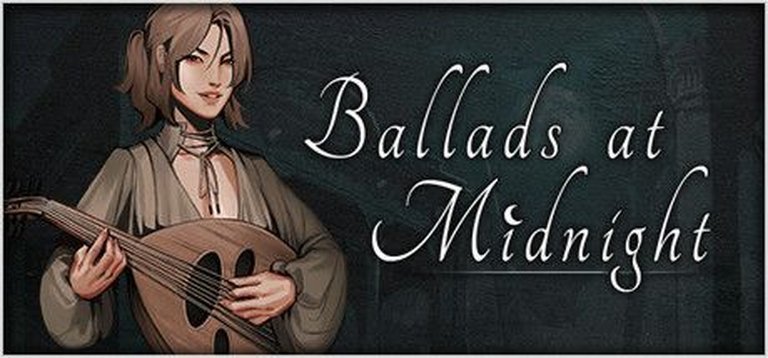
Description
Ballads at Midnight is a romantic fantasy visual novel that immerses players in a richly detailed world of enigmatic darkness, amusing banter, and passionate romance. Set in a dreamy, gothic-inspired universe, the game follows the story of Abigail, a young woman entangled in a mysterious and alluring relationship with the vampire Lucius. With vividly descriptive writing, enchanting music, and expressive voice acting, the game offers a short but captivating narrative experience. Players navigate through a series of choices that shape the story, leading to different paths and outcomes, all while exploring themes of love, identity, and the supernatural.
Gameplay Videos
Where to Buy Ballads at Midnight
PC
Ballads at Midnight Patches & Updates
Ballads at Midnight Guides & Walkthroughs
Ballads at Midnight Reviews & Reception
metacritic.com (88/100): A well-polished, complete VN experience from beginning to end.
sweetnspicyreviews.com : An excellently-written enemies-to-lovers tale about a defiant, quick-witted bard who captures the interest of a bored, lonely vampire.
opencritic.com (88/100): A short, enjoyable romantic fantasy VN.
steambase.io (94/100): A delightful little morsel to sink your teeth and time into.
Ballads at Midnight: A Masterclass in Narrative Intimacy and Atmospheric Storytelling
Introduction
In the crowded landscape of indie visual novels, Ballads at Midnight emerges as a rare gem—a game that transcends its modest origins as a NaNoRenO 2022 jam entry to deliver a deeply affecting, thematically rich, and aesthetically refined experience. Developed by Synstoria and published by Abiding Bridge, this dark fantasy romance visual novel (VN) is a testament to the power of focused storytelling, where every element—from its razor-sharp dialogue to its hauntingly beautiful soundtrack—serves a singular vision. At its core, Ballads at Midnight is a character-driven tale of two broken souls finding solace in each other’s company, wrapped in the trappings of gothic romance and political intrigue. It is a game that understands the weight of words, the power of silence, and the transformative potential of art—both in its narrative and its execution.
Development History & Context
Ballads at Midnight was born from the creative crucible of NaNoRenO 2022, a month-long game jam challenging developers to create a visual novel in just 30 days. Spearheaded by Synstoria, a small but ambitious studio known for their work on Imperial Grace, the project assembled a talented team of collaborators, including lead writer Wudgeous (Herotome), artist Arrapso, and composers Shar Joyner and Eliana Zebro. The constraints of the jam forced the team to distill their vision into its purest form, resulting in a tightly woven narrative that eschews the bloated runtimes and superficial branching paths of many commercial VNs in favor of depth, precision, and emotional resonance.
The game’s development was a study in efficiency and collaboration. Johanna Markus (credited as Ayael) served as director, UI designer, and programmer, ensuring a cohesive visual and interactive experience. The Ren’Py engine, a staple of indie VN development, provided the technical backbone, while the team’s use of free assets (such as fonts from DaFont and sound effects from Freesound) and open-source tools underscored the game’s indie spirit. Despite these constraints, Ballads at Midnight never feels cheap or rushed. Instead, it embraces its limitations, using them to craft a story that is intimate in scope but vast in emotional impact.
Released on April 1, 2022, for Windows, macOS, and Linux, the game quickly garnered attention for its polished presentation and mature storytelling. A subsequent update in July 2022 added a new ending, further refining the narrative and expanding its thematic reach. The game’s reception on platforms like Steam and itch.io has been overwhelmingly positive, with players and critics alike praising its writing, voice acting, and atmospheric design.
Narrative & Thematic Deep Dive
Plot and Structure
Ballads at Midnight follows Abigail, a sharp-tongued bard exiled to a remote castle as punishment for a crime against the crown. Her expected fate—being devoured by the castle’s vampiric inhabitant—is subverted when she discovers that Lucius, the vampire in question, is not a ravenous monster but a centuries-old immortal suffering from profound ennui. The two strike a bargain: Abigail will sing Lucius a hundred ballads over a hundred nights in exchange for her freedom. What begins as a transactional arrangement soon blossoms into a complex, emotionally charged relationship, as the two outcasts find solace in each other’s company.
The game’s structure is deceptively simple. Over the course of seven chapters, Abigail and Lucius engage in a dance of wit, revelation, and reluctant affection. The narrative unfolds primarily through dialogue, with Abigail’s internal monologues providing insight into her thoughts and motivations. The pacing is deliberate, allowing the relationship between the two protagonists to develop organically. Early chapters are dominated by banter and mutual distrust, but as the story progresses, the layers of sarcasm and defensiveness peel away, revealing the vulnerability beneath.
The game’s branching narrative is subtle but impactful. While most choices are flavorful—allowing players to shape Abigail’s tone (flirtatious, sarcastic, or earnest)—a handful of critical decisions determine the story’s trajectory. These choices are not telegraphed as “major” but instead feel like natural extensions of Abigail’s character, making the branching paths feel organic rather than forced. The game features three primary endings:
- Departure: Abigail leaves the castle early, abandoning Lucius to his solitude.
- Bliss: Abigail and Lucius remain together, either as mortal and vampire or as a newly turned vampire couple.
- Freedom: Abigail and Lucius uncover the dark secrets of the castle and the kingdom, leading to a bittersweet but hopeful resolution.
Each ending is thematically distinct, offering different perspectives on love, freedom, and sacrifice. The “Freedom” ending, in particular, is a masterstroke of narrative subversion, upending expectations and providing a satisfying payoff to the game’s underlying mysteries.
Characters
Abigail is a revelation—a protagonist who is neither a blank slate nor a flawless paragon. She is witty, rebellious, and unapologetically herself, with a sharp tongue that often gets her into trouble. Her backstory, revealed gradually through dialogue and flashbacks, paints a picture of a woman who has survived through sheer force of will, using her music and her words as both shield and weapon. Abigail’s voice acting, provided by Megan Youmans, is a standout feature, capturing her sarcasm, vulnerability, and determination with equal aplomb.
Lucius, the vampire, is equally compelling. Far from the brooding, Byronic archetype, Lucius is a man (or rather, an immortal) who has seen too much and felt too little. His dry wit and world-weariness mask a deep loneliness, and his interactions with Abigail reveal a man who is both fascinated and terrified by her vitality. Eric Navarro’s voice performance is pitch-perfect, conveying Lucius’s mix of arrogance, vulnerability, and quiet desperation.
The chemistry between Abigail and Lucius is the game’s beating heart. Their relationship is built on a foundation of mutual respect and intellectual equality, with their banter serving as both foreplay and emotional armor. The game’s writing excels in these moments, with dialogue that crackles with tension, humor, and unspoken longing.
Themes
Ballads at Midnight is a thematically dense work, exploring ideas of freedom, identity, and the redemptive power of art. At its core, the game is a meditation on the nature of captivity—both physical and emotional. Abigail is a prisoner of the castle, but she is also a prisoner of her past, her trauma, and her own defensiveness. Lucius, meanwhile, is trapped by his immortality, his isolation, and his inability to connect with the world around him. Their relationship becomes a means of escape, a way to break free from the chains that bind them.
The game also delves into the transformative power of storytelling. Abigail’s ballads are not just a currency for her freedom; they are a means of communication, a way to bridge the gap between herself and Lucius. Through her music, she shares her experiences, her fears, and her hopes, and in doing so, she helps Lucius rediscover his own humanity. The game’s original songs, performed by Youmans, are a highlight, with lyrics that reflect the themes of the narrative and melodies that linger long after the credits roll.
Another key theme is the idea of found family. Abigail and Lucius, both outcasts in their own ways, find in each other a sense of belonging that they have long been denied. Their relationship is not just romantic but deeply platonic, built on a shared understanding of what it means to be alone in the world. The game’s exploration of trauma and healing is handled with sensitivity and nuance, avoiding the pitfalls of melodrama or exploitation.
Gameplay Mechanics & Systems
Ballads at Midnight is a traditional visual novel, with gameplay centered around reading, making choices, and experiencing the story. The game’s mechanics are simple but effective, with a few standout features that elevate the experience.
Core Gameplay Loop
The core loop of Ballads at Midnight is straightforward: read dialogue, make choices, and progress through the story. The game’s writing is so engaging, however, that this simplicity never feels like a drawback. The pacing is excellent, with each chapter introducing new revelations, deepening the relationship between Abigail and Lucius, and building toward the game’s climactic moments.
Choice and Consequence
While Ballads at Midnight is not a choice-heavy game, the decisions it does present are meaningful and impactful. Most choices are flavorful, allowing players to shape Abigail’s personality and tone without altering the broader narrative. A handful of critical choices, however, determine the story’s trajectory, leading to different endings and revelations.
One of the game’s most innovative features is its use of character sprites in choice menus. As players hover over different dialogue options, Abigail’s facial expression changes to reflect the tone of the choice. This subtle but effective mechanic provides immediate feedback, helping players understand the emotional weight of their decisions without breaking immersion.
User Interface and Accessibility
The game’s UI is a masterclass in elegant design. The serif font, regal-like cursive swirls, and graceful animations create an atmosphere of gothic sophistication, perfectly complementing the game’s dark fantasy setting. The UI is also highly functional, with intuitive menus, clear navigation, and a variety of accessibility options.
Players can adjust text speed, skip read or unread text, and choose between default and OpenDyslexic fonts. The game also features a history log, allowing players to revisit previous dialogue, and a save system that is both flexible and user-friendly. The lack of a flow chart is a minor omission, but given the game’s short length and linear structure, it is not a significant drawback.
Voice Acting and Sound Design
The partial voice acting in Ballads at Midnight is a standout feature, with Megan Youmans and Eric Navarro delivering performances that bring Abigail and Lucius to life. Youmans’s Abigail is a revelation—sarcastic, vulnerable, and fiercely independent—while Navarro’s Lucius is a perfect blend of dry wit, world-weariness, and quiet desperation. The voice acting is not full, but the scenes that are voiced are chosen with care, ensuring that the most emotionally resonant moments are given the weight they deserve.
The game’s soundtrack, composed by Shar Joyner, is equally impressive. The original songs, performed by Youmans, are hauntingly beautiful, with lyrics that reflect the game’s themes and melodies that linger in the mind. The background music is equally effective, using classical instruments to create a rich, atmospheric soundscape that enhances the game’s gothic tone.
World-Building, Art & Sound
Setting and Atmosphere
Ballads at Midnight is set in the kingdom of Illuvia, a dark fantasy realm ruled by a cruel and manipulative queen. The game’s primary location is the abandoned castle where Lucius is imprisoned, a gothic edifice surrounded by a moat that serves as both a physical and symbolic barrier. The castle is a character in its own right, with its crumbling walls, shadowy corridors, and hidden secrets reflecting the emotional states of its inhabitants.
The game’s world-building is subtle but effective. While the broader politics of Illuvia are only hinted at, the details that are revealed—such as the queen’s tyranny and the fate of previous exiles—paint a vivid picture of a world steeped in oppression and despair. The castle itself is a microcosm of this world, a place where the past and present collide, and where the boundaries between captor and captive blur.
Visual Design
The art direction in Ballads at Midnight is a triumph of gothic elegance. Arrapso’s character sprites are semi-realistic, with clean linework, harmonious color palettes, and expressive facial animations. Abigail and Lucius are both visually striking, with designs that reflect their personalities—Abigail’s practical, travel-worn attire contrasting with Lucius’s regal, old-world elegance.
The background art is equally impressive, with fluid transitional animations and overlay effects that create a sense of depth and atmosphere. The castle’s interiors are rendered in moody, shadowy tones, while the exterior scenes—such as the courtyard where Abigail and Lucius dance—are bathed in the soft glow of moonlight. The game’s use of light and shadow is particularly effective, with Lucius often depicted in darkness, his features obscured, while Abigail is illuminated, her expressions clear and vivid.
Sound and Music
The sound design in Ballads at Midnight is understated but effective. The game’s sound effects—such as the rustle of fabric, the creak of doors, and the distant howl of wind—are used sparingly, creating a sense of immersion without overwhelming the player. The voice acting, as previously mentioned, is a standout feature, with Youmans and Navarro delivering performances that are both nuanced and emotionally resonant.
The soundtrack, composed by Shar Joyner, is a masterclass in atmospheric composition. The original songs, performed by Youmans, are hauntingly beautiful, with lyrics that reflect the game’s themes of love, loss, and redemption. The background music is equally effective, using classical instruments—such as strings, piano, and harpsichord—to create a rich, gothic soundscape that enhances the game’s tone and mood.
Reception & Legacy
Ballads at Midnight was met with critical acclaim upon its release, with reviewers praising its writing, voice acting, and atmospheric design. RPGFan awarded the game an 88%, calling it “a short, enjoyable romantic fantasy VN” and highlighting its “gorgeous artwork, lovely music and voice acting, [and] high amount of polish.” NookGaming similarly lauded the game, describing it as “a short and sweet vampire romance OELVN served elegantly with enigmatic darkness, amusing banter, and romantic kisses.”
Player reception has been equally positive, with the game earning a “Very Positive” rating on Steam based on over 400 reviews. Players have praised the game’s characters, writing, and emotional depth, with many noting that the game’s short length belies its narrative ambition. The game’s themes of trauma, healing, and found family have resonated deeply with players, with many describing it as a “hidden gem” in the visual novel genre.
Ballads at Midnight has also had a significant impact on the indie VN community, demonstrating that a game created in a month can rival commercial releases in terms of quality and emotional resonance. Its success has helped to elevate the profile of Synstoria, with many players eagerly anticipating the studio’s future projects, such as Imperial Grace.
Conclusion
Ballads at Midnight is a triumph of indie game development—a game that transcends its modest origins to deliver a deeply affecting, thematically rich, and aesthetically refined experience. Its strengths lie in its writing, its characters, and its atmospheric design, all of which combine to create a story that is both intimate and epic in scope.
The game’s exploration of freedom, identity, and the redemptive power of art is handled with sensitivity and nuance, avoiding the pitfalls of melodrama or exploitation. Its characters are complex, flawed, and deeply human, and their relationship is built on a foundation of mutual respect and intellectual equality. The game’s gothic aesthetic, haunting soundtrack, and partial voice acting further enhance its emotional impact, creating an experience that lingers long after the credits roll.
In a genre often dominated by superficial romances and bloated runtimes, Ballads at Midnight stands as a testament to the power of focused storytelling. It is a game that understands the weight of words, the power of silence, and the transformative potential of art—both in its narrative and its execution. For fans of visual novels, dark fantasy, and character-driven storytelling, Ballads at Midnight is an essential experience—a masterclass in narrative intimacy and atmospheric storytelling.
Final Verdict: 9.5/10 – A Masterpiece of Indie Storytelling