
- Release Year: 2016
- Platforms: Android, iPad, iPhone, Windows
- Genre: Action, Rolling ball
- Perspective: Diagonal-down
- Game Mode: Single-player
Description
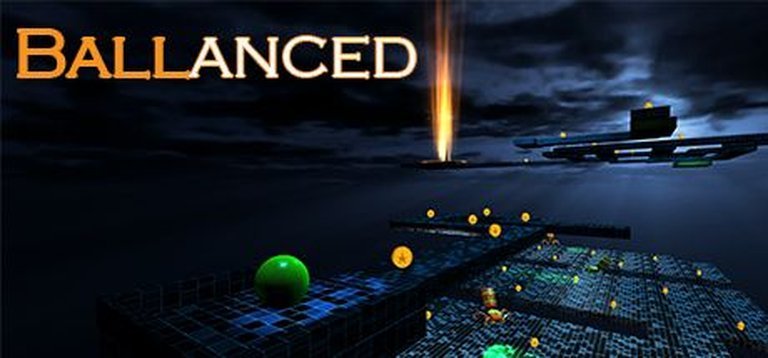
Ballanced is a 3D puzzle game where players navigate a rolling ball through 13 increasingly challenging levels, transforming it into wood, stone, or paper to solve physics-based puzzles. Each material alters the ball’s weight and interactions, requiring strategic use to overcome obstacles like bridges, rails, and ventilators. The game features checkpoints, power-ups, and intricate level designs that test precision and problem-solving skills.
Ballanced Patches & Updates
Ballanced Mods
Ballanced Guides & Walkthroughs
Ballanced: A Modern Homage to a Classic, or a Misunderstood Identity?
Introduction: The Confusion of Names and Legacies
The name Ballanced evokes an immediate association with Ballance, the beloved 2004 puzzle-platformer developed by Cyparade and published by Atari. This connection is not coincidental—Ballanced is a spiritual successor, a modern reinterpretation of the rolling-ball genre that Ballance helped define. However, the two games are distinct entities, each with its own design philosophy, technological foundation, and cultural impact. This review will dissect Ballanced in its entirety, exploring its development, gameplay, reception, and legacy, while clarifying its relationship to its namesake.
Development History & Context: A Game Born from Nostalgia and Innovation
Ballanced was developed by an independent studio and released in 2016 across multiple platforms, including Android, iOS, and Windows. Unlike Ballance, which was built using the Virtools engine, Ballanced leverages the Unity engine, a modern toolset that allows for greater flexibility in design and cross-platform compatibility. The game’s creation was driven by a desire to revive the rolling-ball genre for contemporary audiences, particularly those embracing virtual reality (VR) technology.
The developer, Syblisco, has openly acknowledged the influence of Marble Madness and Ballance on Ballanced, describing it as a “modern techno genre” of those classics. However, Ballanced was not initially conceived as a direct remake or sequel. Instead, it was designed as a standalone experience that could appeal to both nostalgic fans of the genre and newcomers alike. The decision to name the game Ballanced—with an extra “n”—was a deliberate attempt to differentiate it from Ballance, though the similarity in names has led to persistent confusion among players.
Narrative & Thematic Deep Dive: Minimalism in a Floating World
Ballanced eschews traditional narrative structures, opting instead for a minimalist approach that focuses purely on gameplay. There are no characters, no dialogue, and no overarching plot. The player is simply a ball navigating a series of floating platforms, avoiding obstacles, and collecting coins. This lack of narrative is not a flaw but a deliberate design choice, one that aligns with the genre’s tradition of emphasizing mechanics over storytelling.
Thematically, Ballanced explores the concept of balance—both literal and metaphorical. The game’s levels are suspended in a vast, empty void, with only the occasional glimpse of Earth or Mars in the distance. This isolation reinforces the player’s focus on precision and control, as even the slightest misstep can send the ball tumbling into the abyss. The game’s aesthetic is clean and geometric, with bright colors and simple shapes that evoke a sense of order amidst chaos.
Gameplay Mechanics & Systems: Precision, Physics, and Progression
At its core, Ballanced is a physics-based puzzle game. The player controls a ball that must navigate through 24 increasingly difficult levels, each filled with obstacles such as gaps, moving platforms, and environmental hazards like wind and rain. The game’s controls are intuitive, with the ball responding to tilts and turns of the controller (or VR headset, in the case of the VR version). However, mastering these controls requires practice, as the ball’s momentum and inertia play a crucial role in determining success or failure.
One of Ballanced’s most innovative features is its use of dynamic physics. Unlike Ballance, which relied on predefined material properties (wood, stone, paper), Ballanced introduces environmental factors like wind and rain that can alter the ball’s trajectory. These elements add an extra layer of challenge, forcing players to adapt their strategies on the fly. Additionally, the game includes 72 reward-balls to unlock, providing incentives for exploration and replayability.
The game’s difficulty curve is well-balanced (pun intended), with early levels serving as tutorials for basic mechanics and later levels introducing more complex puzzles. However, the lack of a checkpoint system can be frustrating, as a single mistake can force players to restart an entire level. This design choice harkens back to the punishing difficulty of classic arcade games, but it may alienate modern players accustomed to more forgiving mechanics.
World-Building, Art & Sound: A Floating Dream
Ballanced’s visual design is a standout feature. The game’s levels are suspended in a vast, open sky, with vibrant colors and geometric shapes that create a sense of weightlessness. The art style is reminiscent of Ballance, but with a more modern polish. The use of Unity’s lighting and particle effects enhances the game’s atmosphere, making each level feel like a self-contained diorama.
The sound design is equally impressive. The game’s soundtrack is dynamic, shifting in tone and intensity based on the player’s actions. Collecting coins, activating switches, and completing levels are accompanied by satisfying audio cues that reinforce the sense of accomplishment. The ambient sounds—such as the hum of wind or the patter of rain—further immerse the player in the game’s floating world.
Reception & Legacy: A Niche Success with Room to Grow
Ballanced received a mixed reception upon release. While critics praised its faithful recreation of the rolling-ball genre and its modern enhancements, some found it lacking in innovation. The game’s similarity to Ballance led to comparisons that were not always favorable, particularly among fans of the original. However, Ballanced carved out its own niche, appealing to players who enjoyed the genre’s core mechanics but wanted a fresh take.
The game’s legacy is still evolving. Its release on Steam and GOG in 2024, alongside the re-release of Ballance, has sparked renewed interest in the rolling-ball genre. Ballanced’s emphasis on VR and modern physics has also influenced subsequent games in the genre, proving that there is still room for innovation within this classic framework.
Conclusion: A Worthy Homage with Its Own Identity
Ballanced is not Ballance, nor does it aspire to be. Instead, it is a loving homage to the rolling-ball genre, one that builds upon the foundations laid by its predecessors while introducing modern twists. Its minimalist narrative, precise physics, and striking visuals make it a standout title in a niche genre. While it may not have the same cultural impact as Ballance, Ballanced is a worthy successor that deserves recognition for its contributions to the puzzle-platformer landscape.
For fans of Ballance and Marble Madness, Ballanced offers a nostalgic yet fresh experience. For newcomers, it serves as an excellent introduction to the genre’s timeless appeal. Whether played in VR or on a traditional screen, Ballanced is a game that rewards patience, precision, and a love for the art of balance.
Final Verdict: 7.5/10 – A solid modern take on a classic genre, with room for improvement but plenty of charm.