
- Release Year: 2021
- Platforms: Linux, Windows
- Publisher: Amaxang Games
- Developer: Amaxang Games
- Genre: Action
- Perspective: Side view
- Game Mode: Single-player
- Gameplay: Platform
- Setting: Fantasy
- Average Score: 61/100
Description
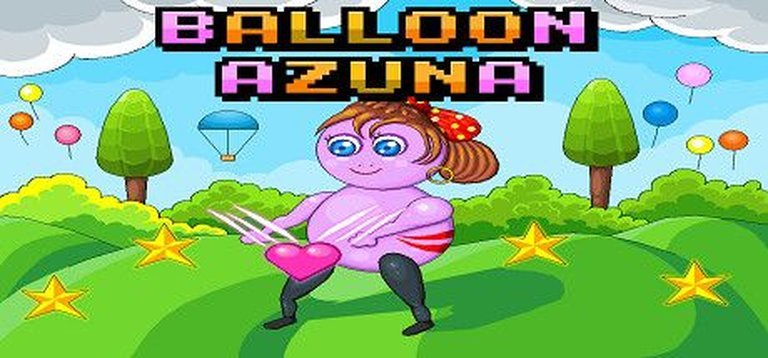
Balloon Azuna is a 2D platformer set in a fantasy world where the protagonist, Azuna, is a Balloon Girl with the unique ability to change the minds of her enemies. Her mission is to rescue her brother, navigating through challenging levels and overcoming obstacles with her special powers. The game features side-scrolling action, pixel graphics, and a colorful, retro-inspired aesthetic, making it both fun and engaging for players.
Where to Buy Balloon Azuna
PC
Balloon Azuna Patches & Updates
Balloon Azuna Guides & Walkthroughs
Balloon Azuna Reviews & Reception
steambase.io (43/100): Balloon Azuna has achieved a Steambase Player Score of 43 / 100, based on 7 total reviews.
sockscap64.com (80/100): Balloon Azuna is a 2D Platform game based on the story of Azuna, a Balloon Girl, whose mission is to rescue her brother using her special ability of changing minds of the enemies.
Balloon Azuna: A Solo Dev’s Ambitious, Flawed Love Letter to Retro Platforming
Introduction
In an era defined by indie darlings like Hollow Knight and Celeste, Balloon Azuna (2021) arrives as a curious artifact—a pixelated passion project crafted entirely by one developer, Anamik Majumdar. This 2D platformer touts a whimsical premise: a balloon-themed heroine fighting militaristic forces with heart-shaped magic. While its ambition is commendable, Balloon Azuna exists in a nebulous space between charmingly retro and frustratingly underbaked. This review dissects its triumphs and tribulations, arguing that the game is a testament to solo development’s potential and pitfalls in an oversaturated market.
Development History & Context
Studio & Vision
Developed and published under Majumdar’s imprint, Amaxang Games, Balloon Azuna is one of 63 titles in the developer’s portfolio, which leans heavily into low-budget, experimental indie projects. Majumdar’s vision was clear: to create a family-friendly platformer blending light puzzle-solving with non-violent combat. The game was built using GameMaker Studio, a tool favored by solo developers for its accessibility, albeit with limitations in polish and scalability.
Technological Constraints
The game’s modest specs—requiring only 50MB of storage and a dual-core 1GHz processor—reflect its minimalist design. While this ensures accessibility, it also highlights the lack of technical ambition. Textures are rudimentary, animations are stiff, and physics feel floaty, all hallmarks of a project constrained by time and resources.
Gaming Landscape
Released in September 2021, Balloon Azuna entered a market dominated by precision-platformers like Shovel Knight and narrative-driven indies. Its “cute” aesthetic and lightweight mechanics struggled to stand out, further buried by its lack of marketing and an overwhelmingly quiet launch.
Narrative & Thematic Deep Dive
Plot & Characters
The story follows Azuna, a member of a paramilitary group whose brother is imprisoned by a secret military faction experimenting on “military tech.” Armed only with her ability to “change minds” via heart-shaped projectiles, she infiltrates the facility to rescue him.
Themes
– Non-violent Resistance: Azuna’s magic symbolizes empathy over aggression, subverting typical “heroic violence” tropes.
– Family Loyalty: The narrative hinges on sacrifice, though the emotional stakes are undermined by stilted dialogue and minimal character development.
Missed Opportunities
The premise—a militarized dystopia clashing with cartoonish magic—could have explored deeper themes (e.g., blind obedience vs. free will). Instead, it settles for a barebones rescue mission, its potential diluted by repetitive exposition.
Gameplay Mechanics & Systems
Core Loop
Players traverse 15 side-scrolling levels, defeating enemies by converting them with heart bullets, dodging traps (spikes, lasers), and collecting power-ups (health, magic boxes).
Innovations & Flaws
– Unique Mechanic: The mind-control mechanic encourages tactical play—converted enemies briefly aid Azuna.
– Repetition: Enemy variety is limited (soldiers, drones), and levels recycle ideas without escalation.
– Janky Controls: Jump physics feel inconsistent, and hitbox detection is unreliable, leading to unfair deaths.
Progression & UI
– No Character Upgrades: Azuna’s abilities remain static, reducing long-term incentive.
– Spartan UI: The HUD is functional but lacks flair, with generic fonts and uninspired menus.
World-Building, Art & Sound
Visual Direction
The pixel art is charmingly rudimentary, with a pastel color palette and whimsical character designs. However, environments are disappointingly bland—industrial labs and prisons lack detail or interactivity.
Atmosphere
The juxtaposition of “cute” aesthetics (balloons, hearts) with dystopian militarism creates an uneven tone. Is this a satire of authoritarianism or a children’s fable? The game never commits.
Sound Design
Music, outsourced to an unknown composer, is forgettable but inoffensive. Sound effects—like the poink of heart bullets—add minor levity but lack impact.
Reception & Legacy
Critical Response
The game garnered negligible press attention, with no professional reviews on Metacritic or MobyGames. Steam user reviews are mixed:
– Positive: Praise for its “old-school vibes” and “unique mechanic” (Steam user review).
– Negative: Criticisms of “clunky controls” and “shallow level design” (Steam user review).
Commercial Performance
Priced at $2.99 and bundled in Amaxang’s Mega Indie Platformer Bundle, sales were likely modest. Its SteamDB metrics show fewer than 100 owners, per Steambase.
Legacy
While Balloon Azuna hasn’t influenced the genre, it exemplifies the challenges solo developers face in balancing scope and polish. Its inclusion in indie bundles ensures it remains a curiosity rather than a classic.
Conclusion
Balloon Azuna is a fascinating case study in indie ambition versus execution. Its heart-based combat and quirky premise hint at creativity, but technical flaws and repetitive design sap its potential. For completists of oddball platformers, it’s a brief diversion; for others, it’s a reminder that even the most earnest visions require refinement. In video game history, it will endure not as a masterpiece but as a footnote—a cult oddity in the vast sea of indie experiments.
Final Verdict: ★★☆☆☆ (2/5)
A noble effort hamstrung by its limitations, best suited for die-hard retro enthusiasts.