
- Release Year: 2017
- Platforms: Windows
- Genre: Action
- Perspective: Behind view
- Game Mode: Online PVP, Single-player
- Gameplay: Shooter
- Setting: Western
- Average Score: 38/100
Description
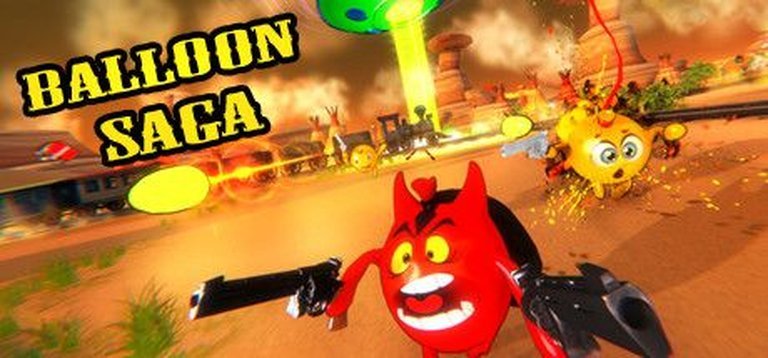
Balloon Saga is a whimsical multiplayer shooter set in a Western-themed world where players control gun-wielding balloons battling each other amid an alien invasion. Players earn coins by defeating opponents, which can be used to upgrade stats like fire rate and flight speed, blending chaotic combat with lighthearted humor and unique mechanics.
Gameplay Videos
Where to Buy Balloon Saga
PC
Balloon Saga Guides & Walkthroughs
Balloon Saga Reviews & Reception
steambase.io (35/100): Balloon Saga has earned a Player Score of 35 / 100.
completionist.me (41.67/100): Restricted 41.67 Game Rating
Balloon Saga: A Whimsical, Flawed, and Forgotten Multiplayer Oddity
Introduction: The Bizarre Ballad of Balloon Saga
In the vast, often homogenous landscape of multiplayer shooters, Balloon Saga (2017) stands as a peculiar outlier—a game that defies convention by replacing gritty soldiers with floating, gun-toting balloons in a Wild West setting besieged by aliens. Developed by Alexey Glinskiy and published under the indie label hede, this Unity-engineered title is a chaotic, comedic, and ultimately flawed experiment in absurdity. It is a game that, on paper, should not work—yet, in its brief moments of madness, it stumbles upon something uniquely charming.
This review seeks to dissect Balloon Saga in its entirety: its development context, its narrative (or lack thereof), its mechanics, its reception, and its legacy. Was it a misunderstood gem, a half-baked novelty, or simply a curiosity lost to the annals of Steam’s indie glut? Let us inflate the discourse and find out.
Development History & Context: The Birth of a Balloon-Based Bloodbath
The Studio and the Vision
Balloon Saga was the brainchild of Alexey Glinskiy, an indie developer whose portfolio includes a handful of niche titles, often characterized by their quirky premises and modest production values. The game emerged during a period when indie developers were increasingly experimenting with asymmetrical multiplayer experiences, blending genres in ways that major studios would not dare. Glinskiy’s vision was simple: What if balloons had guns? And what if those balloons fought in the Wild West while aliens invaded?
The result was a game that defied easy categorization—a third-person shooter with physics-based movement, progression mechanics, and a comedy-driven narrative. It was released on July 28, 2017, exclusively for Windows via Steam, positioning itself as a budget-friendly multiplayer romp in an era dominated by Overwatch, Fortnite, and PlayerUnknown’s Battlegrounds.
Technological Constraints and the Indie Struggle
Built in Unity, Balloon Saga was constrained by the limitations of a small team and a tight budget. The game’s visuals are simple, cartoonish, and functional, prioritizing gameplay over graphical fidelity. The physics engine, while serviceable, occasionally led to janky collisions and unpredictable balloon behavior—a double-edged sword that sometimes enhanced the chaos but often frustrated players.
The Steam Early Access model was considered, but the game launched as a full release, a decision that may have contributed to its mixed reception. Without the iterative feedback of Early Access, Balloon Saga arrived as a raw, unpolished experience, lacking the refinement of its more mainstream competitors.
The Gaming Landscape of 2017
2017 was a pivotal year for multiplayer shooters:
– PlayerUnknown’s Battlegrounds (PUBG) popularized the battle royale genre.
– Overwatch dominated the hero shooter market.
– Fortnite was transitioning from a cooperative survival game to a cultural phenomenon.
In this environment, Balloon Saga was a tiny, bizarre blip—a game that didn’t fit neatly into any established mold. It wasn’t a battle royale, nor was it a competitive esports title. Instead, it was a casual, comedic shooter that relied on sheer absurdity to carve out a niche. Unfortunately, in a market saturated with polished, high-budget experiences, Balloon Saga struggled to find an audience.
Narrative & Thematic Deep Dive: Balloons, Bullets, and B-Movie Camp
Plot: A Thin Veneer of Western Sci-Fi Madness
Balloon Saga does not pretend to be a story-driven experience. Its premise is deliberately ridiculous:
– Players control sentient, armed balloons in a Wild West town.
– An alien invasion disrupts the peace, forcing balloons to engage in gunfights, traps, and chaotic skirmishes.
– The goal? Survive, earn coins, upgrade stats, and dominate opponents.
There is no deep lore, no character arcs, and no emotional stakes—just pure, unfiltered silliness. The game’s comedy narrative is its strongest thematic element, embracing the absurdity of its premise without apology.
Characters and Dialogue: Emoticons as Avatars
Rather than traditional character designs, Balloon Saga allows players to customize their balloons with emoticons—happy, sad, angry, or deranged faces that float across the battlefield. This choice reinforces the game’s minimalist, meme-like aesthetic, where personality is conveyed through exaggerated expressions rather than dialogue or backstory.
The lack of voice acting or substantial text means that narrative is secondary to gameplay. The game’s humor is visual and situational—watching a smiling balloon get popped by a cactus or an alien laser is the closest thing to a punchline.
Themes: Absurdity as a Design Philosophy
Balloon Saga is, at its core, a celebration of chaos. Its themes revolve around:
1. The Absurdity of Violence – Gunfights between balloons in a Western town are inherently ridiculous, subverting the seriousness of traditional shooters.
2. Player Agency in a Silly World – The game encourages experimental, unpredictable play, where physics glitches and random events can turn the tide of battle.
3. Minimalism as a Strength – By stripping away complex narratives and realistic graphics, Balloon Saga focuses on pure, unadulterated fun—even if that fun is fleeting.
Gameplay Mechanics & Systems: Floating, Shooting, and Upgrading
Core Gameplay Loop: Shoot, Earn, Upgrade
Balloon Saga is a multiplayer shooter with the following structure:
1. Matches take place in Western-themed arenas filled with traps, obstacles, and power-ups.
2. Players shoot each other using a variety of weapons, earning coins for kills.
3. Coins are spent on upgrades, such as:
– Fire rate
– Flight speed
– Durability
– Special abilities
The progression system is simple but effective, giving players a sense of tangible improvement without overwhelming complexity.
Movement and Physics: The Joy (and Frustration) of Floating
Unlike traditional shooters, Balloon Saga incorporates physics-based movement:
– Balloons float and bob, affected by wind, gravity, and collisions.
– Players can jump, hover, and dash, leading to unpredictable, often hilarious movement.
– Traps (cacti, spikes, alien lasers) add environmental hazards that can instantly pop balloons.
This system is both innovative and flawed:
– Pros:
– Creates unique, emergent gameplay moments.
– Encourages creative movement strategies.
– Cons:
– Janky collisions can lead to unfair deaths.
– Lack of precision frustrates competitive players.
Combat and Weapons: Simple but Effective
The game features a small arsenal of weapons, including:
– Pistols (basic, fast-firing)
– Shotguns (high damage, short range)
– Rifles (long-range, slower fire rate)
– Special weapons (alien tech, explosives)
Combat is fast-paced and chaotic, with no reload mechanics—players can fire continuously, emphasizing spammy, arcade-style shooting over tactical precision.
Multiplayer Modes: A Lack of Depth
Balloon Saga offers standard multiplayer modes:
– Deathmatch (free-for-all)
– Team Deathmatch (cooperative)
– Survival (wave-based alien hordes)
However, the lack of variety in maps and modes means that replayability is limited. Without a progression-driven meta or esports potential, the game struggles to retain players beyond initial curiosity.
UI and Accessibility: Functional but Unpolished
The user interface is minimalist and functional, but suffers from:
– Cluttered HUD elements (health, coins, upgrades).
– Unintuitive menus (especially in early versions).
– Lack of tutorials, forcing players to learn through trial and error.
World-Building, Art & Sound: A Cartoonish Wild West Meets Sci-Fi
Setting: A Spaghetti Western for Balloons
The game’s Wild West aesthetic is bright, colorful, and exaggerated, with:
– Salons, sheriff’s offices, and desert canyons serving as battle arenas.
– Alien ships and lasers clashing with revolvers and dynamite.
– Traps like cacti, rolling boulders, and quicksand adding environmental danger.
The art style is low-poly, cartoonish, and charming, evoking Saturday morning cartoons more than Red Dead Redemption.
Sound Design: A Mismatched but Memorable Soundtrack
The audio experience is eclectic:
– Gunfire sounds comically exaggerated, fitting the game’s tone.
– The soundtrack blends Western twang with electronic beats, creating a surreal, anachronistic vibe.
– Voice lines are nonexistent, relying on sound effects and music to convey mood.
While not audiophiles’ dream, the sound design enhances the game’s absurdity.
Reception & Legacy: A Game That Popped Too Soon
Critical Reception: Mostly Negative, But Not Without Fans
Balloon Saga received little critical attention, with only a handful of reviews:
– Gameplay (Benelux) gave it an unscored but positive mention, praising its absurd premise and low price point.
– Steam reviews are overwhelmingly negative (35/100), with complaints about:
– Janky physics
– Lack of depth
– Technical issues (performance drops, bugs)
– Metacritic has no critic reviews, and user reviews are nonexistent.
Despite this, a small cult following emerged, appreciating the game’s unique charm and chaotic multiplayer.
Commercial Performance: A Niche Failure
The game failed to gain traction, likely due to:
– Lack of marketing (indie obscurity).
– Steam’s oversaturated market (competing with AAA shooters).
– Technical limitations (32-bit incompatibility, performance issues).
Legacy: A Footnote in Indie History
Balloon Saga is not influential, but it serves as a fascinating case study in:
– How absurdity can be a double-edged sword (fun but limiting).
– The challenges of indie multiplayer games (needing a dedicated community to thrive).
– The importance of polish (even the weirdest ideas need refinement).
It remains a curiosity—a game that could have been great with more support, but instead faded into obscurity.
Conclusion: A Flawed, Forgotten, but Fascinating Experiment
Balloon Saga is not a good game by conventional standards. It is janky, repetitive, and lacking in depth. Yet, within its chaotic, balloon-filled battles, there lies a spark of brilliance—a reminder that video games don’t always need to be serious, polished, or competitive to be memorable.
Final Verdict: 5/10 – A Cult Oddity Worth a Brief Look
- For: Players who enjoy absurd, physics-based shooters and don’t mind rough edges.
- Against: Those seeking deep mechanics, competitive balance, or narrative depth.
Balloon Saga is not a masterpiece, but it is a fascinating failure—one that deserves recognition for its bold, unapologetic weirdness. In a world of generic military shooters, a game about gunfighting balloons in the Wild West is, at the very least, refreshing.
Should you play it? Only if you’re curious about gaming’s stranger corners. Otherwise, it’s best left as a footnote in the annals of indie eccentricity.
Final Score: ★★☆☆☆ (2.5/5) – A Flawed but Fascinating Curio