
- Release Year: 2024
- Platforms: Quest, Windows
- Publisher: Fast Travel Games AB
- Developer: Smart Melon
- Genre: Action, Music, Simulation
- Perspective: 1st-person
- Game Mode: Online Co-op, Single-player
- Gameplay: Motion control, Music, rhythm
- Average Score: 80/100
- VR Support: Yes
Description
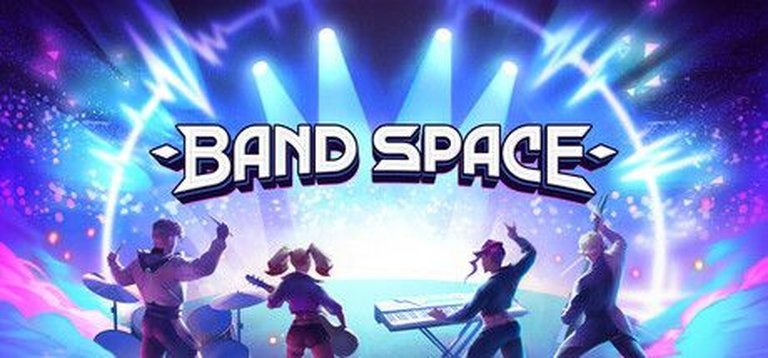
Band Space is a rhythm-based music game set in a virtual reality environment, where players can experience the thrill of performing in a band. Developed by Smart Melon and published by Fast Travel Games AB, the game offers a first-person perspective and supports motion controls, allowing players to immerse themselves in the music. With a focus on multiplayer gameplay, Band Space enables up to four players to collaborate online, creating a dynamic and interactive musical experience. The game features a variety of instruments and a diverse tracklist, aiming to provide a fresh take on the rhythm genre in VR.
Gameplay Videos
Where to Buy Band Space
PC
Band Space Reviews & Reception
store.steampowered.com (82/100): A triumphant return to form for the series.
steambase.io (83/100): Band Space has earned a Player Score of 83 / 100.
thevrrealm.com : Band Space is looking to bring the full band experience back.
mobygames.com (77/100): Average score: 77% (based on 2 ratings).
Band Space: A VR Rhythm Revolution or a Missed Encore?
Introduction
In the pantheon of music rhythm games, few franchises have left as indelible a mark as Guitar Hero and Rock Band. These titles didn’t just sell millions of copies—they created cultural phenomena, turning living rooms into impromptu concert halls and plastic instruments into extensions of players’ musical ambitions. Yet, as the genre waned in the late 2000s, the dream of a true, immersive band experience lingered like the final chord of an unfinished solo. Enter Band Space, a 2024 VR title developed by Smart Melon and published by Fast Travel Games, which boldly attempts to resurrect the spirit of these classics while leveraging the immersive potential of virtual reality. But does it succeed in striking a new chord, or does it merely strum the same old notes?
Band Space is more than just a rhythm game—it’s a bold experiment in social VR, a testament to the enduring appeal of collaborative music-making, and a technical showcase of how far the genre has come since the days of plastic peripherals. This review will dissect the game’s development, mechanics, narrative (or lack thereof), and its place in the broader landscape of VR and rhythm games. By the end, we’ll determine whether Band Space is a groundbreaking evolution or a nostalgic retread with a fresh coat of VR paint.
Development History & Context
The Studio Behind the Stage
Smart Melon, the developer behind Band Space, is a relatively young studio with a focus on VR experiences. While not as established as Harmonix (the creators of Rock Band) or Neversoft (the original Guitar Hero team), Smart Melon brings a fresh perspective to the rhythm genre, unburdened by the legacy—or baggage—of past franchises. Their partnership with Fast Travel Games, a publisher known for VR titles like Mannequin and Vampire: The Masquerade – Justice, suggests a commitment to polished, immersive experiences.
The game’s development coincides with a resurgence of interest in VR rhythm games, a niche that has seen titles like Beat Saber and Pistol Whip dominate the market. However, Band Space distinguishes itself by focusing on the band experience rather than solo play, a risky but ambitious move that harkens back to the golden age of rhythm games.
Technological Constraints and Innovations
Developed in Unity, Band Space leverages modern VR hardware, including the Meta Quest 2, Quest Pro, Quest 3, and SteamVR-compatible headsets. The game’s motion controls are central to its design, with players physically strumming guitars, striking drums, and pressing keys on a virtual keyboard. This level of interactivity is a far cry from the button-mashing of yesteryear, offering a more tactile and immersive experience.
However, VR’s inherent limitations—such as motion sickness, tracking accuracy, and the need for physical space—pose significant challenges. Band Space attempts to mitigate these issues with comfort options like snap turning and seated mode, but the core experience is undeniably best suited for players with ample room to move.
The Gaming Landscape in 2024
Band Space arrives at a fascinating juncture in gaming history. The rhythm genre, once a juggernaut, has fragmented into niche subgenres, with VR titles carving out their own space. Meanwhile, the broader gaming industry is grappling with layoffs, consolidation, and a shift toward live-service models. In this climate, Band Space is a refreshing throwback—a premium, one-time purchase that prioritizes fun over monetization.
Yet, the game’s success hinges on its ability to attract both nostalgia-driven players and a new generation of VR enthusiasts. With Rock Band VR delisted and Guitar Hero dormant, Band Space has a unique opportunity to fill a void—but it must do so without the brand recognition of its predecessors.
Narrative & Thematic Deep Dive
The Story (or Lack Thereof)
Band Space is, at its core, a game about the experience of being in a band rather than telling a story. There is no overarching narrative, no character arcs, and no lore to uncover. Instead, the game’s “story” is emergent, born from the interactions between players as they collaborate (or compete) to master songs and climb leaderboards.
This absence of narrative is both a strength and a weakness. On one hand, it allows players to focus purely on the music and the social experience. On the other, it leaves the game feeling somewhat hollow compared to titles like Rock Band, which at least attempted to frame its gameplay within a loose progression system (e.g., touring, unlocking venues).
Themes: Collaboration and Creativity
The game’s themes revolve around collaboration, creativity, and the joy of making music with others. The inclusion of a keyboard—replacing the traditional vocal track—is a fascinating choice, as it shifts the focus from performance to musicianship. This decision subtly reinforces the game’s emphasis on playing music rather than merely performing it.
The game’s stages, which range from a moonlit arena to a hellish roadside venue, further emphasize this theme of creative expression. Each stage is a blank canvas for players to project their own personalities, whether through avatar customization or sheer musical prowess.
Dialogue and Presentation
Given the lack of a traditional narrative, Band Space relies heavily on its presentation to convey its themes. The game’s UI is clean and intuitive, with a futuristic aesthetic that complements its VR setting. However, the absence of any meaningful dialogue or character interaction means that the game’s personality is derived almost entirely from its music and visuals.
This minimalist approach works well in VR, where immersion is key, but it also means that Band Space lacks the charm and humor of its predecessors. There are no witty banter between band members, no over-the-top stage introductions, and no sense of progression beyond unlocking new songs and stages.
Gameplay Mechanics & Systems
Core Gameplay Loop
Band Space’s core gameplay loop is deceptively simple: pick an instrument, select a song, and play through it while hitting notes in time with the music. However, the game’s depth lies in its multiplayer focus and the unique mechanics of each instrument.
Instruments and Mechanics
-
Guitar/Bass:
- Players slide their hands along a virtual neck to position their fingers, then strum with the other hand.
- Notes are color-coded to indicate which buttons (trigger or grip) to press.
- Double notes require pressing both buttons simultaneously, while held notes require sustained pressure.
- The bass guitar is a simplified version, with fewer note variations.
-
Drums:
- Notes fly toward the player, who must strike the corresponding drum or cymbal.
- Trails between notes indicate sustained hits.
- The lack of a physical drum kit (notes are abstract) is a missed opportunity for immersion.
-
Keyboard:
- Notes descend toward a virtual keyboard, requiring players to press the correct keys.
- Double notes require using both hands.
- The keyboard is the most technically demanding instrument, requiring precise finger placement.
Each instrument has its own difficulty curve, with no global difficulty setting. This means a song might be “Expert+” on guitar but “Common” (medium) on drums, encouraging players to experiment with different roles.
Multiplayer: The Heart of the Experience
Band Space’s defining feature is its online multiplayer, which supports up to four players across PCVR and Meta Quest. The cross-platform functionality is seamless, allowing friends to jam together regardless of their hardware.
The multiplayer experience is where Band Space truly shines. Playing with a full band—each member focusing on their instrument—creates a sense of camaraderie and shared accomplishment that is rare in VR games. The game’s scoring system rewards teamwork, with bonuses for synchronized play and flawless sections.
However, the multiplayer is not without its flaws. The lack of a matchmaking system means players must rely on friends or external communities to form bands. Additionally, the game’s netcode, while functional, occasionally suffers from latency issues that can disrupt the rhythm.
Solo Play and Mod Support
For those who prefer to rock out alone, Band Space offers a robust solo mode, allowing players to tackle any instrument on any song. The game also supports mod.io integration, enabling players to import custom songs—though this feature is currently limited to single-player.
The mod support is a double-edged sword. On one hand, it vastly expands the game’s library, allowing players to add their favorite tracks. On the other, the quality of modded songs varies widely, and the lack of multiplayer support for mods is a significant limitation.
Progression and Customization
Band Space features a lightweight progression system, with players unlocking new stages and avatar customization options as they play. The avatar system is functional but limited, with only four base models and a handful of unlockable outfits. A more robust character creator would have added depth to the experience.
The game’s stages are visually distinct, ranging from a neon-lit arena to a post-apocalyptic wasteland. However, only one stage features a live audience, which is a missed opportunity. Playing to a crowd is a core fantasy of band simulators, and Band Space’s decision to limit this to a single stage feels like a misstep.
World-Building, Art & Sound
Setting and Atmosphere
Band Space’s stages are its most striking visual feature. Each arena is meticulously designed, with detailed lighting, particle effects, and environmental storytelling. The moon stage, for example, features a stark, otherworldly landscape, while the hellish stage is awash in fire and brimstone.
However, the game’s world-building is minimal. There is no overarching lore or narrative context for the stages, which exist purely as backdrops for performances. This is not necessarily a flaw—Band Space is, after all, a rhythm game—but it does mean that the game lacks the immersive depth of titles like Beat Saber, which at least attempts to frame its gameplay within a sci-fi narrative.
Visual Direction
The game’s art style is a blend of futuristic cyberpunk and classic rock aesthetics. The instruments are sleek and high-tech, while the stages evoke the grandeur of a stadium tour. The visuals are crisp and detailed, with a strong emphasis on neon lighting and dynamic effects.
That said, the game’s VR presentation is not without its issues. Some players have reported difficulty tracking notes, particularly on the keyboard, where the lack of tactile feedback can make precise inputs challenging. Additionally, the game’s UI, while functional, occasionally feels cluttered in VR.
Sound Design and Music
The sound design in Band Space is excellent, with each instrument faithfully reproduced in virtual space. The game’s 30-song tracklist is a mix of original compositions and indie tracks, with contributions from artists like Jason Bowld (Bullet for My Valentine) and Johnny Lloyd (Tribes).
However, the lack of licensed hits is a notable omission. Rock Band and Guitar Hero thrived on their ability to let players perform as their favorite artists, and Band Space’s decision to forgo this in favor of original music is a gamble. While the included tracks are well-produced, they lack the instant recognition that would make the game more appealing to casual players.
The mod support mitigates this somewhat, but the inability to use custom songs in multiplayer is a significant drawback. If Smart Melon can address this in future updates, it could greatly enhance the game’s longevity.
Reception & Legacy
Critical Reception
Band Space has received generally positive reviews, with critics praising its multiplayer focus and immersive VR mechanics. Gameplay (Benelux) awarded the game a 79/100, calling it “a neat package that can sometimes measure up to Beat Saber,” while The VR Realm gave it a 75/100, noting that it “does what it sets out to do” but lacks the hit songs that made Rock Band a phenomenon.
The game’s Steam reviews are similarly positive, with an 83/100 Player Score based on 42 reviews. Players have praised the game’s multiplayer and mod support, though some have criticized the lack of licensed music and the occasional tracking issues.
Commercial Performance
As of early 2025, Band Space has sold modestly, with a small but dedicated player base. The game’s niche appeal—VR rhythm games with a multiplayer focus—limits its mainstream potential, but it has found a home among VR enthusiasts and rhythm game fans.
Influence and Legacy
Band Space’s legacy will likely be defined by its multiplayer innovation. While Rock Band VR attempted a similar concept, Band Space’s cross-platform support and focus on collaborative play set it apart. If the game can maintain its player base and expand its mod support, it could become a staple of the VR rhythm genre.
However, the game’s lack of licensed music and limited stage variety may prevent it from achieving the same cultural impact as its predecessors. Band Space is a niche title for a niche audience, and its success will depend on whether Smart Melon can continue to support and expand it in the years to come.
Conclusion: A Promising Encore with Room to Grow
Band Space is a fascinating experiment—a love letter to the rhythm games of yesteryear, reimagined for the VR era. Its multiplayer focus, immersive mechanics, and mod support make it a standout title in a crowded genre. However, its lack of licensed music, limited stage variety, and occasional technical hiccups prevent it from reaching the same heights as Rock Band or Guitar Hero.
The Verdict: 7.5/10 – A Solid Performance with Room for Improvement
Pros:
– Innovative multiplayer focus that captures the magic of playing in a band.
– Immersive VR mechanics that make each instrument feel distinct and engaging.
– Mod support (in single-player) vastly expands the game’s library.
– Cross-platform play between PCVR and Meta Quest is seamless.
Cons:
– Lack of licensed music limits the game’s mainstream appeal.
– Only one stage features a live audience, a missed opportunity for immersion.
– Occasional tracking issues, particularly with the keyboard.
– Multiplayer mod support is absent, limiting the game’s longevity.
Band Space is not the second coming of Rock Band, but it doesn’t need to be. It carves out its own niche, offering a unique and engaging VR experience that prioritizes collaboration and creativity. With continued support—particularly in expanding its multiplayer mod capabilities—it could become a staple of the VR rhythm genre. For now, it’s a promising start, but one that leaves room for an even greater encore.
Final Thoughts: The Future of VR Rhythm Games
Band Space represents an important step forward for VR rhythm games, proving that the genre can evolve beyond solo experiences like Beat Saber. Its emphasis on multiplayer and collaborative play is a breath of fresh air, and its mod support hints at a future where players can shape the game’s content.
However, the game’s success will ultimately depend on whether Smart Melon can address its limitations—particularly the lack of licensed music and multiplayer mod support. If they can, Band Space could become a defining title in the VR rhythm genre. If not, it may fade into obscurity, remembered as a noble experiment that fell just short of greatness.
For now, Band Space is a game worth experiencing, especially for those who long for the days of plastic guitars and living room concerts. It’s not perfect, but it’s a step in the right direction—and in the world of VR rhythm games, that’s a chord worth striking.