
- Release Year: 2017
- Platforms: Macintosh, Windows
- Publisher: Owlbear
- Developer: Owlbear
- Genre: Action
- Perspective: Diagonal-down
- Game Mode: Single-player
- Gameplay: Roguelike
- Setting: Fantasy
- Average Score: 88/100
Description
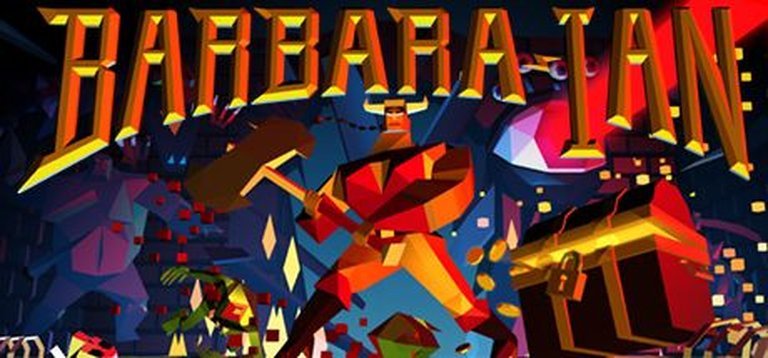
Barbara-ian is a fast-paced, physics-driven roguelike dungeon crawler set in a fantasy world. Players take on the role of Barbara-ian, a mythical warrior with unrelenting rage, smashing through randomly generated dungeons filled with enemies, obstacles, and loot. The game emphasizes pure action with one-hit kills, no inventory, and no health bars, offering a chaotic and adrenaline-fueled experience as players progress deeper into the dungeons, uncovering new weapons and facing increasingly challenging foes.
Where to Buy Barbara-ian
PC
Barbara-ian Cracks & Fixes
Barbara-ian Guides & Walkthroughs
Barbara-ian Reviews & Reception
store.steampowered.com (88/100): Break-neck dungeoneering with 1 hit point.
Barbara-ian: A Mythical Rampage Through Dungeonland
Introduction: The Rage-Fueled Roguelike That Defies Convention
In an era where dungeon crawlers are often bogged down by sprawling inventories, convoluted skill trees, and endless loot management, Barbara-ian (2017) emerges as a breath of fresh, chaotic air. Developed by the tiny but ambitious studio Owlbear, this game strips the genre down to its raw, adrenaline-pumping essence: smash, die, repeat. With a one-hit-kill mechanic for both player and enemies, Barbara-ian transforms dungeon delving into a frantic, physics-driven ballet of destruction.
This review will dissect Barbara-ian in exhaustive detail, exploring its development, narrative (or lack thereof), gameplay mechanics, artistic direction, and lasting impact. By the end, we’ll determine whether this game is a forgotten gem or a niche curiosity—and why its legacy deserves reconsideration.
Development History & Context: The Birth of a Smash-Happy Heroine
The Studio Behind the Smash: Owlbear’s Vision
Owlbear, a small independent studio, developed Barbara-ian with a clear philosophy: minimalism meets mayhem. The team, consisting of just three core members—Kristian Andrews, Sam Chester, and composer Matthew Cooper—sought to create a game that rejected the bloated design trends of modern dungeon crawlers.
The game entered Early Access in July 2015 before its full release in January 2017, a period during which the developers actively engaged with the community to refine mechanics and expand content. This iterative approach was crucial, as Barbara-ian’s core appeal lies in its tight, responsive gameplay—something that could only be perfected through player feedback.
Technological Constraints & Design Philosophy
Built in Unity, Barbara-ian leverages the engine’s physics system to create a destructible, dynamic dungeon environment. Unlike traditional roguelikes that rely on grid-based movement or turn-based combat, Barbara-ian embraces real-time, physics-driven chaos.
The game’s diagonal-down perspective (a rare choice in modern gaming) harkens back to classic dungeon crawlers like Gauntlet while maintaining a fresh, arcade-like feel. The decision to forgo health bars, inventories, and skill trees was a deliberate rejection of spreadsheet-style RPG design, instead favoring pure, unfiltered action.
The Gaming Landscape in 2017: A Crowded Dungeon
At the time of Barbara-ian’s release, the roguelike/roguelite genre was already saturated with titles like The Binding of Isaac, Enter the Gungeon, and Dead Cells. What set Barbara-ian apart was its brutal simplicity—a game where one mistake means death, but where death is instant and painless, encouraging players to jump right back in.
The indie scene was (and still is) dominated by games that blend procedural generation with deep progression systems. Barbara-ian’s refusal to conform to these expectations made it a polarizing but memorable experience.
Narrative & Thematic Deep Dive: The Myth of Barbara-ian
Plot (Or Lack Thereof): A Heroine Defined by Rage
Barbara-ian is not a game concerned with storytelling. There is no lore, no dialogue, no cutscenes. The protagonist, Barbara-ian, is a mythical warrior in a state of perpetual rage, smashing through dungeons with no clear motivation beyond destruction for destruction’s sake.
This absence of narrative is not a flaw but a design choice. The game’s appeal lies in its pure gameplay loop, unburdened by exposition. Barbara-ian is a force of nature, and the dungeons exist solely to be shattered, burned, and obliterated.
Themes: The Catharsis of Destruction
While Barbara-ian lacks a traditional story, it excels in thematic cohesion. The game is a celebration of chaos, a rejection of complexity, and a test of reflexes and adaptability.
- Minimalism as a Virtue: By stripping away RPG mechanics, the game forces players to focus on mastery of movement and weaponry.
- The Beauty of Failure: Death is not a punishment but a lesson—each run teaches players to adapt to new weapons and enemy patterns.
- Physics as a Playground: The dungeons are not just levels but interactive sandboxes, where every object can be smashed, launched, or weaponized.
Character & World: A Silent Protagonist in a Living Dungeon
Barbara-ian herself is a silent, faceless avatar of destruction, but her animations and movement convey a relentless, almost comedic fury. The enemies, drawn from classic D&D-inspired bestiaries, serve as cannon fodder for her rampage.
The dungeons, while procedurally generated, feel alive thanks to the physics-based interactions. Doors splinter, chests explode, and gelatinous cubes wobble satisfyingly when struck. The world is not just a backdrop but an active participant in the chaos.
Gameplay Mechanics & Systems: The Art of Smashing
Core Gameplay Loop: Smash, Loot, Die, Repeat
Barbara-ian’s structure is deceptively simple:
1. Enter a dungeon floor.
2. Smash everything in sight (enemies, chests, doors, environmental objects).
3. Loot chests to acquire new weapons.
4. Find the exit to the next floor.
5. Die in one hit, then restart instantly.
This loop is repetitive by design, but the randomized weapons and enemy spawns ensure no two runs feel identical.
Combat & Physics: The Heart of the Game
Combat is fast, brutal, and physics-driven.
– One-hit kills for all: Both Barbara-ian and her enemies die in a single strike.
– Weapon variety forces adaptation: Each chest grants a random weapon, from swords to wands to crossbows.
– Environmental destruction is key: Players can use debris as projectiles or trap enemies under falling objects.
The lack of a health bar means every encounter is a high-stakes dance of positioning and timing. Mistakes are punished instantly, but the respawn is so quick that frustration is minimized.
Weapon System: Forced Mastery Through Randomization
Unlike most dungeon crawlers, Barbara-ian does not allow weapon selection. Players must adapt to whatever they find, leading to unpredictable, often hilarious strategies.
- Sword: Fast, precise, but short-range.
- Axe of Axing: Slow but spins in a wide arc, clearing groups.
- Wand of Exploding: Places delayed explosives, requiring tactical placement.
- Pump-Action Crossbow: Pierces multiple enemies but has a slow reload.
This system prevents metagaming—players cannot min-max their way to victory. Instead, they must learn each weapon’s quirks on the fly.
Progression & Replayability: The Illusion of Permanence
Barbara-ian lacks traditional progression—no XP, no permanent upgrades, no unlockable skills. However, mastery comes from experience:
– Learning enemy patterns (e.g., how skeletons lunge, how slimes bounce).
– Discovering weapon synergies (e.g., using the crossbow to trigger explosions from a distance).
– Optimizing movement (dodging, kiting, and using the environment).
The Steam Achievements (17 in total) provide optional challenges, such as killing 100 enemies with a single weapon or reaching floor 10, but the true reward is the thrill of survival.
UI & Controls: Minimalist but Effective
The HUD is stripped down—no health bar, no minimap, just:
– Weapon icon (showing current equipped weapon).
– Floor number (indicating progress).
– Pause menu (for quick restarts).
Controls are twin-stick shooter-style, with:
– Left stick: Movement.
– Right stick: Aiming.
– Right trigger: Attack.
This controller-friendly design makes the game accessible but challenging, rewarding precision over button-mashing.
World-Building, Art & Sound: A Dungeon of Style
Visual Design: A Cartoonish Bloodbath
Barbara-ian’s art style is bold, colorful, and exaggerated, with:
– Chunky, cartoonish sprites for enemies and objects.
– Vibrant, high-contrast environments (even in dark dungeons).
– Satisfying particle effects (explosions, blood splatters, debris).
The diagonal-down perspective gives the game a unique, almost isometric feel, while the physics-based animations (e.g., enemies ragdolling when hit) add comedic weight to the violence.
Sound Design: The Symphony of Smashing
Composer Matthew Cooper crafted a pulsing, energetic soundtrack that matches the game’s frantic pace. The music is repetitive but effective, reinforcing the arcade-like intensity of each run.
Sound effects are crisp and impactful:
– Weapons have distinct audio cues (e.g., the thwack of a sword vs. the boom of an explosion).
– Enemies emit satisfying death cries.
– Environmental destruction is audibly rewarding (wood cracking, metal clanging).
Atmosphere: A Dungeon That Feels Alive
Despite its lack of narrative, Barbara-ian’s world feels dynamic thanks to:
– Procedural generation ensuring no two dungeons are alike.
– Physics interactions making every object potentially lethal or useful.
– The constant threat of death keeping players on edge.
The game doesn’t need lore—its gameplay and presentation create an immersive, chaotic dungeon experience.
Reception & Legacy: A Cult Classic in the Making?
Critical & Commercial Reception: A Niche Hit
Barbara-ian received positive reviews on Steam, with 88% of user reviews being favorable. Players praised its:
– Fast-paced, addictive gameplay.
– Unique weapon randomization.
– Low price point ($5.99).
However, it remained a niche title, overshadowed by bigger indie hits like Dead Cells and Hades. Its lack of marketing and small development team meant it never achieved mainstream success.
Evolution of Reputation: From Early Access to Obscurity
During its Early Access phase (2015-2017), Barbara-ian gained a dedicated following of players who appreciated its raw, unfiltered design. Post-launch, however, updates slowed, and the game faded into obscurity.
Today, it is remembered fondly by those who played it, but it lacks the cultural footprint of other roguelikes.
Influence on the Genre: A Blueprint for Minimalist Action
While Barbara-ian didn’t directly inspire major titles, its design philosophy—stripping away complexity to focus on pure gameplay—can be seen in later games like:
– Slay the Spire (minimalist deck-building).
– Vampire Survivors (simplified bullet-heaven action).
– Bone Marrow (physics-based combat).
Its one-hit-kill mechanic also predates the popularity of similar systems in games like Sifu and Returnal.
Conclusion: A Flawed but Brilliant Experiment in Chaos
Barbara-ian is not a perfect game. Its lack of depth, repetitive structure, and absence of narrative will alienate players seeking a rich, evolving experience. However, for those who crave pure, unadulterated action, it is a masterclass in tight, responsive gameplay.
Final Verdict: 8/10 – A Hidden Gem for the Right Player
- Pros:
- Blazing-fast, physics-driven combat.
- Weapon randomization forces adaptability.
- Instant respawns make death painless.
- Charming, chaotic art and sound design.
- Cons:
- Lack of progression may frustrate some.
- Repetitive structure limits long-term appeal.
- No narrative or lore for story-driven players.
Barbara-ian is not for everyone, but for fans of high-stakes, skill-based roguelikes, it is an essential experience. It proves that sometimes, less is more—and that smashing things can be an art form.
Should you play it? If you love games like Super Meat Boy or Nuclear Throne, absolutely. If you need deep RPG mechanics, look elsewhere.
In the end, Barbara-ian is a testament to the power of simplicity—a mythical rampage that deserves to be remembered.