
- Release Year: 2002
- Platforms: Windows
- Publisher: Vivendi Universal Games, Inc.
- Developer: Krome Studios Pty Ltd.
- Genre: Sports
- Perspective: Third-person
- Game Mode: Single-player
- Gameplay: stunts, Tricks
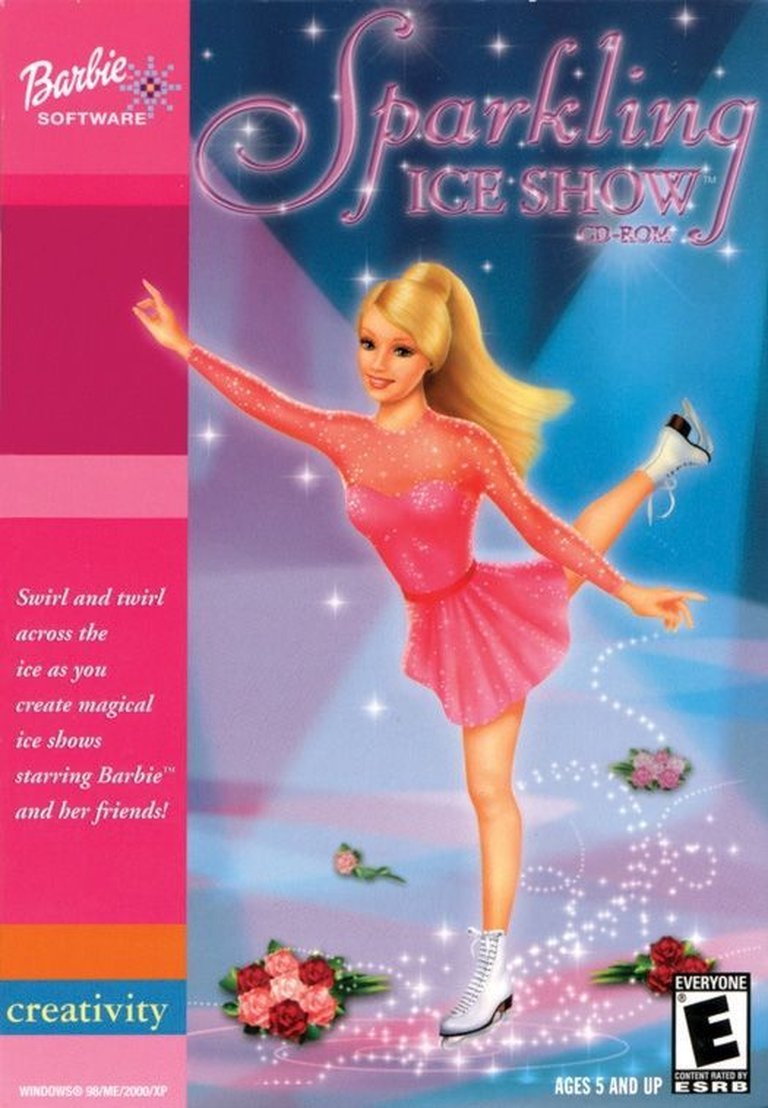
Description
Barbie Sparkling Ice Show is a sports game where players join Barbie and her friends on a global ice skating tour, performing customizable routines by selecting costumes, music, and skating styles. Set in various ice rinks, the game offers a charming and accessible experience for young players, allowing them to skate at their own pace or aim for super stardom with creative freedom.
Gameplay Videos
Barbie Sparkling Ice Show Free Download
Barbie Sparkling Ice Show Patches & Updates
Barbie Sparkling Ice Show Mods
Barbie Sparkling Ice Show Reviews & Reception
edutainingkids.com : The game is very easy to understand and control, but it is also exceptionally easy to complete in one afternoon.
Barbie Sparkling Ice Show: A Frosty Footnote in Gaming’s Gendered Landscape
Introduction: Gliding Through a curated Dream
In the vast, often-overlooked archives of licensed children’s software from the early 2000s, few titles encapsulate a specific moment in both franchise marketing and developmental philosophy as clearly as Barbie Sparkling Ice Show. Released in November 2002 by Vivendi Universal Games and developed Australia’s Krome Studios, this Windows-exclusive title arrived at the peak of the “Barbie video game” pipeline—a period of prolific, if uneven, output that saw Mattel’s doll transformed into a digital heroine across countless genres. Unlike its more complex predecessors or successors, Sparkling Ice Show presents itself as a pure, unadulterated fantasy of grace, customization, and non-competitive accomplishment. Its thesis is not one of challenge or narrative depth, but of agency within constraint: a carefully calibrated experience where the joy is derived from the act of selection—of costume, of music, of routine—and the serene satisfaction of a flawless performance. This review will argue that Barbie Sparkling Ice Show is a fascinating case study in targeted game design, a technically competent yet deliberately shallow title that succeeds precisely because of its limitations, offering a tranquil, aesthetically-driven playground that reflects its era’s assumptions about its young, predominantly female audience while quietly pioneering a form of digital dress-up and creative expression that would later flourish in more sophisticated forms.
Development History & Context: Krome’s Frosty Foray into Licensed Tranquility
The game emerges from a specific confluence of industrial and cultural factors. The developer, Krome Studios, was (and remains) a significant Australian studio with a diverse portfolio. By 2002, Krome had established itself with titles like Ty the Tasmanian Tiger (2002) and was concurrently working on The Adventures of Jimmy Neutron: Boy Genius – Jet Fusion (2002). The shared credits list—with 38 personnel overlapping between the two projects—speaks to a studio adept at managing multiple pipelines, including those for high-profile licenses. Barbie Sparkling Ice Show was thus not a passion project but a calculated piece of work within a robust business model: Mattel’s aggressive expansion of the Barbie brand into interactive software.
The technological context is defined by its stated system requirements: a 3D graphics accelerator with 8MB of RAM and DirectX 8.1 compatibility. This places it squarely in the early-era of accessible 3D acceleration on PC, a time when “3D” was a selling point even for modestly powered hardware. The game leverages this for its ice rink environments and character models, aiming for a glossy, doll-like aesthetic. The choice of the ice skating genre is shrewd; it inherently conveys elegance, spectacle, and a “safe” form of physical prowess that aligns with Barbie’s aspirational yet non-threatening brand identity. Unlike the implied conflict in “Explorer” or “Secret Agent,” the only adversary here is the risk of a fall on the ice, which is easily mitigated on lower difficulties.
The gaming landscape of 2002 was one where “girls’ games” were often pigeonholed into two categories: heavily narrative-driven adventure/point-and-click titles or simple, mini-game collections. Sparkling Ice Show carves a third path: a mechanics-light “performance” simulator. Its closest cousins would be other sports titles like Mattel’s Barbie Fashion Show (which would follow in 2004) or Activision’s Mary-Kate and Ashley: Get A Clue (2002), all sharing a focus on style, customization, and low-stakes play. It exists in the shadow of the monumental The Sims (2000) and its upcoming sequel, but its scope is intentionally microscopic—a single, focused activity versus a sprawling life simulation.
Narrative & Thematic Deep Dive: The Tour as a Skeleton Key
Narratively, Barbie Sparkling Ice Show is almost entirely skeletal, which is central to its design philosophy. The plot is explicitly an “international ice tour” comprising five themed rinks (e.g., Rose Garden, Island Paradise, Winterland, Sky) leading to a finale, “Skating in the Sky.” This structure is not a story but a progression system and a setting generator. The “characters” are the titular Barbie and two friends (presumably generic “Barbie Friends” from the doll line, though The source material doesn’t name them), each with identical capabilities. There is no dialogue, no conflict, no antagonist, and no character arc.
The theme, therefore, is pure therapeutic performance. The game posits a world where the primary goal is not victory but presentation. The narrative spine is the journey from one beautifully decorated venue to the next, each more fantastical than the last. The underlying message aligns with a specific strand of Barbie ideology: empowerment through aesthetic choice and flawless execution in a curated, kind world. The “international tour” subtly introduces global motifs (a “Winterland” rink with polar bears, an “Island Paradise”) but strips them of any cultural specificity or challenge, reducing them to pastel backdrops. The final rink, “Skating in the Sky,” introduces a magical realism that abandons any pretense of realism for pure, weightless fantasy—the ultimate reward is not a trophy but access to a realm of pure creative potential: the custom routine creator.
This approach reflects a design ethos common in early 2000s children’s software: the game as a “safe space.” The cited review from 7Wolf Magazine (translated from Russian) describes it perfectly: “relaxing, and most importantly not annoying.” It is the antithesis of the “game feel” championed by contemporaneous titles; there is no tension, only rhythmic engagement. The “permeation of children’s culture” noted by researcher Emily Aguilo-Perez is evident here not in story but in ritual: the game mirrors the real-world activity of playing with Barbie dolls, where the narrative is improvised by the child around the accessories and outfits. The game’s “story” is the one the player tells themselves through costume changes and routine selection.
Gameplay Mechanics & Systems: The Elegance of Simplified Control
The core gameplay loop is deceptively simple but reveals careful scaffolding for its target audience (ages 4-6, per Edutaining Kids). It consists of three phases for each rink: Selection, Practice, and Performance.
- Selection: Player chooses a skater (Barbie or one of two friends), a “skating style” (which is the difficulty level: Easy, Medium, Expert), and a pre-set routine (e.g., “City Girl Twirl”). This initial choice provides the illusion of complexity and variety while funneling the player into a predetermined path.
- Practice: This is the core mechanical engagement. The perspective is a behind-the-skater 3D view. The rink has a colored trail that the skater follows automatically. The control scheme escalates with difficulty:
- Easy: Only the up/down arrow keys to match the “skate meter” color to the trail’s changing color. Success is guaranteed; Barbie never falls. This is pure color-matching rhythm, building basic keyboard familiarity.
- Medium: Adds the spacebar. Huge snowflakes appear on the trail; pressing space as the skater crosses them triggers the trick associated with the routine. Timing is introduced but forgiving.
- Expert: Adds left/right arrow keys to keep the skater on the trail itself (the trail narrows). Failure to keep on the trail or mistime the spacebar results in a fall. This layer introduces spatial awareness and pressure but remains a test of execution, not strategy.
This tiered system is the game’s masterstroke. It allows a 4-year-old to experience “success” on Easy, while an 8-year-old can find a challenge on Expert. The gradual introduction of inputs (color-match -> timing -> positioning) is a subtle tutorial in motor skill development, disguised as fun.
- Performance: After a successful practice run, the player enters a customization suite: choose a costume (from a set per skater/rink), the rink’s pastel shade, 3D decorative props (harps, unicorns, snowmen, etc.), and a music track from a selection. Then, the performance itself is essentially a replay of the successful practice run—the inputs are not required; the skater automatically executes the routine perfectly. The player’s role is purely observational, watching their chosen aesthetic package come to life. The reward is visual spectacle, not gameplay victory.
- Progression & Replay: Completing a rink unlocks the next. A final “Exhibition Area” allows revisiting completed rinks. The true “endgame” is the “Skating in the Sky” rink, where for the first time, the player can design their own routine by selecting tricks from a list. This is a significant departure, offering genuine creative authorship, though it’s confined to this one finale.
The systems are flawlessly coherent and intuitive. The UI is likely bright, large, and icon-driven. The “flaw” is inherent in the design: once the mechanical pattern of a routine on a given difficulty is learned on the first try (barring Expert’s spatial element), there is no dynamic challenge. The game’s longevity depends entirely on the child’s desire to re-perform with new aesthetic combinations—a desire that, as Edutaining Kids notes, may wane quickly for children over 6. The replay value is not in mastering harder tricks, but in the endless permutation of frosting on a very simple cake.
World-Building, Art & Sound: A Pastel-Perfect Facade
The game’s atmosphere is its primary selling point and lasting impression. The visual direction aims for a “Barbie” aesthetic: smooth, plastic-like character models with a soft sheen, and environments rendered in a palette of candy-store pastels—pinks, lavenders, cyans, and mint greens. The 3D rinks, while simple by today’s standards, were likely impressive for a 2002 children’s title, featuring reflective ice and the promised 3D decorative props (harps, unicorns, polar bears) that pop with a charming, low-poly vibrancy. The art successfully translates the tactile, glossy world of the dolls into a digital space. The perspective (third-person, “other” per MobyGames) keeps Barbie centered and always in view, minimizing disorientation.
Sound design follows the visual lead. The composer, Castles Music Productions, likely provided a suite of light, melodic, synthesized tracks—ethereal, cinematic, or poppy—that match each rink’s theme. Sound effects are probably limited to the swoosh of skates, the tink of successful trick execution, and the soft thump of a fall. The effect is one of serene, melodic busyness. The use of the Bink Video middleware (listed in MobyGames groups) suggests perhaps for introductory or menu sequences, ensuring smooth playback of any FMV sequences showcasing the “dazzling” routines.
Together, these elements create what the Computer Active review calls a “very pretty game with a great atmosphere.” It’s an atmosphere of unblemished positivity. There is no grime, no danger, only sparkle and smooth motion. The world-building is entirely aesthetic; the “international tour” is a series of dioramas. This lack of depth is not a bug but a feature, offering a visually consistent and psychologically safe space that aligns perfectly with the pre-teen, feminine-coded fantasy of effortless grace and universal admiration.
Reception & Legacy: The Chill Critic Consensus and a Niche Stain
Upon release, Barbie Sparkling Ice Show received a muted but generally positive response from the sparse critic pool that deigned to review it. The aggregate MobyGames score of 69% (based on three reviews) tells the story: a title deemed competent and pleasant, but not essential.
- Computer Active (80%) praised its beauty and atmosphere, noting it would “help hone younger children’s keyboard co-ordination skills,” but explicitly states it’s not an educational skating sim.
- Edutaining Kids (67%) provided the most detailed analysis, lauding its accessibility for ages 4-6 and engaging graphics, but delivering the crucial caveat: it is “exceptionally easy to complete in one afternoon” and has “questionable replay value” for older children.
- 7Wolf Magazine (60%) offered the most evocative praise, calling it “pleasant – relaxing, and most importantly not annoying” and likening it to “a sweet children’s toy… with a mandatory happy ending.”
This critical consensus defines its legacy: a well-made, inoffensive, and aesthetically pleasing piece of niche software. Its commercial fate is typical for the genre—likely modest sales driven by Barbie brand loyalty and holiday gift-giving, quickly fading into the bargain bin. Its most significant recognition was a “Recommended” award from Parent’s Choice for Winter 2002, a crucial seal of approval for its target demographic of parents seeking benign entertainment.
Its influence on the broader industry is negligible. It did not spawn a skating genre nor innovate mechanically. Its legacy is as a cultural artifact and a template. Culturally, it is cited by scholars like Emily Aguilo-Perez as an example of “Barbie permeating children’s culture,” showing how the franchise extended beyond physical play into digital, performative spaces. As a template, its core loop—simplified input -> performance -> deep aesthetic customization—foreshadows the explosion of casual and “dress-up” games on mobile and web platforms (e.g., Stardoll, Covet Fashion). However, Sparkling Ice Show lacked the social sharing or infinite content generation of those later hits. It is a frozen moment (pun intended) where this formula was applied to a single, finite activity within a licensed property. The anecdotal evidence from users on My Abandonware (“i used to play this game all the time!!”) suggests it fulfilled its purpose for a specific cohort of young players in the early 2000s, creating a potent, if narrow, nostalgic association with the Barbie brand and the sensation of digital performance.
Conclusion: A Diamond of Modest Design
Barbie Sparkling Ice Show is not a “great” video game by conventional metrics of depth, innovation, or lasting impact. It does not stand alongside genre-defining sports titles or narrative masterpieces. Its historical importance lies in its perfect execution of a extremely narrow design brief: to provide a tranquil, aesthetically rich, and empowering digital play experience for very young girls who love Barbie. It is a game about the joy of choosing a sparkling blue leotard over a pink one, of selecting a harp to float in the sky-rink, of watching your avatar glide flawlessly to a saccharine melody.
Its genius is in its restraint. By stripping away competition, failure (on lower difficulties), and complex strategy, it created a space free from the anxiety that often plagues younger players. It respects its audience’s desire for control over appearance and spectacle, not over outcome. The technical competence of Krome Studios ensured this vision was realized with a polish that belied its modest budget and scope. It is, in the end, the interactive equivalent of a beautifully illustrated, sticker-heavy activity book: its value is entirely in the moment of engagement, the satisfaction of completion, and the pleasantness of the materials.
In the pantheon of Barbie games, it is neither the best nor the worst, but perhaps the most pure in its intentions. It is a frosty, glittering bauble from a bygone era of PC gaming, a testament to a time when a major publisher would greenlight a game where the ultimate victory was a perfectly synchronized twirl under a digital aurora borealis. For that specific, serene vision, Barbie Sparkling Ice Show earns its place not in the hall of fame, but in the curated museum of culturally significant, gently entertaining, and honestly crafted children’s software.