
Description
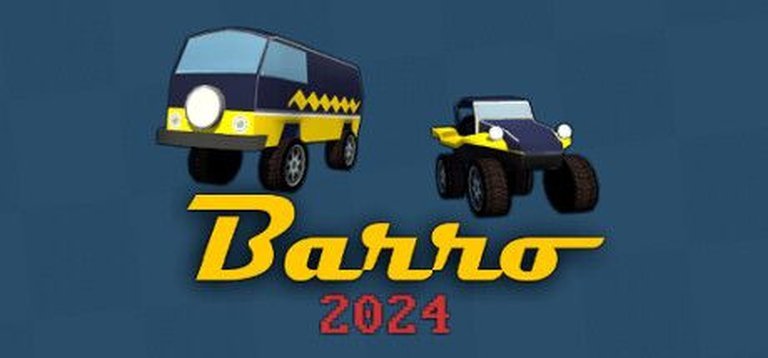
Barro 2024 is the final game in the Barro racing series, developed by SC Jogos, which returns to the original style that captivated early fans. It features 12 new race tracks, four different vehicles, and enhanced time trials with lap-by-lap leaderboards and real-time position tracking. Players can engage in single-player casual races against bots or multiplayer split-screen action for up to four players, with grids supporting up to 10 cars, all from a behind-the-car perspective.
Where to Buy Barro 2024
Barro 2024 Guides & Walkthroughs
Barro 2024: A Nostalgic Victory Lap in the Indie Racing trenches
Introduction: The Final Checkered Flag for a Cult Series
In the vast, high-octane landscape of modern racing games, dominated by photorealistic simulations and billion-dollar spectacle, a quiet, pixelated revolution has been chugging along for nearly a decade. Enter Barro 2024, the latest and allegedly final installment in the Barro series from Brazilian indie developer SC Jogos. To the unconverted, it is an obscure, cartoony racer listed on Steam for less than a dollar. To its small but ardent community, it is the culmination of a years-long odyssey of iterative refinement, a deliberate throwback to a simpler era of arcade racing. This review argues that Barro 2024 is not merely a game but a potent document of indie development ethos—a thesis statement on the enduring power of focused, pure gameplay over graphical fidelity and bloated content. Its value lies not in competing with Forza Horizon or Gran Turismo, but in existing as a steadfast alternative, proving that a compelling racing loop, split-screen camaraderie, and unwavering creative vision can still find an audience in 2025.
Development History & Context: The Unwavering Pulse of SC Jogos
To understand Barro 2024, one must first understand its creator, SC Jogos, and the ecosystem it has nurtured. Since the release of the original Barro in 2018, the studio has operated with a relentless, near-annual cadence, releasing a mainline title or expansion almost every year (Barro 2020, Barro F, Barro Racing, Barro 22, Barro F22, Barro GT, Barro T23, culminating in Barro 2024). This is not a pattern of sequels in the traditional sense, but of continuous, modular iteration on a single, core gaming experience.
The technological context is Unity, a game engine that has powered everything from indie darlings to blockbuster franchises. SC Jogos’ use of Unity is emblematic of the democratization of game development—a small team (likely 1-3 people based on credit structures and update velocity) leveraging accessible tools to build and maintain a consistent franchise. The stated vision for Barro 2024 is explicitly one of regression: “we return to the roots that captivated fans from the beginning. The original style is back.” This is a direct rebuttal to the natural tendency of series to complicate. Where entries like Barro F (focused on faster “Formula” cars) and Barro GT (Grand Touring) introduced vehicle class distinctions, 2024 deliberately strips back to a more foundational, “cartoony” aesthetic and a simple four-vehicle roster. It is a conscious archiving of a specific feel, made necessary by the series’ own divergence.
The gaming landscape of its August 2024 release was one of mainstream saturation. Major publishers were deep into console generation cycles, pushing 4K/60fps as standard. In this environment, Barro 2024’s 2 GB RAM requirement and 3 GB storage footprint were not just minimalist; they were defiant. It targeted the low-end PC, the Steam Deck (though with noted controller quirks), and most importantly, the living room couch. Its primary innovation was not technical, but philosophical: a refusal to chase trends, instead doubling down on a timeless local multiplayer experience that major studios increasingly neglect.
Narrative & Thematic Deep Dive: The Story is the Series
Barro 2024 has no story mode, no characters with names or motivations, no dialogues to speak of. Its narrative is entirely environmental, systemic, and historical. The plot is the Barro series itself.
The central theme is nostalgia as a design principle. The official description’s plea to “return to the roots” is the game’s core narrative argument. It posits that the earliest, purest expression of an idea holds a sacred value that complexity can erode. The “original style” is not just a visual choice but a thematic one—a rejection of the narrative and mechanical inflation common in long-running franchises. The game’s world is not a place with lore, but a concept: the idealized memory of arcade racing circa the late 1990s/early 2000s (Ridge Racer, Mario Kart’s simpler eras, Test Drive). The tracks are not locations (like “New York” or “Monaco”) but abstract, brightly colored circuits named by number (“Race Track #015”), emphasizing function over fiction. The vehicles are archetypes, not vehicles: the standard car, a buggy, a truck, a van. They are tools for a job, not personalities.
The “jumping is back!” tagline from Steam hints at a specific, cherished mechanic—likely a turbo or boost system—that was perhaps deemphasized in recent entries. This minor mechanic’s elevation to marketing slogan speaks volumes: the narrative is built on the return of a specific feeling, a tactile sensation that long-time players associate with the series’ “golden age.” The game’s true story is one of developer-player contract: SC Jogos signals to its faithful, “We heard you. We remember. This is for you.” The lack of a traditional narrative makes this meta-narrative—the story of the series’ evolution and conscious reversion—the only one that matters.
Gameplay Mechanics & Systems: The Elegance of the Loop
At its mechanical heart, Barro 2024 is a pure arcade racer. The “Behind view” perspective and “Direct control” interface (as cataloged on MobyGames) are non-negotiable pillars of its design philosophy. There is no simulation steering, no tire wear, no fuel management. The entire skill expression resides in three areas: racing line, boost management, and collision avoidance.
Core Loop: Select a car (each with distinct stats for speed, acceleration, handling—though the differences are subtle, not class-defining), select a track, race against up to 9 AI bots or 3 other human players in split-screen. The goal is simple: finish first. The “Improved time trial” system is a standout feature. It provides lap-by-lap leaderboards and a “real-time” position fight, transforming the solo Experience into a persistent, global competition against ghosts and times. This cleverly extends the game’s lifespan beyond the multiplayer session.
Vehicles & Progression: The four vehicles offer a shallow but meaningful rock-paper-scissors balance. The buggy may handle better on loose surfaces (though track surfaces are visually uniform, implying mechanical, not visual, differences), the truck is slower but perhaps tougher. There is no persistent RPG-style progression. You unlock nothing. The only “progression” is skill-based and tracked via the pervasive leaderboards and 30 Steam Achievements (e.g., “40 laps,” “Race Track #015”). This is a deliberate design choice: the only thing that levels up is the player. There are no unlocks to pursue, no garage to fill. The focus is relentlessly on the act of driving now.
Innovations & Flaws: The most significant innovation is the “real-time” leaderboard integration in time trials. Seeing your position update against other players’ ghosts after every sector is a powerful motivator. The other is the commitment to 10-car grids in a game with such minimal hardware demands—it achieves a sense of pack density that feels generous compared to its simple graphics.
The flaws are characteristic of its niche ambition:
1. Shallow Longevity: With only 15 tracks (discrepancy between 12 and 15 in sources, likely due to updates) and 4 cars, variety is limited. The game’s entire shelf life depends on the player’s love for perfecting times on these tracks.
2. Feature Transparency: The “improved time trial” is a major selling point, but the systems are opaque. How are positions calculated? What’s the ghost data update frequency? The lack of a robust in-game tutorial or stats screen is a missed opportunity.
3. Online Implementation: Community news posts reveal a rocky path to online multiplayer. The “new online multiplayer mode” launched in March 2025 as an “initial alpha version,” with the dev explicitly recommending playing with friends due to low player count and acknowledging fairness issues (“driveability for the client should be much closer to that of the host”). This highlights the struggle of a tiny indie maintaining networked code for a niche title.
4. Controller & Platform Quirks: Steam discussions cite “Controls on Steam Deck not working” and requests for better controller support, indicating the otherwise universal control scheme may have compatibility edge cases.
The systems are not “flawed” in a broken sense, but deliberately narrow. This is a scalpel where most games are Swiss Army knives. Its brilliance or its boredom depends entirely on whether the player finds profundity in that narrowness.
World-Building, Art & Sound: The “Original Style” Restored
The world of Barro 2024 is an abstract canvas of vibrant, flat colors. Eschewing any pretense of realism, it employs a “Cartoony,” “Cartoon” aesthetic (per Steam user tags) with simple geometry, bright primary color palettes for tracks and environments (lush green borders, bright blue skies, checkerboard patterns), and vehicles that look like playful approximations rather than licensed models. This is not a technical showcase; it is a stylistic choice that prioritizes readability and a lighthearted, almost Mario Kart-esque vibe over immersion. The “world” is a racetrack playground. There are no crowds, no grandstands, no weather systems—just you, your car, and the track. This minimalism ensures rock-solid performance but can feel sterile to those expecting ambient life.
The sound design follows the same philosophy. Engine noises are synthetic, bubbly, and non-descriptive. The music (if present beyond menu screens) is likely upbeat, loop-based electronic or rock tracks meant to pump up the player rather than simulate a believable soundscape. Sound effects for collisions are cartoonish thuds and puffs (the “Puff!” thread in community discussions may even reference a specific, beloved sound effect from the original). The audio is functional, cheerful, and disposable—it serves the gameplay moment and is forgotten. This is the antithesis of the cinematic audio engineering in AAA titles, but perfectly aligned with the game’s arcade roots. The atmosphere is one of casual, focused competition, not dramatic spectacle.
Reception & Legacy: A Cult Classic in the Making
Critical Reception is virtually non-existent. Metacritic lists “Critic reviews not available.” This is the hallmark of a deep-cut indie title operating entirely outside the traditional review pipeline. No major outlet assigned a reviewer. Its existence is curated through Steam tags, community hub posts, and aggregate player scores.
Commercial & Player Reception is a story of slow-burn, curated success. Steam shows a “Mostly Positive (76% of 152 reviews)” rating, with a Steambase Player Score of 77/100. review graphs show a consistent, modestly positive sentiment from launch, with no major backlash waves. The price point is a key factor: routinely discounted to $0.49 (90% off), it is an impulse buy. The “5 players collected” stat on MobyGames belies its actual Steam ownership, but indicates a niche within a niche—hardcore archivists and genre aficionados.
The community is small but engaged. Threads discuss specific mechanics (“How to Boost?”), report bugs (“Controls on Steam Deck not working,” “leaderboard reset”), make feature requests (“PLEASE add workshop,” “Would you please add 5 Steam Trading Cards Set”), and offer praise (“Well Done Dev”). This is the discourse of a dedicated user base, not a mass audience. The request for a Steam Workshop is particularly telling—these players want to extend the game’s life through community-made tracks and mods, a sign of deep investment.
Legacy and Influence must be considered in two contexts: the Barro series itself and the broader indie racing landscape.
-
Within the Series: Barro 2024 is explicitly a capstone, a deliberate return to form. Its legacy within the franchise is that of a corrective, a “greatest hits” compilation that re-centers the series’ original identity. The update logs reveal a developer committed to the entire series—updating older titles (the 2018 original has “nearly 100 updates”) to match the online infrastructure of newer ones. This creates a strangely cohesive, forever-green ecosystem where a 2024 game and a 2018 game are patch twins. Barro 2024’s legacy is cementing the series’ identity as a persistent, evolving service of a specific racing fantasy, rather than a linear sequence of distinct products.
-
Industry Influence: Its influence is indirect, a testament to a viable niche. In an era where even Mario Kart adds convoluted battle modes and extensive vehicle customization, Barro 2024 argues that a perfect, unadulterated racing loop—especially one built for local multiplayer—still has a market. It competes not with Need for Speed, but with the memory of Micro Machines or R.C. Pro-Am. Its success (as measured by consistent sales in bundles and a positive review ratio over 18 months) proves that a tiny studio can sustain a years-long franchise by identifying and staunchly serving a specific player fantasy. It is a case study in scope discipline and community trust-building through consistent, cross-title support.
Conclusion: The Case for the Little Guy
Barro 2024 is not a game for everyone. It will not Astonish with its graphics, overwhelm with its content, or seduce with a dramatic plot. It is, however, a masterclass in design integrity andTargeted Nostalgia. SC Jogos has not merely made another racing game; they have meticulously reconstructed a Feeling—the feel of a simple, challenging, joyfully cartoony arcade racer played with friends on a couch.
Its strengths are its purity and its unwavering commitment to its vision. Its weaknesses are the unavoidable byproducts of that same purity: limited scope and a reliance on player-created meaning through time attacks. The active, transparent development, seen in the detailed patch notes addressing multiplayer sync and achievement logic, reveals a developer deeply in tune with a small, vocal community. This symbiotic relationship—where the developer explicitly updates all games in the series for consistency and the community asks for mod support—is a rare and beautiful thing in today’s corporatized gaming landscape.
Final Verdict: Barro 2024 is a 7/10—a score meaning “very good, with a specific and clear audience.” For the player who associates racing with pure, unadulterated competitive fun, who values split-screen camaraderie over online matchmaking, and who appreciates a developer who speaks directly to their nostalgia, Barro 2024 is a small treasure. It is a victory lap for a specific design philosophy, and a reminder that in the world of gaming, there is still abundant room for the simple, the focused, and the faithfully old-school. Its place in history is not as a landmark title, but as a steadfast, cheerful signpost pointing to an alternate, less-traveled path in game design: the path of Less.