
- Release Year: 2016
- Platforms: Windows
- Publisher: Iceberg Interactive B.V.
- Developer: Shadow Tor Studios
- Genre: Adventure
- Perspective: 1st-person
- Game Mode: Single-player
- Gameplay: Graphic adventure, Point and select, Puzzle elements
- Setting: Horror
- Average Score: 62/100
Description
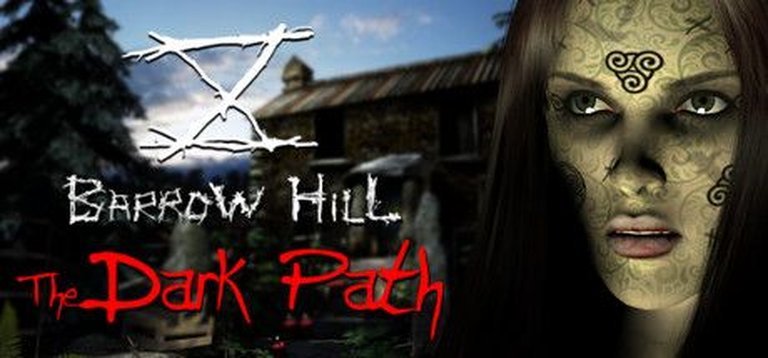
Barrow Hill: The Dark Path is a first-person graphic adventure game with horror elements, set in the eerie and mysterious Barrow Hill. Players explore a hauntingly atmospheric environment, solving puzzles and uncovering dark secrets as they navigate through a narrative rich with supernatural intrigue. Developed by Shadow Tor Studios, the game continues the story from its predecessor, Barrow Hill: Curse of the Ancient Circle, offering a blend of point-and-click gameplay and immersive storytelling.
Gameplay Videos
Where to Buy Barrow Hill: The Dark Path
Barrow Hill: The Dark Path Cracks & Fixes
Barrow Hill: The Dark Path Guides & Walkthroughs
Barrow Hill: The Dark Path Reviews & Reception
metacritic.com (70/100): Barrow Hill: The Dark Path is a competent throwback to old-school horror-themed point-and-click games.
horrorsociety.com : I would recommend Barrow Hill: The Dark Path to those who love challenging puzzles with a Horror theme.
cgmagonline.com (55/100): Satire and nostalgia are not enough to make a game good. Games should be fun, and Barrow Hill: The Dark Path is not.
Barrow Hill: The Dark Path: A Haunting Journey Through Folklore and Fear
Introduction: A Decade of Shadows
Barrow Hill: The Dark Path (2016) is a first-person point-and-click adventure that serves as both a sequel and a spiritual successor to Barrow Hill: Curse of the Ancient Circle (2006). Developed by Shadow Tor Studios and published by Iceberg Interactive, the game plunges players into the eerie, folklore-rich landscapes of Cornwall, England, where ancient Druidic rites, Celtic myths, and modern horror collide. Set ten years after the original “Barrow Hill Incident,” the game follows an unnamed protagonist returning to the haunted woods during the Autumn Equinox—a time when the veil between worlds is thin and the malevolent spirit Baibin stirs.
This review explores Barrow Hill: The Dark Path as a meticulously crafted homage to classic adventure games, a deep dive into British folklore, and a testament to the enduring appeal of atmospheric horror. While it may not innovate radically, its commitment to its themes, puzzles, and world-building makes it a standout title for fans of the genre.
Development History & Context: A Labor of Love
The Studio and Vision
Shadow Tor Studios, led by Jonathan Boakes and Matthew Clark, is a small but passionate team known for its dedication to atmospheric storytelling and folklore-inspired narratives. Barrow Hill: The Dark Path was conceived as a standalone sequel, designed to be accessible to newcomers while rewarding longtime fans with callbacks to the original game. The studio’s vision was clear: to create a game that felt like a “lost episode” of a beloved series, blending nostalgia with fresh mysteries.
Technological Constraints and Design Choices
Released in 2016, Barrow Hill: The Dark Path employs the Wintermute Engine, a tool often used for classic-style adventure games. The game’s visuals are built from pre-rendered backgrounds—a deliberate choice to evoke the aesthetic of 1990s adventure games like Myst and The 7th Guest. While this approach limits dynamic interaction, it allows for highly detailed, painterly environments that enhance the game’s eerie atmosphere.
The decision to use static backgrounds and node-based movement (where players “jump” between fixed points) was polarizing. Some critics, like those at CGMagazine, found it dated and immersion-breaking, while others, such as Adventure Gamers, appreciated the nostalgic throwback. The game’s minimal animations—such as flickering candles or swaying branches—are used sparingly but effectively to maintain tension.
The Gaming Landscape in 2016
At the time of its release, the adventure game genre was experiencing a renaissance, thanks to titles like Firewatch (2016) and The Witness (2016), which blended narrative depth with innovative gameplay. Barrow Hill: The Dark Path, however, positioned itself as a deliberate counterpoint—a love letter to the past rather than a step forward. Its competition included modern point-and-click games like Thimbleweed Park (2017) and Unavowed (2018), which also embraced retro mechanics but with more contemporary polish.
Despite its niche appeal, Barrow Hill: The Dark Path carved out a space for itself by leaning into its British folklore roots and unapologetic retro design. It was a game made for a specific audience: those who cherished the slow-burn horror of Dark Fall (2002) or the puzzle-heavy design of Myst.
Narrative & Thematic Deep Dive: The Weight of the Past
Plot Summary
The game begins with the protagonist arriving at Barrow Hill on the Autumn Equinox, a decade after the original incident. The local radio DJ, Emma Harry, serves as a guide and narrator, filling in the backstory through broadcasts and phone calls. The central mystery revolves around three missing teenagers—Mia Kendell, Gus Bevan, and Oliver Tindle—who have become entangled in the Dark Path, a modern revival of ancient Druidic rituals. Mia, in particular, is possessed by Baibin, a vengeful spirit tied to the land, who seeks to reclaim stolen artifacts and punish those who disturb her rest.
The narrative unfolds through environmental storytelling, radio transmissions, and scattered notes. Players piece together the history of Barrow Hill, from its Bronze Age origins to the 2006 incident, where several people died under mysterious circumstances. The game’s structure is non-linear, allowing players to explore at their own pace, though certain puzzles and events are gated by progress.
Characters and Dialogue
- The Protagonist: A silent cipher, the protagonist serves as the player’s avatar, with no defined personality or voice. This choice, while common in classic adventures, feels outdated in 2016, especially compared to games like The Walking Dead, where character agency and dialogue choices drive immersion.
- Emma Harry: The game’s most vibrant character, Emma is a quirky, conspiracy-theory-loving DJ who provides exposition and comic relief. Her voice acting (performed by Emma Harry herself) is lively but occasionally veers into campiness.
- Mia Kendell: The tragic figure at the heart of the story, Mia is driven by grief over her brother Ben’s disappearance in the original incident. Her possession by Baibin is handled with a mix of pathos and horror, though her dialogue (voiced by Amy Kenny) can feel melodramatic.
- Gus and Oliver: Mia’s friends, who serve as secondary characters. Gus is the cautious skeptic, while Oliver is the lovestruck follower. Their fates are tied to the Dark Path’s rituals, and their interactions with Mia add emotional weight to the story.
The game’s dialogue is delivered primarily through phone calls and radio broadcasts, a clever way to integrate storytelling without breaking the first-person perspective. However, the voice acting is uneven, with some performances (like Jonathan Boakes’ multiple roles) feeling stiff or overacted.
Themes: Folklore, Grief, and the Cycle of Violence
Barrow Hill: The Dark Path is steeped in themes of folklore and the dangers of disturbing the past. Baibin, the vengeful spirit, embodies the consequences of greed and disrespect for ancient traditions. The game draws heavily from Cornish folklore, particularly the idea of “barrows” (burial mounds) as sacred sites and the belief in spirits tied to the land.
The narrative also explores grief and trauma, with Mia’s obsession with the Dark Path stemming from her inability to let go of her brother’s death. The game suggests that the past is never truly buried—it lingers, waiting to be unearthed. This is mirrored in the protagonist’s return to Barrow Hill, a place they (and the player) know is dangerous but cannot resist exploring.
The Dark Path itself is a metaphor for the allure of forbidden knowledge. The teenagers’ dabbling in rituals is framed as both naive and tragic, a cautionary tale about the dangers of romanticizing the occult. The game’s ending, where the protagonist must reverse the wishes made by the teenagers to free them from Baibin’s curse, reinforces the idea that some forces should not be trifled with.
Gameplay Mechanics & Systems: Puzzles, Exploration, and Frustration
Core Gameplay Loop
Barrow Hill: The Dark Path is a classic point-and-click adventure, with gameplay centered around exploration, item collection, and puzzle-solving. The game’s structure is non-linear, allowing players to tackle objectives in different orders, though certain puzzles require specific items or knowledge to progress.
The game’s interface is minimalist:
– Movement: Players navigate by clicking on fixed nodes, with the cursor changing to indicate interactable objects.
– Inventory: Items are stored in a bottom-of-screen inventory, which can be scrolled through. Right-clicking an item provides a closer look.
– Phone and Radio: The protagonist’s cellphone and Emma’s radio broadcasts provide hints, lore, and occasional puzzle solutions.
Puzzle Design: Archaeology Meets the Occult
The puzzles in Barrow Hill: The Dark Path are its strongest and most divisive feature. They range from straightforward (e.g., using a crowbar to open a door) to fiendishly complex (e.g., deciphering runes or aligning celestial symbols). Many puzzles are tied to the game’s themes, requiring players to:
– Use archaeological techniques: For example, excavating a burial mound with a trowel or interpreting ancient symbols.
– Engage with modern technology: Such as hacking a security system or using a laptop to piece together video footage.
– Solve environmental puzzles: Like restoring a dried-up Druid pool by finding a hidden key or aligning runes to open a path.
Some puzzles are brilliantly designed, such as the sequence where players must reverse the teenagers’ wishes by crafting wooden effigies and placing them on cairns. Others, however, suffer from moon logic—solutions that are obscure or poorly clued. The game’s lack of a hint system exacerbates this issue, leading to moments of frustration where progress grinds to a halt.
Combat and Character Progression
Barrow Hill: The Dark Path is a pure adventure game with no combat or traditional character progression. The protagonist’s growth is narrative rather than mechanical, with their understanding of Barrow Hill’s mysteries deepening as they uncover more of its secrets.
UI and Quality-of-Life Issues
The game’s UI is functional but barebones. The inventory system, while simple, can become cumbersome when managing multiple items. The lack of a “use” cursor (a staple of classic adventures) means players must often click randomly to find interactions, leading to trial-and-error gameplay.
The game’s save system is another point of contention. While players can save manually, the lack of an autosave feature means progress can be lost if the game crashes or the player forgets to save. Given the game’s punishing puzzles, this oversight feels particularly egregious.
World-Building, Art & Sound: A Haunting Atmosphere
Setting and Atmosphere
Barrow Hill is a masterclass in atmospheric world-building. The game’s setting—a mix of abandoned service stations, ancient stone circles, and eerie forests—is dripping with dread. The pre-rendered backgrounds, while static, are richly detailed, with textures that evoke the damp, misty landscapes of Cornwall. The game’s color palette is muted, with greys, browns, and deep greens dominating, creating a sense of decay and timelessness.
The game’s non-linear structure encourages exploration, with hidden paths and secrets rewarding curious players. Locations like the Barrow Hill Quoit (a Neolithic burial chamber) and the Druid’s Pool are particularly evocative, blending real-world archaeological sites with supernatural horror.
Visual Direction
The art style is a deliberate throwback to 1990s adventure games, with a focus on realism rather than stylization. The character models, while simple, are expressive enough to convey emotion, though their limited animations can feel stiff. The game’s use of light and shadow is particularly effective, with flickering torches and moonlit clearings adding to the unease.
Sound Design and Music
The sound design is one of the game’s strongest elements. The ambient soundtrack, composed by Jan Kavan and Jonathan Boakes, is a mix of eerie synths, folk instruments, and natural sounds (e.g., wind, distant owls). The music swells during key moments, such as when Baibin appears, but otherwise remains subtle, enhancing the atmosphere without overpowering it.
Emma Harry’s radio broadcasts are a highlight, blending lore, humor, and tension. The voice acting, while uneven, is generally strong, with Emma’s performance standing out as the most charismatic. The game’s sound effects—creaking doors, distant whispers, and the occasional scream—are used sparingly but effectively to maintain a sense of dread.
Reception & Legacy: A Cult Classic in the Making
Critical Reception
Barrow Hill: The Dark Path received mixed reviews upon release, with critics praising its atmosphere and puzzle design but criticizing its dated mechanics and uneven voice acting. Adventure Gamers gave it a 70%, calling it “a competent throwback to old-school horror-themed point-and-click games” that “does its forebears proud.” CGMagazine, however, scored it 55%, arguing that “satire and nostalgia are not enough to make a game good.”
Player reception was more positive, with the game earning a “Mostly Positive” rating on Steam (73% positive from 134 reviews). Fans of the original Barrow Hill appreciated the sequel’s faithfulness to its predecessor, while newcomers were drawn to its unique blend of folklore and horror.
Commercial Performance
The game’s commercial success was modest, with its niche appeal limiting its reach. However, its availability on platforms like Steam and GOG ensured a steady stream of players, particularly among adventure game enthusiasts.
Influence and Legacy
Barrow Hill: The Dark Path has had a subtle but enduring influence on the adventure game genre. Its blend of archaeological puzzles and folklore-inspired horror can be seen in later titles like The Excavation of Hob’s Barrow (2022), which also explores British folklore and ancient mysteries.
The game’s legacy is also tied to its community. Shadow Tor Studios’ commitment to supporting the game post-launch—through patches, walkthroughs, and even a soundtrack release—has fostered a dedicated fanbase. The game’s Steam forums and Discord channels remain active, with players sharing theories, fan art, and modding projects.
Conclusion: A Flawed but Fascinating Journey
Barrow Hill: The Dark Path is a game that defies easy categorization. It is simultaneously a love letter to classic adventure games and a modern exploration of folklore horror. Its strengths—its rich atmosphere, intricate puzzles, and deep lore—are balanced by its weaknesses—dated mechanics, uneven voice acting, and occasional frustration.
For fans of the genre, Barrow Hill: The Dark Path is a must-play. It offers a rare blend of intellectual challenge and eerie storytelling, wrapped in a world that feels both ancient and alive. For those less tolerant of retro design choices, it may feel like a relic of a bygone era. Yet, even its flaws are part of its charm—a reminder of a time when adventure games were unapologetically cerebral and unconcerned with mainstream appeal.
Final Verdict: 7.5/10 – A haunting, puzzle-rich adventure that rewards patience and curiosity, despite its dated mechanics.
Barrow Hill: The Dark Path is not just a game; it is an experience—a journey into the heart of British folklore, where the past is never truly dead, and the Dark Path always beckons.