
- Release Year: 2017
- Platforms: Windows
- Publisher: Golden Bear’s Company
- Developer: Golden Bear’s GAMEWORKS
- Genre: Adventure
- Perspective: 1st-person
- Game Mode: Single-player
- Gameplay: Survival horror
- Setting: Horror
- Average Score: 70/100
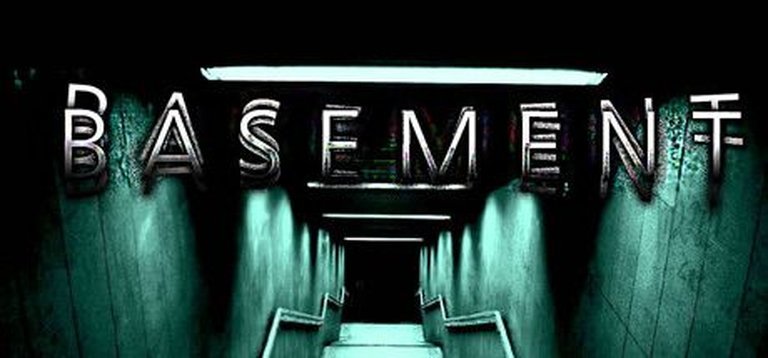
Description
In ‘Basement’, players assume the role of a scientist forced into an underground drug-dealing enterprise after being denied legitimate support for their ideas. Starting in a small basement, players manage production rooms, hire workers and security staff, navigate random events like fires and bribes, expand territories via truck deliveries, and evade law enforcement while growing their operation. The game emphasizes strategic room management, personal staffing, and high-stakes risks including police raids, gang fights, and potential imprisonment, with the outcome depending on survival of escalating challenges.
Gameplay Videos
Basement Cracks & Fixes
Basement Patches & Updates
Basement Mods
Basement Guides & Walkthroughs
Basement: Review
Introduction
In the shadowed corners of indie game development, few concepts blend satire and simulation with such audacious precision as Basement. From its origins as a Ludum Dare prototype to its full release in 2019, this Belarusian-developed strategy title dares players to build a drug empire in the pursuit of a “noble” goal: funding a cure for cancer. Its legacy lies in unflinching thematic depth—a morally ambiguous descent into organized crime—and a gameplay loop that masterfully balances meticulous management with chaotic risk. This review dissects Basement as both a cultural artifact and a mechanical marvel, arguing that while it falters in polish and narrative cohesion, its raw authenticity and systemic depth cement it as a cult classic within strategy gaming.
Development History & Context
Emerging from the Ludum Dare 29 game jam in 2014, Basement began as a minimalist 2D prototype by Belarusian studio Halfbus. The team, led by indie developers inspired by dark themes of desperation and ambition, sought to expand the concept beyond its jam constraints. Technologically constrained by its pixel-art aesthetic and real-time strategy mechanics, the game prioritized systemic complexity over graphical fidelity. Its Early Access launch on Steam in 2015 coincided with a resurgence of base-building and “criminal enterprise” simulations, yet Basement carved a unique niche by embedding its mechanics in a narrative of reluctant morality—a stark contrast to the glamorized crime of titles like Gangsters: Organized Crime. Four years of iterative development refined its drug-production systems and emergent storytelling, culminating in a November 2019 full release that preserved its gritty, unapologetic vision.
Narrative & Thematic Deep Dive
Basement’s narrative is a fractured morality play centered on Gunther High, a scientist-turned-entrepreneur, and his volatile partner, Jesse Cash. Expies of Walter White and Jesse Pinkman, their dynamic hinges on Jesse’s catchphrase: “I’ve done this a thousand times!”—a mantra that oscillates between bravado and dread. The plot unfurls through missions that escalate from basement-scale operations to city-wide turf wars, pitting the duo against rival gang lords Miguel and Tupo in a Let’s You and Him Fight scheme that backfires spectacularly. Thematic layers permeate every system:
– The American Dream’s Corruption: Gunther’s “legitimate” dream of curing cancer is perverted by the very systems he rejects, as drug funds become a Faustian bargain.
– Consequence and Karma: Prison arcs (complete with Prison Rape threats) and betrayals underscore the game’s thesis that crime is a self-devouring cycle.
– Dark Humor: Achievements like “420, Blaze It” (requiring $42,000 cash) and Bad Boss mechanics (firing employees before payday) lampoon capitalist excess.
The narrative’s fragmentation—abrupt shifts from strategic planning to prison escapes—mirrors the chaos of criminal life, though it lacks cohesion for a truly compelling saga.
Gameplay Mechanics & Systems
Basement’s genius lies in its emergent complexity. Core loops revolve around:
– Room Management: Optimizing layouts for drug production (e.g., chemistry labs, hydroponic gardens) while navigating limited space.
– Personnel Dynamics: Hiring workers (chemists, growers) and security guards, each with distinct stat pools (production, combat, loyalty). A Bad Boss ethos allows ruthless exploitation—e.g., delaying payroll.
– Logistics & Threats: Directing trucks via a city map to expand sales, while evading Dirty Cop bribes, rival gang raids, and federal busts. Combat is rudimentary but tense, involving real-time shootouts where buffs from “Getting High on Their Own Supply” (e.g., enhanced accuracy) turn tides.
– Random Events: Fires, supply shortages, or investor demands force reactive strategy, while a Cars Collection system rewards success with luxury vehicles—a satirical nod to criminal vanity.
Flaws emerge in UI clutter and underdeveloped late-game systems, where prison breaks or territory wars feel scripted rather than organic.
World-Building, Art & Sound
The game’s world is a pixel-art tapestry of grime and neon. Basements decay with mold-splattered walls and flickering fluorescent lights, while city maps pulse with the threat of rival territories (color-coded red for Tupo, green for Miguel). This duality—claustrophobic intimacy vs. sprawling urban chaos—creates a palpable tension. Sound design amplifies unease: a thumping heartbeat signals the “Mary Jane” tutorial voice (Gunther’s drug-induced hallucinations), while jazzy score swells during raids. The ★★★★☆ art style, though simplistic, excels in environmental storytelling—abandoned syringes or hastily scrawled notes hint at unseen suffering.
Reception & Legacy
Upon release, Basement earned “Mostly Positive” reviews on Steam (77% from 1,673 reviews), praised for its “addictive gameplay” and “dark humor.” Critics lauded its systemic depth but criticized janky combat and pacing issues. Commercially, it attracted a niche audience drawn to its unflinching premise, with over 2,200 reviews by 2025. Its legacy persists in discussions of moral ambiguity in strategy games, often cited alongside Papers, Please for its ethical dilemmas. Though it hasn’t spawned direct sequels, its influence echoes in indie simulations that blend base-building with narrative consequence, cementing its status as a beloved, flawed gem.
Conclusion
Basement is a double-edged scalpel: a razor-sharp simulation of criminal ambition wrapped in occasionally rough execution. Its genius lies in transforming drug-dealing into a visceral, systemic drama where every choice—from optimizing production lines to bribing cops—echoes in moral weight. While narrative fragmentation and technical hiccups prevent transcendence, Halfbus’ creation endures as a bold, unapologetic exploration of desperation and the American dream’s dark underbelly. For players seeking strategy with teeth—where profit and peril dance in pixelated harmony—Basement remains an essential, if imperfect, descent into the basement of human ambition.