
- Release Year: 2011
- Platforms: OnLive, PlayStation 3, Windows, Xbox 360
- Publisher: ak tronic Software & Services GmbH, Warner Bros. Interactive Entertainment Inc., WB Games, Inc.
- Developer: Rocksteady Studios Ltd
- Genre: Action
- Perspective: Behind view
- Game Mode: Single-player
- Gameplay: Beat ’em up, brawler, Detective mode, Forensic puzzles, Gadget-based combat, Metroidvania, Open World, Stealth, Trophy collection
- Setting: Contemporary, North America
- Average Score: 97/100
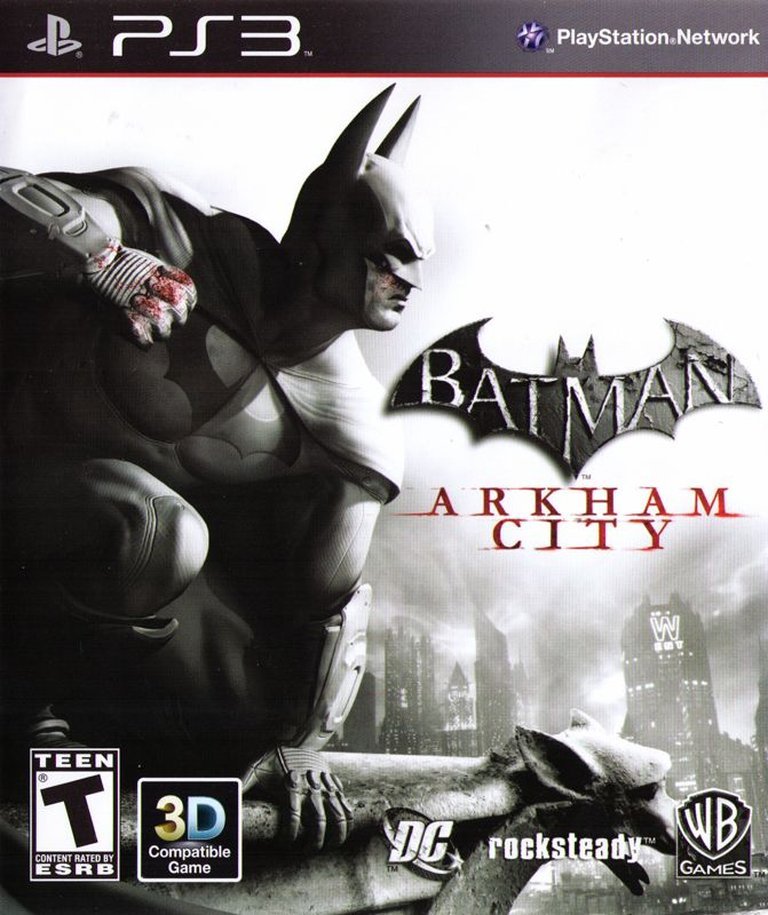
Description
Batman: Arkham City is the sequel to Batman: Arkham Asylum, set a year and a half after the original game. The story follows Batman as he is imprisoned in Arkham City, a massive open-air prison run by the corrupt mayor Quincy Sharp and the sinister Hugo Strange. With Gotham’s criminals and villains locked inside, Batman must uncover the secrets behind a deadly Titan formula infecting the Joker and a mysterious plan called Protocol 10. The game features an open-world environment, allowing players to explore, fight, and solve puzzles using Batman’s arsenal of gadgets and combat skills. Players can also take on the role of Catwoman, who has her own unique abilities and missions.
Gameplay Videos
Where to Buy Batman: Arkham City
Batman: Arkham City Free Download
Batman: Arkham City Cracks & Fixes
Batman: Arkham City Patches & Updates
Batman: Arkham City Mods
Batman: Arkham City Guides & Walkthroughs
Batman: Arkham City Reviews & Reception
metacritic.com (94/100): A Batman game like never before. Fans will feel like they’re dreaming, whereas everyone else has an incredibly large and in-depth world to enjoy and engage with.
ign.com : Batman: Arkham City is a brilliant game.
calitreview.com (100/100): The Stars are Bright with this Dark Knight – BIF BAM BANG POW! – Deep in the Heart of Gotham!
gamesradar.com : Arkham Asylum was practice. Compared to its sequel, the ‘best superhero game ever’ and our choice for Game of the Year 2009 seems like a tech demo, a first draft, merely a blueprint for what the perfect Batman game can actually be.
slantmagazine.com : Batman: Arkham City conclusively outshines its predecessor in every respect, not only tweaking its already fantastic combat, weapon, and control schemes for the better, but, more impressively, transplanting its action to a sprawling environment that proves even better suited for its various gameplay modes.
Batman: Arkham City Cheats & Codes
PC
Enter codes at the main menu.
| Code | Effect |
|---|---|
| Left, Left, Down, Down, Left, Left, Right, Up, Up, Down | Unlocks all skins for selection in Story mode. |
| Up, Up, Up, Down, Down, Down, Left, Left, Right, Left, Left, Up, Up, Down | Activates Big Head Mode. |
| Hold LT, RT, RB, LB (Xbox) or L1, R1, L2, R2 (PlayStation), rotate right stick clockwise and left stick counterclockwise | Activates Big Head Mode (alternative method). |
| Rotate the right analog stick clockwise repeatedly | Performs a taunt. |
PlayStation 3
Enter codes at the main menu or during gameplay.
| Code | Effect |
|---|---|
| Left(2), Down(2), Left(2), Right, Up(2), Down | Unlocks all costumes. |
| Hold L1 + R2 and rotate the Right Analog-stick clockwise ten times | Activates Big Head Mode. |
| Rotate the Right Analog-stick clockwise repeatedly | Performs a taunt. |
Xbox 360
Enter codes at the main menu or during gameplay.
| Code | Effect |
|---|---|
| Left(2), Down(2), Left(2), Right, Up(2), Down | Unlocks all costumes. |
| Hold LT + RT and rotate the Right Analog-stick clockwise ten times | Activates Big Head Mode. |
| Rotate the Right Analog-stick clockwise repeatedly | Performs a taunt. |
Batman: Arkham City: A Masterclass in Superhero Gaming
Introduction
Batman: Arkham City is not just a game—it is a cultural milestone, a defining moment in the evolution of superhero storytelling in interactive media. Released in 2011 by Rocksteady Studios, it is the sequel to the critically acclaimed Batman: Arkham Asylum and a game that redefined what a licensed superhero title could achieve. With its sprawling open-world design, meticulously crafted combat, and a narrative that rivals the depth of the best Batman comics, Arkham City stands as a testament to the potential of video games as a medium for immersive storytelling and gameplay innovation.
This review will dissect Batman: Arkham City in exhaustive detail, exploring its development history, narrative depth, gameplay mechanics, world-building, and lasting legacy. By the end, it will be clear why this game is not only one of the greatest superhero games ever made but also one of the most significant titles in the history of video games.
Development History & Context
The Studio and Vision
Rocksteady Studios, a British developer founded in 2004, was tasked with creating a Batman game that would transcend the mediocrity of previous licensed titles. Their debut, Batman: Arkham Asylum (2009), was a critical and commercial success, proving that a superhero game could be both artistically ambitious and mechanically refined. Building on this foundation, Rocksteady set out to expand the scope of their sequel, Batman: Arkham City, while retaining the tight, focused design that made Arkham Asylum so compelling.
The vision for Arkham City was to create a “Batman in Gotham” experience, where players could truly embody the Dark Knight in a living, breathing urban environment. The game’s director, Sefton Hill, emphasized the importance of capturing the essence of Batman’s world, stating that the goal was to make players feel like they were stepping into the pages of a comic book or the frames of a film. This ambition required a significant expansion in scale, with Arkham City featuring a virtual footprint five times larger than its predecessor.
Technological Constraints and Innovations
Developed using the Unreal Engine 3, Arkham City pushed the technical boundaries of the PlayStation 3, Xbox 360, and PC. The game’s open-world design presented unique challenges, particularly in ensuring that Batman’s traversal mechanics—gliding, grappling, and stealth—felt seamless in a larger environment. Rocksteady’s solution was to design the city with verticality in mind, allowing Batman to soar above the streets and dive into alleyways with fluidity.
One of the most significant innovations was the refinement of the “Freeflow” combat system, which allowed players to chain together attacks, counters, and gadget-based moves in a dynamic, rhythmic fashion. This system was expanded to include new abilities, such as countering multiple enemies simultaneously and using environmental objects in combat. The game also introduced new gadgets, like the Remote Electrical Charge (REC) and the Disruptor, which added layers of strategy to both combat and stealth scenarios.
The Gaming Landscape in 2011
Batman: Arkham City was released in a year that saw the launch of several landmark titles, including The Elder Scrolls V: Skyrim, The Legend of Zelda: Skyward Sword, and Uncharted 3: Drake’s Deception. The gaming landscape was dominated by open-world adventures and cinematic storytelling, and Arkham City stood out by blending these elements with the unique identity of Batman. Its release was met with immense anticipation, fueled by a marketing campaign that emphasized its dark, gritty tone and the return of Mark Hamill as the Joker.
Narrative & Thematic Deep Dive
Plot Summary
Batman: Arkham City takes place 18 months after the events of Arkham Asylum. Quincy Sharp, the former warden of Arkham Asylum, has become the mayor of Gotham City and has overseen the creation of Arkham City, a massive super-prison enclosing the decaying slums of Gotham. The prison is run by the enigmatic psychiatrist Hugo Strange, who is aware of Batman’s secret identity and has sinister plans for the inmates.
The game begins with Bruce Wayne being arrested and imprisoned in Arkham City after publicly opposing the facility. Once inside, he dons the mantle of Batman and must navigate the chaotic prison to uncover the truth behind Strange’s “Protocol 10,” a plan to exterminate the inmates and destroy Gotham’s criminal underworld. Along the way, Batman encounters a rogue’s gallery of villains, including the Joker, who is dying from a disease caused by the Titan formula, and Catwoman, who has her own agenda within the prison.
Characters and Performances
The game’s narrative is elevated by its stellar voice cast, with Kevin Conroy reprising his role as Batman and Mark Hamill delivering a career-defining performance as the Joker. The chemistry between these two actors is electric, capturing the complex, antagonistic relationship between Batman and his greatest foe. Other standout performances include Tara Strong as Harley Quinn, Nolan North as the Penguin, and Maurice LaMarche as Mr. Freeze.
The game’s writing, led by Paul Dini, Paul Crocker, and Sefton Hill, is sharp and nuanced, blending dark humor with genuine emotional weight. The Joker’s arc, in particular, is a masterclass in character development, as his descent into madness is juxtaposed with his physical deterioration. The game’s ending, which sees the Joker’s death, is both shocking and poignant, leaving a lasting impact on players.
Themes and Symbolism
Batman: Arkham City explores several profound themes, chief among them the nature of justice and the cost of heroism. The game’s setting—a prison where inmates are left to fend for themselves—serves as a microcosm of Gotham’s moral decay. Batman’s struggle to maintain order in this lawless environment raises questions about the effectiveness of his methods and the limits of his moral code.
The game also delves into the duality of identity, particularly through the character of Hugo Strange, who knows Batman’s secret and seeks to exploit it. This theme is further explored in the relationship between Batman and the Joker, who are often portrayed as two sides of the same coin. The Joker’s final moments, where he manipulates Batman into believing he has been cured, only to reveal that he is still dying, underscore the tragic, co-dependent nature of their rivalry.
Gameplay Mechanics & Systems
Combat and Stealth
At the heart of Arkham City is its combat system, which builds on the foundations laid by Arkham Asylum. The “Freeflow” combat allows players to chain together attacks, counters, and gadget-based moves in a fluid, rhythmic manner. The system is intuitive yet deep, rewarding players for creativity and precision. New mechanics, such as the ability to counter multiple enemies at once and use environmental objects in combat, add layers of strategy to the gameplay.
Stealth is equally important, with Batman’s predatory tactics allowing him to take down enemies silently from the shadows. The game’s predator challenges, where players must navigate environments filled with armed guards, are some of the most tense and rewarding moments in the game. The use of gadgets, such as the Disruptor and Smoke Pellets, adds variety to these scenarios, ensuring that no two encounters feel the same.
Gadgets and Progression
Batman’s arsenal of gadgets is one of the game’s standout features. From the classic Batarang to the new REC and Disruptor, each gadget serves a unique purpose in combat, exploration, and puzzle-solving. The game’s progression system allows players to upgrade these gadgets, unlocking new abilities that open up new possibilities in traversal and combat.
The game’s RPG-like elements, such as experience points and skill trees, give players a sense of growth and customization. As Batman levels up, players can choose to enhance his combat skills, stealth abilities, or gadget proficiency, allowing for a personalized playstyle.
Open-World Design
Arkham City’s open-world design is a triumph of level design and environmental storytelling. The city is divided into distinct districts, each controlled by a different villain, from the Joker’s industrial steel mill to the Penguin’s fortified museum. These areas are richly detailed, with environmental storytelling that hints at the history and personalities of their inhabitants.
The game’s traversal mechanics are a highlight, with Batman’s gliding and grappling allowing for seamless navigation of the city’s vertical spaces. The sense of freedom and momentum is unparalleled, making exploration a joy rather than a chore.
Side Missions and Collectibles
In addition to the main story, Arkham City features a wealth of side missions and collectibles that add depth and replayability. The Riddler’s challenges, which include solving puzzles and collecting trophies, are particularly well-designed, requiring players to think creatively and use Batman’s gadgets in unexpected ways.
Other side missions, such as those involving Catwoman, Robin, and Nightwing, offer unique perspectives on the game’s events and expand the lore of the Batman universe. These missions are not just filler; they are integral to the game’s world-building and narrative depth.
World-Building, Art & Sound
Setting and Atmosphere
Arkham City’s setting is a character in its own right. The prison is a sprawling, decaying urban landscape, filled with crumbling buildings, neon-lit alleyways, and towering skyscrapers. The art direction is a masterclass in atmospheric design, with each district of the city reflecting the personality of its controlling villain.
The game’s use of color and lighting is particularly striking. The Joker’s territory is bathed in sickly green hues, while the Penguin’s museum is a stark, cold environment filled with ice and snow. These visual cues not only enhance the game’s aesthetic but also serve as narrative shorthand, reinforcing the themes and personalities of the characters.
Visual Direction
The game’s visual style is a blend of hyperrealism and comic book aesthetics. Character models are detailed and expressive, with animations that convey a sense of weight and impact. The game’s use of motion capture, particularly for the combat and stealth sequences, adds a layer of realism that grounds the fantastical elements of the story.
The game’s cutscenes are equally impressive, with cinematic framing and pacing that rival the best animated films. The attention to detail in these sequences, from the subtle facial expressions of the characters to the dynamic camera angles, ensures that the narrative is as engaging visually as it is thematically.
Sound Design and Music
The sound design in Arkham City is immersive and atmospheric, with ambient noises that bring the city to life. The game’s score, composed by Nick Arundel and Ron Fish, is a haunting, orchestral masterpiece that perfectly complements the game’s dark tone. The music dynamically shifts to reflect the player’s actions, adding tension to combat and stealth sequences.
The voice acting is another standout feature, with each actor delivering a performance that captures the essence of their character. Mark Hamill’s Joker is particularly memorable, with his manic laughter and chilling monologues leaving a lasting impression.
Reception & Legacy
Critical Reception
Batman: Arkham City was met with universal acclaim upon its release, with critics praising its narrative, gameplay, and world design. The game holds a Metacritic score of 96/100 for the PlayStation 3 version, making it one of the highest-rated games of all time. Reviewers lauded the game’s combat system, open-world design, and the depth of its storytelling.
The game’s reception was not without controversy, however. Some critics took issue with the game’s use of DLC, particularly the Catwoman missions, which were initially locked behind a pre-order bonus. Others criticized the game’s technical issues, particularly on the PC, where performance problems marred the experience for some players.
Commercial Success
Batman: Arkham City was a commercial juggernaut, selling over two million copies in its first week and generating over $600 million in revenue. The game’s success cemented Rocksteady’s reputation as a premier developer and demonstrated the viability of superhero games as a major genre.
Influence and Legacy
Arkham City’s influence on the gaming industry is profound. It set a new standard for superhero games, inspiring titles like Marvel’s Spider-Man and Insomniac’s Spider-Man 2. The game’s combat system, in particular, has been emulated in numerous action-adventure games, and its open-world design has become a benchmark for the genre.
The game’s narrative depth and character development have also had a lasting impact, with many subsequent superhero games striving to achieve the same level of storytelling. The game’s ending, in particular, is often cited as one of the most memorable in gaming history, and its exploration of themes like justice and identity continues to resonate with players.
Conclusion
Batman: Arkham City is more than just a game—it is a masterpiece of interactive storytelling, a triumph of gameplay design, and a landmark in the evolution of superhero media. Its blend of open-world exploration, meticulously crafted combat, and a narrative that rivals the best Batman comics makes it a standout title in the history of video games.
The game’s legacy is secure, with its influence felt in countless titles that followed. It remains a benchmark for what a superhero game can achieve, and its place in the pantheon of gaming greats is well-deserved. For fans of Batman, action-adventure games, or simply great storytelling, Batman: Arkham City is an essential experience.
Final Verdict: 10/10 – A Masterpiece
Batman: Arkham City is not just the greatest superhero game ever made—it is one of the greatest games of all time. Its combination of narrative depth, gameplay innovation, and atmospheric world-building sets a standard that few games have matched. Whether you’re a fan of Batman or simply a lover of great games, Arkham City is an experience that should not be missed.