
- Release Year: 2015
- Platforms: PlayStation 4, Windows, Xbox One
- Publisher: Warner Bros. Interactive Entertainment Inc.
- Developer: Rocksteady Studios
- Genre: Compilation
- Game Mode: Single-player
- Average Score: 76/100
Description
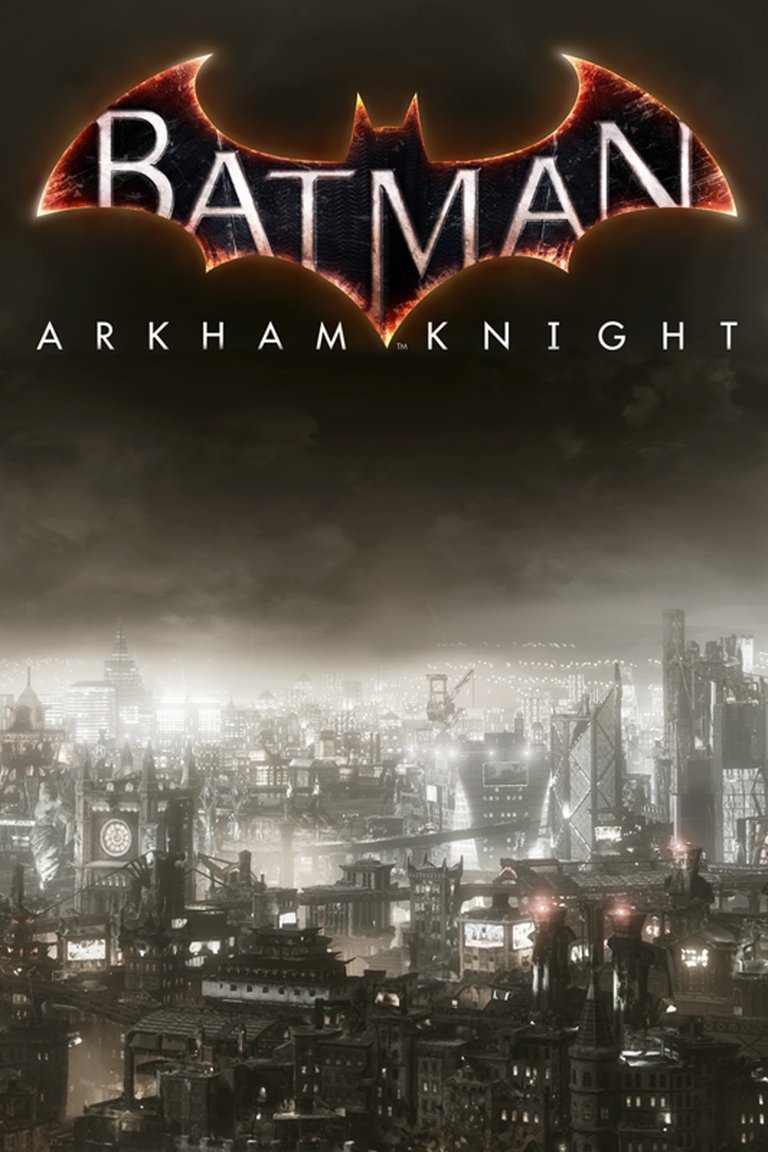
The ‘Batman: Arkham Knight – Season Pass’ expands the final chapter of the Arkham series with additional content, immersing players in Gotham City’s chaotic showdown against Scarecrow’s fear toxin and the mercenary forces of the Arkham Knight. This DLC package includes new story missions, playable characters, alternate skins like the Batman Beyond and Arkham Batmobile, and harrowing confrontations with iconic villains such as Harley Quinn and Two-Face, deepening the game’s dark narrative.
Gameplay Videos
Where to Buy Batman: Arkham Knight – Season Pass
Batman: Arkham Knight – Season Pass Patches & Updates
Batman: Arkham Knight – Season Pass Mods
Batman: Arkham Knight – Season Pass Reviews & Reception
niklasnotes.com (74/100): Mostly Positive
metacritic.com (79/100): All’s well that ends well, even DLCs.
comicbookvideogames.com : It is an absolute must-play for fans of Batman and the Arkham universe, yet it comes a little too late to redeem the Season Pass as a whole.
Batman: Arkham Knight – Season Pass Cheats & Codes
Xbox One
At the main menu or while playing the game
| Code | Effect |
|---|---|
| Hold LT + RT and rotate Right Analog-stick continuously | Enlarges character’s head (Big Head Mode) |
PlayStation 4
At the main menu or while playing the game
| Code | Effect |
|---|---|
| Hold L2 + R2 and rotate Right Analog-stick continuously | Enlarges character’s head (Big Head Mode) |
Batman: Arkham Knight – Season Pass: Review
Introduction
The Final Gauntlet of the Dark Knight
Bruce Wayne’s crusade against Gotham’s criminal underworld reaches its crescendo in Batman: Arkham Knight, the climactic finale to Rocksteady Studios’ genre-defining trilogy. Released in 2015 after a four-year development cycle, the game sought to marry the series’ signature freeflow combat and predator stealth with unprecedented scale, driven by the long-awaited debut of the Batmobile. The Season Pass—a contentious staple of modern gaming—promised to expand this swan song with post-launch stories, skins, and challenges. Yet, as this review will argue, the pass embodies both the zenith of Rocksteady’s ambition and the pitfalls of live-service monetization: a patchwork of fan service and missed opportunities that enriches the core experience but fails to coalesce into a essential whole.
Development History & Context
From Asylum to Armageddon: Rocksteady’s Gotham Odyssey
Rocksteady Studios, having redefined superhero gaming with Arkham Asylum (2009) and Arkham City (2011), faced immense pressure to deliver a finale worthy of Batman’s legacy. Development began in 2011, with Warner Bros. assigning its Montréal studio to craft the prequel Arkham Origins (2013) as a stopgap. Freed from cross-gen constraints, Rocksteady leveraged the PS4 and Xbox One’s power to create a Gotham five times larger than City’s, rendered with fluid, loading screen-free traversal and a fully realized Batmobile—a dream deferred since Asylum.
The Batmobile Gambit
The vehicle’s inclusion demanded a redesign of Gotham’s architecture: wider streets for high-speed chases, taller buildings for aerial ejections, and a shift from City’s claustrophobic alleys to three distinct islands (Bleake, Founders, Miagani). This open-world pivot mirrored industry trends but risked diluting the series’ intimate environmental storytelling. Technical innovations, like real-time cutscenes and the Apex physics engine for cape dynamics, showcased Rocksteady’s technical prowess—yet the studio’s insistence on excluding multiplayer to focus on single-player purity drew both praise and skepticism.
A New Knight Rises
Collaborating with DC CCO Geoff Johns and artist Jim Lee, Rocksteady introduced the Arkham Knight—a militarized anti-Batman—as an original antagonist. This decision sparked debate: Was the Knight a bold narrative device or a cynical ploy to sidestep comic lore? The answer, as players discovered, lay somewhere in between.
Narrative & Thematic Deep Dive
Fear and Legacy in a City Without Hope
Set nine months after Joker’s death, Arkham Knight pits Batman against Scarecrow’s citywide fear-toxin siege, aided by the eponymous Knight’s militia. The plot intertwines two core threads:
The Ghost of Joker
Mark Hamill’s iconic villain returns as a hallucination—a manifestation of Batman’s infected blood and psychological trauma. Through fever-dream sequences and wrenching internal monologues, the game explores Batman’s guilt over their symbiotic relationship, culminating in a psyche-shattering showdown where Bruce conquers his “inner Joker.” This arc elevates the narrative beyond comic-book bombast into a tragic meditation on obsession and sacrifice.
The Arkham Knight’s Identity
The Knight’s reveal as Jason Todd—the “dead” Robin—divided fans. While Troy Baker’s raw performance sold Jason’s betrayal, Rocksteady’s marketing campaign (“an original character”) felt disingenuous, undercutting the twist’s emotional weight. Still, the dynamic enriched Batman’s role as a flawed father figure, paralleling Scarecrow’s manipulation of Gotham’s fears. Supporting arcs—Oracle’s resilience, Ivy’s redemption, Gordon’s grief—added depth, though villains like Two-Face and Penguin faded into repetitive sidequests.
Gameplay Mechanics & Systems
A Symphony of Violence—With a Jarring Tank Cadenza
Arkham Knight refines the series’ Freeflow combat and predator stealth while introducing divisive vehicular warfare.
The Freeflow Evolution
The Dual Play system—seamlessly swapping between Batman, Robin, Nightwing, and Catwoman during combat—added tactical depth, allowing tandem takedowns and combo preservation. Fear Multi-Takedowns let Batman incapacitate five foes if undetected, rewarding strategic timing. However, enemy variety stagnated: medics revived allies, drones hacked gadgets, but most fights devolved into rhythmic counter-chaining.
The Batmobile: Triumph and Albatross
Rocksteady’s pride became its polemic. Pursuit Mode’s slick handling and ejector-powered leaps made traversal exhilarating, but Battle Mode—transforming the Batmobile into a tank—clashed tonally with Batman’s no-kill ethos. Grindy drone skirmishes and Riddler race tracks (all 243 of them) overstayed their welcome, revealing the car’s role as a padding tool rather than an organic extension of the fantasy.
Sidequest Stumbles
“Most Wanted” missions highlighted Batman’s rogues’ gallery, yet their execution varied wildly. Professor Pyg’s chilling body-horror investigation stood alongside tedious bomb-defusal chores. The Season Pass exacerbated this inconsistency—while “Season of Infamy” added memorable villain arcs (Killer Croc’s rampage, Mr. Freeze’s moral dilemma), disposable DLC like challenge maps and cosmetic skins felt cynically segmented.
World-Building, Art & Sound
Gotham as Gilded Cage
Gotham’s rain-lashed, neon-soaked skies oozed atmosphere, blending Blade Runner’s dystopia with Art Deco grandeur. Miagani’s skyscrapers loomed over Founders’ slums, while Bleake’s docks whispered tales of urban decay. Yet this beauty masked a hollow core: civilians were evacuated, leaving only thugs to populate streets—a trade-off for seamless gameplay that estranged the city from its humanity.
The Aesthetic of Fear
Nick Arundel and David Buckley’s score merged gothic choirs with electronic pulses, echoing Batman’s fractured psyche. Scarecrow’s toxin warped environments into Lynchian nightmares (liminal morgues, grotesque dollhouses), while Joker’s jaunty piano motifs taunted players during hallucinations. Sound design triumphed in small moments: the crunch of bone during combat, the roar of the Batmobile’s engine.
The Dressing-Up Box
The Season Pass’s skins—spanning Batman Beyond, The Dark Knight Returns, and even Adam West’s campy ‘60s suit—offered delightful fan service but clashed with the main game’s grim tone. DLC-exclusive areas, like the oil rig in Batgirl: A Matter of Family, showcased inventive level design but underscored the pass’s uneven value.
Reception & Legacy
A Broken Covenant
Upon release, Arkham Knight became 2015’s fastest-selling game (5M+ units by October), praised for its narrative ambition and technical achievements. PS4 and Xbox One versions earned Metascores of 87 and 85, lauded as a fitting series capstone. Yet the PC port’s botched launch—plagued by framerate caps, stuttering, and missing effects—forced Warner Bros. to pull it from sale, tainting the game’s reputation irreparably.
The Season Pass Divide
Critics lambasted early DLC like the 10-minute Red Hood mission as “disgustingly short” (Destructoid), while Batgirl: A Matter of Family won plaudits for its character-driven puzzles. The pass’s $40 price sparked backlash, partly redeemed by meatier expansions like “Season of Infamy,” which Eurogamer called “a buffet for Batman die-hards.” Ultimately, it mirrored industry trends: a mix of meaningful content and cash-grabs.
Echoes in the Industry
Arkham Knight’s DNA infused later titles—Spider-Man’s traversal, Shadow of Mordor’s combat—but its Batmobile missteps became a cautionary tale. The Season Pass model spurred Warner Bros. toward live-service experiments (Suicide Squad: Kill the Justice League), yet Rocksteady’s focus on single-player purity remains a benchmark.
Conclusion
A Knight Worth Remembering—But Not Without Scars
Batman: Arkham Knight is a masterclass in atmospheric storytelling and refined mechanics, marred by misguided vehicular elements and exploitative DLC packaging. The Season Pass epitomizes this duality: indispensable for lore completists (via “Season of Infamy”) yet burdened by filler. For all its flaws, the game stands as a testament to Rocksteady’s ambition—a flawed, fiery requiem for the Dark Knight that reshaped superhero gaming. In the echoing halls of Arkham’s legacy, it remains both a triumph and a warning: the line between innovation and excess is perilously thin.
Final Verdict:
A compulsively playable, narratively rich conclusion hamstrung by its own ambition. The Season Pass? Pick selectively—like Batman choosing his battles.