
- Release Year: 2015
- Platforms: Windows
- Publisher: Petroglyph Games Inc.
- Developer: Petroglyph Games Inc.
- Genre: Strategy, Tactics
- Perspective: Diagonal-down
- Gameplay: Real-time, Strategy, Tactics, Wargame
- Setting: Futuristic, Sci-fi
- Average Score: 62/100
Description
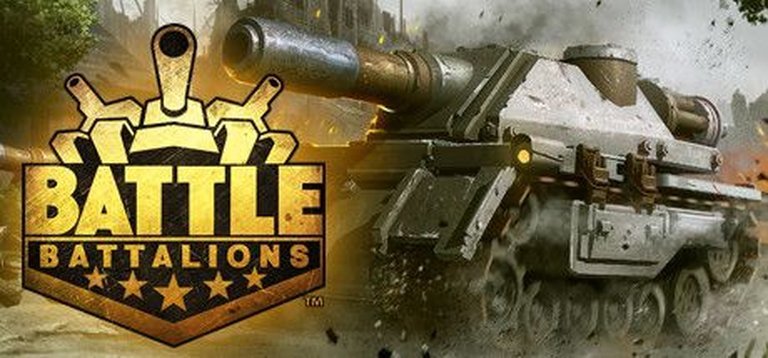
Battle Battalions is a tactical military MOBA set in a sci-fi/futuristic war narrative. Players command personalized battalions in 5v5 real-time strategy battles, capturing objectives and upgrading units to outmaneuver opponents. The game emphasizes teamwork and strategic positioning, offering a variety of unit types and environmental advantages to secure victory.
Gameplay Videos
Battle Battalions Cracks & Fixes
Battle Battalions Guides & Walkthroughs
Battle Battalions Reviews & Reception
steamcommunity.com : Check this out, is a 1st Look-Review of the game hope u like that.
Battle Battalions: Review
Introduction
In the crowded landscape of free-to-play multiplayer titles, Battle Battalions (2015) emerged as an ambitious—if flawed—experiment by Petroglyph Games, a studio founded by veterans of Westwood Studios (Command & Conquer). Blending real-time strategy (RTS) micromanagement with MOBA-style team battles, the game sought to carve a niche in the tactical warfare genre. Yet, by 2018, its servers were shuttered, leaving behind a legacy of unrealized potential. This review argues that Battle Battalions was a fascinating but fatally disjointed hybrid, undone by its monetization model, uneven execution, and the unforgiving economics of live-service games.
Development History & Context
Studio Vision and Predecessors
Petroglyph Games, formed by ex-Westwood developers, aimed to resurrect the spirit of classic RTS titles in a modern context. Battle Battalions began life as Victory Command, a Kickstarter project in 2013 that was later retooled into a free-to-play title. The studio sought to marry tactical unit control (a hallmark of their Grey Goo and Star Wars: Empire at War pedigree) with the accessibility of MOBAs like League of Legends.
Technological and Market Challenges
Released in November 2015, the game entered a market dominated by established MOBAs and burgeoning hero shooters. Its RTS-inspired mechanics—such as unit rotation, terrain exploitation, and drone deployment—were innovative but clashed with casual玩家 expectations. The reliance on a live-service model, exacerbated by aggressive monetization, alienated players amid growing skepticism toward “pay-to-win” systems.
Narrative & Thematic Deep Dive
Plot and Setting
Battle Battalions eschewed narrative depth for purely competitive gameplay. Set in a generic near-future sci-fi conflict, players commanded battalions of infantry, recon vehicles, or tanks across battlefields devoid of lore. The lack of faction identity or storytelling mirrored contemporaries like World of Tanks, focusing instead on mechanical mastery.
Themes of Teamwork and Tactics
The game emphasized coordination, with battalions serving specialized roles:
– Recon Units leveraged stealth and speed.
– Tanks acted as armored bruisers.
– Infantry provided versatile support.
This class-based synergy echoed military sims, but without narrative stakes, matches felt functionally transactional rather than epic.
Gameplay Mechanics & Systems
Core Loop and Combat
Matches were 5v5 skirmishes centered on capturing objectives (A, B, C) to accumulate 250 points. Players controlled 3–5 units per battalion, micromanaging positioning, abilities, and terrain advantages (e.g., brush for camouflage). The controls were praised for their intuitiveness, but the learning curve for optimal unit interplay was steep.
Progression and Monetization
- Unit Customization: Unlockable perks, skins, and upgrades via XP or credits.
- Pay-to-Win Criticisms: Premium purchases offered stat-boosting drones and units, skewing balance. Starter packs ($5–$10) fragmented the already-small player base.
Flaws and Frustrations
- Matchmaking Times: Often exceeded 10 minutes due to low retention.
- AI Fill-Ins: Abandoned matches were padded with incompetent bots.
- UI Issues: Alt-tab crashes and tooltip overload confused newcomers.
World-Building, Art & Sound
Visual Design
The game adopted a clean, arcade-like aesthetic with cel-shaded units and vibrant maps. While functional, environments lacked dynamism, repeating industrial and desert biomes. Unit designs—from Humvees to rocket troops—were recognizable but unremarkable.
Sound Design
The soundtrack, composed by Frank Klepacki (of Command & Conquer fame), featured pulse-pounding electronic tracks. Battle noises—artillery fire, engine roars—were serviceable but failed to immerse players in the chaos of war.
Reception & Legacy
Launch and Decline
Battle Battalions debuted to mixed reviews (59/100 on Steam), praised for its tactical depth but lambasted for progression grinding and monetization. By 2018, Petroglyph pulled the plug, citing unsustainable player counts.
Industry Impact
The game’s closure joined a graveyard of failed live-service experiments (LawBreakers, Battleborn). However, its RTS/MOBA hybrid DNA influenced later titles like Total War: Arena and Iron Harvest. Petroglyph shifted focus to niche strategy games (Conan Unconquered), abandoning the live-service model.
Conclusion
Battle Battalions was a bold but flawed experiment—a game that asked players to juggle RTS precision and MOBRA reflexes in an era that demanded simplicity. Its servers may be silent, but its lessons resonate: hybrid genres demand clarity, and player trust is fragile in monetized ecosystems. For historians, it remains a poignant case study of ambition versus execution. For players, it’s a fleeting footnote—a battalion that marched bravely into oblivion.
Final Verdict: A cautionary tale of innovation stifled by design dissonance and predatory monetization. Worth remembering, not resurrecting.