
- Release Year: 2018
- Platforms: Windows
- Publisher: Suzhou DaYu Network Technology Co., Ltd.
- Developer: Suzhou DaYu Network Technology Co., Ltd.
- Genre: Strategy, Tactics
- Perspective: Diagonal-down
- Gameplay: Tower defense
- Average Score: 65/100
Description
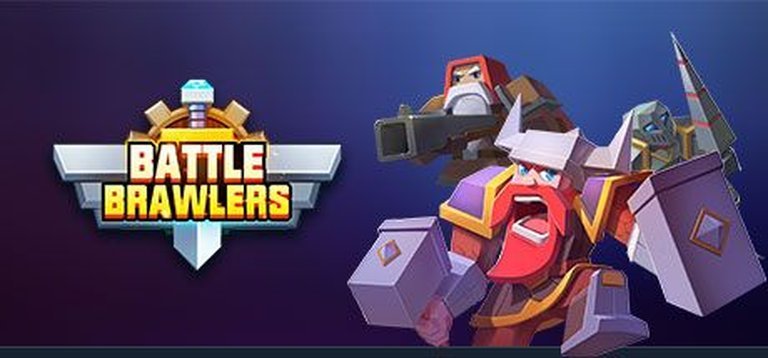
Battle Brawlers is a strategy and tactics tower defense game developed and published by Suzhou DaYu Network Technology Co., Ltd., featuring a diagonal-down perspective where players engage in intense brawling confrontations by strategically placing defenses to repel enemy waves in dynamic battle arenas.
Where to Buy Battle Brawlers
PC
Battle Brawlers Reviews & Reception
steambase.io (58/100): Mixed
metacritic.com (81/100): Generally Favorable
Battle Brawlers: Review
Introduction
In the crowded arena of free-to-play multiplayer strategy games, where clones of MOBAs and auto-battlers vie for attention, Battle Brawlers bursts onto the scene like an uninvited challenger—raw, relentless, and unapologetically focused on pure tactical skirmishes. Released in 2018 by the relatively obscure Suzhou DaYu Network Technology Co., Ltd., this Windows-exclusive title draws superficial echoes from the Bakugan: Battle Brawlers franchise (a 2009 console adaptation of the popular anime and toy line), sharing a name that evokes explosive monster battles and competitive brawling. Yet, Battle Brawlers carves its own niche as a fast-paced real-time strategy (RTS) hybrid with tower defense roots, emphasizing symmetric 1v1 and 2v2 PvP matches that last a brisk 10 minutes. Its legacy? A cult curiosity in the F2P ecosystem, overshadowed by giants like Dota Auto Chess or Clash Royale, but praised by some for its addictive placement-based combat. Thesis: While Battle Brawlers innovates on auto-resolving troop mechanics in a global server environment, its unbalanced monetization, repetitive maps, and lack of depth prevent it from transcending mediocrity, cementing it as a flawed gem for strategy purists.
Development History & Context
Suzhou DaYu Network Technology Co., Ltd., a Chinese developer with minimal footprint beyond this title, crafted Battle Brawlers using the Unity engine—a choice emblematic of the late-2010s indie boom, enabling quick deployment of 2D/3D hybrid visuals and cross-platform potential (though it remained PC-only). Released on June 18, 2018, via Steam as a free-to-play title, it arrived amid a gaming landscape dominated by battle royales (Fortnite, PUBG) and mobile RTS hybrids (Clash of Clans, Boom Beach). Technological constraints were minimal; Unity handled diagonal-down perspectives smoothly on modest hardware (Intel Core Duo recommended), but the era’s F2P model imposed its own limits: aggressive in-app purchases for heroes, spells, and troops.
The studio’s vision, per Steam’s ad blurb, was a “globally served RTS” breaking “boundaries of nations and languages,” with features like auto-matching, ladder tournaments, and real-time chat. This reflected China’s booming esports scene and export of mobile-inspired games to PC (e.g., Honor of Kings). Influences are clear: tower defense stalwarts like Bloons TD for placement strategy, auto-battlers like early Vainglory for hands-off combat, and Bakugan‘s thematic brawling (though unrelated—Bakugan Battle Brawlers was a 2009 Now Production title on consoles/DS, focused on card-based mini-games). No patches or sequels followed, suggesting abandonment post-launch, typical of F2P live-service flops amid 2018’s market saturation.
Narrative & Thematic Deep Dive
Battle Brawlers eschews traditional storytelling for pure PvP abstraction, a deliberate choice amplifying its competitive ethos. No single-player campaign exists; instead, lore emerges via eight races, 200+ troops, 10+ heroes, and 40+ spells, implying a mythic war where players command “War Gods”—godlike avatars at each base, whose death spells defeat. Symmetric maps evoke neutral battlegrounds, thematically echoing gladiatorial arenas or Bakugan‘s interdimensional clashes (e.g., Doom Dimension origins in the 2009 game), but without narrative ties.
Core Themes:
– Strategic Predestination: Troops auto-move/fight post-placement, forcing premeditated decisions. This mirrors real-world command: generals “place” units without micromanagement, critiquing overcontrol in RTS like StarCraft.
– Global Tribalism: Universal servers foster cross-cultural rivalries, with chat enabling trash-talk. Races (implied factions like Pyrus/Subterra analogs from Bakugan toys) add asymmetry, exploring unity vs. diversity.
– Redemption & Escalation: Upgrades and spells represent evolution (paralleling Bakugan‘s evolving Bakugan like Leonidas to Omega Leonidas), but War God vulnerability underscores hubris—overextend, and doom follows.
Dialogue is sparse (chat-only), but in-game prompts (“Be prepared! Enemy attacks fiercer each round!”) build tension. Absent a plot, themes rely on emergent stories: ladder climbs as hero’s journeys, comebacks via clever spells. Flaws abound—no voiced lore or bios leave races feeling generic, diluting immersion compared to Bakugan Battle Brawlers‘ character-driven tournaments (Dan Kuso vs. Marduk).
Gameplay Mechanics & Systems
At its heart, Battle Brawlers reimagines tower defense as “barracks placement RTS.” Symmetric maps feature lanes/portals; players spawn barracks producing auto-fighting troops that advance, clash, and assault the enemy’s War God. Gold accrues per round for builds/upgrades; no direct control post-placement demands foresight.
Core Loops:
– Placement Phase: Select from 200+ troops (melee/ranged, e.g., Bakugan-esque dragonoids or insects), heroes (unique abilities), spells (40+, like AoE nukes). Static positioning is key—poor lanes mean undefended flanks.
– Combat Resolution: Units auto-path, skill, die. Waves intensify, forcing adaptation. Matches: 10 mins, 1v1/2v2.
– Win Conditions: Deplete enemy War God’s health first.
Innovations:
– Auto-Balance: Eliminates APM grind; skill in prediction (e.g., countering meta troops).
– Modes: Gold Tournament, Master Cards Championship, Group/Crazy—add variety (e.g., spell-only chaos).
– Progression: Achievements, profiles, stats; reconnects prevent rage-quits.
UI/Flaws: Clean diagonal-down view, but cluttered HUD (gold, timers). Balance issues plague: paywalled premiums dominate ladders (Steam complaints). Progression grinds BP for unlocks, echoing Bakugan‘s codes (e.g., Warius). No tutorial depth; newbies falter. Compared to Bakugan Battle Brawlers‘ mini-games (Shooting/Timing/Power Battles), this is purer strategy but less tactile.
| Mechanic | Strength | Weakness |
|---|---|---|
| Troop Placement | High replayability | Static = punishing errors |
| Spells/Heroes | Tactical depth | Pay-to-win skew |
| Match Length | Arcade-perfect | Repetitive metas |
World-Building, Art & Sound
Settings are abstract symmetric arenas—volcanic lanes, foggy battlefields—evoking Bakugan‘s Vestroia but generic. Atmosphere builds via escalating waves: early skirmishes yield to chaotic melees, portals glowing as War Gods clash.
Visuals: Unity-powered 2D sprites in diagonal-down view; cartoonish troops (hulking brutes, agile flyers) pop with particle effects (explosions, spells). Heroes shine (e.g., axe-wielding titans akin to Vladitor). Low-res textures betray budget, but fluid animations enhance chaos.
Sound: Pulsing electronica ramps tension; troop clashes deliver satisfying thwacks, spells booms. No VO, but chat pings add social buzz. Contributes immersively: audio cues signal upgrades/breaches, heightening paranoia. Overall, functional polish elevates modest assets, mirroring Bakugan‘s toy-inspired vibrancy.
Reception & Legacy
Launch reception: Silent. MobyGames lists no scores/reviews; Steam’s 197 user reviews yield “Mixed” (57% positive), praising quick matches/addictiveness but slamming paywalls, bots, matchmaking. Peaks in 2018 (dozens monthly) faded; now <10 concurrent.
Critically absent—F2P PvP obscurity. Evolved rep: Niche endurance; Steam charts show steady 50-100 players. Influence minimal: Prefigures auto-battlers (Teamfight Tactics), but no direct successors. Name confusion with Bakugan Battle Brawlers (2009’s 70-80 Metacritic, praised mini-games but panned repetition) hurts discoverability. No ports/emulation; legacy as “forgotten Steam TD.”
Conclusion
Battle Brawlers ambitiously fuses RTS planning with tower defense automation, delivering tense, global PvP in bite-sized doses amid 2018’s F2P glut. Its strengths—clever placement, escalating chaos—shine for casual strategists, evoking Bakugan‘s brawling spirit without copying its card mini-games. Yet, monetization toxicity, balance woes, and content drought relegate it to obscurity. Verdict: 6/10. A historical footnote for genre historians, playable for free but quickly brawled out; recommended for TD diehards seeking offline-like online scraps, but skip if you hate grindy ladders. In gaming history, it joins the pantheon of ambitious underdogs, much like its namesake franchise’s plucky brawlers.