
- Release Year: 1988
- Platforms: Acorn 32-bit, Amiga CD32, Amiga, Antstream, Apple II, Apple IIgs, Atari ST, CDTV, Commodore 64, DOS, Linux, Macintosh, NES, PC-98, Sharp X68000, Windows 16-bit, Windows
- Publisher: Data East USA, Inc., Dice Multi Media Europe B.V., Electronic Arts, Inc., Empire Interactive Europe Ltd., GameTap LLC, Interplay Productions, Inc., Krisalis Software Ltd., Pack-In-Video Co., Ltd
- Developer: Interplay Productions, Inc.
- Genre: Strategy, Tactics
- Perspective: Top-down
- Game Mode: Hotseat, LAN, Single-player
- Gameplay: Board game, Chess, Turn-based
- Setting: Fantasy
- Average Score: 65/100
- Adult Content: Yes
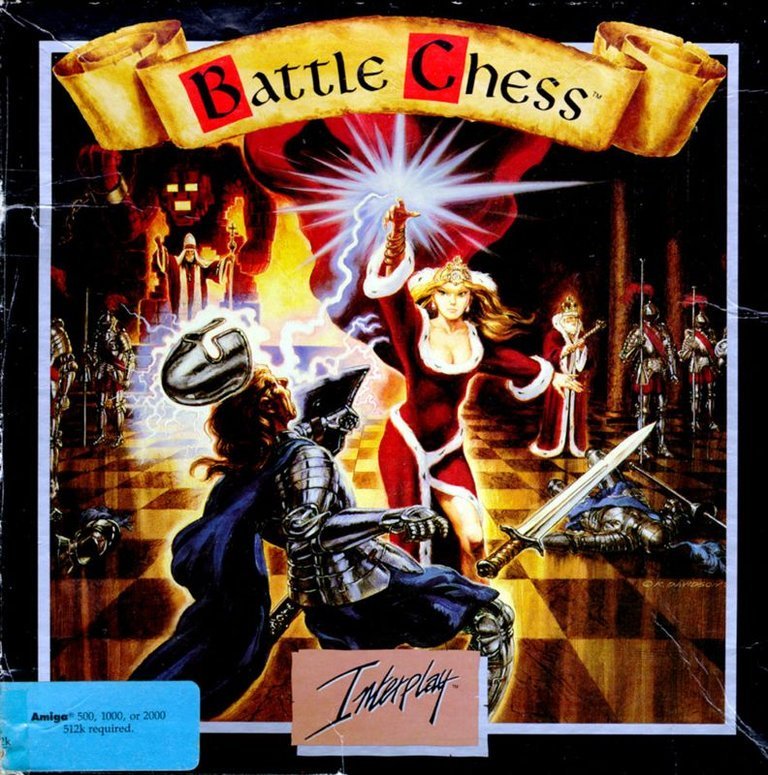
Description
Battle Chess is a fantasy-themed chess game that animates its pieces as small, realistic figures moving across the board, where captures trigger unique, entertaining battle animations for every piece combination, offering 10 skill levels, a 30,000-move opening library, and optional 2D mode alongside multiplayer support via modem or serial port.
Gameplay Videos
Where to Buy Battle Chess
Battle Chess Guides & Walkthroughs
Battle Chess Reviews & Reception
en.chessbase.com : a cult classic
mobygames.com (65/100): Battle Chess is an incredible game, an incredible experience.
Battle Chess Cheats & Codes
PC
Type codes during gameplay. For mouse cursors, use command line /ducks when starting in DOS or DOSBox.
| Code | Effect |
|---|---|
| DISTRACTIONPIECE | Bishop flies around screen and removes opponent’s queen (works once per game) |
| /ducks | Changes mouse cursors: selection to sword, waiting animation to woman’s upper body, check to duck on check mark |
Battle Chess: Review
Introduction
Imagine a chessboard where pawns don’t simply vanish—they clash swords in brutal, hilarious melee; rooks morph into hulking rock monsters that pulverize foes; and knights reenact Monty Python sketches with limb-severing gusto. Released in 1988, Battle Chess transformed the stoic strategy of chess into a spectacle of animated warfare, hooking a generation of gamers who might otherwise dismiss the game as “too boring.” Developed by Interplay Productions, this title wasn’t just a chess simulator; it was a multimedia milestone that popularized the board game through fantasy flair and pop-culture nods. Its legacy endures in ports, sequels, clones like Star Wars Chess, and even a 2015 Steam remake, proving chess could be as thrilling as any RPG. My thesis: Battle Chess revolutionized digital chess by prioritizing entertainment over elite AI, making it an accessible gateway for novices while earning a timeless spot in gaming history as a pioneer of animated strategy.
Development History & Context
Interplay Productions, fresh off parting ways with Electronic Arts after hits like The Bard’s Tale, took a bold swing with Battle Chess as their first fully in-house project (save for ports like the C64 version by Silicon & Synapse, later Blizzard). Producer Brian Fargo, the studio’s founder, assembled a lean team of seven: programmers Michael Quarles, Jay Patel, and Troy P. Worrell; artists Todd J. Camasta and Bruce Schlickbernd; sound designer Kurt Heiden; and Fargo himself steering the vision. Inspired by the holographic chess in Star Wars: A New Hope and Futureworld‘s battling pieces, the goal was simple yet ambitious: jazz up chess for the masses.
The late 1980s gaming landscape was a battleground of 8-bit and emerging 16-bit hardware. The Amiga (1988 debut) showcased its graphical prowess with pseudo-3D boards and fluid animations, pushing 4096 colors and custom chips. Ports followed to Atari ST, Commodore 64, DOS (EGA/CGA), Apple II/IIgs, NES (1990), and exotics like Sharp X68000 and PC-98. Technological constraints were brutal: floppy disks limited storage, leading to load times for animations (mitigated by a 2D mode); early PCs lacked sound cards, so DOS used PC speaker “RealSound” tricks for digitized effects. No opening library on C64/Apple II due to memory caps. Despite this, Interplay packed 30,000 openings and 10 skill levels into most versions, with modem/null-modem multiplayer foreshadowing online play. Fargo later reflected fondly but doubted modern appeal—yet its cult status persists via GOG/Steam re-releases.
Anecdotes like “Atwood’s Duck”—a trivial animator gag to satisfy meddlesome producers—highlight the scrappy creativity amid Parkinson’s law of triviality. Publishers like EA (Europe), Data East (NES), and others spread it wide, cementing Interplay’s rep for innovative strategy.
Narrative & Thematic Deep Dive
Battle Chess has no traditional plot—it’s chess—but its “narrative” unfolds through anthropomorphic pieces in a fantasy realm, turning moves into epic vignettes. The chessboard is a misty, top-down arena where white (noble humans) battles black (gothic foes), evoking medieval warfare with thematic depth in asymmetry: pawns as scrappy infantry, knights as chivalric chargers, bishops as zealous clerics, rooks as siege beasts, queens as seductive sorceresses, and kings as frail monarchs.
Characters shine in 35 unique capture animations (plus checkmates), each a micro-story of hubris, comedy, and violence. A pawn vs. knight sees the underdog impale the steed; the rook devours the queen whole; the king shoots a showboating bishop (Raiders of the Lost Ark spoof). Knight-on-knight parodies Monty Python and the Holy Grail‘s Black Knight (“Tis but a scratch!”), limbs flying in defiant humor. Checkmate finales amplify drama: rooks strip the trembling king nude (low-res EGA “full frontal” trivia), emphasizing vulnerability. Dialogue is absent, but grunts, clashes, and cherub-delivered menus imply a whimsical lore—chess as gladiatorial fantasy.
Themes probe power dynamics: underdogs triumph (pawn slays queen), authority crumbles (king’s cowardice), and inevitability reigns (no kings capturing kings). It’s anti-purist, subverting chess’s abstraction for spectacle, critiquing dry strategy while celebrating chaos. For beginners, CDTV’s voiced tutorial narrates piece lore; for vets, it’s ironic theater. This “living chess” narrative hooked non-players, as player reviews note: “Chess for people who don’t like chess.”
Gameplay Mechanics & Systems
At core, Battle Chess adheres strictly to FIDE rules: standard moves, castling, en passant, promotions. The loop is turn-based purity—plan, move, react—with innovations elevating tedium. Pieces “walk” animatedly (toggleable), but captures trigger battles: attacker wins 100% (deterministic), shown in close-up. 2D mode skips flair for speed/clarity.
Core Loops & Combat: Single-player vs. AI (10 levels, from novice blunders to competent midgame); hotseat, null-modem, or modem multiplayer (era’s LAN precursor). AI draws from 30,000 openings for variety, but critics lambast its predictability—mediocre players win 90%, lacking “human-ness” vs. Chessmaster. Combat is spectacle, not risk: rook smashes pawn’s head; queen casts spells ripping board holes. Checkmate battles king directly.
Progression & UI: Skill levels scale AI depth/think time; setup board, takeback, suggest move, time limits. UI excels: mouse-driven (Amiga/ST gold), rotatable pseudo-3D board, color schemes. Flaws: load times (floppy hell), slowdowns (XT bugs), port variances—NES/C64 glacially slow, Amiga fluid.
Innovations: Battles as reward/education (visualize threats); 2D for purists. Flaws: Repetitive animations tire post-novelty; weak endgame AI. Ports degrade: C64 muddled sprites, NES unplayable pace.
| Feature | Strength | Weakness |
|---|---|---|
| AI | 10 levels, openings | Predictable, beatable |
| Multiplayer | Modem/hotseat | Hardware-limited |
| Controls | Intuitive mouse | Slow animations/loads |
| Modes | 2D/3D toggle | Port inconsistencies |
World-Building, Art & Sound
The “world” is a fantastical chessboard: fog-shrouded, with gothic/red vs. noble/blue armies. Atmosphere blends Disney whimsy and grimdark—cherubs hoist menus, pieces strut like actors.
Visuals: Amiga’s 2.5D pseudo-3D shines: detailed sprites (queen sways seductively), 35 fluid animations (4MB data!). EGA DOS dazzles; CGA humble. Ports scale down—C64 low-res mess, X68000 arcade-like. Innovates multimedia: battles as cutscenes.
Sound: Digitized effects (clangs, screams, steps) via PC speaker genius—no card needed. Heiden’s library immersive: pawn gasps, rook roars. Music sparse (CD-ROM symphonics later); CD32/CDTV adds voiceovers.
Elements synergize: animations build tension (slow walks heighten captures), sound punctuates violence, fostering “alive” board. Drawback: repetition dulls immersion; loads shatter flow.
Reception & Legacy
Launched to acclaim: Amiga 80-90% (AUI 90%, Zzap! 85%), DOS 81% (Games Machine). MobyScore 7.0/10 (154 players); critics 65% (33 reviews). Praised: “Superb graphics/animations” (Retro Gamer 84%), “funniest chess” (Games Machine 83%). Slammed: Weak AI (Chessmaster superior), animation fatigue, port slop (NES 45%, C64 45%).
Commercially: 250,000+ units by 1993; EA/Interplay cash cow. Evolved: Enhanced CD-ROM (1991) VGA/symphonic upgrades; sequels II: Chinese Chess (1990), 4000 (1992 claymation sci-fi). Clones: Star Wars Chess, Lego Chess, War Chess (PS2). Awards: CGW Hall of Fame (1994 #106 all-time), SPA “Best Graphics Non-Graphics.” Cultural: Knight Moves film nod; Anna Rudolf credits it for her chess start.
Influence: Pioneered animated chess, inspiring multimedia (e.g., Virtual Chess 64); Interplay’s blueprint for fun-over-depth. Remake Game of Kings (2015) buggy but nostalgic. Ports to Antstream/Linux keep it alive.
Conclusion
Battle Chess masterfully blended chess rigor with arcade spectacle, its 35 battle animations and pop nods (Monty Python, Indy) democratizing strategy for casuals while delighting vets. Strengths—graphics, humor, accessibility—outweigh flaws (AI mediocrity, port woes), especially in Amiga/DOS glory. A commercial hit and critical darling, it birthed a subgenre, earned halls of fame, and endures via re-releases. Verdict: Essential classic, 9/10 for innovation/legacy; play the Steam original for history’s thrill. In video game canon, it’s the checkmate that made chess cool.