
- Release Year: 2009
- Platforms: Windows
- Publisher: Shrapnel Games, Inc.
- Developer: ProSIM Company
- Genre: Strategy, Tactics
- Perspective: Top-down
- Game Mode: LAN, Online PVP, Single-player
- Gameplay: Pause to issue commands, Real-time, Wargame
- Setting: Europe, Modern-era
- Average Score: 62/100
Description
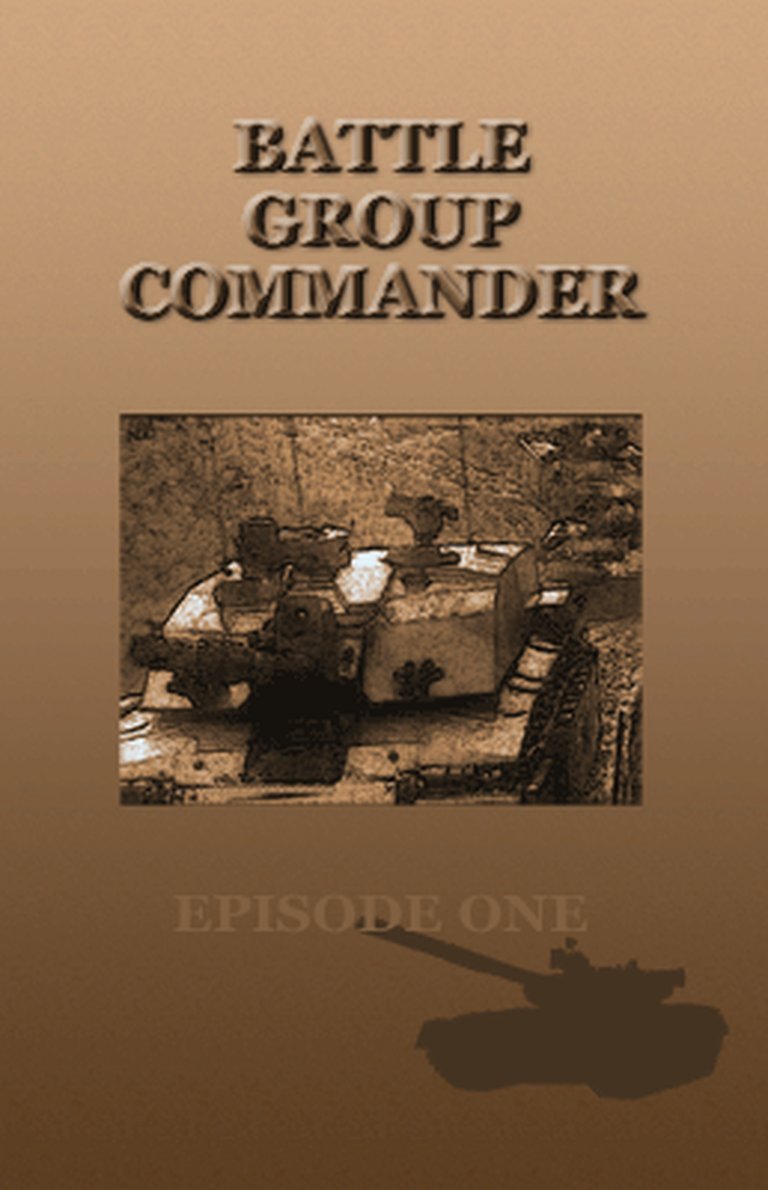
Battle Group Commander: Episode One is a modern-era tactical wargame set in a hypothetical conflict between the British Army and former Soviet Union forces on England’s Salisbury Plain Training Area. Developed by ProSIM Company and powered by the Air Assault Task Force engine, the game offers real-time (or ‘command real-time’) gameplay with the ability to pause and issue orders. Players command a combined arms battalion, managing armor, infantry, and artillery across four scenarios, with high-fidelity combat modeling and detailed terrain. The game supports both single-player against AI and multiplayer modes, featuring multiple AI difficulty settings for replayability.
Battle Group Commander: Episode One Reviews & Reception
forum.shrapnelgames.com : Battle Group Commander: Episode 1 follows on in the same vein as AATF and uses the interface and improvements first implemented with that title.
p2pgames.blogspot.com (62.5/100): An attractive price, but this limited expansion-like wargame will appeal mostly to fans of the series.
Battle Group Commander: Episode One: A Tactical Wargame of Precision and Legacy
Introduction
In the vast and often overlooked niche of hardcore tactical wargames, Battle Group Commander: Episode One stands as a testament to the enduring appeal of military simulations that prioritize realism over spectacle. Released in 2009 by ProSIM Company and published by Shrapnel Games, this title is a fascinating artifact of its time—a game that dared to embrace the complexities of modern combined arms warfare while experimenting with the then-nascent episodic release model. For fans of meticulously detailed battlefield simulations, Battle Group Commander: Episode One offers a unique blend of strategic depth, historical authenticity, and tactical challenge. However, its legacy is one of unfulfilled potential, as it remains the sole entry in a series that never materialized beyond its first episode.
This review will dissect Battle Group Commander: Episode One in exhaustive detail, exploring its development history, narrative and thematic underpinnings, gameplay mechanics, world-building, and its reception within the wargaming community. By the end, we will assess its place in the pantheon of tactical wargames and determine whether it deserves a spot in the collections of modern strategy enthusiasts.
Development History & Context
The ProSIM Legacy
ProSIM Company, the developer behind Battle Group Commander: Episode One, has been a stalwart in the realm of realistic military simulations since its inception in 1996. Unlike many studios that chase mainstream trends, ProSIM has consistently focused on creating “command real-time” wargames—titles that blend the immediacy of real-time strategy with the depth and precision of turn-based tactical simulations. Their games are renowned for their fidelity to real-world military doctrine, unit databases, and terrain modeling, making them favorites among both civilian wargamers and professional military trainers.
ProSIM’s portfolio includes titles like BCT Commander, Armored Task Force (ATF), Air Assault Task Force (AATF), and The Star and the Crescent, each of which pushed the boundaries of what a commercial wargame could achieve in terms of realism. Notably, their games have been used by organizations such as Lockheed Martin and the U.S. Department of Defense for training purposes, a rare honor in the commercial gaming space.
The Birth of an Episodic Experiment
Battle Group Commander: Episode One was conceived as the first installment in an ambitious episodic series, a format that was gaining traction in the late 2000s thanks to titles like Half-Life 2 and Sam & Max. The idea was to deliver smaller, more affordable chunks of content at regular intervals, allowing players to experience a continuous narrative or thematic progression without the lengthy development cycles of traditional full-priced games.
For ProSIM, this approach was particularly bold. Wargames, by their nature, tend to be dense, content-rich experiences that justify their price tags with extensive campaigns, scenario editors, and modular replayability. An episodic wargame was uncharted territory, and Battle Group Commander: Episode One would serve as the litmus test for whether such a model could succeed in the niche strategy market.
The Engine: Air Assault Task Force
At its core, Battle Group Commander: Episode One is built upon the engine of Air Assault Task Force, ProSIM’s 2007 modern combined arms simulator. This engine was already a proven commodity, offering a robust framework for real-time tactical combat with pausable gameplay, detailed unit modeling, and digitally rendered terrain based on real-world elevation data.
By leveraging the AATF engine, ProSIM could focus on refining the content and scenario design for Battle Group Commander without reinventing the wheel. This also meant that the game would inherit the strengths—and weaknesses—of its predecessor, including its steep learning curve, complex interface, and demanding system requirements.
The Designer: Gary Bezant
The creative force behind Battle Group Commander: Episode One was Gary Bezant, a former member of the British Army and the designer of The Falklands War: 1982, another ProSIM title. Bezant’s military background lent the game an air of authenticity, particularly in its portrayal of British Army doctrine and the structure of a Battle Group—a battalion-sized formation that integrates armor, infantry, artillery, and other assets into a cohesive combined arms team.
Bezant’s vision for Battle Group Commander was to create a simulation that captured the essence of modern land warfare as experienced by British commanders. The choice of setting—the Salisbury Plain Training Area in England—was deliberate, as it provided a familiar yet challenging environment for players to test their tactical acumen against a Soviet-style adversary.
The Gaming Landscape of 2009
The late 2000s were a period of transition for the strategy genre. Real-time strategy (RTS) games were beginning to cede ground to the rising popularity of multiplayer online battle arenas (MOBAs) and tower defense games, while turn-based strategy titles were finding new audiences through digital distribution platforms like Steam. Meanwhile, the wargaming niche remained a bastion for hardcore enthusiasts, with titles like Combat Mission and Steel Panthers maintaining loyal followings.
In this context, Battle Group Commander: Episode One was a gamble. It targeted a very specific audience—players who craved deep, realistic simulations of modern warfare—and did so with a pricing model that was unconventional for the genre. At $14.95, it was significantly cheaper than most full-priced wargames, but it also offered far less content, with only four scenarios and no built-in editor.
Narrative & Thematic Deep Dive
The Hypothetical Conflict
Battle Group Commander: Episode One is set in a hypothetical conflict between the British Army and the forces of the former Soviet Union on the Salisbury Plain Training Area. This premise is reminiscent of Cold War-era wargames, where NATO and Warsaw Pact forces clashed in simulated battles across Europe. The choice of Salisbury Plain—a real-world training ground used by the British military—adds a layer of authenticity, as players navigate a digitally rendered version of the actual terrain, complete with elevation data, roads, and vegetation.
The narrative framework is minimalistic, focusing on the tactical execution of missions rather than a grand overarching story. Each of the four scenarios presents a distinct challenge, ranging from reconnaissance engagements to full-scale assaults and defenses. The lack of a traditional campaign or narrative arc is a deliberate design choice, reflecting the game’s roots in military training simulations where the emphasis is on mastering tactics rather than storytelling.
Themes of Combined Arms Warfare
At its heart, Battle Group Commander: Episode One is a celebration of combined arms warfare—the integration of different military units (infantry, armor, artillery, aviation) to achieve tactical superiority. The game forces players to think holistically about the battlefield, considering the strengths and weaknesses of each unit type and how they can be leveraged in concert.
For example, a scenario might require players to use infantry to secure a key position while armor provides covering fire and artillery suppresses enemy reinforcements. The game’s AI is designed to exploit weaknesses in the player’s formation, punishing overly aggressive advances or poorly coordinated attacks. This creates a dynamic where success hinges on careful planning, adaptability, and a deep understanding of military doctrine.
The Cold War Echoes
The game’s setting and adversary—British forces vs. Soviet-style opponents—evoke the tensions of the Cold War, a period when the specter of a large-scale conventional war in Europe loomed large. While the Soviet Union had collapsed by the time of the game’s release, the hypothetical conflict serves as a nostalgic nod to the wargames of the 1980s and 1990s, which often explored similar “what if” scenarios.
This thematic choice also allows ProSIM to leverage existing unit databases and doctrinal models, as the British and Soviet military structures were well-documented and familiar to wargamers. The result is a game that feels both timely and timeless, blending modern simulation techniques with classic wargaming tropes.
The Role of the Player
In Battle Group Commander: Episode One, the player assumes the role of a Battle Group Commander, a position that requires a balance of strategic oversight and tactical precision. The game’s “command real-time” mechanics—where players can pause the action to issue orders—reinforce this duality, allowing for both rapid decision-making and deliberate planning.
The player’s avatar is largely abstract, with no personalized narrative or character development. Instead, the focus is on the units under command, their capabilities, and the outcomes of the player’s decisions. This depersonalization is typical of military simulations, where the emphasis is on the mission rather than the individual.
Gameplay Mechanics & Systems
Core Gameplay Loop
Battle Group Commander: Episode One is a real-time tactical wargame with pausable gameplay, a feature that ProSIM dubs “command real-time.” This mechanic is central to the experience, as it allows players to issue orders, assess the battlefield, and adjust their strategy without the pressure of an unrelenting clock. The ability to pause and plan is particularly crucial given the game’s complexity and the need for precise coordination between units.
The core gameplay loop revolves around the following steps:
- Assessment: Players analyze the battlefield, taking note of terrain features, enemy positions, and the disposition of their own forces.
- Planning: Using the pause function, players issue orders to individual units or entire companies, assigning missions such as “assault,” “attack by fire,” or “screen.”
- Execution: The game resumes in real-time, and players observe the outcomes of their orders, making adjustments as necessary.
- Adaptation: As the battle unfolds, players must respond to enemy movements, unexpected losses, and changing tactical situations.
This loop is repeated throughout each scenario, with the player’s success hinging on their ability to anticipate enemy actions and exploit weaknesses in the opponent’s formation.
Unit Control and Command Structure
One of the defining features of Battle Group Commander: Episode One is its granular unit control system. Players can issue orders at multiple levels of command, from individual vehicles to entire companies. This flexibility allows for both micromanagement and broad strategic oversight, depending on the player’s preference and the demands of the scenario.
The game’s order system is divided into several categories:
- Basic Commands: These include “move,” “suppress,” “target,” “fire mission,” and “mount.” These are direct orders that dictate a unit’s immediate actions.
- Missions: Higher-level directives such as “assault,” “attack by fire,” “screen,” and “breach.” These missions provide units with broader objectives and allow for more autonomous behavior.
- Behaviors: Modifiers that affect how units execute their orders, including “sprint,” “defilade,” “engage on contact,” “creep,” and “detach.”
While this system offers a high degree of control, it can also be overwhelming for newcomers. The distinction between commands and missions, for example, is not always intuitive, and the game’s interface does little to clarify the hierarchy of orders. This complexity is a double-edged sword: it provides depth for experienced players but creates a steep learning curve for those new to the genre.
Combat and Weapon Modeling
Battle Group Commander: Episode One prides itself on its detailed combat modeling, which takes into account a wide range of factors beyond simple unit statistics. The game simulates individual weapon destruction, meaning that a tank might lose its main gun or tracks without being completely destroyed. This level of detail extends to other aspects of combat, such as the time it takes for artillery shells to arrive after being called in, or the acceleration and deceleration rates of vehicles.
The game’s ballistics and damage models are similarly intricate. Factors such as armor thickness, angle of impact, and weapon caliber all play a role in determining the outcome of engagements. This realism is a hallmark of ProSIM’s design philosophy, but it also means that the game can be unforgiving. A poorly positioned unit or a misjudged advance can result in catastrophic losses, forcing players to restart scenarios or adapt their strategies on the fly.
Artificial Intelligence
The AI in Battle Group Commander: Episode One is one of its strongest features. Unlike many wargames where the AI is predictable or exploitable, the AI in this title is aggressive, adaptive, and capable of executing a variety of operational plans. Each scenario includes multiple AI “personalities,” which are selected randomly at the start of a mission. This variability ensures that no two playthroughs are identical, as the AI might prioritize different objectives or employ different tactics depending on its chosen plan.
The AI’s behavior is also influenced by the player’s actions. For example, if the player leaves a flank exposed, the AI will exploit it; if the player concentrates their forces in one area, the AI might attempt to outmaneuver them elsewhere. This dynamic creates a sense of unpredictability and challenge that is rare in the genre.
Multiplayer and Replayability
Battle Group Commander: Episode One supports both single-player and multiplayer modes. The multiplayer component allows players to face off against human opponents in head-to-head battles, adding a layer of strategic depth that the AI, while impressive, cannot fully replicate. The game’s multiplayer browser is functional but basic, reflecting the title’s budget constraints.
Replayability is a mixed bag. On one hand, the four scenarios are well-designed and offer a variety of tactical challenges. The randomness of the AI’s operational plans also encourages multiple playthroughs. On the other hand, the lack of a scenario editor (unless the player owns Air Assault Task Force) limits the game’s long-term appeal. Without the ability to create custom scenarios or download user-generated content, players are confined to the four missions included in the base game.
Interface and Usability
The user interface in Battle Group Commander: Episode One is functional but dated. The game retains the same menu structures and point-and-select mechanics as Air Assault Task Force, with little in the way of modernization or streamlining. The result is an interface that feels claustrophobic and unintuitive, particularly for players accustomed to more contemporary RTS or wargame UIs.
Key issues include:
- Small Icons and Poor Scaling: Unit icons and menu elements are often too small, making it difficult to issue orders or assess the battlefield at a glance.
- Wasted Screen Space: The right side of the screen is largely unused, a missed opportunity for additional information displays or contextual tooltips.
- Lack of Clarity: The game does a poor job of communicating a unit’s current orders or status. Players must often dig through multiple menus to determine what a unit is doing or why it is not responding as expected.
These usability challenges are compounded by the game’s reliance on NATO symbols and contour maps, which can be intimidating for players unfamiliar with military cartography. While the inclusion of a geographic overlay helps, it does little to mitigate the steep learning curve.
Performance and Technical Issues
Battle Group Commander: Episode One is not a demanding game in terms of graphics, but it can be taxing on system resources due to the complexity of its simulations. Players have reported performance issues, particularly when large numbers of units are present on the battlefield. The game’s real-time calculations can cause stuttering or skipped seconds, even on systems that can handle more visually intensive titles.
These technical hiccups are a reminder of the game’s age and the limitations of its engine. While ProSIM’s focus on realism is commendable, the lack of optimization detracts from the overall experience, particularly for players who expect smooth performance from a modern wargame.
World-Building, Art & Sound
The Salisbury Plain Training Area
The setting of Battle Group Commander: Episode One—the Salisbury Plain Training Area—is one of its most impressive features. The game’s map is a digitally rendered representation of the real-world training ground, complete with accurate elevation data, terrain features, and man-made structures. This attention to detail extends to the game’s use of contour maps, which are derived from actual military cartography.
The result is a battlefield that feels authentic and immersive, even if the visual presentation is spartan. Players who take the time to study the terrain will find that it plays a crucial role in their tactical decisions. High ground provides better lines of sight, forests offer cover from enemy fire, and roads facilitate rapid movement—but also expose units to ambushes.
Visual Design: Function Over Form
Battle Group Commander: Episode One is not a game that will win awards for its graphics. The visual design is utilitarian, prioritizing clarity and functionality over aesthetic appeal. Units are represented either as NATO wireframe symbols or as low-resolution sprites, and the terrain is depicted through contour lines and optional geographic overlays.
This minimalist approach is a deliberate choice, reflecting the game’s roots in military simulations where readability is paramount. However, it also means that the game lacks the polish and immersion of more modern wargames. The explosions are basic, the unit animations are rudimentary, and the overall presentation feels dated.
Sound Design: The Silent Battlefield
The sound design in Battle Group Commander: Episode One is equally sparse. The game features basic audio cues for events such as unit destruction or incoming fire, but there is little in the way of ambient noise or immersive battlefield sounds. The absence of voice acting, environmental effects, or dynamic music further contributes to the game’s austere presentation.
While this lack of auditory feedback is consistent with the game’s simulation-focused design, it also robs the experience of some of its potential intensity. Wargames like Combat Mission or Wargame: European Escalation use sound to great effect, heightening the tension and immersion of battle. Battle Group Commander, by contrast, feels almost silent, with players relying on visual cues and text notifications to track the ebb and flow of combat.
Atmosphere and Immersion
Despite its technical and presentational limitations, Battle Group Commander: Episode One manages to create a compelling atmosphere through its sheer attention to detail. The game’s commitment to realism—from its unit databases to its terrain modeling—fosters a sense of authenticity that is rare in the genre.
Players who embrace the game’s complexities will find themselves drawn into a world where every decision matters, and where the fog of war is ever-present. The lack of hand-holding or simplistic feedback mechanisms forces players to engage with the simulation on its own terms, rewarding patience, planning, and adaptability.
Reception & Legacy
Critical Reception
Battle Group Commander: Episode One received a mixed but generally positive reception from the wargaming community. Critics praised the game’s depth, realism, and challenging AI, while also noting its steep learning curve, outdated interface, and limited content.
- P2P Games gave the title a 5/8, highlighting its accurate simulation and low price point but criticizing its lack of innovation and poor pathfinding.
- Hub01 on the Shrapnel Games forums described it as a “stripped-down version of AATF” but appreciated its value for money and the quality of its scenarios.
- IGN and other mainstream outlets largely ignored the title, reflecting its niche appeal.
The game’s reception was largely shaped by the expectations of its audience. For veteran ProSIM fans, Battle Group Commander: Episode One was a welcome, if modest, addition to the series. For newcomers, it was an intimidating and often frustrating introduction to the world of hardcore wargaming.
Commercial Performance
As a digital-only release priced at $14.95, Battle Group Commander: Episode One was not a major commercial success, but it found a dedicated audience among wargaming enthusiasts. The episodic model, while innovative, struggled to gain traction in a genre where players expected comprehensive, content-rich experiences.
The game’s lack of a demo—ProSIM directed interested players to the Air Assault Task Force demo instead—may have also hindered its adoption. Without a way to sample the game’s unique blend of realism and complexity, many potential players likely passed it over in favor of more accessible titles.
The Unfulfilled Promise of a Series
Perhaps the most significant aspect of Battle Group Commander: Episode One‘s legacy is what it represents: a series that never was. The game was explicitly marketed as the first episode in a planned sequence, with future installments promised to explore British operations in other settings. However, no further episodes were released, leaving Battle Group Commander as a standalone curiosity rather than the start of a new franchise.
The reasons for the series’ cancellation are unclear, but they likely stem from a combination of factors, including:
- Limited Commercial Viability: The episodic model may not have generated sufficient revenue to justify continued development.
- Development Challenges: ProSIM’s small team and focus on realism may have made it difficult to produce episodes at a consistent pace.
- Shifting Market Dynamics: The late 2000s saw a decline in interest in traditional wargames, as players gravitated toward more accessible strategy titles or multiplayer-focused experiences.
Influence on Subsequent Games
While Battle Group Commander: Episode One did not spawn a direct sequel, its influence can be seen in the broader evolution of the wargaming genre. The game’s emphasis on combined arms warfare, realistic unit modeling, and dynamic AI set a standard that later titles would strive to emulate.
ProSIM’s subsequent releases, such as The March to Baghdad series, continued to refine the “command real-time” formula, but none achieved the same level of critical or commercial success as Air Assault Task Force or BCT Commander. The studio’s legacy remains one of innovation and dedication to realism, even as the gaming landscape shifted away from hardcore simulations.
Conclusion: A Flawed but Fascinating Artifact
Battle Group Commander: Episode One is a game of contradictions. It is a masterclass in tactical realism, offering a level of depth and authenticity that few wargames can match. Yet it is also a victim of its own ambitions, hampered by an outdated interface, limited content, and a lack of polish. It is a bold experiment in episodic gaming, but one that ultimately failed to deliver on its promise of a continuing series.
For the right audience—veteran wargamers who crave complexity and are willing to overlook its rough edges—Battle Group Commander: Episode One is a hidden gem. Its scenarios are well-designed, its AI is challenging, and its attention to detail is commendable. For newcomers, however, the game’s steep learning curve and archaic presentation make it a difficult recommendation.
In the grand tapestry of wargaming history, Battle Group Commander: Episode One occupies a unique niche. It is neither a classic nor a failure, but rather a fascinating artifact of a time when developers were willing to take risks in pursuit of realism and innovation. Its legacy is one of unfulfilled potential, a reminder of what might have been had the series continued. As it stands, it remains a testament to ProSIM’s dedication to the craft of military simulation, and a game that, despite its flaws, deserves to be remembered.
Final Verdict: 7/10 – A Niche Masterpiece with Unrealized Ambitions
Battle Group Commander: Episode One is not for everyone, but for those who appreciate the intricacies of modern combined arms warfare, it is a rewarding and challenging experience. Its lack of polish and limited content prevent it from achieving greatness, but its core gameplay and attention to detail make it a worthy addition to the libraries of hardcore wargamers. Had the series continued, it might have evolved into something truly special. As it is, it stands as a testament to the enduring appeal of realism in strategy gaming.