
- Release Year: 2008
- Platforms: PlayStation 3, Windows
- Publisher: Bimboosoft Co., Ltd.
- Developer: Bimboosoft Co., Ltd.
- Genre: Strategy, Tactics
- Perspective: Top-down
- Game Mode: Single-player
- Gameplay: Tile-based, Turn-based strategy, Unit management
Description
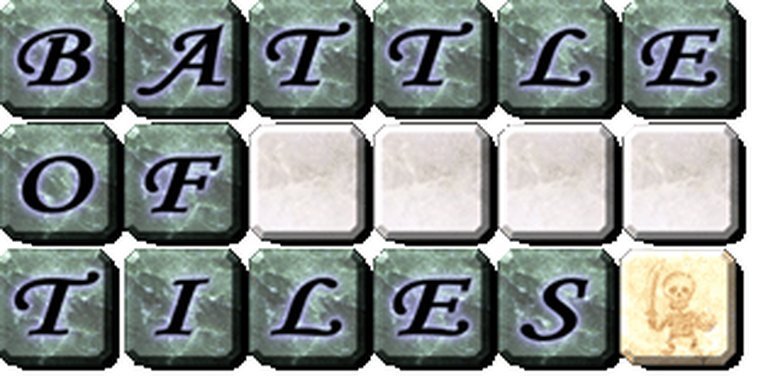
Battle of Tiles is a turn-based strategy game with simple tile-based graphics and a top-down perspective, where players command an army of up to 70 customizable units across five levels. Each unit has distinct stats like strength and range, and by defeating enemy tiles—from grunts to bosses—players earn money to recruit new units or convert foes, while managing experience distribution to level up their forces in tactical grid-based combat.
Battle of Tiles Cheats & Codes
Battle of Tiles v1.05
| Code | Effect |
|---|---|
| F10 | now when you kill an enemy, each is worth 10,000gold |
| F11 | purchase enemy units for free |
| F12 | level upgrade, when you level up instead of going to level 2 you hop immediately to level 99 |
Battle of Tiles: A Cult Classic of Minimalist Tactical Depth
Introduction: The Unlikely Charm of a Tile-Based War
In the vast and often homogenous landscape of turn-based strategy games, Battle of Tiles (2008) stands as a testament to the enduring power of elegant, focused design. Developed and published by the small Japanese studio Bimboosoft Co., Ltd., this title eschews the sweeping fantasy narratives and lush production values of its contemporaries for a stark, almost ascetic aesthetic. Yet, beneath its simple tile-based graphics lies a aggressively engaging tactical system that demands strategic foresight and rewards careful resource management. This review argues that Battle of Tiles is not merely a curiosity but a brilliant distillation of the “easy to learn, hard to master” philosophy. Its legacy is that of a精准 (jīngzhǔn—precise) and purist tactical experience, a game that understands that strategic depth sprouts not from complexity of presentation, but from the integrity of its core mechanical loop.
Development History & Context: The Pragmatism of Inducement
Battle of Tiles emerged from the workshop of Bimboosoft Co., Ltd., a developer whose name suggests a playful, perhaps DIY ethos. Released in 2008 for Windows, and later ported to the PlayStation 3 in 2013, the game arrived at a fascinating juncture for strategy gaming. The late 2000s saw the genre bifurcating: one path led to big-budget, cinematic titles like Total War: Shogun 2 or XCOM: Enemy Unknown, while the other cultivated a thriving indie scene on platforms like Steam and, relevantly, digital storefronts for consoles. Bimboosoft’s creation firmly belongs to the latter, embodying the constraints and creative pragmatism of a small team.
The technological constraints are immediately evident and, in hindsight, central to its design philosophy. With “simple tile-based graphics” as its stated visual cornerstone, the studio avoided the costs and complexities of 3D modeling, animation, and advanced particle effects. This limitation became avirtue, forcing all design energy into the grid-based combat system. The gaming landscape of 2008 was saturated with tactical RPGs (Disgaea, Final Fantasy Tactics ports) and real-time strategy games, but few focused so purely on the abstract, chess-like interplay of unit stats on a discrete grid. Battle of Tiles feels less like a simulation of war and more like a pure, mathematical puzzle of positioning and resource allocation, harkening back to the board game roots of the genre.
Narrative & Thematic Deep Dive: War as Abstract Geometry
Battle of Tiles possesses what can most generously be described as a narrative void. There is no plot, no characters, no dialogue, and no overarching lore. The “story” is conveyed purely through mechanics: you, the commander, are presented with a grid. On it are neutral or enemy “tiles.” Your objective is the total annihilation of the opposition across five distinct levels.
This absence is not a failing but a deliberate thematic choice. The game frames conflict not as a clash of ideals or personalities but as a sterile, geometric problem. The units—37 in total, ranging from “simple grunts” to “tough level bosses”—are not heroes or villains; they are data points with statistics (strength, defense, life, dexterity, range). The theme is one of pure tactical abstraction. The thematic resonance comes from the player’s own experience: the tension between the desire to create a powerful, veteran “party” and the brutal necessity of using weaker, expendable units as sacrificial fodder. The only “lore” is written in the positioning of a unit with 1 remaining hit point luring an enemy into a kill zone, or the calculated expenditure of shared experience points to elevate a key archer. It is war reduced to its essential spatial and arithmetic truths.
Gameplay Mechanics & Systems: The Calculus of Conquest
The core gameplay loop is brutally simple yet rewards immense strategic nuance:
1. Deployment & Economy: Each level begins with a purchase phase. You start with a limited pool of money (earned from previous battles or provided initially). You can buy up to 70 units from a roster of 37, and crucially, defeated enemy units become available for purchase in subsequent levels. This creates a profound meta-game: do you spend heavily to win the current map, or save to acquire a powerful elite unit (like a former boss) for future battles?
2. The Tile Grid: The battlefield is a top-down grid. Each unit occupies one “tile.” Movement and attack ranges are defined in tiles (e.g., a unit with a range of “2” can attack from two tiles away). This discretization makes positioning the absolute bedrock of strategy. Zones of control, line-of-sight (if any), and flanking are abstracted into the simple geometry of who can reach whom.
3. Combat & Progression: Combat is deterministic. When a unit attacks, its strength is pitted against the defender’s defense. The resulting damage is subtracted from the defender’s life stat. There are no random dice rolls; outcomes are pure calculations, which elite players can predict with certainty. Units gain experience from kills, but here lies the game’s most brilliant and punishing mechanic: experience is divided among all living units in the player’s party. A large army of 50 units will level up agonizingly slowly, while a tight squad of 5 will become overpowered veterans quickly. This forces a fundamental trade-off between tactical flexibility (many units) and combat power (few, high-level units).
4. Innovation & Flaws: The central innovation is this shared XP pool. It’s a systemic representation of command bandwidth—you can only effectively lead so many veterans. However, the system has a significant flaw: it can lead to “trap” builds. A player might invest in a large army early, only to find their units perpetually underleveled and ineffective against later, tougher enemies, forcing a restart. There is no UI indicator of XP gains or division during battle, which can be frustrating. The unit diversity is mostly statistical reskins (a “Knight” has high defense, an “Archer” has high range), with little in the way of special abilities, which limits tactical variety over time.
World-Building, Art & Sound: Minimalism as Focus
The game’s world-building is nonexistent in a traditional sense. There are no towns to visit, no NPCs to talk to, no item shops outside the pre-battle purchase screen. The “world” is the series of five battle grids, each a different layout but identical in aesthetic. This extreme minimalism serves a purpose: it eliminates all distraction. The player’s entire cognitive load is directed toward the grid.
The visual direction is, as noted, “simple tile-based graphics.” Units are represented by small, colored squares with a single icon indicating their type (a sword for melee, a bow for ranged, etc.). The terrain is similarly abstract—different colored tiles for plains, forests, or mountains might offer minor defense bonuses, but they are visually indistinct. This aesthetic is not “bad”; it is functional and clear. At a glance, you understand the battlefield state. It is the visual equivalent of a chessboard, forcing you to think in terms of positions and stats, not spectacle.
The sound design is equally sparse, consisting of simple, MIDI-style beeps and bloops for attacks and unit death. There is no musical score during battles, only a title screen theme. This sonic vacuum further amplifies the game’s cold, calculated atmosphere. You are left with the sound of your own strategic thoughts, punctuated by the flat, digital impacts of combat.
Reception & Legacy: The Critic of Patience
Battle of Tiles exists in a curious reception void. On MobyGames, it holds a 72% score based on a single critic review from the Dutch outlet Gameplay (Benelux). This review, while noting the “erg sober” (very sober) visuals, was genuinely surprised by the “aardige gameplay” (nice gameplay) that “ons vele uren aan het scherm kluisterde” (kept us glued to the screen for hours). This encapsulates the game’s entire reception: a title that overcomes its primitive presentation through sheer, addictive tactical engagement.
Its commercial impact was negligible. It remains a “Collected By” item for only 5 players on MobyGames, a stark indicator of its obscurity. However, its influence is niche but clear. It represents a pure, almost academic take on the tile-based tactics genre. In an era where series like Disgaea added layer upon layer of complex systems, Battle of Tiles asked: what if we strip everything back to the grid, the stats, and the shared XP dilemma? It can be seen as a conceptual ancestor or cousin to later minimalist indie hits like Into the Breach (which adds perfect information) or the Advance Wars series (which builds on tile-based strategic movement). Its legacy is not in widespread acclaim but in its status as a cult object of study for designers examining the core loop of tactical RPGs. It proves that a game with the narrative depth of a spreadsheet and the graphics of a 1980s chess program can still be a compelling, even haunting, strategic challenge.
Conclusion: The Beauty of the Bare Grid
Battle of Tiles is a game that dares to be a game first and an experience second. It is a compelling argument against the necessity of lore, spectacle, or mechanical bloat. Its genius lies in its ruthless focus on a single, powerful idea: that the tension between army size and unit power, played out on a clear grid, is a sufficiently deep well for engaging gameplay. While its graphical austerity and lack of content (only 5 levels) limit its accessibility and longevity, within that narrow scope it achieves a remarkable purity.
For the historian, it is a fascinating snapshot of indie design philosophy circa 2008—a period where digital distribution allowed tiny studios to release hyper-focused experiments. For the player, it is a challenging, sometimes frustrating, but ultimately rewarding puzzle-box that asks you to think like a commander with finite resources and infinite consequences. Battle of Tiles will not appeal to everyone; it demands patience and an appreciation for abstract challenge. But for those who meet it on its own stark, tile-filled terms, it offers one of the most纯粹 (chúncuì—pure) and intellectually satisfying tactical experiences available. Its place in history is secured not by sales figures or awards, but by its unwavering commitment to a single, brilliant design tenet: sometimes, less is infinitely more.