
- Release Year: 2017
- Platforms: Windows
- Publisher: OneManTeam
- Developer: OneManTeam
- Genre: Driving, Racing, Simulation
- Perspective: 1st-person / 3rd-person
- Game Mode: Single-player
- Gameplay: Track racing, Vehicular combat
- Average Score: 75/100
Description
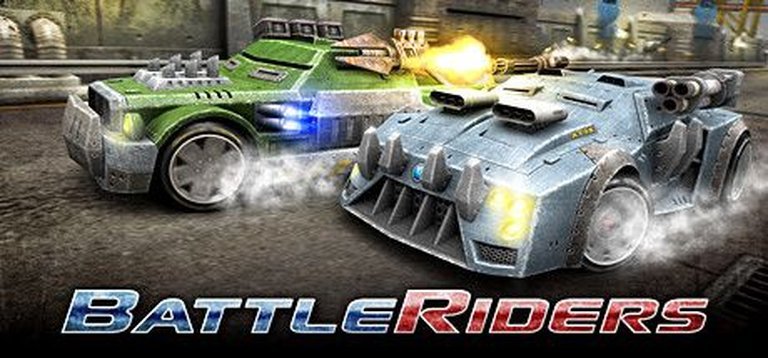
Battle Riders is an adrenaline-pumping combat racing game set on 18 diverse tracks across three environments, where players pilot seven unique, customizable cars equipped with powerful weapons like machine guns, missiles, mines, EMPs, and rayguns to battle rivals and secure victory. Progress through a career mode spanning over 120 events in six racing modes—Duel, Battle Race, Survival, Elimination, Clean Race, and Time Trial—unlocking new vehicles, tracks, and upgrades while wrecking opponents for credits and powerups.
Gameplay Videos
Where to Buy Battle Riders
PC
Battle Riders Reviews & Reception
steambase.io (70/100): Mixed (70/100 from 186 reviews)
store.steampowered.com (80/100): Very Positive (80% of the 90 user reviews)
Battle Riders: Review
Introduction
Imagine twisting the cheerful chaos of Mario Kart into a grim, post-apocalyptic demolition derby where colorful karts are replaced by armored behemoths, power-ups are deadly rayguns instead of banana peels, and victory means reducing your rivals to smoldering wreckage. Battle Riders, the 2017 PC remaster of a 2014 mobile title by solo developer Valentin Ciampuru under OneManTeam, delivers exactly that high-octane thrill in a compact, addictive package. Born from the arcade racing tradition but infused with vehicular combat ferocity, it hooks you with blistering speed, precise destruction, and relentless progression. This review argues that Battle Riders stands as a testament to indie ingenuity—a budget masterpiece that punches far above its weight, refining mobile roots into a polished PC experience that captures the raw joy of combat racing while exposing the limitations of its solo-dev origins.
Development History & Context
Battle Riders emerged from the fertile ground of mobile gaming’s golden era, debuting on iOS in September 2014 before its ambitious remaster hit Steam on April 26, 2017. Crafted entirely by Valentin Ciampuru—operating as OneManTeam—this project exemplifies the solo developer’s grit in an industry dominated by AAA behemoths. The original mobile version was a tilt-to-steer arcade racer with combat elements, reviewed positively by outlets like Pocket Gamer for its “compelling and satisfying post-apocalyptic arcade racer” vibe, evoking a gritty Mario Kart in a concrete wasteland.
By 2017, the PC landscape was ripe for indie racers: Rocket League had popularized vehicular mayhem, while remasters like Twisted Metal: Black echoed in nostalgic circles. Ciampuru seized this, overhauling the game with technical wizardry constrained by modest resources. Key upgrades included 10x more polygons on 3D models, higher-resolution textures, reworked shaders, real-time shadows, doubled rendering distance, anti-aliasing, 4K/60fps support, refined physics/controls, a new HUD/menus, and 10 fresh music tracks. These addressed mobile-era limits like low-poly visuals and touch controls, tailored for PC with customizable keyboard/mouse/controller schemes—carefully designed to sidestep keyboard ghosting (e.g., avoiding Ctrl/Alt/Space for simultaneous inputs).
The era’s technological constraints were forgiving for indies: DirectX 9 support meant broad compatibility (min spec: Core 2 Duo, GeForce 8800 GT), positioning it as an accessible $0.99 Steam title. Ciampuru’s vision was clear: evolve a fun mobile diversion into a replayable PC staple, emphasizing single-player depth over multiplayer hype. No patches or expansions followed, underscoring its complete-on-arrival ethos amid Steam’s flood of microtransaction-laden racers.
Narrative & Thematic Deep Dive
Battle Riders eschews traditional storytelling for pure arcade adrenaline, a deliberate choice that amplifies its thematic core: survival of the ruthless in a dystopian speedway hellscape. There’s no overt plot—no brooding anti-hero backstory or cutscene monologues. Instead, the “narrative” unfolds through career mode’s 120+ events across three escalating tiers, where you claw from underdog duels to high-speed weaponized mayhem. This progression mirrors a gladiatorial ascent, with each wrecked foe yielding credits for upgrades, evoking Darwinian themes of adaptation and dominance.
Characters are absent as fleshed-out entities; AI opponents are faceless aggressors in identical cars, distinguished only by tiered aggression and speed. Dialogue? Nonexistent—communication happens via missile barrages and EMP pulses. Yet, this void births emergent storytelling: your customized car becomes a silent protagonist, its paint jobs and performance tweaks narrating your rise. Thematically, it channels post-apocalyptic grit (as Pocket Gamer noted: “Gloom City by way of Misery Alley”), with graffiti-strewn tracks implying societal collapse where racing is the last bastion of thrill. Weapons like rayguns and mines symbolize unchecked aggression, critiquing (subtly) vehicular violence as escapist catharsis.
Deeper lore is implied but unexplored—no item descriptions or codex entries. Challenges like Minefield or Barrels add vignette-like tales of peril, reinforcing themes of precision amid chaos. In an era of lore-heavy epics (The Witcher 3), Battle Riders‘ minimalism is refreshing, prioritizing “feel” over fiction: the satisfaction of a raygun snipe on a fleeing leader is its own epic resolution.
Gameplay Mechanics & Systems
At its heart, Battle Riders masterfully blends racing simulation with vehicular combat, creating loops that demand multitasking mastery. Core gameplay: pilot one of 7 unique, customizable cars (performance visuals tweakable via credits) across 18 tracks (9 forward/reverse in 3 environments: urban sprawl, industrial ruins, arid badlands). Perspectives toggle between 1st-person immersion and 3rd-person awareness, enhancing tactical depth.
Racing Modes form the backbone:
– Duel/Battle Race: Head-to-head shootouts, emphasizing positioning.
– Survival/Elimination: Last-car-standing frenzy, punishing early mistakes.
– Clean Race: No weapons—pure driving skill.
– Time Trial: Ghost-car benchmarks for perfectionists.
Combat integrates seamlessly: 5 weapon classes (Machinegun for suppression, Missiles for homing, Mines for traps, EMP for disables, Raygun for lasers) deplete enemy health, triggering spectacular wrecks that respawn foes behind you. Power-ups (Ammo, Boost, Health) spawn dynamically, fueling slipstreaming chases. Wrecking nets credits for upgrades (speed, handling, weapons), feeding a satisfying progression loop across tiers—higher ones unlock faster cars and deadlier arsenals.
Physics shine in the remaster: responsive handling rewards braking into corners (rare but pivotal), manual acceleration for control, and boost-chaining. UI is clean—new HUD tracks health/ammo/race position intuitively. Flaws persist: single-player only (no multiplayer despite leaderboard taunts), occasional AI rubber-banding, control quirks (auto-acceleration switches, ghosting warnings), and linear unlocks demanding wins. Challenges (Time Attack, Minefield, Barrels) add variety, testing dodging/mining. Achievements (63) and Wrecks Leaderboard extend replayability, but no deep customization beyond basics limits longevity. Overall, it’s tight, innovative for indie fare—fast-paced destruction without bloat.
World-Building, Art & Sound
The game’s world is a stark, post-industrial apocalypse: 9 tracks evoke derelict cities, factories, and deserts, doubled by reverses for 18 variants. No open world—just looping circuits amplifying claustrophobic intensity. Atmosphere drips menace—concrete barriers, graffiti walls, debris fields scream decay, with dynamic elements like destructible barrels heightening peril.
Visuals, vastly improved in PC, impress: 10x polygon models render chunky, armored cars with gritty detail; high-res textures/shaders yield metallic sheens, explosion blooms, and screen filters (motion blur, damage vignette). Real-time shadows/lighting cast dramatic dusk glows; extended draw distance reveals track twists ahead. 4K/60fps support ensures smoothness, though anti-aliasing softens edges elegantly. Perspectives enhance immersion—1st-person cockpit shakes violently on hits.
Sound design punches: revving engines, ricocheting bullets, thunderous wrecks deliver visceral feedback. 10 remastered tracks pulse with electronic synth-rock, syncing to races’ frenzy—urgent beats for pursuits, heavy riffs for battles. No voicework needed; destruction SFX (scraping metal, fiery booms) and UI pings create auditory chaos that elevates tension. Collectively, these forge a cohesive, adrenaline-soaked vibe: not photorealistic, but evocatively retro-arcade with modern polish.
Reception & Legacy
Launched to modest fanfare, Battle Riders garnered “Very Positive” Steam ratings (80% of 90 reviews, per store page; broader data notes Mixed 70/100 from 186 total). Praised for addictive action, value ($0.99), and remaster quality—”adrenaline pumping, high-octane fun”—critics lauded mobile roots (Pocket Gamer: “rewarding, speedy blast”). Gripes: control bugs (auto-accel switches, launch crashes), lack of multiplayer, repetitive tracks.
Commercially niche (19 MobyGames collectors), it flew under radars amid 2017’s Forza/Burnout giants. No critic scores on MobyGames; Steam curators (22) mixed endorsements. Reputation evolved positively as a “hidden gem” for vehicular combat fans, with community screenshots/videos celebrating “carsplosions.” Influence is subtle: echoes in indies like Bomb Riders, reinforcing solo-dev remasters’ viability. No industry-shaking legacy, but it preserves arcade combat racing’s spirit, inspiring budget thrills in Steam’s indie sea.
Conclusion
Battle Riders is a diamond in the rough—a solo-dev triumph distilling combat racing to its explosive essence. From mobile grit to PC polish, it excels in mechanics, atmosphere, and value, faltering only in depth and polish quirks. In video game history, it claims a humble yet vital spot: proof that passion trumps budget, a 9/10 budget blaster for demolition derby devotees. Fire up Steam, grab it for a buck, and wreck the competition—it’s pure, unadulterated racing rapture.