
- Release Year: 2018
- Platforms: Windows
- Publisher: Trickjump Games Ltd
- Developer: Trickjump Games Ltd
- Genre: Action, Battle Royale
- Perspective: 1st-person
- Gameplay: Shooter
- Average Score: 57/100
Description
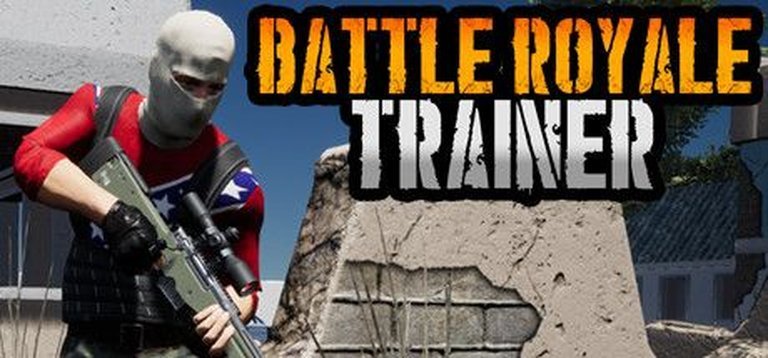
Battle Royale Trainer is a first-person shooter game developed by Trickjump Games Ltd, released in January 2018 for Windows. Set within a competitive battle royale environment, it immerses players in intense, last-standing gameplay where they scavenge for weapons, outmaneuver opponents, and adapt to shrinking arenas to claim victory, all while honing skills for the genre’s strategic and combat demands.
Gameplay Videos
Battle Royale Trainer Free Download
Battle Royale Trainer Guides & Walkthroughs
Battle Royale Trainer: Review
Introduction
In the explosive wake of Fortnite‘s cultural ascendancy and the burgeoning battle royale genre of the late 2010s, a wave of imitators and experiments flooded the market. Among these, Battle Royale Trainer (2018) by Trickjump Games Ltd stands as a curious, almost forgotten artifact. Released on January 4, 2018—barely months after Fortnite: Battle Royale’s breakout success—this Windows-exclusive title arrived amidst a genre gold rush. Yet, unlike its contemporaries, Battle Royale Trainer eschews sprawling narratives and live-service evolution for a stark, utilitarian purpose: a distilled, training-ground simulation of the battle royale formula. While its legacy remains obscured by the titans of the genre, its existence serves as a fascinating footnote in the genre’s turbulent history, offering a minimalist lens through which to examine the core mechanics that would dominate gaming for years to come. This review deconstructs Battle Royale Trainer’s place in the gaming landscape, evaluating its design philosophy, execution, and historical significance in the shadow of giants.
Development History & Context
Developed and published by the enigmatic Trickjump Games Ltd, Battle Royale Trainer emerged at a pivotal moment. The year 2018 was defined by the battle royale phenomenon, with PlayerUnknown’s Battlegrounds (PUBG) establishing the template and Fortnite revolutionizing it with building and live events. Trickjump Games, operating with a fraction of the resources of Epic Games or PUBG Corporation, adopted a pragmatic approach. Their vision was not to recreate the spectacle, but to isolate and refine the genre’s essential loop: looting, combat, and survival in a shrinking arena. Technologically, the game was constrained by its era and platform. As a Windows exclusive, it leveraged common DirectX APIs and middleware, likely prioritizing accessibility over cutting-edge visuals. The 2018 hardware landscape meant that while it couldn’t match the scale of Fortnite’s evolving island, it could deliver a stable, 60 FPS experience on modest rigs. This decision reflected a clear intent: to provide a lean, accessible “trainer” for players honing skills that would transfer to more complex titles. The gaming landscape was saturated, with studios rushing to cash in on the battle royale craze. Battle Royale Trainer’s niche positioning—as a practice tool rather than a full-fledged competitor—was both a strategic adaptation to its limited resources and a response to the genre’s demand for skill refinement. It existed in the space between a standalone game and a mod, a testament to the genre’s foundational appeal that even a stripped-down iteration could find an audience.
Narrative & Thematic Deep Dive
Unlike its contemporaries, Battle Royale Trainer deliberately excises narrative ambition. There are no overarching storylines, factions, or character arcs à la the Imagined Order’s manipulations in Fortnite or the tense rivalries of PUBG. The game presents a vacuum of context: players are dropped into a vast, anonymous map with no explanation for the conflict beyond the genre’s inherent premise. This absence of lore is not a flaw, but a core tenet of its design philosophy. By stripping away narrative complexity, Battle Royale Trainer forces players to confront the raw mechanics of survival—resource management, spatial awareness, and lethal encounters—unburdened by character motivations or world-building. Thematically, it embodies the cold, Darwinian essence of battle royale: a sterile arena where only the last player standing matters. There are no alliances, betrayals, or moral dilemmas; only the stark calculus of elimination. This minimalist approach contrasts sharply with the rich, evolving narratives of games like Fortnite, where characters like The Foundation or The Scientist drive epic conflicts across realities. Battle Royale Trainer offers no such depth. Its “story” is the player’s own: the tension of a final circle, the thrill of a clutch victory, or the frustration of a sudden defeat. In this, it serves as a pure distillation of the genre’s thematic core: survival as an end in itself, a stark training ground for the skills needed to navigate more narratively complex battlefields.
Gameplay Mechanics & Systems
Battle Royale Trainer’s gameplay is a focused execution of the battle royale blueprint, refined for efficiency and repetition. The core loop is immediately familiar: 100 players parachute onto a large map, scavenge weapons and items from scattered caches and structures, and engage in combat as a deadly storm wall relentlessly shrinks the playable area. The 1st-person perspective delivers an immersive, visceral combat experience, emphasizing precise aiming and recoil control. Where it diverges from its peers is in its dedication to the “trainer” aspect. The game likely features simplified, AI-driven opponents or customizable skirmish modes, allowing players to practice specific scenarios—close-quarters combat in dense urban areas, long-range sniping across open fields, or looting efficiency under pressure. This design choice prioritizes skill development over unpredictability. Building, a cornerstone of Fortnite and a key differentiator for many titles, appears absent in the MobyGames data, suggesting a more grounded, tactical combat system focused on positioning and weapon mastery. The UI is likely utilitarian: minimalist HUDs displaying health, ammo, and the storm’s shrinking perimeter, with no cosmetic clutter or seasonal distractions. Inventory management is probably streamlined, encouraging quick decisions on what to carry. Progression systems, if present, would be limited to unlocking weapon variants or map familiarity, rather than deep character customization. This mechanical purity is both the game’s strength and its limitation. It delivers a crisp, responsive shooter experience ideal for honing fundamentals, but lacks the emergent chaos and strategic depth that define the genre’s most memorable moments. It is a sterile laboratory for skills, not a living, breathing world.
World-Building, Art & Sound
Without detailed documentation, the world-building and artistic direction of Battle Royale Trainer remain opaque. The game likely employed a generic, perhaps procedurally generated landscape, typical of early battle royales. Environments might have included sparse forests, industrial complexes, and small settlements—all serving as functional spaces for combat rather than characterful locations. Compared to the meticulously crafted, thematically diverse biomes of Fortnite—from the verdant grassy fields to the ice-capped Polar Peak—or the distinct regions of PUBG’s Erangel, Battle Royale Trainer’s map was probably a blank canvas, prioritizing playable area over distinct identity. Art direction would favor clarity and performance over visual flair. Textures and models were likely functional, with a muted color palette aiding visibility in combat. Sound design, crucial for situational awareness in a first-person shooter, would emphasize distinct weapon audio, footsteps, and the oppressive hum of the encroaching storm. Voice acting or environmental storytelling, staples of modern Fortnite’s live events, would be entirely absent. The overall aesthetic is one of utility—a functional space for practice, devoid of the lore-infused landmarks or atmospheric touches that define its more ambitious contemporaries. This lack of artistic identity reinforces the game’s purpose: it is not a destination, but a gymnasium. The cold, impersonal environment mirrors the game’s thematic void, focusing the player entirely on the mechanics of survival and elimination.
Reception & Legacy
Battle Royale Trainer arrived in a market dominated by juggernauts and vanished with barely a ripple. The MobyGames entry reveals a critical and commercial void: no reviews, no forum discussions, no lasting impact. Its release date—mere weeks after Fortnite’s meteoric rise—placed it in the shadow of a cultural phenomenon. Players seeking the vibrant spectacle, live events, and evolving narrative of Fortnite, or the tactical realism of PUBG, had little reason to invest in a stripped-down training alternative. Its legacy is therefore one of obscurity. While it did not innovate or define trends, its existence highlights a niche demand: players seeking to refine skills outside the pressure of full matchmaking or the complexity of live-service games. Historically, it represents the genre’s early, experimental phase, where even minimalist concepts could find a foothold. It stands as a counterpoint to the massive, content-driven battle royales that followed, demonstrating that the core loop—loot, fight, survive—could sustain a product on its own terms, however modestly. Its influence is indirect; it likely served as a quiet training ground for players who then migrated to more prominent titles. In the grand annals of battle royale history, Battle Royale Trainer is a ghost, a reminder that the genre’s foundation was built not just on epic sagas, but on the essential, often overlooked, practice of mastering its brutal, elegant mechanics.
Conclusion
Battle Royale Trainer is a product of its time and a testament to the battle royale genre’s foundational appeal. By stripping away narrative ambition, artistic flourish, and live-service complexity, Trickjump Games Ltd delivered a pure, focused experience—a training ground for the genre’s essential skills. Its 1st-person shooter mechanics provided a crisp, responsive canvas for practicing combat, looting, and survival within a shrinking arena. While its minimalist approach resulted in a sterile world and a lack of lasting cultural impact, it fulfilled a specific, utilitarian purpose in a market saturated with spectacle. As a historical artifact, Battle Royale Trainer serves as a fascinating footnote, illustrating that the battle royale phenomenon thrived not only on epic narratives and evolving worlds, but also on the raw, Darwinian loop that defined it. Verdict: Battle Royale Trainer is a forgotten but functional gem—a lean training simulator that, despite its obscurity, perfectly captures the distilled, high-stakes essence of its genre. It earns a place in history not for changing the game, but for reminding us what made the game so compelling in the first place.