
- Release Year: 2017
- Platforms: Windows
- Publisher: Cosmic Ray Studio
- Developer: Cosmic Ray Studio
- Genre: Action
- Perspective: Behind view
- Game Mode: Single-player
- Gameplay: Shooter
- Setting: Futuristic, Sci-fi
- Average Score: 75/100
Description
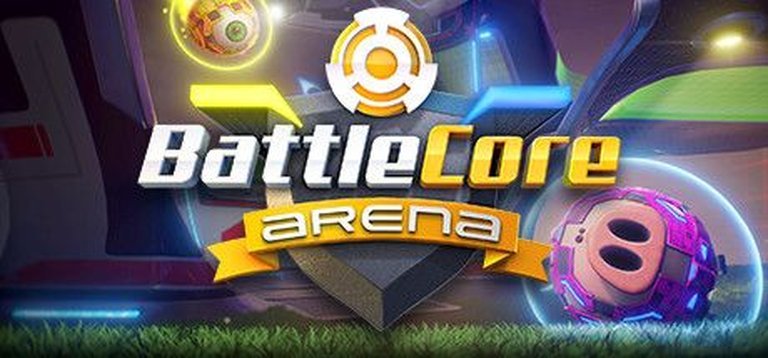
BattleCore Arena is a multiplayer third-person shooter set in a sci-fi/futuristic universe, where players engage in fast-paced combat across various arenas. Originally developed by Cosmic Ray Studio and later re-released by Ubisoft Bordeaux, the game features direct control mechanics, behind-view perspective, and a focus on competitive gameplay. The title evolved from an early access release in 2017 to a free-to-play model in 2025, incorporating modern features like Unreal Engine 5 enhancements and full controller support.
Gameplay Videos
Where to Buy BattleCore Arena
PC
BattleCore Arena Cracks & Fixes
BattleCore Arena Guides & Walkthroughs
BattleCore Arena Reviews & Reception
steambase.io (88/100): BattleCore Arena has earned a Player Score of 88 / 100.
store.steampowered.com (63/100): Mixed (63% of the 419 user reviews for this game are positive).
BattleCore Arena: A Physics-Driven Multiplayer Gem Lost in the Shadows
Introduction: The Overlooked Arena of Chaos and Skill
In the crowded landscape of competitive multiplayer shooters, BattleCore Arena (2017) emerged as a breath of fresh air—a game that stripped away the bloated mechanics of modern heroes shooters and distilled the essence of fast-paced, physics-driven combat into a tight, chaotic, and endlessly replayable experience. Developed by the small but ambitious Cosmic Ray Studio, BattleCore Arena dared to defy conventions by blending third-person shooting, platforming, and brutal ejection mechanics into a unique hybrid. Yet, despite its innovative design and passionate community, the game struggled to carve out a lasting niche in an industry dominated by giants like Overwatch and Rocket League.
This review seeks to uncover the hidden depths of BattleCore Arena—its development journey, its bold gameplay philosophy, its underappreciated artistry, and its tumultuous legacy. Was it a misunderstood masterpiece, or a flawed experiment that never quite found its audience? Let’s dive in.
Development History & Context: A Labor of Love in a Competitive Market
The Birth of a Unique Vision
BattleCore Arena was conceived by Cosmic Ray Studio, a French indie team with a clear mission: to create a multiplayer game that prioritized pure, unadulterated fun over complex narratives or bloated progression systems. The studio’s philosophy was simple—strip away the unnecessary, amplify the adrenaline, and let players engage in raw, skill-based competition.
The game entered Steam Early Access on October 4, 2017, at a time when the multiplayer shooter market was saturated with hero shooters (Overwatch, Paladins) and battle royales (PUBG, Fortnite). BattleCore Arena stood apart by rejecting class-based systems and instead focusing on universal mechanics—jumping, dashing, shooting, and most importantly, ejecting opponents off the map.
Technological Foundations: Unreal Engine 4 and PhysX
Built on Unreal Engine 4, BattleCore Arena leveraged the engine’s robust physics system (NVIDIA PhysX) to create a dynamic, weighty feel to movement and combat. The game’s core mechanic—ejecting enemies from the arena—relied heavily on precise collision detection and momentum-based interactions, making physics not just a backdrop but the very foundation of gameplay.
However, the game’s early access period was plagued by technical growing pains:
– Netcode instability led to inconsistent hit registration.
– Small player base made matchmaking difficult.
– Limited marketing meant the game flew under most gamers’ radars.
Despite these challenges, Cosmic Ray Studio persisted, refining the game over years of early access.
The Ubisoft Revival: A Second Chance or a Corporate Takeover?
In a surprising turn of events, Ubisoft Bordeaux acquired the rights to BattleCore Arena and announced a free-to-play re-release in June 2024, transitioning the game to Unreal Engine 5 and introducing peer-to-peer matchmaking. This move was met with mixed reactions:
– Optimists saw it as a chance for the game to finally reach a wider audience.
– Skeptics feared Ubisoft’s involvement would dilute the game’s indie charm.
The re-release launched officially on February 4, 2025, but by March 1, 2025, Ubisoft shut down the official servers, forcing players to rely on peer-to-peer connections. This abrupt shift left many wondering: Was Ubisoft’s intervention a lifeline or a death knell?
Narrative & Thematic Deep Dive: Minimalism with a Playful Edge
A Story-Free Experience by Design
BattleCore Arena makes no pretense of storytelling. There is no campaign, no lore, no cutscenes—just pure, unfiltered competition. The game’s narrative void is intentional, reinforcing its arcade-like purity. The only “story” is the one players create in the heat of battle.
Themes: Chaos, Mastery, and Playful Absurdity
While lacking a traditional narrative, BattleCore Arena thrives on thematic consistency:
1. Physics as the Ultimate Arbitrator – Every match is a test of how well players manipulate gravity, momentum, and positioning.
2. Ejection as the Ultimate Humiliation – Unlike traditional shooters where death is abstract, being flung off the map is a visceral, often hilarious defeat.
3. Customization as Self-Expression – Players can turn their Core (the spherical avatar) into anything from a teapot to a skull, embracing absurdity in a genre often obsessed with hyper-realism.
The Absence of Dialogue and Its Impact
With no voice acting or written dialogue, BattleCore Arena relies entirely on gameplay language:
– The thud of a dash signals an impending attack.
– The clang of a weapon ricochet warns of danger.
– The scream of a player being ejected is the only “story” that matters.
This minimalist approach ensures that mechanics, not narrative, drive engagement—a bold choice in an era where even competitive games feel compelled to include cinematic fluff.
Gameplay Mechanics & Systems: A Masterclass in Minimalist Depth
Core Gameplay Loop: Shoot, Dash, Eject, Repeat
At its heart, BattleCore Arena is a third-person arena shooter where players control a Core—a spherical, customizable avatar capable of:
– Double-jumping for aerial maneuverability.
– Dashing in any direction for quick repositioning.
– Shooting with a variety of weapons (each with unique recoil and projectile physics).
– Ejecting enemies by knocking them off the map (the primary win condition).
The game’s genius lies in its ejection mechanic:
– No health bars—players are eliminated instantly if knocked off the arena.
– No respawns in Juggernaut mode—once ejected, you’re out until the next round.
– Team Backup mode introduces a shared life pool, adding strategic depth.
Game Modes: Variety Without Bloat
-
Team Mode (3v3 Backup)
- Two teams of three compete to eject the most opponents.
- 10 Backup Points are shared—each ejection consumes one.
- Lasts 5 minutes, ensuring fast-paced matches.
-
Juggernaut Mode (1v5)
- One player becomes the Juggernaut—a larger, stronger Core.
- The Juggernaut must survive 3 minutes while opponents try to eject them three times.
- A tense, high-stakes mode that rewards both aggression and evasion.
Weapon & Ability Customization: Depth Without Overwhelm
Unlike class-based shooters, BattleCore Arena offers universal weapon loadouts with subtle variations:
– Primary Weapons: Ranged guns with distinct firing patterns (e.g., rapid-fire vs. charged shots).
– Secondary Abilities: Dashes, shields, or explosive attacks that alter movement dynamics.
– Perks: Passive buffs like increased dash distance or reduced recoil.
The lack of hard counters means matches are won through skill and adaptability, not pre-determined meta strategies.
UI & Accessibility: Functional but Unpolished
The game’s minimalist UI reflects its design philosophy:
– No clutter—health, ammo, and cooldowns are displayed cleanly.
– Customization menus are intuitive but lack the polish of AAA titles.
– Controller support was added late (2024), addressing a long-standing complaint.
However, netcode issues and inconsistent hit detection (especially in early versions) marred the experience for some players.
World-Building, Art & Sound: A Vibrant, Understated Aesthetic
Visual Design: Sci-Fi Meets Playful Minimalism
BattleCore Arena opts for a clean, futuristic aesthetic with:
– Geometric arenas featuring floating platforms, neon accents, and dynamic lighting.
– Customizable Cores that range from sleek robotic spheres to absurd objects (teapots, skulls, pigs)—a delightful contrast to the game’s competitive nature.
– Particle effects that emphasize impacts, dashes, and ejections without overwhelming the screen.
The art direction strikes a balance between serious competition and playful absurdity, making it visually distinct from gritty military shooters.
Sound Design: The Symphony of Chaos
The game’s audio is functional yet immersive:
– Weapon sounds are punchy and satisfying.
– Dash and jump cues provide essential auditory feedback.
– Ejection screams add a touch of dark humor.
– Ambient electronic tracks keep the energy high without distracting.
While not a soundtrack-driven experience, the audio design reinforces the game’s fast, chaotic rhythm.
Reception & Legacy: A Cult Classic in the Making?
Critical Reception: Overlooked but Beloved
BattleCore Arena received little mainstream attention, but its Steam reviews (88/100, “Very Positive”) reveal a passionate niche audience:
– Praise focused on its unique mechanics, fast-paced action, and physics-driven depth.
– Criticism targeted netcode issues, small player base, and lack of content updates.
Metacritic has no critic reviews, underscoring the game’s obscurity in traditional gaming media.
Commercial Performance: A Struggle for Survival
- Original 2017 release: Struggled to gain traction due to limited marketing and early access growing pains.
- Ubisoft’s 2025 re-release: Briefly revived interest but was overshadowed by Ubisoft’s other titles (e.g., XDefiant).
- Server shutdown (March 2025): Forced the game into peer-to-peer limbo, fragmenting the community.
Influence & Legacy: A Blueprint for Physics-Based Shooters?
While BattleCore Arena never achieved mainstream success, its design philosophy has influenced smaller indie projects:
– Proved that ejection mechanics can work in competitive shooters.
– Demonstrated the appeal of minimalist, skill-focused multiplayer without bloated progression.
– Inspired similar physics-driven arena games, though none have replicated its exact formula.
Conclusion: A Flawed Diamond in the Rough
BattleCore Arena is a rare gem—a game that dares to be different in an industry obsessed with trends. Its physics-driven combat, minimalist design, and relentless focus on pure gameplay make it a standout experience for those willing to look past its rough edges.
Final Verdict: 8.5/10 – A Cult Classic Deserving of a Second Life
Pros:
✅ Innovative ejection mechanics that redefine competitive shooters.
✅ Fast, skill-based gameplay with no filler.
✅ Charming customization that balances absurdity and competition.
✅ Free-to-play revival (2025) made it accessible to new players.
Cons:
❌ Netcode issues (especially in early versions) frustrated players.
❌ Small player base made matchmaking difficult.
❌ Ubisoft’s abrupt server shutdown damaged long-term viability.
❌ Lack of post-launch support left potential untapped.
Where Does It Stand in Gaming History?
BattleCore Arena may never be remembered alongside Counter-Strike or Overwatch, but it carved a niche for itself as a physics-driven, minimalist shooter that prioritized fun over frills. Its legacy is one of what could have been—a game that, with better marketing and polish, might have redefined the arena shooter genre.
For now, it remains a hidden treasure, waiting for a new generation of players to discover its chaotic, ejecting brilliance.
Final Recommendation:
If you crave fast, skill-based multiplayer with a unique twist, BattleCore Arena is worth your time—just be prepared to rally friends for peer-to-peer matches. It’s not perfect, but it’s one of the most original shooters of the last decade.
Would you like a follow-up analysis on its potential revival or a comparison to similar games like Rocket League or Splitgate? Let me know!