
- Release Year: 2019
- Platforms: Windows
- Publisher: Focus Home Interactive SAS
- Developer: Tindalos Interactive
- Genre: Strategy, Tactics
- Perspective: 3rd-person
- Game Mode: Online PVP, Single-player
- Gameplay: Customization, Real-time strategy, Space battles, Tactical Combat
- Setting: Futuristic, Sci-fi
Description
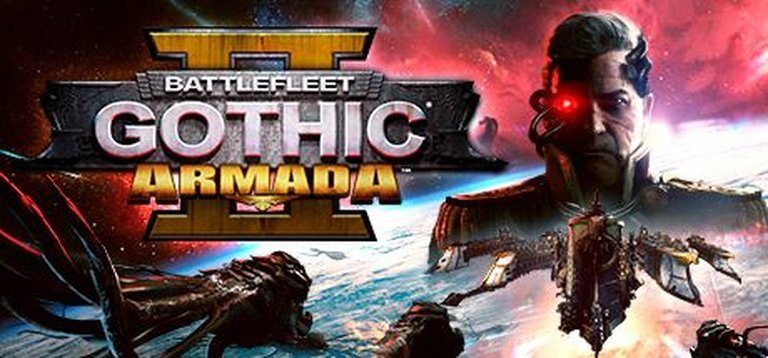
Battlefleet Gothic: Armada II is a real-time strategy game set in the Warhammer 40,000 universe, where players command customizable space fleets in tactical combat. It features three single-player campaigns with unique stories and mechanics, along with multiplayer support for all twelve factions, delivering a deep and immersive strategy experience in a grimdark sci-fi setting.
Gameplay Videos
Where to Buy Battlefleet Gothic: Armada II
PC
Battlefleet Gothic: Armada II Free Download
Battlefleet Gothic: Armada II Mods
Battlefleet Gothic: Armada II Guides & Walkthroughs
Battlefleet Gothic: Armada II Reviews & Reception
pcgamer.com : Involved, spectacular, space battles packaged into satisfying campaigns, and great fan service too.
Battlefleet Gothic: Armada II: The Grandeur and Grind of the 41st Millennium
Introduction: A Flagship for a Franchise
In the vast, overcrowded armada of Warhammer 40,000 video games, few titles have dared to capture the sheer scale of the setting’s signature space combat. While most adaptations focus on the grit of the trenches or the heroics of a single squad, Battlefleet Gothic: Armada II (hereafter Armada II) swings for the fences—literally and figuratively. It is a game of kilometers-long cathedrals of war, where the fate of star systems is decided by the careful positioning of battle-barges and the desperate sacrifice of thousands. Developed by Tindalos Interactive and published by Focus Home Interactive in 2019, this sequel sought to expand upon its 2016 predecessor’s foundation by delivering every faction from the original Battlefleet Gothic tabletop game, weaving them into campaigns inspired by the “Gathering Storm” and “13th Black Crusade” fiction, and crafting a tactical experience that is as punishing as it is spectacular. This review will argue that Armada II is a game of brilliant, if deeply flawed, vision—a title that achieves unparalleled authenticity in its depiction of 41st-millennium naval warfare, yet is often weighed down by its own ambition, technical inconsistencies, and a steep, uncompromising difficulty curve that alienates as much as it enchants. It stands as a pivotal, if imperfect, monument to the potential—and perennial pitfalls—of adapting niche wargaming into digital RTS.
Development History & Context: From Modest Beginnings to Grand Ambition
Armada II emerged from the shadow of its predecessor and the colossal legacy of Games Workshop’s IP. Tindalos Interactive, a French studio with a history of strategy titles like Etherium and Aliens: Dark Descent, had proven with the first Armada that they understood the tactile, positioning-focused core of Battlefleet Gothic. The 2016 game was a solid, focused effort, but its limited faction roster (four at launch) and simpler campaign structure left room for expansion.
The sequel was announced in January 2018 with a clear mandate: completeness. The goal was to include all 12 factions from the tabletop derivative—Imperial Navy (with sub-factions Space Marines and Adeptus Mechanicus), Chaos, Aeldari (Craftworlds, Corsairs, Drukhari), Orks, Necrons, Tyranids, and T’au (Protector and Merchant Fleets)—from the start. This was not just a numerical goal but a philosophical one, aiming to represent the chaotic, asymmetrical tapestry of the 40K galaxy. The team, led by Game Director Romain Clavier and Creative Director Aurélien Josse, built the game in Unreal Engine 4, a significant leap from the first game’s engine, allowing for the promised “bigger, richer, more impressive” visuals.
However, ambition collided with constraints. The game was delayed from its original September 2018 date to January 2019, a move typically signaling needed polish. The development context was also shaped by the state of the 40K genre. The much-anticipated Dawn of War III had been a critical and commercial disappointment the previous year, leaving a vacuum for a “true” large-scale 40K strategy game. Armada II positioned itself as that heir, but with a niche focus on space tactics rather than combined-arms RTS. This context explains its fiercely loyal but specific audience: it was not aiming for the mainstream RTS player, but for the wargamer and lore devotee hungry for fidelity.
Narrative & Thematic Deep Dive: The Gathering Storm’s Aftermath
Set approximately 800 years after the events of the first game, Armada II’s narrative is anchored in the tumultuous “Gathering Storm” and “13th Black Crusade” periods of 40K lore. This is the era of the Cicatrix Maledictum, the galaxy-splitting rift created by Abaddon the Despoiler’s final push, and the resurrection of Roboute Guilliman, the return of the Necrons, and the relentless advance of the Tyranid Hive Fleets.
The game’s campaigns are its primary storytelling vehicle, and here the design diverges significantly from the first game:
* The Imperium Campaign: The player assumes the role of a newly minted Lord Admiral, tasked with securing Segmentum Pacificus following the fracturing of the Imperium. The narrative involves rallying the disparate forces of the Imperial Navy, Adeptus Astartes, and Adeptus Mechanicus. Key characters from the lore, like Archmagos Belisarius Cawl and Roboute Guilliman himself, feature prominently in cutscenes and mission briefings. The story is a classic 40K tale of desperate, grinding defense against multiple existential threats, with player success measured in systems held and enemies repelled.
* The Necrons Campaign: A rare and welcome perspective, this campaign allows players to command the silent, aristocratic legions of the Necron Empire as they awaken across the galaxy to reclaim their ancient domains. The narrative frames the Necrons not as mindless automatons, but as a tragic, ancient force seeking to restore a dead empire, clashing with both the “old” life of the Imperium and the “new” life of the Tyranids.
* The Tyranid Campaign: The second playable “monster” faction after the first game’s Chaos, this campaign puts the player in control of a splinter fleet of the Great Devourer. The story is one of pure consumption, with the goal to consume designated worlds to fuel the fleet’s growth. It’s a stark, thematic contrast to the Imperium’s defensive struggle; the Tyranids have no territory to hold, only biomass to acquire.
* The Chaos Campaign (DLC): Released separately, this campaign focuses on the forces of Chaos, particularly the Word Bearers and other warbands, capitalizing on the power vacuum left by Abaddon’s crusade. It introduces mechanics tied to the favor of the Chaos Gods, a system of risk and reward that mechanizes the faction’s inherent volatility.
Thematically, Armada II grapples with the core 40K dichotomies: order vs. chaos, ancient vs. new, technology vs. sorcery, survival vs. extinction. The Imperium represents僵化 (stagnant) order, the Necrons represent a dead order, Chaos represents entropic anarchy, and the Tyranids represent alien, hive-mind extinction. The campaigns, while structurally similar (conquer sectors on a starmap), reinforce these themes through unique mechanics—the Tyranids’ constant need to consume, the Necrons’ devastating but brittle power, the Imperium’s fragile civil-military coordination.
However, the narrative delivery is not without criticism. As noted by Goonhammer, the story can feel “threadbare” at times, relying heavily on pre-mission briefings and post-mission debriefings from a handful of archetypal officers. The “high narrative values” promised in the official description are more evident in atmosphere and voice acting—with performers like Adam Howden as Lord Admiral Spire and Grant Burgin as Abaddon delivering suitably grim or grandiose performances—than in a tightly plotted, character-driven saga. The campaigns are best appreciated as a sandbox for the player’s own tactical stories, rather than a cinematic narrative experience.
Gameplay Mechanics & Systems: The Calculus of Catastrophe
Armada II‘s genius and its greatest frustration reside in its mechanics, a dense web of systems imported from the tabletop and digitized with varying success. The core loop is deceptively simple: maneuver fleets of spaceships on a 2D plane to capture strategic points or destroy the enemy. But depth erupts from the details.
1. The Foundation: Ship Combat & The “Big Change”
The most significant departure from the first game is a fundamental rebalancing of core stats and concepts:
* 50% Range Increase: All weapon ranges were increased by half. This transforms engagements from close-in knife-fights into longer-range duels, giving battles more spatial scale but also reducing the immediacy of visual spectacle.
* Non-Blocking Armor: Armor is no longer a binary “block chance” but a damage reduction percentage. A ship with 50% armor takes half damage from incoming attacks. This change makes armor a predictable but crucial buffer, shifting focus from random mitigation to calculated risk management.
* Ammunition Systems: Key abilities—torpedoes, bombers, boarding craft, lightning strikes—now have limited charges (typically 3). This permanently alters playstyle from the first game, where these could be spammed from maximum range. Now, timing and positioning for these “burst” abilities are paramount.
* The Stance System: Replacing the temporary “Special Orders” (Brace, Lock On, etc.) are permanent Stances (like “Weapons Hold” or “Combat Turtling”). Switching stances incurs a cooldown, forcing players to make strategic commitments for entire phases of battle rather than reactive toggles.
2. Campaign Strategic Layer: The “Soulstorm” Influence
Drawing clear inspiration from Warhammer 40,000: Dawn of War – Soulstorm, the campaigns operate on a turn-based strategic map divided into Sectors (like planets) and Systems (like territories). This is where the game’s ambition is most evident and most divisive.
* Multiple Fleets & Shipyards: Players manage an Armada composed of multiple Fleets, each led by a Commander and centered on a Flagship. Fleets move independently on the map. Critically, ships are not bought globally; they must be constructed at a Shipyard planet within the same Sector as the fleet. Shipyards have a limited, regenerating Construction Point pool, creating a logistical bottleneck. Building a Battleship might require consolidating multiple shipyards in one system.
* Permadeath & Maintenance: This is the campaign’s brutal, defining feature. Ships do not fully repair between turns. Damage carries over, and destroyed ships are permanently gone. Losing an experienced, upgraded capital ship is a catastrophic strategic loss. Coupled with a per-ship upkeep cost that drains income, this forces extreme caution. Players cannot afford reckless ship swaps or suicidal tactics; attrition is a palpable, strategic force.
* The Urgency Meter: Each campaign has a primary Objective (conquer X system, destroy Y faction leader). While this objective is active, an Urgency Meter ticks up each turn. If it fills (after ~20 turns), it’s an instant game over. This meters can be slowed by spending rare Battleplan resources. This creates relentless pressure, preventing “camping” and forcing proactive expansion.
* Raids & Randomness: Undefended or weakly defended systems can be hit by Raids, even if all connected systems are secure. These are strong, timed attacks that can capture territory overnight, forcing the player to maintain defensive fleets rather than an all-offensive push.
* Planetary Upgrades & Faction-Specific Effects: Planets can be upgraded for income, construction, repair bonuses, etc. Crucially, these effects are faction-specific. An Agri World might reduce upgrade costs for the Imperium but lower enemy Chaos crew bravery. This adds a layer of asymmetric strategic planning.
3. Faction Asymmetry & Identity
The game shines in translating tabletop factions into distinct digital playstyles:
* Imperial Navy/Space Marines/Mechanicus: Balanced, shield-heavy, reliant on broadside gunnery and disciplined formations. The Imperial campaign combines all three, offering a toolkit of close-combat Terminators, mechanized Techmarine support, and traditional battleships.
* Chaos: Focuses on superior maneuverability (with the “All Ahead Full” burst), powerful boarding actions, and corruption mechanics that can turn enemy crews.
* Aeldari (Craftworlds/Corsairs/Drukhari): The ultimate glass cannons. Their holofields (shields that only drop when moving) make them lethally elusive when kept in motion, but devastatingly fragile if caught stationary. As Goonhammer observed, even the AI struggles to manage this constant movement, making Aeldari a faction that rewards player skill immensely.
* Necrons: Slow, incredibly tough, with regeneration and devastating, long-cooldown “Gauss” weapons that ignore armor. Their weakness is crippled by sustained focus fire on key systems.
* Tyranids: The swarm faction. They deploy Bio-Titans and spawn Ripper Swarms that disable systems. Their strength lies in overwhelming numbers and biological weaponry that attacks hull, subsystems, and crews simultaneously.
* Orks: Brawlers. They rely on ramming (which does progressive damage), short-range but high-damage weapons, and sheer, noisy aggression. Their “Kustom Force Field” is a short-range shield that requires getting close.
* T’au: Ranged specialists with powerful seeking torpedoes and markerlights that increase damage taken by targets. They are fragile and must dictate range.
4. The Learning Curve & UI Criticisms
The game’s depth comes at a cost. The user interface (UI) is a frequent point of criticism. Icons for abilities, stances, and status effects are not always distinct at a glance. During the chaos of a large battle, identifying which of your ships is low on crew or which enemy subsystem is marked can be difficult. The campaign shipbuilding screen is notoriously slow, with long freeze times mentioned in multiple reviews. The tutorial is also considered inadequate for the game’s complexity, throwing players into the deep end.
5. Multiplayer: The Grind and the Meta
Multiplayer operates on a point-based fleet builder separate from the campaign. Players design fleets from their available sub-faction options within a point limit. The meta is heavily influenced by the campaign’s balance issues. Factions like the Orks, with their ramming focus, and the Aeldari, with their movement-dependent defenses, are extremely high-skill-cap but can dominate in skilled hands. The presence of twelve factions is a strength, but reports of poor faction balance (a point raised by The Games Machine and others) are common, with some options seen as strictly inferior in competitive play.
World-Building, Art & Sound: The Grandest Stage
Where Armada II is almost universally praised is in its presentation and atmospheric fidelity.
* Visuals: Using Unreal Engine 4, the game achieves a brooding, majestic beauty. Ship designs are faithful, exaggerated interpretations of the tabletop miniatures—gothic spires, daemon-possessed hulls, sleek Aeldari curves, and rusted Ork scrap-heaps. Battlefields are spectacular. Lens flares frommacrocannon impacts, the purple warp-fire of Chaos, the sickly green of Tyranid bio-weapons, and the elegant lightning of Eldar las-cannons create a visual cacophony that feels authentically 40K. The detail is obsessive: destroyed ships become physics-enabled drifting hulks; Thunderhawk Gunship squadrons are individually animated specks; Necron monoliths assemble from fragments. The grim,工业化的 dark tones are punctuated by vibrant weapon effects, perfectly capturing the “gothic sci-fi” aesthetic.
* Sound Design: The soundscape is a masterpiece of weight and scale. The deep, resonant booms of macro-cannon batteries, the screech of ramming prows, the guttural roars of Ork shouts and Tyranid screeches, and the melancholic, imperial choir of the soundtrack (composed by Doyle W. Donehoo) all combine to create an audial experience that matches the visual spectacle. Voice acting, while sometimes intentionally over-the-top (in the best 40K way), is generally well-cast and delivered with conviction.
* Lore Integration: The game serves as an effective lore primer. Each faction’s campaign intro cutscene succinctly explains their place in the galaxy during the Gathering Storm. Seeing the Necrons awaken, the Tyranids descend, or the Aeldari flee the Craftworlds’ destruction brings tabletop codices to life in a way few other media can. It’s a love letter to fans, packed with references to Guilliman’s return, the Great Rift, and other major events.
Reception & Legacy: A Cult Classic with Caveats
Upon release in January 2019, Battlefleet Gothic: Armada II received generally favorable reviews but with a notable split.
* Critical Reception: It holds a Metacritic score of 77/100. Scores ranged from the high 90s (Way Too Many Games) to the 70s (4Players, Capsule Computers). Common praises were its spectacle, tactical depth, and faction variety. PC Gamer’s 84/100 review called it “one of the most authentic attempts to capture the grandiosity of Warhammer 40,000.” Rock, Paper, Shotgun highlighted its “big, beautiful, dramatic RTS campaigns.” Common criticisms coalesced around: technical issues and bugs (crashes, UI freezes), poor AI (especially for mobile factions like the Aeldari), campaign frustration due to the Urgency meter and permadeath, and faction imbalance.
* Player Reception: Steam reviews are “Mostly Positive” (10,613 reviews), but the user score on sites like MobyGames is lower (2.6/5). Player complaints consistently target performance stability (crashes, particularly with certain hardware), the awful shipbuilding UI, lack of tutorial, and the grueling campaign difficulty. Many note that the game is a must-buy for multiplayer but recommend waiting for a sale for the single-player experience due to its punishing nature.
* Legacy and Influence: Its legacy is twofold:
1. The Pinnacle of 40K Space Combat: It remains the definitive digital adaptation of Battlefleet Gothic. No other game has matched its combination of scale, faction completeness, and dedication to the tabletop’s tactical DNA. It demonstrated that a niche, positioning-heavy wargame could find an audience in the digital space.
2. A Benchmark for Asymmetry: Its faction designs are a masterclass in asymmetric strategy. The contrast between the slow, tanky Necrons and the skittering, fragile Tyranids istotal. This has influenced perceptions of how to adapt complex tabletop factions, showing that mechanical uniqueness is more important than numerical balance for identity.
3. The “Soulstorm” Campaign Template: Its strategic layer, with its sector map, resource management, and urgency meter, became a template for subsequent strategy games seeking a “war campaign” feel. It is more tense and consequential than a simple mission string but less bloated than a full 4X.
* Eurogamer and PC Gamer have consistently listed it among the best Warhammer 40,000 games in recent years, a testament to its enduring quality despite its flaws.
Conclusion: A Flawed Gem in the Crown of the Imperium
Battlefleet Gothic: Armada II is not a game for everyone. Its punishing campaign mechanics, impenetrable UI at times, and persistent technical gremlins will rightfully deter the casual strategy player. Its AI is often a poor substitute for human tactical cunning, and its balance is a ongoing topic of debate within its community.
Yet, to dismiss it on these grounds is to miss its monumental achievements. It is a game that understands its source material at a cellular level. It captures the terrifying scale, the gothic aesthetic, the asymmetry of ancient, bizarre armies, and the desperate, strategic calculus of 40K’s endless war. When a Chaos battle-barge, bristling with daemon engines, warps in amidst your fleet, or when a Tyranid bio-titan emerges from a cloud of spore-ships, the game achieves a level of atmospheric and tactical immersion unmatched in the genre. The feeling of successfully outmaneuvering a faster Aeldari fleet, or weathering a Necron onslaught with disciplined fire, is a victory earned through pure, cerebral play.
It is a game of spectacle and spreadsheet, of booming cannons and cold, hard resource calculations. It is a game where a single ship lost to a bad decision can unravel a campaign, but where a perfectly executed fleet action feels like writing a new page of the lore.
In the pantheon of Warhammer 40,000 video games, Armada II occupies a special, niche throne. It is not the most accessible (Dawn of War), nor the most narratively compelling (Space Marine), nor the most refined (Mechanicus). But in its specific domain—the vast, silent, deadly dance of starships in the void—it is peerless. It is a flawed, demanding, and often frustrating experience, but one that, for the patient and the devoted, offers a glimpse into the epic, terrible grandeur of the 41st Millennium like no other game ever has. Its place in history is secured not as a mainstream blockbuster, but as the definitive digital monument to Battlefleet Gothic, and a bold, instructive experiment in bringing complex tabletop wargaming to the PC. For that ambition, and for those moments of sublime, catastrophic space battle, it deserves to be celebrated—warts, crashes, and all.