
- Release Year: 2018
- Platforms: Windows
- Publisher: Wolfship Games
- Developer: Wolfship Games
- Genre: Strategy, Tactics
- Perspective: Free camera
- Game Mode: Single-player
- Gameplay: Real-time
- Setting: Futuristic, Sci-fi
- Average Score: 50/100
Description
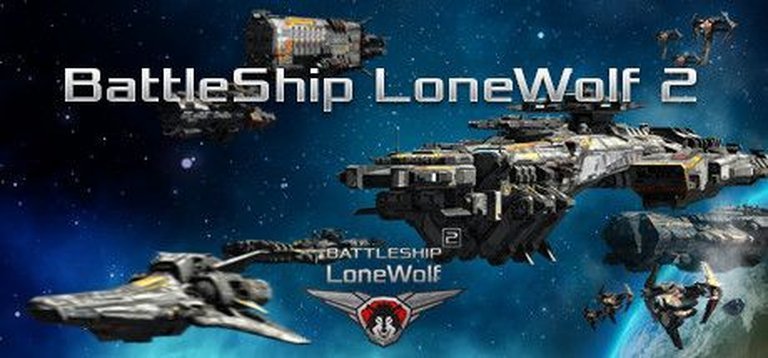
In the sci-fi real-time strategy game Battleship Lonewolf 2, players build custom space fleets to engage in intense one-on-one PVP battles, commanding a flagship with unique skills while strategically summoning AI-controlled units to destroy the enemy Mothership.
Where to Buy Battleship Lonewolf 2
PC
Battleship Lonewolf 2: Review
1. Introduction
In the vast cosmos of real-time strategy (RTS), where titans like StarCraft and Homeworld reigned supreme, Battleship Lonewolf 2 arrived in 2018 as a curious footnote: a multiplayer-focused niche title from South Korean developer WolfShipGames Co., Ltd. Promising “ultimate space fleet” combat, it positioned itself as a sequel to the lesser-known Battleship Lonewolf (2017). Yet, its legacy is defined not by innovation, but by its ambitious yet flawed execution as an Early Access title. This review argues that Battleship Lonewolf 2 encapsulates the dual-edged sword of Early Access ambition: a mechanically sound core concept undermined by a crippling lack of content, poor player retention, and developer abandonment, ultimately leaving it as a cautionary tale of unrealized potential in the crowded RTS landscape.
2. Development History & Context
Developed and published by the small South Korean studio WolfShipGames Co., Ltd., Battleship Lonewolf 2 emerged during a transitional period for digital distribution. The game leveraged the Unity engine, a democratizing force that empowered smaller studios to create visually competent titles without the resources of AAA giants. Released on March 7, 2018, it arrived amid the peak of Steam’s Early Access boom—a model promising community feedback and iterative development. WolfShipGames explicitly framed the Early Access phase as essential for “coordinating the nature of combat,” aiming to refine the interplay between player-controlled Flagships and AI-driven units over a planned 1–3 month period.
However, the context reveals a critical disconnect. The 2018 RTS market was dominated by established franchises and narrative-driven experiences like Total War: Warhammer II. WolfShipGames, lacking pedigree or a major publisher, bet on a hyper-specialized multiplayer-only formula. Their vision—focused on deep tactical synergy between Flagship skills and unit counters—was technically feasible within Unity but required robust matchmaking and player engagement to survive. The studio’s ambitious post-launch plans (new Flagships, units, a progression system) hinged entirely on Early Access success. Tragically, this model backfired; without a single-player foundation or sufficient initial player base, the game struggled to attract the critical mass needed for iterative growth, leaving its Early Access promises unfulfilled.
3. Narrative & Thematic Deep Dive
Battleship Lonewolf 2 offers virtually no narrative or character development. The official blurb—a sterile “Become a commander of the space fleet”—and the absence of any lore, cutscenes, or dialogue reduce the game to a pure abstraction of conflict. Thematically, it leans into the cold calculus of futuristic warfare: resource management, tactical positioning, and the obliteration of an enemy “Mothership.” Yet this lack of narrative context is a profound weakness. While Homeworld used its setting to evoke wonder and tragedy, Battleship Lonewolf 2’s sterile void feels devoid of purpose. Players are commanders without a cause, engaging in battles devoid of stakes beyond victory. The game’s only thematic consistency is its obsession with mechanical precision, but without human or cosmic context, this precision feels hollow—a sterile simulation rather than a compelling story.
4. Gameplay Mechanics & Systems
The core gameplay loop of Battleship Lonewolf 2 is a masterclass in controlled chaos. Players directly pilot a “Flagship”—a powerful capital ship with three unique active skills (e.g., area-of-effect attacks, buffs, or debuffs)—while managing resources to summon AI-controlled units (frigates, cruisers, etc.). The objective is singular: destroy the enemy Mothership. This duality creates a compelling rhythm: micro-managing the Flagship’s positioning and skills while macro-managing unit production counters. Unit effectiveness varies by type, size, and weapon, encouraging strategic depth. A Flagship with AoE skills synergizes with swarm units, while a sniping-oriented Flagship pairs well with long-range artillery.
However, the system is marred by Early Access limitations. The initial version offered only one-vs-one PvP via a basic matching system, with no rewards, progression, or variety in Flagships/units. As community feedback noted, this created a vicious cycle: new players faced steep learning curves against veterans without practice modes (e.g., skirmish or AI opponents). The AI’s autonomy simplified unit control but also removed player agency beyond the Flagship, leading to repetitive battles where skillful Flagship use often determined outcomes. The UI, though functional, lacked polish, and the free camera, while flexible, could feel disorienting during frantic engagements. Ultimately, the gameplay was a “diamond in the rough”—tactically rich but mechanically underbaked—and the full version’s promised progression system never materialized.
5. World-Building, Art & Sound
Visually, Battleship Lonewolf 2 embodies functional sci-fi. The Unity engine delivers crisp, polygonal models for ships and effects, with a color palette dominated by blues, grays, and weapon glows evoking a cold, industrial aesthetic. The free camera allows cinematic angles, but the void-like environments—with nebulae and debris as mere backdrop—lack the immersive detail of peers like Sins of a Solar Empire. Ships lack personality, resembling generic hulls with interchangeable weapons.
Sound design is similarly perfunctory. Weapon effects are serviceable but unmemorable, and the absence of voice acting or dynamic music underscores the game’s sterile tone. The only notable audio element is a subtle electronic soundtrack that fades into the background. While technically competent, the art and sound fail to elevate the experience. They support the gameplay’s focus on tactics but do little to engage players emotionally or thematically, leaving the universe feeling like a testbed rather than a lived world.
6. Reception & Legacy
Upon release, Battleship Lonewolf 2 received a muted reception. MobyGames and Steambase.io list no critical reviews, while Steam’s user reviews (split 3 positive, 3 negative) reveal a divided audience. Positive reviews praised the “deep unit/Flagship synergy,” but negativity dominated: players lamented the “no single-player” disappointment, long matchmaking queues due to a small player base, and the “dead multiplayer” community. A Steam user, Architect_Apoclypse, typified this: “Ah man I loved the first Battleship Lonewolf… but talk about disappointment. The game looks really good too, you should have made a single player campaign though.”
Commercially, the game struggled. Its $7.99 price point was reasonable for an Early Access title, but without a full version or updates, sales dwindled. By 2026, Steambase.io noted a Player Score of 50/100, reflecting its niche appeal and abandonment. The last developer update was over eight years ago, cementing its status as an unfinished project. Legacy-wise, Battleship Lonewolf 2 influenced few games but serves as a case study in Early Access risks: it demonstrated that a compelling core mechanic cannot sustain a game without player retention, content, or developer commitment. It remains a footnote in RTS history, remembered for its unrealized potential rather than its execution.
7. Conclusion
Battleship Lonewolf 2 is a game of profound contrasts: a mechanically intricate RTS system trapped in a barren multiplayer-only shell. WolfShipGames crafted a satisfying loop of Flagship micro-management and unit macro-strategy, but its refusal to include single-player content or deliver on Early Access promises doomed it. The sterile art, minimal sound, and complete lack of narrative further eroded its appeal. While it briefly intrigued a small audience with its tactical depth, the game’s legacy is one of missed opportunities—a cautionary tale of ambition outweighing execution in the volatile world of Early Access. For historians, it exemplifies the challenges faced by small studios in a saturated market; for players, it remains a curiosity: a space combat simulator whose greatest battle was against its own limitations. Ultimately, Battleship Lonewolf 2 is not a failure of design but of vision—a reminder that even the most polished mechanics cannot compensate for a world devoid of purpose or a community that never coalesced.