
- Release Year: 2019
- Platforms: Nintendo Switch, PlayStation 4, Windows
- Publisher: EuroVideo Medien GmbH, Wild River GmbH
- Developer: Independent Arts Software GmbH
- Genre: Adventure
- Perspective: 3rd-person (Other)
- Game Mode: Single-player
- Gameplay: Platform, Puzzle elements, RPG elements
- Setting: Fantasy
- Average Score: 69/100
Description
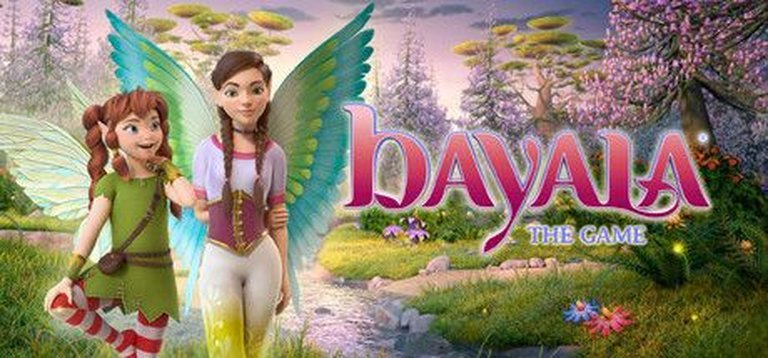
Bayala: The Game is a fantasy adventure set in the magical kingdom of Bayala, where fairy princesses Sera and Surah embark on a perilous journey to protect a precious dragon egg and restore fading magic threatened by shadow elf queen Ophira’s theft of dragon eggs, featuring 3rd-person platforming, puzzle-solving, and RPG elements across vibrant environments.
Gameplay Videos
Where to Buy Bayala: The Game
PC
Bayala: The Game Cracks & Fixes
Bayala: The Game Reviews & Reception
metacritic.com (65/100): Bayala is a simple game, but correct. It does not offer great things, but it is fun and it is especially attractive for the little ones at home. Totally recommended for those who have seen the movie and have enjoyed it.
ladiesgamers.com : Adventure game bayala is based on the movie bayala – a magical adventure. What’s more, the movie, and the game, are based on the lovely figurines by Schleich.
opencritic.com (70/100): bayala – the game is an ideal game for any child or young boy who wants to enjoy the adventures of Surah and her friends, who have enjoyed the movie, or who enjoy the collection of bayala toys from the Schleich brand, but can also have fun for parents and older brothers if they give it a try.
gamingboulevard.com : The game itself is not particular but works its magic. It brings the characters to life and engulfs you with the Bayala factor.
steambase.io (73/100): has earned a Player Score of 73 / 100. This score is calculated from 11 total reviews which give it a rating of Mostly Positive.
Bayala: The Game: Review
Introduction
In a gaming landscape increasingly dominated by sprawling open-world epics and hyper-competitive multiplayer arenas, Bayala: The Game emerges as a delightful throwback—a spellbinding, fairy-dusted platformer that whisks players into the whimsical realm of Schleich’s beloved toy line. Released in 2019 as a tie-in to the German-Luxembourgish animated film Bayala: A Magical Adventure, this unassuming adventure captures the essence of early 2000s licensed games like Jak and Daxter or Crash Bandicoot, but tailored for a younger audience enchanted by elves, unicorns, and dragons. Though overshadowed by AAA blockbusters, its legacy lies in faithfully extending a niche toy empire into interactive play, blending simple platforming with collectathon charm. My thesis: Bayala is a competent, heartwarming platformer that shines for its target demographic of children (especially young girls aged 7+), delivering magical escapism through vibrant worlds and forgiving mechanics, yet falters in depth and innovation, cementing its place as a forgotten gem in licensed kids’ gaming history.
Development History & Context
Independent Arts Software GmbH, a modest German studio founded in the early 2000s, spearheaded Bayala: The Game under the watchful eye of managing director Holger Kuchling, whose credits span over 49 titles including Eldrador Creatures and BIG-Bobby-Car: The Big Race. With a lean team of 48 credited individuals—game designers Daniel and Hannah Müller, art director Thomas Nowicki, and audio maestro Julian de Freitas—this project exemplifies the era’s boutique approach to licensed adaptations. Powered by Unity, the game launched on October 24, 2019, for Windows (via Steam at $9.99), PlayStation 4, and Nintendo Switch, coinciding with the film’s European theatrical rollout and digital release.
The 2019 gaming landscape was ripe for such endeavors: Nintendo Switch’s family-friendly portability fueled a surge in kid-centric platformers (Gigantosaurus: The Game, The Game of Life 2), while PS4 catered to budget digital titles. Technological constraints were minimal—Unity enabled cross-platform parity—but creative ones abounded. As a promotional extension of Schleich’s bayala toy line (introduced in 2007, pitting light and shadow elves), and the film by Ulysses Films and Fabrique d’images (directed by Aina Järvine and Federico Milella), the game prioritized fidelity over ambition. Producers like Emely Christians bridged film and game, ensuring Surah’s shadow-elf arc mirrored the movie’s narrative. In an industry pivoting toward live-service models, Bayala harkens to pre-mobile era tie-ins (Planet 51: The Game, Heidi: The Game), where toys and films drove modest commercial ventures amid giants like Super Mario Odyssey.
Narrative & Thematic Deep Dive
Bayala: The Game weaves a tapestry directly from the film’s plot, immersing players as Surah, the sun-elf princess abducted as a child by Shadow Queen Ophira during the Dragon’s Feast. Ophira’s theft of dragon eggs disrupts Bayala’s magical harmony—elves guard eggs until reuniting hatchlings with parents, sustaining the land’s life force. Years later, Surah escapes the Shadow Realm with allies Jaro (a shadow elf) and Nuray (Ophira’s niece), her upbringing granting shadow wings and storm magic, symbolizing hybrid identity.
The game opens in Solyas Kingdom amid Eyela’s coronation (Surah’s sister), disrupted when young Marween delivers a “talking rock”—hatching dragon Nugur. Cutscenes (high-fidelity movie excerpts) propel the quest: restore dragons via a new Feast requiring all elven tribes (sun, forest, ice, rainbow, shadow). Surah’s party—Sera (twin sister), Marween, Piuh (mischievous raccoon)—journeys through forests, caves, and Dragon Mountains, clashing with Ophira’s ravens and guards. Pivotal moments echo the film: Bilara’s wisdom embraces Surah’s “evil” powers as strength; storms test alliances; a Shadow Rock siege reveals hidden eggs in petrified dragons. Climaxing in Surah’s duel—bolstered by dragon magic—Ophira turns to stone, Nuray ascends as shadow queen, and Bayala celebrates unity.
Thematically, Bayala explores harmony versus discord: dragons as magical conduits demand elven cooperation, mirroring real-world ecology. Surah’s arc champions self-acceptance—shadow powers aren’t curses but tools—while tribal alliances (light vs. shadow) preach reconciliation. Dialogue, penned by Sascha Hartmann, is simple yet poignant, voiced under Hannah Müller’s direction: “Your shadow elf abilities are a source of strength, not evil.” Pacing mirrors the film’s steady, emotionally light tone—whimsical perils (glowing mushrooms in “scary” caves) yield a happy ending. For kids, it’s empowering; analytically, it’s a straightforward fairy tale reinforcing toy-line lore without subversion.
Gameplay Mechanics & Systems
At its core, Bayala is a linear 3D platformer with side-scrolling influences, blending adventure quests, light RPG progression, and puzzle elements in bite-sized levels accessed via portals. Core loop: fetch quests (gather flower seeds, tidy streets, present-hunt) propel narrative, teaching Surah skills like ledge-climbing, leaf-jumping, wall-scaling, and mushroom-bouncing. Direct control (gamepad/keyboard/mouse) feels responsive yet forgiving—falls into slime pits respawn instantly sans penalty, suiting 7+ ratings.
Combat is mild: energy-depleting spins fend off crows/guards, refilled by ubiquitous sparkles. Progression unlocks via skill trees—new abilities open paths, like countering Ophira’s storms. Mini-games diversify: Bejeweled-style match-3 (jewels), Piuh’s fish-catching, endless-runner horse races evading obstacles. Collect 90+ stickers/seeds for a magical album (glittering fragments hidden), trading for puzzles/bonus games. UI is intuitive—portals hub levels (throne room to town)—but linearity mandates revisits: presents/spiders inaccessible until quested, fostering repetition.
Innovations shine in integration: movie cutscenes trigger segments (Marween balancing Nugur; crow fights). Flaws abound—static camera hampers depth perception (mushroom jumps frustrate), iffy stick-climbing, chore-like backtracking. No multiplayer/RPG depth (solo offline), but RPG elements (skill-teaching, quests) engage young players. Compared to contemporaries, it’s Spyro-lite: charming but shallow, prioritizing accessibility over challenge.
World-Building, Art & Sound
Bayala’s fantasy setting—lush forests, butterfly-lit caves, Dragon Mountains—immerses via Unity’s vibrant palette: glittering unicorns, flower boats, elf castles evoke Schleich figurines’ hand-painted whimsy. Environments transition seamlessly: Solyas’ sun-kissed streets to shadow-shores, Ophira’s raven-haunted rocks. Art direction (Jessica Hassenewert’s leads, Thomas Nowicki’s VFX) crafts static-yet-enchanting vistas—glowing mushrooms soften “dangers”—with movie cutscenes elevating fidelity.
Atmosphere builds wonder: portals evoke magical hubs, horse rides sweep vistas. Sound design, helmed by Julian de Freitas, enchants—ethereal flutes/strings underscore quests, whimsical SFX (Piuh’s chirps, storm whooshes) amplify joy. Voicework (Madison Mullahey’s Surah) fits family fare, no bombast needed. Collectively, they forge escapism: a toy-box world pulsing magic, restoring Bayala’s wilted harmony visually/aurally, making flaws (static cams) forgivable for immersion.
Reception & Legacy
Launch reception was tepid yet kid-positive: MobyGames lacks scores/reviews; Metacritic/OpenCritic aggregate sparse data (LaPS4: 65/100, “fun for little ones”). User fronts vary—Steam’s 73/100 (“Mostly Positive,” 11 reviews); Switch sites like LadiesGamers (“I Like it a Lot,” praising toy fidelity), GamingBoulevard (7/10, “introduction platformer”), NSG Reviews (2.5/5 gameplay). Critics lauded visuals/charm for 7+ girls (33bits: 70/100), critiqued linearity/repetition. Commercially obscure ($771k film gross hints modest marketing; digital-only bulk), collected by few.
Legacy endures niche: preserves Schleich IP amid toy-to-game shifts (Barbie Fairytopia), influencing no majors but echoing 2000s platformers. Evolving rep: cult curiosity for parents/kids’ Switch libraries, undervalued for forgiving design amid Astro Bot‘s polish. No patches/sequels signal endpoint, yet it embodies licensed gaming’s joy—fun over prestige.
Conclusion
Bayala: The Game distills Schleich’s magical elf-dragon saga into a vibrant, quest-filled platformer: Surah’s odyssey through Bayala’s realms captivates with linear charm, collectibles, and mini-game variety, bolstered by lush art and fitting audio. Strengths—accessibility, thematic warmth—cater expertly to young players, evoking toy-play interactivity. Weaknesses—repetitive structure, control quirks—limit replayability, dooming broader appeal.
In video game history, it occupies a quaint footnote: a 2019 relic of family tie-ins, bridging film/toys sans blockbuster ambition. Verdict: Recommended for kids and nostalgic parents (8/10)—a sparkling entry-point to platforming, eternally enchanting Bayala’s fans, but fleeting for veterans. Play it with a child; watch the magic ignite.