
- Release Year: 2022
- Platforms: Android, Linux, Macintosh, Windows
- Genre: Adventure
- Perspective: 1st-person
- Game Mode: Single-player
- Gameplay: Visual novel
- Setting: Fantasy, Medieval
- Average Score: 92/100
Description
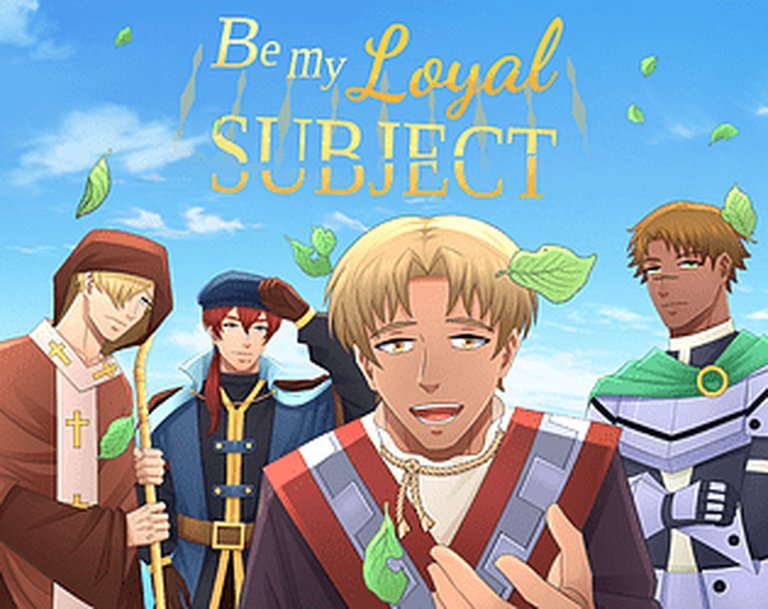
Set in a fictional medieval-inspired kingdom, ‘Be My Loyal Subject’ is a visual novel where players assist King Ulric in ruling his realm by making critical decisions affecting the clergy, army, merchants, and common people. Amidst political challenges, a romantic narrative unfolds as the king may find love among his followers, blending historical themes with modern fashion elements in an anime/manga art style.
Where to Buy Be My Loyal Subject
PC
Be My Loyal Subject Guides & Walkthroughs
Be My Loyal Subject: Review
Introduction
In the ever-expanding landscape of independent visual novels, few titles manage to bridge the gap between niche genre appeal and sophisticated world-building as effectively as Be My Loyal Subject. Released in October 2022 by solo developer ChaniMK, this historical Boys Love (BL) visual novel invites players to step into the regal shoes of a young king navigating political intrigue, class divides, and personal relationships. Its legacy lies not in graphical spectacle or groundbreaking mechanics, but in its masterful fusion of governance simulation with intimate character-driven storytelling. This review will argue that Be My Loyal Subject stands as a landmark example of how accessible tools—like the Ren’Py engine—and focused vision can create an experience that resonates deeply with genre enthusiasts while offering surprising depth for broader audiences, particularly in its exploration of power dynamics and emotional vulnerability.
Development History & Context
ChaniMK operates as a singular creative force, embodying the modern indie ethos of self-publishing across multiple platforms. Be My Loyal Subject was developed using the versatile Ren’Py engine—a staple for visual novels due to its flexibility and accessibility—while artwork was crafted in Clip Studio Paint, ensuring a cohesive anime aesthetic. This technical choice allowed for simultaneous releases on Windows, macOS, Linux, and Android, demonstrating a commitment to inclusivity rare in niche genres. The game emerged in October 2022, a period marked by increasing visibility for LGBTQ+ titles on Steam and itch.io, though BL games still occupied a specialized market segment. ChaniMK’s prior work, including The Subject (2018) and Subject 13 (2015), established a pattern of blending historical or fantasy settings with romance, but Be My Loyal Subject represented a significant expansion in scope, introducing a governance layer. The absence of traditional publisher constraints enabled ChaniMK to prioritize thematic purity—evident in the game’s unflinching portrayal of class conflict and emotional vulnerability—while the low system requirements (300 MB RAM, integrated graphics) ensured broad accessibility. This context underscores the game as a product of both the digital democratization of game development and the growing demand for diverse narratives within the BL space.
Narrative & Thematic Deep Dive
The narrative unfolds through the eyes of King Ulric, a newly crowned monarch whose youth and arrogance mask a sharp, strategic mind. The plot immediately establishes tension: Ulric’s father’s loyalists view his ascension as an opportunity to seize power, forcing him to seek allies beyond the nobility. This premise sets the stage for a multifaceted exploration of leadership and trust. The four romance interests—Hans, Luther, Siegfried, and Gerold—are not mere archetypes but vessels for nuanced thematic exploration. Hans, the compassionate steward of commoner origin, embodies the tension between idealism and weakness, his kindness a potential vulnerability in a court rife with betrayal. Luther, the insecure bishop from nobility, grapples with imposter syndrome and repressed desires, his internal monologues dissecting the hypocrisy of piety. Siegfried, the emotionally detached knight, serves as a study in trauma, his rigorous training a mask for existential emptiness. Gerold, the charismatic yet avaricious merchant, examines the corrupting influence of wealth and the performative nature of charm.
Dialogue is peppered with sharp wit and political subtext. Ulric’s “entertainment in rousing people’s feelings” reveals a manipulative streak that complicates his role as a benevolent ruler. The petition system—where players adjudicate disputes between clergy, army, merchants, and commoners—serves as a narrative engine, forcing players to confront the moral ambiguities of governance. Thematic depth emerges from the game’s examination of inter-class romance, as Ulric’s relationships challenge feudal hierarchies. The eight endings—four romantic triumphs and four character-specific tragedies—reinforce the narrative’s core message: leadership requires balancing personal desires with collective welfare. The “bad endings,” as confirmed by ChaniMK, are avoidable yet narratively devastating, illustrating how mistrust or emotional neglect can unravel a kingdom. This structure transforms the game into a subtle meditation on power, where every dialogue choice and petition decision either builds bridges or sows discord.
Gameplay Mechanics & Systems
Be My Loyal Subject employs a minimalist interface centered on menu-driven exploration and decision-making. The core loop involves navigating a flip-screen map between the castle, chapel, training grounds, and guild, each location tied to a specific faction’s happiness. This design creates a tangible sense of kingdom management, albeit abstracted. The gameplay bifurcates into two interconnected systems: governance and romance. Governance manifests through the petition mechanic, where players hear grievances and issue rulings that impact factional satisfaction. While not a deep simulation, these choices have tangible consequences—neglecting the clergy leads to Luther’s disillusionment, while appeasing the commoners strengthens Hans’s loyalty.
Character progression is managed through relationship meters, influenced by dialogue choices and location-based interactions. The pivotal Chapter 14 festival introduces a meta-layer: selecting flower colors during the event directly boosts affection for specific love interests, streamlining romance paths. This system rewards attentiveness to character preferences, turning routine navigation into strategic relationship-building. The UI, while functional, prioritizes clarity over flair, with side portraits and text boxes evoking classic visual novel conventions. The 50,000-word script ensures substantial narrative density, while 30 CGs punctuate key moments with expressive artwork. Innovations include the integration of governance into romance, making faction happiness a prerequisite for romantic success. However, the game’s simplicity can be a double-edged sword; the lack of fail-states beyond the scripted “bad endings” may reduce tension for players seeking challenge. Yet this accessibility aligns with the game’s casual ethos, emphasizing narrative over mechanical complexity.
World-Building, Art & Sound
The game’s fictional medieval kingdom, despite its “modern fashion” as noted in descriptions, evokes a rich, believable tapestry of societal stratification. The castle, chapel, training grounds, and guild are not mere backdrops but active spaces reflecting their respective factions’ values. The chapel’s austere design contrasts with the guild’s opulent clutter, visually reinforcing Luther’s asceticism and Gerold’s materialism. This environmental storytelling extends to the petition system, where dialogues expose the tensions between feudal obligations and human needs—a farmer’s plea for fair taxation versus a clergyman’s demand for tithes.
Artistically, the anime/manga style, rendered in Clip Studio Paint, is both consistent and expressive. Character designs prioritize personality over realism: Ulric’s sharp features convey cunning, Siegfried’s sturdiness reflects his martial identity, and Hans’s softer features underscore his empathy. The 30 CGs excel during emotional climaxes, such as Luther’s moments of doubt or Siegfried’s rare vulnerability. Sound design, sourced from royalty libraries (Zapsplat for SFX, Ravnskjold for music), enhances atmosphere without overshadowing the narrative. The soundtrack blends somber orchestral pieces with lighter themes, adapting to the scene’s tone—from the chapel’s solemn hymns to the guild’s jaunty melodies. Subtle ambient sounds, like clanging armor or market chatter, ground the player in the world. Together, these elements create an immersive space where political tension and personal intimacy coexist, proving that constraints can breed creativity.
Reception & Legacy
At launch, Be My Loyal Subject enjoyed a warm reception, particularly on Steam where it secured a “Positive” rating (90% of 10 reviews) and on itch.io, where user comments praised its “brilliant medieval drama” and refreshing protagonist. Critics lauded its witty dialogue, complex characters, and the unique fusion of governance and romance. A recurring theme in positive reviews was Ulric’s “arrogant but wise” characterization, seen as a departure from more passive BL protagonists. The single negative review likely stemmed from unmet expectations of explicit content, as the game is SFW despite mature themes. Commercial performance, while unquantified beyond its $4.99 price point, was buoyed by cross-platform availability and ChaniMK’s existing fanbase, which lauded the developer’s consistent output of BL titles.
Over time, the game’s reputation has solidified within niche circles. Steambase’s player score of 92/100 (based on 12 reviews) reflects sustained appreciation, with user tags like “Lore-Rich” and “Multiple Endings” highlighting its strengths. Its legacy is twofold: within the BL genre, it popularized the “kingdom management + romance” hybrid, inspiring developers to integrate political stakes into intimate narratives. For broader visual novel audiences, it demonstrated that Ren’Py projects could deliver substantive storytelling without high budgets. ChaniMK’s responsiveness to feedback—such as adding a walkthrough after player requests—fostered a loyal community, while the game’s influence is evident in the developer’s subsequent titles, like Be My Horde (2024), which similarly blend fantasy settings with social dynamics. Though it may not revolutionize gaming, Be My Loyal Subject endures as a benchmark for how niche genres can achieve both accessibility and depth.
Conclusion
Be My Loyal Subject is a triumph of focused vision over technical ambition. ChaniMK’s sophomore effort transcends its humble origins to deliver a rich, politically charged romance that resonates long after the final chapter. The game’s greatest strength lies in its synthesis of governance simulation with intimate character studies, turning the act of ruling into a deeply personal journey. Ulric’s evolution from manipulative monarch to emotionally engaged ruler, mirrored by the vulnerabilities of his suitors, creates a narrative tapestry as intricate as the game’s factional politics. While its minimalist gameplay and Ren’Py roots may not appeal to action-oriented players, the 50,000-word script and 30 CGs ensure a compelling, texturally dense experience.
In the pantheon of BL visual novels, Be My Loyal Subject carves a unique niche by elevating genre conventions with thematic rigor. It proves that historical settings need not be shackled by realism, and that romance can coexist with complex moral dilemmas. Its legacy is not in redefining gaming, but in perfecting a formula: accessible, inclusive, and unflinchingly human. For players seeking a story where every choice shapes both a kingdom and a heart, this game remains an indispensable gem—a loyal subject worthy of your time.