
- Release Year: 2014
- Platforms: Windows
- Publisher: Koch Media GmbH
- Developer: Earthworm Games
- Genre: Simulation
- Perspective: Diagonal-down
- Game Mode: Single-player
- Gameplay: Business simulation, Managerial
- Setting: Tropical
Description
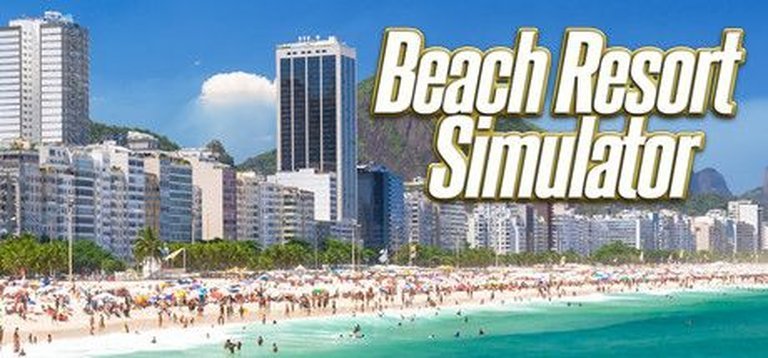
Beach Resort Simulator is a managerial simulation game where players design, build, and operate their own exotic tropical resort, balancing elements like entertainment, dining, safety, and healthcare to attract and retain millions of tourists while carefully managing finances to expand the resort without going bankrupt and maintain a constant flow of visitors.
Gameplay Videos
Where to Buy Beach Resort Simulator
PC
Beach Resort Simulator Free Download
Beach Resort Simulator Guides & Walkthroughs
Beach Resort Simulator: A Sun-Scorched relic of the Budget Simulator Boom
Introduction: Paradise Lost in Translation
In the vast, sun-bleached archipelago of management simulations, there exists a particularly forlorn island: Beach Resort Simulator. Released into a burgeoning market hungry for niche tycoon experiences, this 2014 title from the obscure Earthworm Games promised the serene, strategic joy of transforming a pristine coastline into a thriving tropical paradise. Instead, it delivered a stark, often frustrating lesson in the perils of minimalist design, technical negligence, and the crushing weight of player expectation. This review will argue that Beach Resort Simulator is not merely a bad game, but a fascinating historical artifact—a symptom of the mid-2010s “budget simulator” gold rush where ambition wildly outpaced execution, resulting in a title that is more notable for its catastrophic reception and curious quirks than for any successful simulation of resort life. Its legacy is one of caution, a case study in how a seemingly simple formula can unravel under the strain of poor systems, abysmal polish, and a profound disconnect between vision and reality.
Development History & Context: The Earthworm and the Publisher’s Gamble
The Studio: Earthworm Games
Earthworm Games, the developer behind Beach Resort Simulator, remains an enigma. With no significant prior or subsequent releases documented in major databases, the studio appears to have been a small, transient team operating on the fringes of the Polish and German game development scenes. Their “vision,” as gleaned from marketing blurbs, was to create an accessible, low-stress resort builder. However, the source material reveals a project plagued by the classic constraints of an under-resourced team: simplistic 3D models, minimal animation, and a feature set that feels more like a prototype than a finished product. The name “Earthworm” itself suggests a focus on digging into a niche, but perhaps they bit off more than they could chew with a full 3D simulation.
The Publisher: Ravenscourt and Koch Media
The game’s path to market was handled by Ravenscourt, a publisher known for titles like Mining Company Simulator and Winter Resort Simulator. This immediately places Beach Resort Simulator within a specific sub-genre: the industrial or logistical simulator aimed at a European, specifically German and Polish, audience. Ravenscourt’s portfolio indicates a strategy of greenlighting low-budget, high-concept simulation games, often with a regional focus. Koch Media GmbH (Austria) handled broader distribution. This publishing relationship explains the game’s unusual multilingual support, including the noted Kashubian subtitles—a区域性 (regional) nod that is more culturally significant than the game’s actual mechanics. It was a title released into a crowded field (notably around the same time as SimCity (2013) and various Tycoon series entries) but with a fraction of the budget and talent.
The 2014 Landscape & Technological Constraints
2014 was a peculiar time for sims. The disastrous launch of SimCity had created a hunger for offline, manageable city-builders. However, the market was also saturated with low-fidelity, often Steam Early Access-style titles. Beach Resort Simulator exemplified the technological constraints of its ilk: a 500MB footprint, minimum specs of a Dual Core 1.6 GHz and a 512MB GPU (GeForce 405/Radeon HD 5400). This points to a DirectX 9-level engine, likely a heavily modified or in-house tool. The “free camera” with diagonal-down perspective was a cost-effective choice, avoiding the complex pathfinding and occlusion challenges of a true 3D world. The focus was on “functionality” over fidelity, a mantra that would prove both its only conceivable saving grace and its greatest failure.
Narrative & Thematic Deep Dive: The Void at the Heart of Paradise
Beach Resort Simulator possesses a narrative in the same way a vacant lot possesses a building. There is no story, no characters, and no dialogue. The “plot” is a single, spreadsheet-driven sentence: “Your job is to find the balance… expand your resort without going bankrupt.”
Thematic Aspiration vs. Execution:
The source material repeatedly uses evocative phrases: “exotic tropic resort,” “transform a pristine beach,” “give free rein to your creativity,” “decide if you want a party beach or a tranquil refuge.” These are the thematic bones of a compelling simulation—the tension between commercial viability and experiential design, between mass tourism and curated exclusivity. The game aspires to let players be the auteur of their own slice of heaven.
However, the execution renders these themes inert. There are no guests with personalities, only faceless “millions of tourists” mentioned in the MobyGames description, who manifest as anonymous blobs (as one Steam user lamented: “you cannot see your holiday makers walking around”). There is no dialogue, no customer feedback system, no narrative events like storms, celebrity visits, or economic downturns that could personify the resort’s story. The player does not manage a place; they manage a cluster of icons on a grid. The profound theme of “balance” is reduced to a cold equation of building placement versus guest capacity versus revenue. The “tranquil refuge vs. party beach” dichotomy is meant to be expressed through building choices (cinema/casino vs. parks/hospitals), but without any simulation of guest types (families vs. young adventurers vs. rich people, as per the LaunchBox description) actually having discernible, pathing-driven needs, it remains an unrealized promise. The narrative is a ghost, haunting the empty beaches of its own mechanics.
Gameplay Mechanics & Systems: A House of Cards on a Sand Foundation
The core loop is deceptively simple: Build infrastructure -> Attract tourists -> Collect revenue -> Expand. This is the bedrock of any good tycoon game. Beach Resort Simulator attempts to layer complexity onto this base but crumbles under the weight of its own systems.
Core Loop & Building:
Players start on a “deserted beach” (GamePressure) and must construct a chain of dependencies: power and water first, then roads, then accommodation (hotels), then amenities (restaurants, bars, attractions like the “Devil’s mill”), and finally services (police, firefighters, hospitals). The “free camera” allows rotation and zooming, a must for managing intersecting objects on the limited map.
The Crushing Flaws:
1. The “Balance” Mirage: The claim that “all buildings will have an influence on each other” is vague to the point of meaninglessness. The source material provides no evidence of nuanced systemic interplay. A casino likely increases revenue but requires more security; a park increases satisfaction but costs maintenance. However, this is standard fare. The lack of visible tourist pathing or expressed needs means the player cannot observe the balance in action. They are guessing, not strategizing based on feedback.
2. Pacing & The 200,000 Guest Grind: A critical piece of community insight from Steam user govegirl reveals the brutal endgame: “1200 guests- the goal of the game is to have 200,000 guests- patience required -even on high speed it takes a while to grow and earn money.” This exposes a fundamental design rot: a prohibitively large, flat numerical goal with no meaningful progression milestones or scaling challenge. It transforms the simulation into a passive, mind-numbing clicker game.
3. Economic Obfuscation: While the player sets prices and hires employees, the sources give no indication of a sophisticated economic model. There is no mention of supply chains, fluctuating tourist demographics, or dynamic pricing based on seasonality. The economy is a static, opaque loop.
4. UI & Tutorial: The GamePressure review notes the tutorial explains “all the meanderings of the system”—a backhanded compliment suggesting the systems are convoluted. Given the community’s frequent reports of the game “not launching” or “crashing” (multiple Steam threads), the tutorial’s accessibility is meaningless if the core application is unstable.
5. No “Game Modes”: A Steam user asked about “game modes” and received no answer. This suggests a singular, unyielding sandbox with no scenarios, challenges, or campaigns—further emphasizing the emptiness of the experience.
Innovation? None is documented. The game’s one potential innovation—the Kashubian localization—is a cultural footnote, not a gameplay one. It is a derivative compilation of existing tycoon mechanics (from SimCity, RollerCoaster Tycoon) assembled with minimal integration or polish.
World-Building, Art & Sound: The Beautiful Facade of Nothingness
Visual Direction & Atmosphere:
The game’s presentation is its most consistently praised, yet most damning, aspect. MobyGames’ specs note a “diagonal-down” perspective and “free camera.” The GamePressure review states: “Graphic design… is not the highest quality, but it has a pleasant holiday climate and in practice works quite well. Instead of a variety of fireworks and the greatest attention to detail, the developers focused on functionality.”
This is polite code for: low-poly, low-texture, and graphically barren. The “pleasant holiday climate” comes from a bright, saturated color palette (blue sea, green palm trees, yellow sand) and simple, clear iconography. The “functionality” means you can tell a hotel from a bar at a glance. There is no artistic ambition, no atmosphere beyond a generic “tropical” vibe. The world is a sterile, empty grid awaiting your buildings. The lack of visible tourists strips it of any life, making it feel like a post-apocalyptic resort planning simulator.
Sound Design:
The source material is completely silent on sound. The PCGamingWiki entry has an “Audio” section with all states marked as unknown (no separate volume controls, no surround sound, no subtitles for audio, only UI/subtitles listed). This suggests sound design was an afterthought or entirely absent. A game about a resort—a place defined by the crash of waves, the hum of activity, distant music—is likely audibly sterile, contributing to the pervasive feeling of operating in a void.
Contribution to Experience:
The art and sound do not enhance the simulation; they merely signal its genre. They provide just enough visual feedback to perform the recursive task of placing buildings. The “pleasant holiday climate” is a thin veneer over a fundamentally un-engaging, non-diegetic system. You are not in a resort; you are managing a spreadsheet that happens to have palm trees on it.
Reception & Legacy: The Canon of Failure
Critical & Commercial Reception at Launch:
Beach Resort Simulator arrived and died almost instantly in the court of public opinion.
* Steam: A “Mostly Negative” rating (31% positive) from 59 reviews. The community hub is a graveyard of technical support requests: “game wont launch,” “Can not start game,” “CPU overheat,” “Sound not working.” The most upvoted posts are complaints about crashes and calls for refunds. One user bluntly states it’s a “ripoff” and “Scam?” Another compares it unfavorably to SpringBreak or Beachlife.
* User Scores: GamePressure lists a user score of 6.1/10, but this is likely a skewed average from a tiny, possibly more forgiving sample. PlayTracker Insight estimates ~50K owners, but with a Popularity Score of 0 and a median playtime of just 0.4 hours. This is the death knell: people are buying it, trying it, and abandoning it within minutes, almost certainly due to crashes or immediate boredom.
* Critical Absence: Not a single professional critic review exists on MobyGames. It was ignored by the press, a fate worse than a bad review for a niche title.
Evolution of Reputation & Influence:
Beach Resort Simulator has no legacy of influence. It did not inspire clones or refine genres. Its reputation has not evolved; it has solidified. It is now a permanent fixture in the lore of Steam’s “Mostly Negative” club, a cautionary tale whispered in simulator forums. Its one point of interest for historians is its Kashubian localization—a bizarre, culturally specific detail that outshines the entire game in terms of discussion value.
* Influence on the Industry: Its influence is purely negative, serving as a data point for publishers on what happens when you underfund, under-test, and misjudge a simulation’s depth. It represents the nadir of the “budget simulator” trend: a game that checks boxes (resort theme, building variety, managerial tasks) without understanding why those boxes exist.
* Cult Status? No. The ~50K owners and 0.4h median playtime indicate no cult following. It is a zombie product, occasionally surfacing in a user’s library before being right-clicked and refunded.
Conclusion: Verdict on a Deserted Island
Beach Resort Simulator is a profound failure on every level that matters to a game: it is often unplayable due to crashes, unengaging due to its barren mechanics, and unpolished in every technical regard. Its brief flashes of potential—the conceptual appeal of resort management, the notion of creating a themed beach—are utterly drowned in a sea of mediocrity.
In the grand museum of video game history, it does not deserve a gallery of its own. Instead, it should be housed in a small, discreet cabinet labeled “The Simulator Gold Rush: Artifacts of Neglect.” It is the gaming equivalent of a beautiful beach postcard that, upon arrival, reveals the sand is littered with broken glass and the water is stagnant. It teaches a vital lesson: a simulation is not a list of features. It is a living system that must simulate something—be it economics, human behavior, or physical logistics. Beach Resort Simulator simulates nothing but the act of placing icons in space. For that, it earns not just a bad score, but a place in the annals as a stark warning of what happens when ambition, unmoored from competence and care, washes ashore.