
- Release Year: 2019
- Platforms: Nintendo Switch, PlayStation 4, Windows, Xbox One
- Publisher: Modus Games, LLC
- Developer: Exordium Games
- Genre: Adventure
- Perspective: 3rd-person (Other)
- Game Mode: Single-player
- Gameplay: Graphic adventure, Point and select, Puzzle elements
- Setting: Fantasy
- Average Score: 67/100
Description
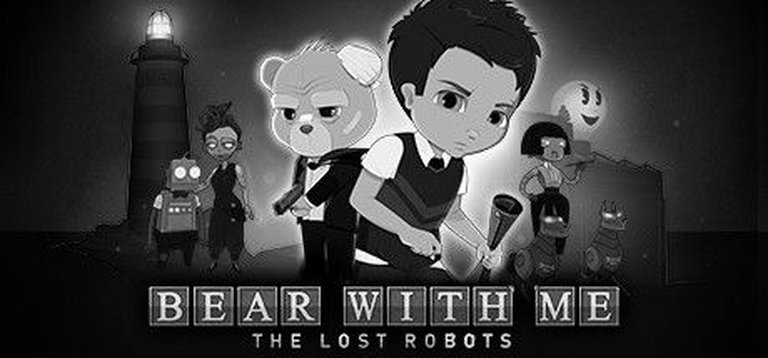
Bear with Me: The Lost Robots is a standalone prequel to the Bear with Me series, set in a fantasy world. This point-and-click adventure game offers a 3-4 hour experience with a compelling narrative, solid dialogue, and clever puzzles, designed as an accessible entry point for new players.
Gameplay Videos
Where to Buy Bear with Me: The Lost Robots
Bear with Me: The Lost Robots Cracks & Fixes
Bear with Me: The Lost Robots Guides & Walkthroughs
Bear with Me: The Lost Robots Reviews & Reception
metacritic.com (65/100): Bear With Me: The Lost Robots manages to avoid many of the pitfalls of the point-and-click genre. A few flaws take some of the shine off, but if you’re a fan of the genre you’ll likely enjoy this one regardless.
monstervine.com (70/100): Blending the storytelling of film noir with the premise of a child playing with toys, Bear With Me: The Lost Robots is a point-and-click adventure game that manages to be a lighthearted romp and a gritty crime story at the same time. While this odd tone might not appeal to everyone, it’s worth consideration by fans of the genre.
switchplayer.net : Bear With Me: The Lost Robots is a refreshing change, ticking most of the aforementioned boxes and providing a fairly solid experience.
gamegrin.com : Poor voice acting notwithstanding, there’s a great story to be found in Bear With Me: The Lost Robots, so I still wouldn’t hesitate to recommend playing it… it’s got a few rough edges, but nothing too unbearable.
Bear with Me: The Lost Robots: Review
Introduction
The digital streets of Paper City are rarely kind, but they’re even less forgiving when sentient toy detectives are on the case. Bear with Me: The Lost Robots arrives not as a standalone epic, but as a prequel chapter to Exordium Games’ acclaimed noir adventure series—a compact, 3-hour dive into a world where childlike fantasy collides with hardboiled cynicism. Set before the events of the original trilogy, this title shifts focus from the series’ protagonist Amber to her brother Flint and the perpetually inebriated teddy bear detective, Ted E. Bear. What emerges is a fascinating, if flawed, experiment in tonal alchemy: a monochrome noir mystery filtered through the lens of a child’s playtime. This review contends that The Lost Robots succeeds in expanding its universe with wit and striking visuals, yet stumbles under the weight of inconsistent execution and mechanical roughness. For fans of the genre, it’s a worthwhile detour; for newcomers, it’s an imperfect but intriguing entry point into a uniquely crafted world.
Development History & Context
Born from the vision of Croatian studio Exordium Games, led by creative director and writer Hrvoje Maroš, The Lost Robots was developed as a standalone prequel to the studio’s episodic 2016 debut. Maroš, who previously helmed episodic releases across Windows, Linux, and macOS, sought to distill the Bear with Me series’ core appeal—a fusion of film noir tropes and whimsical toy-world storytelling—into a self-contained narrative. Built on the Unity engine, the game leveraged cross-platform compatibility, debuting on Windows in July 2019 before expanding to PlayStation 4, Xbox One, and Nintendo Switch via publisher Modus Games. This timing placed it in a crowded indie landscape where point-and-click adventures, while revered, struggled for mainstream visibility. Technologically, Unity allowed Exordium to maintain a distinctive 2D art style while ensuring accessibility across consoles, but the engine’s flexibility came with trade-offs, evident in the game’s occasional UI quirks and performance hiccups. The studio’s prior work on Bear with Me episodes had honed their narrative voice, yet The Lost Robots represented an ambitious leap—a prequel designed to both honor established lore and serve as a gateway for uninitiated players.
Narrative & Thematic Deep Dive
At its core, The Lost Robots investigates a string of robot abductions plaguing Paper City, with Flint and Ted E. Bear navigating seedy locales like jazz clubs and scrapyards to unravel the mystery. The plot’s brilliance lies in its meta-commentary on genre conventions. Flint’s melancholic disinterest (“[Flint’s Betrübtheit und seinen Wissensdurst]”) mirrors the player’s initial skepticism toward a child’s noir fantasy, while Ted’s gruff narration (“Dark interrogations, sarcastic banter”) leans into self-aware parody. Characters like the OCD-afflicted informant O.C.D. and the femme fatale robot (“eine verdächtige Roboterin”) embody noir tropes but subvert them through absurdist humor—O.C.D.’s compulsions are exploited as puzzle mechanics, and the femme fatale’s seductive act is undercut by her robotic nature.
Dialogue is a double-edged sword: Ted’s one-liners (“It’s not the new Monkey Island, but it’s still beary enjoyable”) deliver groan-worthy puns with endearing earnestness, while Flint’s muted performance reflects his trauma. Thematically, the game explores innocence corrupted and reality fractured. Flint’s role as a child playacting in an adult world (“Das Kind, das mit einem Bären-Detektiv spielt”) underscores noir’s moral ambiguity, suggesting that even in fantasy, darkness infiltrates. The narrative’s emotional weight, however, is reserved for series veterans; newcomers may miss the weight of Flint’s connection to Amber, leaving the climax feeling abrupt. As one critic noted, “die Story ist zwar interessant, aber nicht genug, um dieses Loch auszufüllen” (the story is interesting but not enough to fill this gap).
Gameplay Mechanics & Systems
The Lost Robots adheres to classic point-and-click conventions, prioritizing exploration, item collection, and environmental puzzles over combat or progression systems. Players guide Flint through static, flip-screen environments, interacting with objects and NPCs to uncover clues. Puzzles are generally logical—combining a broken robot part with a welding torch, or using a flashlight to reveal hidden numbers—but occasionally suffer from non-intuitive solutions. A few late-game challenges, like deciphering a password, rely on obscure leaps in logic, forcing trial-and-error experimentation.
The inventory system, while functional, is hampered by clunky UI. Selecting an item to use often closes the menu, requiring manual re-opening to test combinations—a frustrating loop amplified by the lack of a hotspot highlighter. Character movement is similarly deliberate, with Flint’s sprite-based navigation feeling sluggish. These issues compound during longer play sessions, though the game’s brevity (2–3 hours) prevents them from becoming overwhelming.
Innovatively, puzzles are non-linear, allowing players to revisit unsolved areas freely—a welcome nod to genre purists. However, this freedom is diluted by the game’s linearity, as critical story beats trigger mandatory cutscenes. The absence of fail states or branching paths reinforces the railroading experience, making the player less a detective and more a passive observer of Flint and Ted’s investigation.
World-Building, Art & Sound
Paper City is a triumph of atmospheric design. Rendered in a bold monochrome palette with stark shadows and high-contrast lighting, the world evokes classic film noir and graphic novels. Hand-drawn environments—from rain-slicked alleyways to neon-drenched jazz clubs—are brimming with personality, using limited color (e.g., a single red umbrella) to draw the eye. This visual style isn’t just aesthetic; it reinforces the game’s theme of duality: innocence (toy-like characters) meeting corruption (gritty cityscapes).
Sound design similarly juxtaposes whimsy and grit. Slava Pogorelsky’s jazz-infused soundtrack sets a smoky, melancholic tone, with saxophone solos underscoring tense interrogations. Voice acting, however, is divisive. Ted E. Bear’s monotone delivery (“Morgan Freeman after a mug of cocoa”) feels intentionally deadpan, contrasting Flint’s apathetic sighs. Supporting performances are stronger, particularly the femme fatale’s sultry robot voice, but inconsistencies—like the exaggerated accents of minor NPCs—break immersion.
The game’s greatest strength is its world-building, which expands Bear with Me lore through new locales and factions (e.g., the Robot Union). Yet, this expansion is bittersweet: Paper City feels lived-in, but its mysteries are often left half-explored. A missing soundtrack in certain scenes and an overreliance on static backdrops dampen the atmosphere, leaving the world feeling more sketched than fully realized.
Reception & Legacy
The Lost Robots debuted to a mixed critical reception, with a Moby Score of 6.8 and a Metascore of 65 (“Mixed or Average”). Praise centered on its art style and narrative cleverness: PS4Blog.net lauded it as a “solid point and click adventure,” while GameGrin celebrated its “beary enjoyable” puns. However, criticism targeted its technical flaws—Switch Player noted “a few flaws take some of the shine off,” and Adventure Gamers felt puzzles were “not too challenging.” Voice acting drew particular ire, with GameGrin’s reviewer admitting to turning sound off and reading subtitles.
Commercially, its $4.99 price point positioned it as budget fare, likely achieving modest sales. Its legacy is twofold: within the Bear with Me series, it deepens lore but lacks the emotional resonance of the original trilogy. For the wider adventure genre, it’s a footnote—an ambitious tonal experiment that highlights the challenges of blending noir with whimsy. As TechRaptor noted, “If you haven’t played Bear with Me, chances are The Lost Robots won’t be your cup of tea,” cementing its status as a companion piece rather than a standalone landmark.
Conclusion
Bear with Me: The Lost Robots is a game of compelling contrasts: a noir mystery wrapped in toy-box aesthetics, a short adventure with ambitious themes, a polished art style undermined by rough mechanics. It succeeds in crafting a visually striking, narratively quirky prequel that expands its universe with humor and heart. Yet, its inconsistent voice acting, obtuse puzzles, and UI blemishes prevent it from reaching the heights of its predecessors. For genre enthusiasts, it’s a charming, if flawed, detour—worth experiencing for its unique vision and self-aware wit. For newcomers, the original trilogy remains the superior entry point. Ultimately, The Lost Robots stands as a testament to Exordium Games’ creative ambition: a flawed but fascinating puzzle piece in the larger Bear with Me saga, reminding us that even in a world of toy detectives, the shadows always linger.