
- Release Year: 2016
- Platforms: PlayStation 4, Windows, Xbox One
- Publisher: Strangely Named Ltd.
- Developer: Strangely Named Ltd.
- Genre: Driving, Racing
- Perspective: Behind view
- Game Mode: Co-op, Single-player
- Gameplay: Automobile, Track racing, Vehicular
- Setting: Fantasy
- Average Score: 59/100
Description
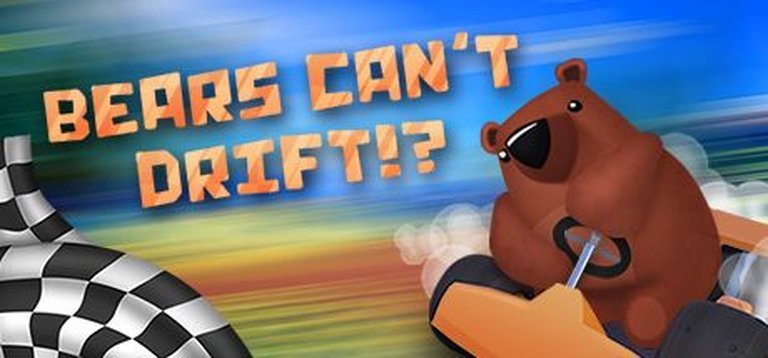
In ‘Bears Can’t Drift!?’, players race as bears in a vibrant fantasy karting adventure, choosing unique bear characters with distinct abilities and customizing karts for competitive edge. Set across diverse, beautifully crafted tracks, the game features intuitive controls, obstacle navigation, power-up collection, and dynamic environments. It supports single-player challenges and up to four-player split-screen multiplayer, blending fast-paced action with charming visuals.
Gameplay Videos
Bears Can’t Drift!? Cracks & Fixes
Bears Can’t Drift!? Patches & Updates
Bears Can’t Drift!? Guides & Walkthroughs
Bears Can’t Drift!? Reviews & Reception
monstercritic.com : Bears Can’t Drift!? will not offer a great single player experience.
metacritic.com (53/100): Bears Can’t Drift!? will not offer a great single player experience.
Bears Can’t Drift!?: Review
Introduction
In the realm of kart racing games, Bears Can’t Drift!?’s Bear-shaped shadow looms large as both a charming indie darling and a case study in the perils of ambition outstripping resources. This 2016 release from Strangely Named Ltd. captivated audiences with its vibrant visuals and unique premise, but critics and players alike found their enthusiasm tempered by gameplay flaws and technical limitations. As we explore this game’s history, mechanics, and legacy, we’ll discover a tale of passion, innovation, and the challenges faced by solo developers in a competitive market.
Development History & Context
Bears Can’t Drift!? was the brainchild of Arran Langmead, a lecturer at Solent University with a passion for retro kart racers. The project’s origins trace back to an ill-fated Ouya console prototype, which eventually pivoted to Unreal Engine 4 and Steam Early Access. Langmead’s decision to develop the entire game using Blueprint without any traditional coding showcased both his artistic skills and the versatility of Unreal’s visual scripting system.
The game’s development was marked by financial hurdles and crowd-funding attempts that ultimately fell short, leading Langmead to complete the project as a one-man army. This resource constraint likely contributed to some of the technical compromises seen in the final product, such as limited online multiplayer and a stripped-down options menu.
Set against the backdrop of a post-Nintendo kart racing drought, Bears Can’t Drift!?’s launch was greeted with cautious optimism. The indie game landscape of 2016 was ripe for a quirky racer, but the lack of sustained marketing and a small development team meant the game struggled to break through the noise.
Narrative & Thematic Deep Dive
Bears Can’t Drift!? eschews traditional storytelling in favor of an immersive, wordless experience. The narrative isalie delivered through environmental storytelling and the gameplay itself, with players driving bears through whimsical tracks that hint at their backstory. The themes of competition, friendship, and the joy of racing are omnipresent, reinforced by the emphasis on local multiplayer and cooperative play.
While the bears themselves are visually distinct (panda, polar bear, skeleton bear, etc.), there’s a deliberate lack of character customization or stat-based differentiation. This design choice promotes accessibility by avoiding complex progression systems, but it may also limit replay value for players seeking strategic depth in character selection.
The visual style draws heavy inspiration from PS1-era classics like Crash Team Racing and Diddy Kong Racing. The colorful, low-poly aesthetic combines with imaginative track designs (underwater tunnels, ancient ruins, winter wonderlands) to create a world that’s both nostalgic and fresh. The game’s& invisible story is told through these environments, inviting players to interpret their own narrative context.
The Oak Anderson, outwardly appearing as a standard action game, the title hosts numerous unique features and self-aware homages. The player who delves deeper will find hidden references to gaming history and clever nods to the medium’s conventions.
Gameplay Mechanics & Systems
At its core, Bears Can’t Drift!? offers a pick-up-and-play kart racing experience. The control scheme is straightforward, with buttons for accelerate, brake/reverse, drift, and use item. The drifting mechanic stands out as a highlight, providing a satisfying speed boost when maintained over time. The game’s handling model is intentionally arcade-style, favoring accessibility and fun over simulation.
The combat system revolves around collectible power-ups. There are four primary items (salmon, bee, hedgehog, bird) that can be combined to form more powerful attacks. This adds a layer of tactics as players must decide whether to use items immediately or save them for more opportune moments. However, the power-ups can sometimes feel underpowered compared to those in other kart racers, leading to less chaotic and less memorable race dynamics.
Character progression is non-existent, as all bears are functionally identical. While this promotes fairness in multiplayer, it removes a key element of personalization that many kart racing games rely on to foster replay.
The UI design is sparse by necessity, relying on visual cues rather than on-screen text. The hub world acts as the central menu system, with players driving to different locations to select tracks, game modes, and difficulty levels. While this can be immersive, it also leads to confusion for players unfamiliar with the system, as there’s no guidance or tutorial.
The game’s use of the Unreal Engine 4 provides solid performance and attractive visuals, but the single-player experience is hampered by occasionally unfair AI opponents and repetitive track designs. The true strength of Bears Can’t Drift!? lies in its multiplayer mode, which supports up to four players in split-screen. This local multiplayer focus has helped the game find a niche audience despite its shortcomings in other areas.
World-Building, Art & Sound
Visually, Bears Can’t Drift!? is a feast for the eyes. The art team (largely Arran Langmead himself) has created a world of breathtaking beauty, with each track and hub world showcasing distinct environmental themes. The color palette is vibrant and inviting, with soft lighting and detailed textures that outshine many other indie games of its era. The art style is deliberately retro-inspired, evoking memories of classic PlayStation and N64 racers while still maintaining a modern sheen.
The sound design complements the visuals with an upbeat, energetic soundtrack that keeps players engaged. The sound effects are crisp and responsive, from the revving of kart engines to the satisfying “Thunk” of a successful power-up hit. While not revolutionary, the audio elements effectively enhance the overall atmosphere of friendly competition.
Reception & Legacy
Upon release, Bears Can’t Drift!? received mixed to negative reviews from critics. Common criticisms included technical issues (poor frame rate on some platforms, limited resolution options), lack of depth in gameplay, and confusing control schemes—especially for keyboard users. However, the game’s visuals and multiplayer fun were often praised, with some critics citing it as a potential hit among younger audiences or multiplayer enthusiasts.
Commercially, the game failed to make a significant impact. Limited marketing, a saturated market for kart racers, and the lack of online multiplayer likely contributed to its underwhelming sales. Despite this, a dedicated fanbase has emerged, appreciating the game’s charm and replay value in local multiplayer sessions.
In the years since its release, Bears Can’t Drift!? has influenced few subsequent games. However, it remains a unique entry in the kart racing genre, demonstrating the potential of Unreal Engine’s Blueprint system and the creative spirit of indie developers. The game’s legacy is that of a fondly-remembered underdog rather than a genre-defining landmark.
Conclusion
Bears Can’t Drift!? occupies a curious place in video game history. Its innovative approach to control schemes, emphasis on local multiplayer, and stunning visuals make it a worthy entry in the kart racing canon. However, technical limitations, shallow gameplay mechanics, and poor single-player experiences prevent it from achieving the heights of its more successful contemporaries. As a piece of indie gaming history, it stands as a testament to passion and determination, offering both disappointments and delights in equal measure.