
- Release Year: 2021
- Platforms: Macintosh, Nintendo Switch, Windows
- Publisher: Vodeo Games
- Developer: Vodeo Games
- Genre: Adventure
- Perspective: Side view
- Game Mode: Single-player
- Gameplay: Pinball, Puzzle elements, Turn-based strategy
- Setting: Fantasy
- Average Score: 90/100
Description
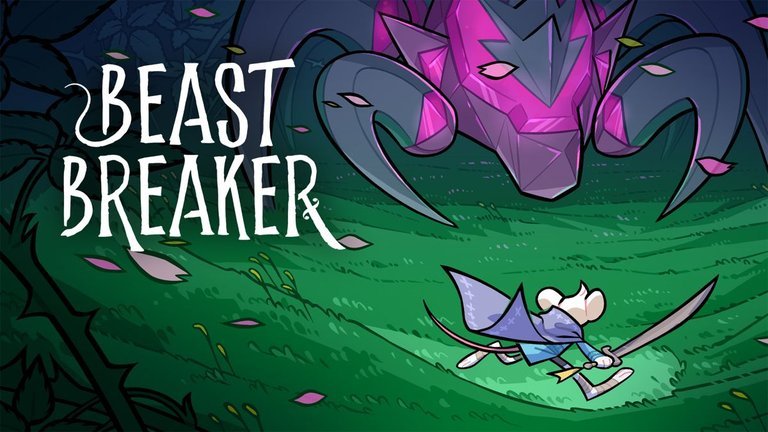
Beast Breaker is a turn-based role-playing game where players control Skipper, a tiny mouse warrior, fighting colossal mosaic beasts in a vibrant fantasy world. Combining pinball-inspired mechanics with strategic depth, players engage in grid-based battles, ricocheting attacks between enemies in tactical, puzzle-like encounters. Developed by Vodeo Games, this 2021 release blends quirky charm with challenging gameplay across Windows, MacOS, and Nintendo Switch, earning praise as an inventive hidden gem in the tactical RPG genre.
Gameplay Videos
Where to Buy Beast Breaker
PC
Beast Breaker Guides & Walkthroughs
Beast Breaker Reviews & Reception
opencritic.com : The mind behind Threes brings us this ‘cosy-crunchy’ turn-based adventure that’s delightfully deep and brilliantly approachable.
opencritic.com (90/100): Beast Breaker is the epitome of a hidden gem, and we would highly recommend you give it a shot.
opencritic.com (85/100): Beast Breaker is the kind of game that flies under the radar but rewards those willing to give it a shot.
metacritic.com (90/100): Beast Breaker is the epitome of a hidden gem, and we would highly recommend you give it a shot.
metacritic.com (50/100): That all-important momentum is absent: the physics of movement just feels wrong, and as such you cannot rely on it.
metacritic.com (100/100): Fantastic and fun game with a brick breaker style gameplay.
metacritic.com (100/100): Beast Breaker is super creative and opens the door for more involved puzzle-RPGs.
metacritic.com (100/100): Awesome variation of a pinball game!
metacritic.com (100/100): Beast Breaker is a game with so much charm and heart.
imdb.com (100/100): It’s satisfying, moving, addictive, compelling, and rich.
eurogamer.net : The mind behind Threes brings us this ‘cosy-crunchy’ turn-based adventure that’s delightfully deep and brilliantly approachable.
Beast Breaker: A Pint-Sized Revolution in Tactical RPG Design
Introduction
In a gaming landscape dominated by sprawling epics and live-service juggernauts, Beast Breaker emerges as a disarmingly ambitious indie gem—a radical fusion of turn-based strategy, physics-based pinball mechanics, and environmental allegory wrapped in a deceptively cozy art style. Developed by Vodeo Games (the industry’s first unionized studio, founded by Threes! creator Asher Vollmer), this 2021 release reimagines tactical RPG combat as a balletic ricochet against crystalline leviathans. Our thesis: Beast Breaker masterfully balances mechanical depth with thematic warmth, crafting an innovative hybrid that deserves recognition as one of the most conceptually daring RPGs of its era.
Development History & Context
Studio Vision & Industry Landscape:
Vodeo Games materialized in 2020 with a manifesto for “cozy-crunchy” experiences—games pairing accessibility with intricate systems. Amidst a pandemic-era surge in narrative-driven indies (Hades, Disco Elysium), Beast Breaker’s development occurred entirely remotely across North America, led by Vollmer and co-director Christopher Floyd (Monster Train contributor). The studio’s unionization two months post-launch became a landmark moment in labor advocacy, though financial headwinds led to Vodeo’s closure in 2023—rendering Beast Breaker both a triumphant debut and poignant swan song.
Technical Innovations:
Built in Unity, the game’s physics engine transforms Skipper the mouse into a dynamic projectile—a concept inspired by Vollmer’s aborted Super Ballistic Rawket Launcher prototype. Developers wrestled with predictability vs. chaos: ensuring ricochets felt tactical rather than random. Per composer Jimmy Hinson (aka Big Giant Circles), intentional frame drops on Switch were tolerated to preserve “pinball-esque kineticism” when Skipper careened through multi-bounce combos, revealing the team’s prioritization of tactile feedback over polish.
Cultural Moment:
Releasing amidst discourse on crunch culture and indie sustainability, Beast Breaker embodied Vodeo’s worker-first ethos—its environmental narrative critiquing unchecked consumption, parallel to the studio’s own challenge to industry norms.
Narrative & Thematic Deep Dive
Plot Structure:
Players embody Skipper, a stuttering field mouse thrust into heroism when crystalline “Beasts” (manifestations of magical pollution) ravage their agrarian society. The quest evolves from provincial heroics into a systemic critique, exposing a monarchy exploiting corrupted energy sources. The narrative’s third-act twist—Skipper’s climactic audience with the Queen, a corporate-coded weasel—culminates in subverted expectations: societal change requires grassroots action, not top-down salvation.
Character Archetypes & Representation:
– Skipper: A nonbinary protagonist (implied via they/them pronouns), defying the “chosen one” trope through vulnerability and collaborative leadership.
– Umbra & Cinnabar: Married moth/snake scientists, symbolizing queer love and redemption (Umbra atones for enabling the Beast crisis).
– Dandy: A fabulist bird aristocrat whose “Lord Gladiolus du Fritillaria” persona masks survivor’s guilt.
Thematic Threads:
– Environmental Catastrophe: Beasts emerge from “magitek” runoff—a transparent metaphor for fossil fuels. The Cloud Kingdom’s creation of the DRAGON Beast (“Start X to Stop X”) mirrors real-world geoengineering debates.
– Collective Action: Skipper’s motto—“You’re never too small to make a difference”—contrasts with the Queen’s corporate fatalism. The ending’s unresolved revolution (villages self-organizing post-monarchy) champions incrementalism over tidy victories.
– Intergenerational Trauma: Granny’s backstory—a retired Breaker mourning her twin—questions the glorification of heroic sacrifice.
Gameplay Mechanics & Systems
Core Loop Trilogy:
1. Hex-Based Tracking: Overworld exploration blends Into the Breach-style fog-of-war with resource gathering, pressuring players to intercept Beasts before they absorb corruption pools.
2. Pinball Combat: Each turn, players launch Skipper like a cue ball, chaining bounces off Beast fragments. Weapon types dictate physics:
– Sword: Bounce-generated charge fuels defensive counters.
– Bow: Ammo conservation rewards precision.
– Hammer: Short-range “inertia” builds require proximity gambits.
3. Crafting Meta: Blueprints from defeated Beasts enable modular arms—e.g., acid-coated swords or homing arrows—that synergize with companions’ battlefield powers (e.g., Alchemilla’s fog walls).
Innovations & Flaws:
– Yellow Scale System: Randomly placed “bonus targets” each turn create emergent dilemmas—pursue damage or gamble for momentum shifts.
– Rampage Timer: A ticking clock (resettable by destroying cores) injects urgency without punitive failure states.
– Lingering Issues: Switch frame drops hampered ranged weapons; post-campaign lacked procedural Beast generation, limiting replayability.
UI/UX Philosophy:
Vodeo minimized menus via diegetic interfaces—crafting occurs at Granny’s forge, quests are chosen on a cellar map. The absence of voice acting (budget constraints) heightened focus on Jemma Salume’s emotive character portraits.
World-Building, Art & Sound
Visual Identity:
Jemma Salume’s art direction merges Studio Ghibli-esque pastoralism with geometric severity—Beasts resemble cubist kaiju, their shard clusters fragmenting like stained glass under Skipper’s strikes. The four biomes (e.g., Glitchpeaks’ prismatic storms vs. Tradehaven Wastes’ sun-baked dunes) use palette shifts to denote corruption levels.
Dynamic Audio:
Jimmy Hinson’s score employs Celtic instrumentation (fiddle, whistles) to underscore rustic camaraderie, while synths warp melodies during Beast battles. The “Arcane” track variant—used only for the DRAGON fight—layers glitchy electronics to signal technological hubris.
Ambient Storytelling:
Skipper’s farm evolves visually—weapons displayed on walls, companions gathered at hearths—acting as a progress museum. The unused “Arcane biome” music implies cut content about corrupted settlements.
Reception & Legacy
Launch Reception:
– Critical Praise: Nintendo Life (9/10) lauded its “surprising depth”; Eurogamer dubbed it “smart, heartwarming.” Minor critiques targeted repetitious side quests.
– Commercial Headwinds: Despite 90% average scores, Beast Breaker languished in obscurity—a fate attributed to Vodeo’s underfunded marketing and September’s crowded release slate (Deathloop, Kena).
Posthumous Influence:
While not a sales hit, its DNA surfaces in hybrids like Dorfromantik (chill strategy) and Marvel Snap (physics-meets-tactics). Academics have spotlighted its nonbinary representation and environmental themes in game design curricula.
Preservation Status:
Delisted post-Vodeo’s closure, physical Switch copies became collector’s items. Modders later restored access via fan patches—a testament to its cult following.
Conclusion
Beast Breaker stands as a boundary-pushing opus in miniature—a game where every ricochet carries narrative weight, and a mouse’s fragility becomes a metaphor for resilience against corporate and ecological collapse. Its legacy is dual: a triumph of union-led development and a cautionary tale about the market’s indifference to innovation. While flawed in polish and pacing, its bold synthesis of pinball dynamism and RPG strategy remains unmatched. For designers and historians, Beast Breaker earns a place alongside Undertale and Outer Wilds as proof that small studios—and even smaller heroes—can reshape gaming’s DNA. Final Verdict: A lost classic demanding rediscovery, and a poignant monument to what unionized creativity could achieve.