
- Release Year: 2020
- Platforms: PlayStation 4, Windows
- Publisher: Beat Games s.r.o.
- Genre: Compilation
- VR Support: Yes
Description
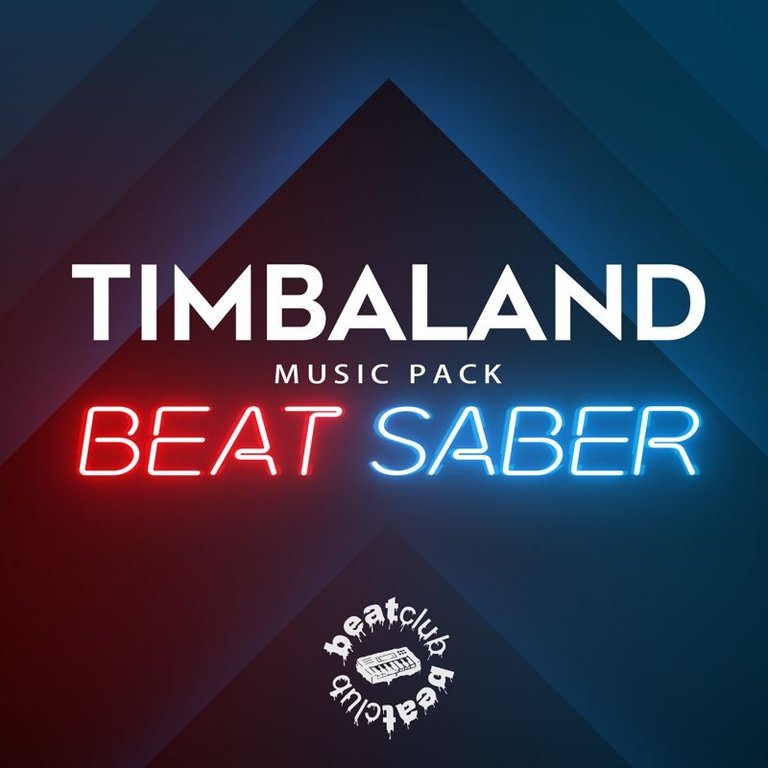
Beat Saber: Timbaland Music Pack is a downloadable content (DLC) compilation for the virtual reality rhythm game Beat Saber. Released on March 26, 2020, for Windows and PlayStation 4, it features five original tracks produced by renowned music producer Timbaland, with collaborations from artists such as Bruno Martini, Kaydence, Jake Davis, and others. The pack introduces a blend of R&B and rap styles to the game, offering players new musical challenges in the immersive VR environment where they slash beats to the rhythm.
Gameplay Videos
Beat Saber: Timbaland Music Pack: A Rhythmic Collaboration in VR’s Premier Sandbox
Introduction: The Beat Goes On
In the short but meteoric history of virtual reality (VR) gaming, few titles have achieved the cultural ubiquity and sustained popularity of Beat Saber. Since its 2018 release, this rhythm game hybrid—part Guitar Hero, part Rez, part immersive lightsaber duel—has become the de facto flagship for VR, a universally understood gateway that turns players into cybernetic conductors. Its success is built on a deceptively simple premise: slash incoming blocks corresponding to beats and notes, set to a meticulously curated soundtrack. The game’s longevity, however, rests on a robust post-launch strategy of downloadable content (DLC) packs, transforming it from a game into a living platform. Enter the Timbaland Music Pack, released on March 26, 2020—a collaboration that represents a significant, if quiet, milestone. It marks the first time a legendary, Grammy-winning producer of Timbaland’s stature has composed original tracks exclusively for a VR rhythm game, rather than licensing existing hits. This review will dissect this collaboration not as a standalone narrative experience (which it is not), but as a pivotal piece of Beat Saber’s ongoing evolution, analyzing how its specific musical DNA maps onto the game’s core mechanics, and what its existence says about the maturing VR ecosystem at a pivotal moment in its history.
Development History & Context: From Czech Garage to Global Phenomenon
To understand the significance of the Timbaland pack, one must first situate Beat Saber itself. Developed by the Czech studio Beat Games (founded by Jaroslav Beck and Vladimír Hrinčár), the game emerged from the jam scene and early VR experiments. Its 2018 release on PC VR platforms was an instant critical darling, praised for its intuitive, physically gratifying gameplay that made VR feel essential rather than gimmicky. The studio’s acquisition by Facebook (now Meta) in 2019 was a watershed moment, validating VR’s commercial potential and providing the resources for aggressive DLC expansion.
The technological and market context of March 2020 is crucial. The pack launched just three days after the groundbreaking Half-Life: Alyx, a moment that saw a massive surge in VR headset adoption. Furthermore, the world was on the cusp of pandemic lockdowns, making在家 (at-home) entertainment invaluable. Beat Games reported that Beat Saber had already surpassed 2 million copies sold—astronomical for VR—and over 10 million paid songs sold via DLC. The Timbaland pack, therefore, wasn’t just another song pack; it was a strategic move to capitalize on this expanding user base with high-profile, exclusive content. It followed a successful template of branded packs (Green Day, Linkin Park, Imagine Dragons) but pivoted from rock to hip-hop/R&B, testing the boundaries of Beat Saber‘s chart versatility. The collaboration was facilitated by BeatClub, Timbaland’s own production platform and community, suggesting a forward-looking artist embracing new distribution channels.
Narrative & Thematic Deep Dive: The Absence of Story, The Presence of Vibe
It is a critical and defining point: the Timbaland Music Pack has no narrative, no characters, and no plot. It is a pure, unadulterated gameplay expansion. This is not a failing but a fundamental characteristic of Beat Saber‘s design philosophy. The “story” is the player’s own journey of skill progression, the rising tension of a song’s crescendo manifesting in faster, denser note patterns.
However, we can analyze the implied thematic throughline: collaboration and futurism. Timbaland, an artist synonymous with pushing sonic boundaries and collaborative production (his work with Justin Timberlake, Missy Elliott, Aaliyah), aligns perfectly with Beat Saber‘s core interactive premise. Each track is a featured credit—”Bruno Martini & Timbaland,” “Kaydence & Timbaland”—emphasizing the producer’s role as a curator and co-creator. Thematically, the track titles hint at a loose emotional spectrum:
* Has A Meaning & What I Like: Suggest affirmations of personal value and simple joys, positive, declarative statements.
* Dumb Thingz: Implies a playful, carefree, perhaps hedonistic attitude.
* While We’re Young: A direct nod to seizing the moment, a theme resonant with the youthful, kinetic energy of VR.
* Famous: A meta-commentary on aspiration and visibility, ironically playing out in the player’s visible performance within the VR environment.
The lack of a traditional narrative forces the focus onto the musical narrative itself—the arc of each song is its own story, and the player’s physical interpretation is the only dialogue.
Gameplay Mechanics & Systems: Mapping Timbaland’s Groove to the Grid
The genius of Beat Saber lies in its consistent yet adaptable mapping language. The Timbaland Music Pack exists within this established framework, but its true test is in how it adapts the signature sound of Timbaland’s production—often characterized by syncopated rhythms, unconventional percussion, stuttering vocal chops, and smooth, melodic R&B underpinnings—to the game’s grid-based, directional slash mechanics.
- Core Loop & Rhythm Translation: The pack does not reinvent the wheel. Arrows still indicate direction (left/right for standard blocks, up/down for special obstacles and bombs), and the four-color system (red/blue for left/right sabers, with notes sometimes on top or bottom) remains. The innovation must come from the note sequencing. Based on the producer’s style, one would expect fewer straightforward, pounding rock backbeats (like those in the Green Day pack) and more off-beat, intricate patterns. Imagine “Dumb Thingz” featuring rapid, staccato notes that mimic Timbaland’s iconic “tick-tock” percussion, requiring quick, precise alternating slashes rather than strong, unified swings. What I Like, with its smoother R&B vibe, might employ longer, flowing streams of single-colored notes encouraging sweeping, continuous motions.
- Obstacle & Environment Design: Beat Saber‘s environmental obstacles (walls, spinning saws) and visual effects are as important as the notes. The Timbaland pack’s environments are not detailed in the sources, but extrapolating from the music’s aesthetic—likely futuristic, neon-drenched, with a blend of urban edge and sleek glamour—we can anticipate visuals that sync with the music’s “drop” and “vibe” rather than a literal narrative. The environment becomes a reactive light show to Timbaland’s production.
- Innovation or Flaw? The pack’s potential flaw is simply its genre conformity. If all five tracks rely too heavily on similar mid-tempo, groove-based patterns, it could feel monotonous compared to the dynamic range of, say, the Linkin Park pack (heavy rock vs. soft piano). Its innovation is purely in genre expansion for the platform. By successfully mapping R&B/hip-hop grooves, it proves Beat Saber‘s mapper toolkit is genre-agnostic. The true “system” at play is Beat Games’ proprietary mapper and its ability to translate any audio waveform into a satisfying physical sequence. The pack’s success is a testament to that underlying system’s flexibility.
World-Building, Art & Sound: A Visual Sonic Landscape
While the pack lacks a traditional world, Beat Saber’s signature abstract, minimalist environments serve as its world. Each song has a dedicated “map” with a unique visual theme, color palette, and particle effects that react to the music’s frequency and intensity.
* Visual Direction: Expect a departure from the gritty punk-rock aesthetics of the Green Day pack or the industrial fantasy of some original maps. The Timbaland pack likely leans into sleek, futuristic, and perhaps slightly opulent or techno-urban visuals. Think deep purples, electric blues, and gold accents; smooth, glowing lines instead of jagged rock formations; environments that feel like a high-fashion music video or a luxurious virtual lounge, reflecting the polished sound of mainstream R&B/hip-hop production.
* Sound Design as Gameplay: In Beat Saber, the sound is the gameplay. The iconic “humm” of a saber swing, the satisfying thwack of a hit, the bass-heavy boom of a drum kick—these audio feedback loops are non-negotiable. The source material confirms the tracks are original compositions, meaning they were crafted with Beat Saber‘s audio profile in mind. Timbaland and his collaborators would have had to ensure punchy, distinct kick drums and clear melodic leads to be mappable. This is a crucial, often overlooked aspect of DLC development: the music must first and foremost work as a game score.
* Synthesis of Elements: The overall experience is one of synesthesia. The player isn’t just hearing Timbaland’s production; they are feeling it through muscle memory. A perfectly placed vocal chop might correspond to a single, satisfying block in the center of the playfield. A percussive fill erupts into a dazzling explosion of particles. The environment pulses with the sub-bass. The collaboration succeeds if the player, regardless of their fandom, feels that the physical act of slashing is an authentic, complementary interpretation of the music’s rhythm.
Reception & Legacy: A Cultural Footnote with Lasting Implications
Critical and player reception data for the Timbaland Music Pack specifically is not provided in the sources, which is telling. It did not generate the waves of a major single-player release. However, we can infer its reception and legacy from context and trends.
- Launch Reception: At the time of its March 2020 release, it was covered as a noteworthy piece of industry news (as seen in Engadget, UploadVR, Windows Central). The angle was consistently: “A-list producer makes exclusive music for VR’s biggest game.” This framed it as a validation of VR’s cultural capital. For existing Beat Saber fans, it was a new flavor to try. For Timbaland fans, it was a curiosity. The pricing ($7.99 bundle, $1.99/song) was standard for premium DLC.
- Commercial Impact: While exact sales figures for this specific pack are not public, it contributed to Beat Games’ reported 10 million+ paid songs sold milestone. Its existence, alongside packs from rock giants, demonstrated a successful model of artist partnerships that benefits both parties: Beat Games gets marquee names to attract new players and retain existing ones; artists get direct exposure to a highly engaged, tech-savvy audience and a novel promotional vehicle. Timbaland’s BeatClub platform also gained a high-profile showcase.
- Legacy & Influence: The pack’s legacy is primarily as a proof-of-concept. It showed that major, legacy artists could be enticed to create bespoke content for VR, moving beyond simple licensing. This model has since been expanded with packs from artists like Billie Eilish and Queen. It cemented Beat Saber not just as a game with a soundtrack, but as a music distribution platform in its own right. Furthermore, its release in early 2020 placed it at the beginning of the “VR fitness and social” boom during the pandemic. Tracks with steady, danceable grooves like What I Like or While We’re Young likely served as excellent workout soundtracks, indirectly contributing to Beat Saber‘s reputation as a legitimate fitness tool.
Conclusion: A Strategic Strike in an Ongoing Symphony
The Beat Saber: Timbaland Music Pack is not a landmark game changer. It does not revolutionize the core Beat Saber experience. Evaluated on the metrics of narrative depth or mechanical innovation, it scores near zero. Yet, to dismiss it would be to fundamentally misunderstand its purpose and its success.
It is, instead, a masterclass in strategic content expansion. It is a perfectly executed piece of synergy that serves multiple masters: it satisfies the core player base with new, high-quality charts; it attracts fans of a specific artist genre; it validates Beat Saber‘s status as a premier platform; and it demonstrates the commercial viability of bespoke VR music production to the wider industry. The collaboration between Beat Games’ airtight mapping philosophy and Timbaland’s distinctive rhythmic sensibility resulted in five tracks that, while perhaps less dramatically varied than rock-based packs, offered a smooth, polished, and physically intuitive groove-based experience that filled a necessary gap in the Beat Saber library.
In the grand tapestry of video game history, this DLC is a single, brightly colored thread. But in the specific, burgeoning history of VR as a mainstream entertainment medium, it represents a key moment where the medium confidently stepped into the cultural conversation on its own terms, not as a tech demo, but as a destination for exclusive creative content. The Timbaland Music Pack is a testament to the fact that by early 2020, Beat Saber was no longer just a great VR game—it was a cultural platform, and this pack is one of its most stylish, if understated, exhibits.
Final Verdict: ★★★★☆ (4/5)
For *Beat Saber enthusiasts and players seeking a fresh, groovy direction in theirVR workout, the Timbaland Music Pack delivers a premium, well-mapped experience that expands the game’s musical horizon. Its lack of narrative or mechanical novelty is by design, not defect. Its slight deduction comes from a potential lack of genre diversity within the pack itself and a relatively low public profile compared to mega-brand packs. However, as a strategic and cultural artifact, it earns high marks for proving VR’s appeal to A-list music producers.*