
- Release Year: 2024
- Platforms: Windows
- Publisher: 2 Left Thumbs
- Genre: Role-playing (RPG)
- Perspective: Diagonal-down
- Gameplay: Turn-based RPG
- Setting: Ninja-themed
- Average Score: 93/100
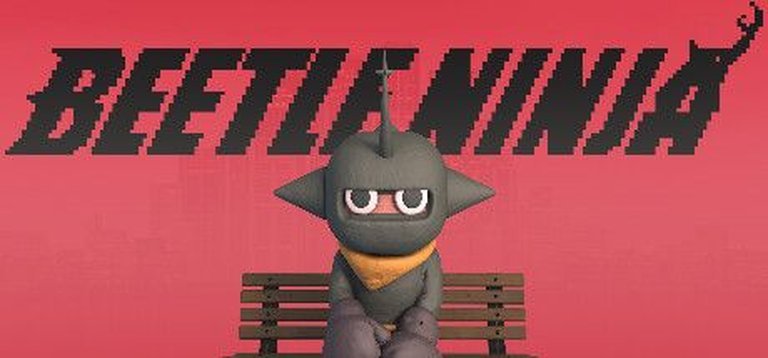
Description
Beetle Ninja is a turn-based RPG where players embody Montrell Saint-Luc, the titular Beetle Ninja, burdened with preventing an unfathomable cataclysm he inadvertently unleashed. With only two short weeks until the world’s inevitable demise, players must navigate an ever-changing hub-world, undertake 11 unique missions, and recruit 13 distinct party members, all while making a crucial decision: strive to save the world or choose to spend the remaining time relaxing at home. The game features 14 in-game days of content, high replayability through varied strategies, multiple unique endings, and secrets, encouraging repeated playthroughs to fully experience its depth.
Gameplay Videos
Where to Get Beetle Ninja
PC
Guides & Walkthroughs
Reviews & Reception
store.steampowered.com (93/100): A game built for repeated playthroughs with varied strategies, unique endings, and secrets.
metacritic.com : Critic and user reviews are not available yet for this game.
vgtimes.com (93/100): A choice-driven RPG where the Beetle Ninja must prevent a cataclysm or relax at home, with multiple playthroughs needed to appreciate its depth.
mobygames.com : No Moby Score or official description available yet; contributions are wanted.
steamcommunity.com : No user reviews found on this community page.
Beetle Ninja: An Unconventional Gem Forged in the RPGMaker Crucible
In the ever-expanding cosmos of independent game development, where passion often outweighs budget, certain titles manage to carve out a distinct identity. Among these stands Beetle Ninja, a game that, despite its humble origins and a somewhat stealthy initial release, has garnered a fervent following and critical acclaim within its niche. As a game journalist and historian, I find Beetle Ninja to be a compelling case study: a title that skillfully subverts genre expectations, delivers a surprisingly deep and humorous narrative, and showcases the remarkable potential of the RPGMaker engine when wielded with creativity and conviction. This review will meticulously dissect Beetle Ninja, exploring its idiosyncratic development, its rich thematic tapestry, its innovative gameplay, and its enduring, if understated, legacy in the annals of indie gaming.
Development History & Context
The story of Beetle Ninja begins not on a grand stage, but within the vibrant, yet often overlooked, independent game development scene of 2020. Conceived by the creative minds of ProsciuttoMan and PostElvis, and later published by 2 Left Thumbs for its Steam re-release, the game first emerged as an RPGMaker 2003 title. This choice of engine is paramount to understanding Beetle Ninja‘s aesthetic and mechanical foundations.
The RPGMaker Ethos and Creators’ Vision
RPGMaker 2003, a tool revered for its accessibility in crafting 2D, top-down, turn-based role-playing games, inherently dictates much of a project’s visual and mechanical scope. Yet, ProsciuttoMan and PostElvis embraced these constraints, using them not as limitations but as a stylistic framework for their ambitious vision. Their goal was to create an “open-ended design that allows the player to simulate two weeks in the life of a vigilante-for-hire in whichever way he chooses.” This core tenet—player agency within a strict time limit—is central to the game’s identity. The developers clearly aimed for high replayability, evidenced by “multiple separate playthroughs” being necessary to “truly appreciate” the game, alongside an “expansive roster of recruitable ninjas,” “unique endings and secrets,” and a “mission-and-day-based structure.”
The game’s original 2020 release, primarily via platforms like Itch.io, required players to install the RPGMaker 2003 runtime package. This detail underscores its grassroots origins. The subsequent Steam re-release on June 28, 2024, brought “several QOL changes and bugfixes,” streamlining the experience and removing the need for external runtime installations, thus making it more accessible to a broader audience.
Technological Constraints and Artistic Triumphs
While RPGMaker 2003 typically conjures images of retro, pixel-art graphics and diagonal-down 2D scrolling, Beetle Ninja managed to elevate these inherent qualities. It received significant recognition at the MISAO AWARDS (2020), securing 1ST PLACE for several categories:
* “Eye Candy” Award: Lauded for “Raddest Graphics & Artwork” and an “excellent example of art direction and cohesive vision.” This speaks volumes about the developers’ ability to transcend typical RPGMaker visuals.
* “Star Stealing Prince Award: Recognized for using the “best original assets,” further cementing its visual distinction.
These accolades demonstrate a conscious artistic choice to leverage the engine’s strengths for a unique visual identity, rather than being confined by its perceived limitations.
The Gaming Landscape of Its Time
Released initially in 2020, Beetle Ninja emerged during a period of burgeoning indie development, where players actively sought out unique experiences outside the mainstream. Its characterization as “the biggest sleeper hit of 2020” by fans suggests a grassroots appreciation for its innovative design. In 2024, its re-release on Steam as a free-to-play title positioned it amidst a new wave of accessible indie games, showcasing that compelling design, rather than cutting-edge graphics, can still capture attention. The developers’ candid remark about not justifying a “Director’s Cut” due to the game remaining “far too under the radar” despite its quality highlights the challenges even award-winning indie titles face in achieving widespread commercial success. This decision, however, does not diminish the game’s artistic and design achievements; rather, it underscores its status as a cherished cult classic.
Narrative & Thematic Deep Dive
At its heart, Beetle Ninja presents a narrative that, while deceptively simple in its premise, blossoms into a complex exploration of choice, consequence, and even comedic apathy in the face of impending doom.
The Absurdist Plot
The game thrusts players into the role of Montrell Saint-Luc, the titular Beetle Ninja, who finds himself in a most unenviable predicament: he has “unleashed an unfathomable cataclysm.” Now, with only “two short weeks” until this disaster’s “inevitable arrival,” Montrell must find a way to prevent it. However, Beetle Ninja immediately injects a dose of unique, dark humor by offering a stark alternative: “Will you save the world, or will you spend the rest your time chilling at home? Ultimately, it’s up to you.” This central dilemma, framed by the ominous pronouncements of “some insane cultish man on the street insists that the world is going to end soon,” establishes the game’s blend of high stakes and comedic detachment.
The narrative unfolds over “14 in-game days worth of content,” structured around “11 different missions” and an “ever-changing hub-world.” This tight timeframe and mission-based progression lend an urgent yet flexible rhythm to Montrell’s quest.
Characters and Dialogue
While Montrell Saint-Luc is the protagonist, the player is far from alone. The game boasts “13 unique party members” – an “expansive roster of recruitable ninjas.” This diverse cast provides strategic depth (as we’ll discuss in gameplay) but also thematic richness, as Montrell assembles his unconventional team. The game’s dialogue is characterized by “crude humor and crass language,” a fact explicitly acknowledged by the developers. This comedic tone is not merely incidental; it was recognized with the “Punniest Game Alive” award at the MISAO AWARDS, cementing Beetle Ninja‘s reputation for sharp, sometimes irreverent, wit. The humor serves as a counterpoint to the apocalyptic premise, allowing the game to explore serious themes without becoming overly dour.
Underlying Themes
- Agency and Responsibility: The most prominent theme is the player’s agency. Montrell unleashed the cataclysm, placing the burden of responsibility squarely on him, yet the game presents the radical choice to shirk that duty entirely. This freedom to choose between heroic action and passive inaction is a bold narrative stroke, directly impacting the “large selection of unique endings and secrets.”
- Replayability as Narrative: The game’s design necessitates “multiple separate playthroughs,” implying that no single playthrough can fully capture the narrative’s breadth. This makes replayability not just a gameplay feature, but a thematic device—the “true” story of Beetle Ninja is the sum of its varied outcomes, challenging players to explore every facet of Montrell’s two weeks.
- The Nature of Heroism: By offering the option to simply “chill at home,” Beetle Ninja satirizes the traditional notion of the unwavering hero. It suggests that heroism is a choice, not an inevitability, and that even in the face of global catastrophe, individual priorities (and comedic laziness) can take precedence.
- Subversion of Tropes: The narrative cleverly subverts typical RPG tropes. The grand, world-saving quest is undercut by irreverent humor and the player’s absolute freedom to ignore it. The idea of a “vigilante-for-hire” further grounds Montrell’s actions in a transactional reality, even as the stakes are cosmic.
In summary, Beetle Ninja‘s narrative is a masterclass in balancing high-concept drama with low-brow humor, all while empowering the player with an unusual degree of narrative control.
Gameplay Mechanics & Systems
Beetle Ninja stands out not just for its narrative choices, but for a meticulously crafted gameplay loop that fundamentally redefines traditional RPG expectations, particularly given its RPGMaker 2003 heritage.
The Two-Week Cycle and Open-Ended Design
The core of Beetle Ninja‘s gameplay revolves around a fixed “14 in-game days” timeline. This “mission-and-day-based structure” gives players a clear sense of pacing and urgency, but within this structure, immense freedom is offered. The “ever-changing hub-world” serves as the central nexus where Montrell can activate events, recruit party members, and initiate missions. The player’s choices each day directly impact the available content, the relationships with “13 unique party members,” and ultimately, the game’s multiple endings.
Revolutionary Combat and Progression Systems
One of Beetle Ninja‘s most innovative, and potentially misunderstood, mechanics is its approach to combat and character progression. The developers explicitly clarified several “misconceptions”:
Combat: A Means, Not an End
- Turn-based pacing: Adhering to RPGMaker conventions, combat is turn-based.
- Not mandatory: Crucially, “Not all the fights are mandatory.” The game is designed to feature “stealth-focused” missions where avoiding enemies is the preferred, or even intended, strategy. Defeating enemies is “only required when the game tells you it is.”
- Secondary purpose: Fighting enemies does not lead to character leveling. Instead, it helps players acquire a “secondary currency” used for “optional upgrades to your house.” This recontextualizes combat from a primary progression path to a resource-gathering activity, a bold departure from most RPGs.
Progression: Unique to Montrell
- No traditional leveling system: “Beetle Ninja doesn’t have a leveling system.” This is a significant design choice that sets it apart.
- Hub-world stat upgrades: Montrell’s “stats are upgraded via in-game events that can be activated in the hub world.” This ties character development directly to narrative choices and exploration rather than grind.
- Stagnant party members: Perhaps most strikingly, “Beetle Ninja himself is the only character capable of being upgraded, other ninjas are stagnant and their stats cannot be altered in any way.” This places a unique strategic emphasis on who to recruit (as their base stats are fixed) and when to deploy them, rather than on power-leveling a favored team. It also discourages “Beetle Ninja-only runs,” which the developer deemed “too hard” and not initially supported by a special ending.
Replayability, Choices, and Endings
Beetle Ninja is “built for repeated playthroughs.” The game’s design ensures that “certain things are inevitably missable if you only play it once.” Key elements influencing replayability include:
* Cash management and hidden cats: These factors “dictate that you can’t really obtain all ninjas in a single playthrough,” forcing players to make tough choices about recruitment and resource allocation.
* Day skips for buffs: “Day skips are designed as a way to ‘payout’ a day for some skill buffs,” adding another layer of strategic decision-making in how players manage their limited time.
* Multiple endings and secrets: The variety of outcomes encourages players to experiment with different choices across playthroughs. Achieving the “good ending” requires beating “7 of the game’s 11 missions” and having “hired at least 3 ninjas.”
User Interface and Experience
The “D.” counter, replacing a traditional level counter, visually indicates the current day, allowing players to “easily gauge how far into the game they are.” The “direct control” interface and “diagonal-down” perspective are standard for RPGMaker titles, providing a familiar and intuitive experience for players accustomed to classic 2D RPGs.
The sum of these mechanics creates a gameplay experience that is both familiar in its presentation (2D, turn-based) and radical in its underlying philosophy. It challenges players to think strategically about resource management, character composition, and the very purpose of combat, rather than relying on conventional grind-and-level systems.
World-Building, Art & Sound
Beetle Ninja‘s aesthetic and auditory presentation are a testament to how creative direction can elevate a game beyond its technical foundations, crafting a cohesive and memorable experience.
A World on the Brink, Yet Full of Whimsy
The world of Beetle Ninja is one teetering on the edge of “unfathomable cataclysm,” yet it’s permeated by an “Atmospheric,” “Cartoony,” and “Comedy” tone. This dichotomy is key to its world-building. The setting is conveyed through a “2D scrolling” environment with a “diagonal-down” perspective, utilizing “Pixel Graphics” that evoke a “Retro,” “16-bit” feel. The “ever-changing hub-world” suggests a dynamic environment that reacts to the player’s choices and the passage of time, making the world feel alive and responsive despite its retro visual style. The combination of existential dread and humorous irreverence creates a unique atmosphere where the stakes are high, but the journey is often lighthearted.
Award-Winning Visual Direction
Despite being built in RPGMaker 2003, Beetle Ninja‘s visuals garnered significant praise, earning it the MISAO AWARDS (2020) “Eye Candy” Award for “Raddest Graphics & Artwork” and an “excellent example of art direction and cohesive vision.” It also won the “Star Stealing Prince Award” for utilizing “best original assets.” These honors are remarkable for an RPGMaker title and indicate a deliberate and successful artistic effort. The pixel art is not merely functional; it’s expressive, contributing to the game’s comedic timing and character personality. The visual style, while inherently retro, is elevated by strong art direction, demonstrating that technical prowess is secondary to a coherent artistic vision.
A Sonic Masterpiece
The sound design and musical score of Beetle Ninja are arguably among its most distinguishing features. The game boasts an impressive “70 custom music tracks by PostElvis,” who also contributed to the game’s development. This extensive soundtrack is further enriched by “guest compositions by Shane Mesa (of Mother 4 fame) and ClassyJitto (known for Frostix and Pizza Tower).” The sheer volume and quality of original music are exceptional for an indie title, especially one from RPGMaker.
This dedication to audio excellence was recognized with the MISAO AWARDS (2020) “Summoner of Sounds Award” for “The best soundtrack and creative use of sound.” The music not only sets the mood for different missions and areas but actively enhances the comedic timing and emotional beats of the narrative. The contributions from composers associated with beloved indie and fan games lend a particular weight and pedigree to Beetle Ninja‘s sonic landscape, proving that a robust and original soundtrack can significantly elevate the overall player experience, regardless of visual fidelity.
Together, the game’s world-building, distinct pixel art, and exceptional soundtrack converge to create an experience that is far greater than the sum of its parts. They establish a unique identity that is both nostalgic and refreshingly original.
Reception & Legacy
Beetle Ninja‘s journey from an indie “sleeper hit” to a free-to-play Steam title reveals an interesting trajectory in its reception and influence.
Initial Buzz and Critical Acclaim (2020)
Upon its initial release in 2020, Beetle Ninja quickly cultivated a strong reputation among fans, earning the moniker “the biggest sleeper hit of 2020.” This fan-driven enthusiasm was validated by its impressive performance at the MISAO AWARDS that year. Beyond the “Eye Candy,” “Summoner of Sounds,” and “Punniest Game Alive” awards, it was also a RUNNER-UP for “Game of the Year” and the “How the Hell Did They Do That?” Award for technical prowess and ingenuity. These accolades, particularly the Game of the Year nomination, highlight its profound impact on the indie community and its recognition for pushing the boundaries of what an RPGMaker title could achieve. The Itch.io rating of 4.8 out of 5 stars from 11 ratings for the original version further supports its positive early reception.
Steam Re-release and Contemporary Reception (2024)
The game’s re-release on Steam on June 28, 2024, as a free-to-play title, allowed it to reach a wider audience. On Steam, Beetle Ninja enjoys overwhelmingly positive user reviews, with “93% of the 47 user reviews for this game are positive.” This strong user sentiment reinforces the enduring appeal of its unique design.
However, a notable aspect of its modern reception is the relative absence of traditional critic reviews. Both MobyGames and Metacritic currently show “no critic reviews for this game yet,” with Metacritic’s user score still “tbd.” This phenomenon, where user reception is robust but professional critical analysis is lacking, is not uncommon for niche indie titles, particularly those released as free-to-play. It suggests that while the game resonates deeply with its player base, it has yet to capture widespread industry attention in the same way some other indie darlings have.
The developer’s acknowledgment of “community’s criticisms of Beetle Ninja” while simultaneously stating that the game has “gone far too under the radar” to justify an enhanced version is a poignant reflection on the realities of indie game development. It reveals a game that, despite its artistic triumphs and fervent fan base, struggles for broader visibility.
Legacy and Influence
Beetle Ninja‘s legacy is multifaceted. First and foremost, it serves as a powerful demonstration of the creative potential within the RPGMaker ecosystem. Its MISAO Awards for art direction, sound, and technical ingenuity set a high bar for what can be accomplished with a seemingly limited toolset, inspiring countless other aspiring developers.
Secondly, its innovative gameplay mechanics, particularly the subversion of traditional RPG progression (no leveling system for party members, optional combat, stats tied to hub-world events), challenge conventional design wisdom. It offers a blueprint for how RPGs can be structured around player choice and narrative consequence over grinding and linear power scaling. This experimental approach could influence future designers looking to break free from established genre tropes.
Finally, its unique blend of comedic writing, open-ended decision-making, and high replayability solidifies its place as a distinctive and memorable entry in indie game history. Beetle Ninja proves that a game doesn’t need a massive budget or photorealistic graphics to deliver a rich, engaging, and thought-provoking experience. It is a cult classic that prioritizes player agency and artistic expression, remaining a testament to the enduring power of creative vision.
Conclusion
Beetle Ninja is a remarkable achievement, a testament to what ingenuity and a clear artistic vision can accomplish within the perceived confines of a game development engine like RPGMaker 2003. It masterfully blends the classic pixel art aesthetic and turn-based combat of retro RPGs with a radically modern approach to player agency, narrative choice, and character progression.
Its central premise—the choice between saving the world from a self-inflicted cataclysm or simply chilling at home for two weeks—is a stroke of comedic genius that permeates every aspect of the game. Montrell Saint-Luc’s journey, whether heroic or delightfully lazy, is shaped entirely by the player, ensuring that each of the “multiple separate playthroughs” offers unique insights and outcomes. The game’s subversion of traditional RPG mechanics, such as the absence of a leveling system for party members and the non-mandatory nature of combat, marks it as a truly innovative title that dares to challenge player expectations.
Furthermore, Beetle Ninja‘s award-winning visual direction, which elevates pixel art into “Eye Candy,” and its exceptional “70 custom music tracks” by PostElvis, Shane Mesa, and ClassyJitto, demonstrate a profound commitment to artistic excellence that few indie titles, let alone RPGMaker games, achieve.
While its initial “sleeper hit” status and strong user reviews on Steam highlight its quality, the lack of widespread critical attention underscores its niche appeal. Nevertheless, Beetle Ninja has cemented its place as a pivotal indie darling, a shining example for aspiring developers, and a delightful, humorous, and strategically deep experience for those who dare to delve into its unique world. It is, without a doubt, an unconventional gem that deserves to be celebrated for its audacious design and enduring charm.