
- Release Year: 2012
- Platforms: Windows
- Publisher: Grundislav Games
- Developer: Grundislav Games
- Genre: Adventure
- Perspective: 3rd-person (Other)
- Game Mode: Single-player
- Gameplay: Dialogue choices, Graphic adventure, Object combining, Point-and-click, Puzzle elements, Time-based sequences
- Setting: City – London, City – Paris, Country – France
Description
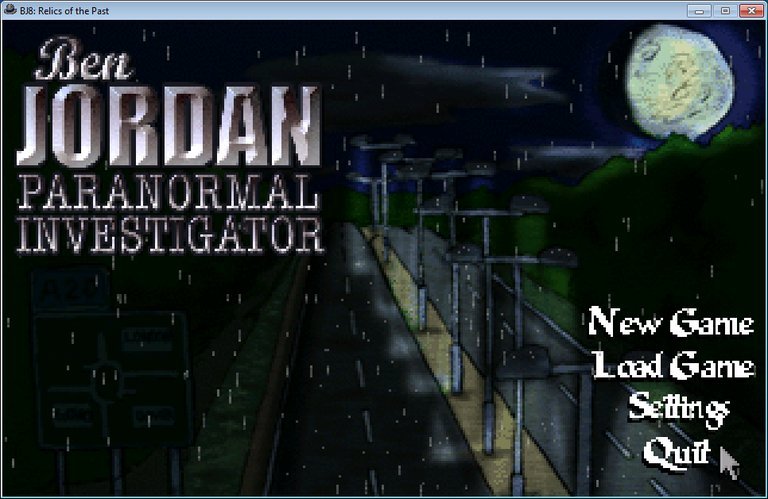
Ben Jordan: Paranormal Investigator Case 8 – Relics of the Past picks up after Case 7, with Ben Jordan unconscious in London on December 30, 2004, facing a two-day deadline to prevent Cardinal Genovese’s dark ritual tied to relics from his past cases. The game combines point-and-click adventure gameplay across modern London and Paris with flashbacks to 1926 Romania, where Ben’s grandfather Arthur fights vampires, featuring puzzles, time-based sequences, and multiple plot branches that shape Ben and Alice Wilkins’ futures.
Gameplay Videos
Ben Jordan: Paranormal Investigator Case 8 – Relics of the Past Free Download
Ben Jordan: Paranormal Investigator Case 8 – Relics of the Past Guides & Walkthroughs
Ben Jordan: Paranormal Investigator Case 8 – Relics of the Past: The Ghost in the Machine of Indie Adventure
Introduction: A Farewell to a FaithfulFriend
For nearly a decade, from the swamps of Florida to the streets of Rome, the Ben Jordan series stood as a testament to what one passionate developer could achieve with a modest engine and an unyielding vision. Francisco Gonzalez, under his Grundislav Games moniker, crafted a sprawling eight-part narrative that blended the cozy mystery of a detective series with the escalating, supernatural horror of a cosmic conspiracy. Case 8: Relics of the Past is not merely an entry; it is the cathedral’s keystone, the point where every cryptic clue, every lost love, and every philosophical rumination must converge. Released on August 8, 2012, as a freeware title built in Adventure Game Studio (AGS), this finale carries the immense weight of a saga’s conclusion while operating under the same resource constraints that defined its predecessors. This review argues that Relics of the Past is a profoundly satisfying, if imperfect, capstone—a game that triumphs in narrative ambition and character resolution but reveals the tensile limits of a solo developer juggling a continent- and century-spanning epic. It is less a technical marvel and more a historical artifact: the passionate, messy, and ultimately heartfelt final chapter of an era in indie adventure gaming.
Development History & Context: The Last Case File of a One-Man Bureau
The Creator and the Engine: The Ben Jordan series is the brainchild of Francisco Gonzalez, a developer whose credits—spanning Rosewater, Lamplight City, and The Samaritan Paradox—reveal a career built on meticulous narrative design and a deep affection for the adventure genre’s traditions. Case 8, like all preceding titles, was crafted in Adventure Game Studio, the open-source engine that powered the indie adventure renaissance of the 2000s and 2010s. AGS provided the point-and-click framework, the icon-based verb interface, and the tools for importing hand-drawn graphics and syncing voice acting—a democratic toolkit that allowed Gonzalez to bypass the commercial engines of the day.
Technological and Creative Constraints: The game’s technical specs are a direct window into its development context: a 320×200 resolution with 16-bit colour. This low-resolution, stylized aesthetic was a practical necessity for performance on early-2000s hardware and a stylistic choice that harkened back to the pixel-art classics of Sierra and LucasArts. The MobyGames credit list—41 people, but with Gonzalez wearing most hats (Writer, Background Artist, Character Animator, Programmer, Scripting)—tells the true story. This was largely a one-(wo)man show, supported by a small team of voice actors, beta testers, and engine module contributors (like Edmundo Ruiz Ghanem’s Tween Module). The AGS community, thanked in the credits, was a vital resource for troubleshooting and moral support.
The Gaming Landscape of 2012: The summer of 2012 was a transitional period for adventures. The genre was between major commercial waves—post-Sam & Max Telltale, pre-Life is Strange. It was a golden age for freeware and niche AGS titles, with communities like the Adventure Game Studio forums serving as bustling marketplaces and showcases. Releasing Case 8 as freeware was both a philosophical stance (making the conclusion accessible to all who followed the series) and a practical reality of a non-commercial project. It existed in a space parallel to the burgeoning indie boom on Steam, finding its audience through word-of-mouth, the AGS Awards, and aggregators like the Internet Archive and itch.io.
Narrative & Thematic Deep Dive: The Relic is Time Itself
Relics of the Past is a narrative of profound dualities. Its plot is split between December 2004, where a recovered but battered Ben Jordan races against a two-day deadline in London and Paris, and 1926 Romania, where his grandfather, Arthur Jordan, fought vampires alongside Percy Q. Jones (the elderly, spectral presence who opens Case 7 and serves as Ben’s unconscious chauffeur here).
Plot Architecture and Payoff: The story is a masterclass in series culmination. The “relics” are physical artifacts collected by the villainous Cardinals of the Knights of St. Anthony from every previous case location—the Skunk-Ape’s claw, the Salton Sea idol, the Smailholm witch’s grimoire, etc. This device elegantly forces the player (and Ben) to mentally revisit the entire saga. The central conflict is a chess game against Cardinal Genovese, whose dark ritual requires these relics. The narrative’s brilliance lies in how it uses the 1926 flashback not as mere backstory, but as a mechanical and thematic key. The solution to a present-day puzzle in the Paris catacombs requires understanding a sequence solved by Arthur and Percy in the past, creating a tangible link between generations.
Character Arcs and Philosophical Weight: Ben is no longer the wide-eyed novice of Case 1. He is traumatized, physically broken, and emotionally scarred by the deaths in The Cardinal Sins. His journey here is one of grim determination. The relationship with Alice Wilkins, his friend and potential love interest, hangs in the balance based on the player’s choices, lending genuine emotional stakes to the four plot branches. Percy Q. Jones’s role is transformed from quirky old mentor to tragic figure, his past in Romania revealing the source of his guilt and his spectral state. The most potent theme is legacy—what we inherit from our family (Arthur’s journal, his skills), what we leave behind (Ben’s future with Alice), and how the past (the relics, the Knights’ history) violently invades the present.
Dialogue and Voice Acting: Eric Feurstein’s performance as Ben anchors the seria’s tone—weary, sarcastic, but fundamentally decent. The voice work, praised in the AGS Panel review as “solid,” is a significant upgrade from earlier cases. The script, by Gonzalez, balances necessary exposition with dark wit (e.g., ordering “blood sausage and jaffa cakes” for the initials B.J.). The dialogue trees are functionally dense, with wrong choices sometimes leading to death or branch points, making conversations a core gameplay element.
Gameplay Mechanics & Systems: Point, Click, and Panic
The core loop is classic AGS: navigate static screens, examine objects, combine inventory items, and use verbs (Look, Take, Use, Talk) via an iconic toolbar. Relics of the Past refines this formula with two key innovations and one notable shift.
1. The Time-Based Sequence: The game introduces “autosave parts” where Ben is in immediate, lethal danger. The most memorable is the car chase early on, where the player must quickly search Otto’s car for motor oil, then use the magazine on the Knight’s car and the oil on the road—all within a tense, real-time countdown. Failure means a game over. These sequences break the contemplative pace with genuine adrenaline, a clever way to simulate chase scenes in a point-and-click framework.
2. Dual-Protagonist Puzzles: The Romania 1926 segments control Arthur Jordan. The puzzles here are more straightforward—finding a stick, combining it with brambles, using a poker—but their solutions directly impact the 2004 Paris puzzles (e.g., the specific sequence of statue bases in the Sacré-Cœur crypt). This creates a satisfying “aha!” moment when the present-day Ben applies knowledge from the past.
3. Branching Endings and Replayability: The game’s four endings (determined by whether you enter the cemetery crypt and your final choice regarding the Cardinal) give the narrative real branching weight. The secret “dog key” ending in the catacombs is a pure AGS-style easter egg, rewarding thorough exploration. This structure encourages replay, a significant design goal for an episodic series finale.
Flaws in the System: As noted by players on AGS, the puzzles are “straight-forward and slightly generic” compared to earlier, more convoluted cases. The infamous “catacombs puzzle which is essentially solving the same puzzle three times” (following directional word clues like NOOSES, NOSE SOON, NO ONE SEES) can feel like padding. The shift toward cinematic storytelling—with “many long cut-scenes”—sometimes comes at the expense of player agency, a common critique of Gonzalez’s later work as well.
World-Building, Art & Sound: The Texture of a Shared Universe
Visual Style: The 320×200, 16-bit colour palette is a deliberate homage. Gonzalez’s background art, while praised for its “vast amount of locations,” is noted by the AGS Panel as sometimes “rushed and unpolished” due to the sheer scope. This is the game’s most visible trade-off: a globe-trotting plot (London, Paris, Romania) versus the solo artist’s bandwidth. London is effectively dreary, Paris somewhat romanticized, and 1926 Romania appropriately gothic. The sprite animations, however, are a highlight—”surprisingly well done,” with Ben’s walk cycles and character expressions giving life to the low-res models.
Sound Design and Music: Peter Gresser’s score is atmospheric, playing into the detective/horror fusion. However, a sharp-eyed reviewer on Backloggd noted a direct lift of the “Napoleon House” music from Gabriel Knight for a Parisian scene—a curious, uncredited homage (or oversight) that momentarily breaks immersion for genre veterans. The voice acting, a cornerstone of the series’ identity, is generally strong, with clear enunciation and good chemistry, though some minor characters are less polished.
Atmosphere and Tone: The game masterfully balances its tones. The 2004 sequences are urban paranoid thrillers; the 1926 segments are gothic horror. The recurring motif of clocks—a working clock in Percy’s flat, time-based puzzles—reinforces the relentless, ticking-clock urgency of the plot. The world feels lived-in because it is a shared universe; seeing the “relics” from Case 3‘s Scottish witch or Case 5‘s Japanese yokai in Genovese’s collection is a powerful reward for dedicated players.
Reception & Legacy: A Cult Classic’s Quiet Triumph
Contemporary Reception: Relics of the Past existed in a niche ecosystem. Its one critic score on MobyGames is a 90% from Czech site Hrej!, which called it “a very ambitious project” with “a vast amount of locations and characters,” praising the voice acting, humor, and multiple endings. Player ratings on MobyGames (3.5/5 from three votes) and the robust discussion on the AGS forums (where it currently holds a 9/10 average from over 30 ratings) reveal a deeply appreciative, if small, fanbase. The AGS Awards 2012 nominations (Best NPC, Best Player Character, Best Dialogue, etc.) and win for Best Non-Player Character (likely Percy) cement its status as a peerless work within the AGS community that year.
Evolving Reputation: Today, it is remembered as “almost certainly the best game in the series” (Stupot, AGS) and “an epic length series wrapped up beautifully” (Cogliostro). Its reputation has solidified as the definitive conclusion. Criticisms about rushed backgrounds and easier puzzles are acknowledged but often seen as acceptable concessions to the project’s monumental scope. The continuity payoffs are universally lauded.
Influence and Place in History: As a historical document, Relics of the Past is invaluable. It represents the apex of the long-form, episodic, solo-developed adventure game—a model that became rarer as indie development professionalized and moved toward smaller, more polished projects. Francisco Gonzalez himself evolved from this style; his later games like Lamplight City and Rosewater are more streamlined, commercially-minded titles. Ben Jordan Case 8 is the last hurrah of a particular kind of ambitious, narrative-driven, freeware AGS epic. It demonstrates the engine’s capability for complex, branching stories with voice acting and cinematic flair, inspiring a generation of AGS developers to think big. It is a bridge between the casual, episodic adventures of the mid-2000s and the more focused indie experiences that followed.
Conclusion: A Worthy End to a Ghostly Adventure
Ben Jordan: Paranormal Investigator Case 8 – Relics of the Past is a game of striking contradictions. It is both sweeping and intimate, ambitious yet constrained, cinematic yet interactive. Its flaws—rushed art, some generic puzzles, a few questionable audio choices—are inseparable from its context as a monumental finale crafted by a single developer. Yet, its strengths are indelible: a narrative that consummately rewards a decade of player investment, character arcs that feel earned and poignant, and a structure that elegantly ties two timelines into a single, desperate confrontation.
In the canon of adventure games, it does not tower alongside the commercial giants of its era. Instead, it occupies a cherished, quieter space: the magnum opus of the dedicated amateur. It is a game built not for profit, but for completion—a love letter to a genre and its fans. For those who traveled the full eight cases with Ben Jordan, Relics of the Past delivers a cathartic, emotionally resonant, and intellectually satisfying conclusion. It proves that even at the end of a long road, a seasoned paranormal investigator can find one last, vital truth: that the most powerful relics are the memories we make and the stories we leave behind. This is not just a good finale; it is a necessary one, securing the Ben Jordan series’ legacy as a cornerstone of the AGS era and a heartfelt chapter in the history of the narrative-driven adventure.