
- Release Year: 2020
- Platforms: Windows
- Publisher: NIGHTBOX
- Developer: NIGHTBOX
- Genre: Action, Adventure
- Perspective: 1st-person
- Gameplay: Life, Social simulation
Description
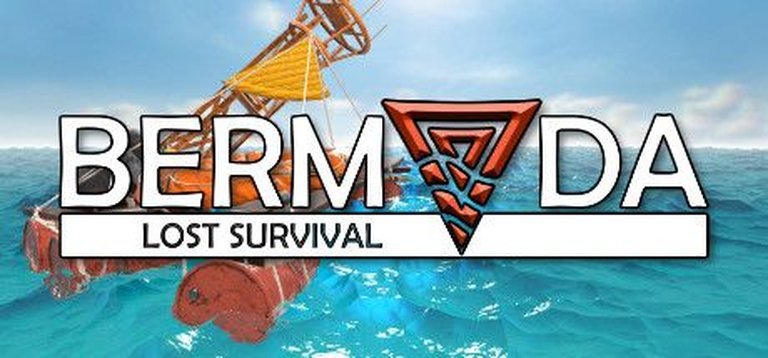
Bermuda – Lost Survival is a first-person action-adventure game with survival and life simulation elements, set in the enigmatic Bermuda Triangle. Players explore underwater reefs, craft tools like spearguns and scuba tanks, and manage their impact on a dynamic ecosystem where overfishing or disrupting predators can cause reef collapse, all while striving to survive in this mysterious oceanic environment.
Gameplay Videos
Bermuda – Lost Survival Guides & Walkthroughs
Bermuda – Lost Survival Reviews & Reception
rockpapershotgun.com : The real horror of being stranded in the Bermuda Triangle is the unrelenting tedium.
Bermuda – Lost Survival: A Sunken wreck of Ambition in the Survival Genre
Introduction: The Allure of the Deep Blue Abyss
The Bermuda Triangle. Few geographic regions carry such potent cultural weight, a permanent fixture in pulp fiction and late-night documentaries synonymous with inexplicable vanishings and supernatural mystery. It is a premise so rich, so inherently compelling, that it feels inevitable someone would attempt to translate it into an interactive survival experience. Bermuda – Lost Survival emerged from the crowd-funded/early-access boom of the mid-2010s with exactly this promise: a first-person, open-world survival-crafting adventure set atop and within the enigmatic waters of the Triangle. Developed by the two-person German studio NIGHTBOX, the game spent years in early access before its full release in September 2020, only to be quietly delisted following the studio’s dissolution in September 2023. This review seeks to reconstruct and analyze Bermuda – Lost Survival not as a finished product, but as a fascinating, flawed, and ultimately poignant case study in ambition constrained by scope, technology, and resources. Its legacy is not one of genre-defining success, but of a noble, if deeply troubled, attempt to inject ecological systemic depth into a saturated formula.
Development History & Context: The Two-Person Odyssey
NIGHTBOX, as gleaned from Steam announcements and the ModDB page, was not a traditional studio but a part-time partnership undertaking a monumental task. The game’s early access launch in 2017 was the culmination of roughly a year of prior work, a common timeline for small indie projects. The initial vision, as outlined in their dev blogs, was ambitious: an open-world “sea scenario” divided into sectors (reefs) with distinct resources, necessitating strategic base placement. Core pillars were a dynamic ecosystem where player actions (overfishing, shark hunting) could cause a reef to “collapse,” a progressive narrative shifting from pure survival to uncovering the Triangle’s myth, and a late-game confrontation with a “hostile faction.”
The development trajectory, meticulously documented in Steam news posts, reveals a project in constant, turbulent flux. The most seismic event was the April 2019 “Beta” update. The team announced they had “basically had to rebuild the entire game from scratch.” The initial engine and coding structure proved “not powerful and scalable enough,” leading to poor performance and limited object density. This migration to a new technical setup was a Herculean task for two developers working “besides working regular full-time jobs.” It resulted in a near-total redesign: reworked lighting, a “much denser environment,” a new UI, controller support, and “rebalanced most of the game mechanics.” This pivot highlights the classic indie dilemma: a foundational tech debt that threatens to consume the project, forcing a reset that delays content but aims for a sturdier future.
The post-beta roadmap (“2019 roadmap, which will be all about content”) promised new reefs (like “First Encounter”), tier-3 tools (speargun, scuba tank), perishable food with poisoning risks, and new shark species with refined AI. Updates continued through 2020, culminating in the full release on September 26, 2020. The final Steam news from NIGHTBOX, dated September 3, 2023, announced the studio’s dissolution, rendering the game “only… available for a short time” for purchase, though existing owners could keep it. This abrupt end transforms Bermuda from an ongoing project into a preserved artifact of a specific indie development struggle.
Narrative & Thematic Deep Dive: Mystery by Environment, Not Exposition
Bermuda – Lost Survival presents a narrative of profound absence. There is no opening cutscene explaining your arrival, no NPCs to dialogue with, no journal entries spelling out a conspiracy. The story is pure environmental and systemic storytelling, a choice both pragmatic (for a tiny team) and thematically resonant.
- The Premise: You are a survivor stranded in the Bermuda Triangle. The “why” is irrelevant; your existence is defined by the “what now.” The core narrative conflict is established in the game’s own description and ModDB tagline: the Triangle is “notorious for the vanishing of countless ships and airplanes,” and your goal is to “survive long enough to reveal its secret.” The secret, however, is not a person but a phenomenon.
- Environmental Storytelling: The world tells the story. The countless shipwrecks (from small boats to larger vessels) are silent testament to the Triangle’s power. Their scattered, unnatural positions on the seabed imply catastrophic, sudden events. The promise of “ancient structures” and “unique artifacts” hints at lost civilizations or preternatural forces. The “First Encounter” reef name and the developer hint about a “lost submarine” suggest direct, tangible evidence of the Triangle’s otherness.
- Thematic Underpinnings: The game’s deepest narrative layer is its ecological allegory. The dynamic ecosystem mechanic is not just a gameplay system; it’s the thematic core. The Bermuda Triangle, in this interpretation, is not just a place of supernatural mystery but a self-contained, fragile biosphere. Your intrusion as a human—hunting predators, overfishing, disrupting habitats—makes you an invasive force. The reef’s potential “collapse” is a direct consequence of your failure to respect the natural balance. The late-game threat of a “hostile faction guarding Bermuda’s secret” can be read narratively as the ecosystem (or its supernatural stewards) actively rejecting and attacking the disruptive human element. You are not just fighting sharks; you are fighting the repercussions of your own survivalist greed.
- The Fatal Flaw: This ambitious thematic framework is almost entirely subtle to the point of invisibility. Without explicit narrative markers, most players (as evidenced by the Rock Paper Shotgun review) would never deduce this ecological cautionary tale. The “hostile faction” is mentioned but never meaningfully integrated into the early or mid-game experience, creating a bait-and-switch where the promised mystery feels absent. The narrative is a ghost—suggested by systems and setting, but rarely manifesting in a way that provides payoff or progression.
Gameplay Mechanics & Systems: The Grind Beneath the Waves
Gameplay is where Bermuda – Lost Survival conceives its most innovative ideas but stumbles most severely in execution, creating a loop reviewers found tedious.
- Core Loop & Progression: The loop is classic survival: gather resources (sticks, planks, scrap metal, seaweed) -> craft tools/stations -> build/upgrade floating base outposts -> explore deeper/new reefs -> gather rarer resources -> repeat. Progression is tiered and gated by specific resource bottlenecks, most notoriously scrap metal. The early game is defined by the agonizing hunt for this one resource to unlock the workbench and, subsequently, basic tools like the axe and spear. This creates a brutal difficulty spike that the Rock Paper Shotgun reviewer found maddening, spending “an hour” aimlessly stabbing shipwrecks for scant returns.
- The Ecosystem System (The Star Mechanic): This is the game’s defining, if underdeveloped, innovation. Each reef has a simulated population and balance. Killing too many predators or overfishing leads to reef collapse. This turns resource gathering from a mindless grind into a strategic consideration. Ideally, you must rotate between reefs, manage populations, and perhaps even let areas recover. In practice, as hinted in patch notes, this system likely suffered from poor feedback. Players would not see tangible, immediate consequences for their actions, making it an invisible rule rather than an engaging dynamic. It was a system ahead of its implementation budget.
- Survival Needs & Perishables: Post-first update, food spoilage and food poisoning were added, and water required purification via a distillery. Oxygen is a constant underwater constraint. These elements add logistical tension but, as the RPS review crystallizes, they often serve as frustration amplifiers rather than meaningful choices. When the core activity (gathering) is already tedious, managing spoilage feels like an extra chore. The needs exist to force activity, not to create interesting risk/reward scenarios.
- Crafting & Building: The crafting menu was famously non-intuitive, with the RPS reviewer discovering a separate inventory menu for tools after hours of play. Building is modular wooden construction on floating pontoons. The “dock” and “raft” recipes allow for mobile bases. While functional, the building is visually simple and, per the review, quickly becomes the “same wooden hut” trope common to the genre, failing to leverage its nautical setting with unique architectural options.
- Combat & Wildlife AI: Shark behavior was a major update focus. Initially, reef sharks were non-hostile (a developer confirmed fact on ModDB). Later updates added tiger sharks and more complex, patrolling AI. Fish schools react to predators. The intention was a believable, reactive food chain where you are a mid-level predator. In execution, combat appears simple (spear fishing) and the tension from sharks is likely inconsistent—sometimes a threat, sometimes ambient scenery. The late-game “hostile faction” is referenced but its nature (humanoid? supernatural?) and implementation remain the game’s great unknown.
- Travel: A major pain point. Swimming is slow and oxygen-limited. Raft travel, while freeing you from air, introduces seasickness-inducing bouncy physics and vast, empty oceanic expanses. The world is “open” but often feels like a barren, repetitive blue desert dotted with similar-looking wrecks and reefs, making exploration a chore rather than a wonder.
World-Building, Art & Sound: Atmospheric Potential, Repetitive Reality
- Setting & Atmosphere: The theoretical setting is perfect for survival horror-lite: the vast, oppressive emptiness of the ocean, the eerie silence broken by whale songs (a nice patch note addition), the looming dread of the deep. The dynamic day-night cycle and weather effects (added post-beta) are crucial atmospheric tools. Night would logically transform the reef, with different fish behaviors and increased danger.
- Visuals & asset reuse: This is where ambition visibly outpaces resources. The environment is repetitive. Shipwrecks, while numerous, are variations on a few models. Reefs, despite promises of “individual species and resources,” likely suffer from palette-swapped flora and fauna. The “First Encounter” reef’s visual rework suggests efforts to break monotony, but the base aesthetic is one of low-poly, Unity-default-esque underwater scenery. The lighting (a focus of the beta update) is key to mood—god rays piercing the water, darkness in caves—but without compelling landmarks or varied biomes, the visual identity is “generic underwater.”
- Sound Design: Sound is a critical survival tool (hearing shark movement, whale songs as events) and atmospheric anchor. The addition of whale song events is a brilliant touch, injecting moments of awe and scale. However, the overall soundscape is likely sparse, dominated by bubbling water and creature noises. It serves its purpose but lacks the immersive, terrifying depth of a game like Subnautica.
- The Fatal Flaw: The lack of meaningful points of interest. The Steam page promises “unique shipwrecks” and “ancient structures.” The RPS reviewer found only “a bunch of rocks” and another sector with “iron.” The world feels like a resource spreadsheet mapped onto a 3D plane. Without distinct, memorable locations—a giant squid lair, a biodome-like wreck, a cannibalistic survivor camp—the exploration loses its allure. The mystery of the Triangle exists only as a tagline, not as a place you discover.
Reception & Legacy: The Mixed Verdict of a Ghost
- Critical Reception: Formal critic reviews are virtually non-existent (Metacritic lists none). The defining critical voice comes from Rock Paper Shotgun’s “Premature Evaluation” by Fraser Brown, a scathing early-access takedown. Its core criticism: Bermuda is “bizarrely” conservative, trading its unique setting for “the same wooden hut” survival loop, with “plodding busywork” and “unrelenting tedium.” It was unfavorably compared to the标杆 Subnautica, found wanting in wonder, threat, and engagement.
- Player Reception: Steam reviews, as aggregated by Steambase, show a “Mixed” score (57/100) from ~500 reviews at the time of analysis. This aligns with a divisive game. Positive reviews likely praise the ecological system concept, the satisfaction of a self-built floating base, and the potential they saw in the roadmap. Negative reviews echo Brown’s points: grindy, repetitive resource collection, poor travel controls, a barren world, and the feeling of a game “years late” to a saturated genre without enough innovation to justify its flaws.
- Commercial & Historical Fate: The game sold poorly enough that its publisher/developer shut down and the game was delisted. This is the ultimate verdict. In a market glutted with survival games, Bermuda failed to capture audience attention or critical acclaim. Its legacy is not as a classic, but as a cautionary tale.
- Influence & Industry Significance: Direct influence is negligible. However, its experimental ecosystem mechanic is a noteworthy footnote. Games like The Long Dark (with its regional animal populations) and No Man’s Sky (with planet ecosystems) explore similar ideas, but Bermuda attempted to make ecosystem health a direct, central survival mechanic tied to player activity. It was a significant systemic idea that, due to implementation and visibility issues, did not land. It serves as a data point for future developers: a brilliant system needs clear, compelling feedback loops to resonate with players. Its story is also emblematic of the perils of early access for micro-teams—the 2019 rebuild, while prudent, consumed precious time and momentum in a fast-moving genre, leaving the game feeling dated on release.
Conclusion: A Reef of Unfulfilled Promise
Bermuda – Lost Survival is a game defined by what it almost was. Conceived with a profoundly intelligent core—an ocean that reacts to your predation, a mystery embedded in the very health of the world—it was ultimately sunk by the relentless gravity of genre conventions and the crushing weight of technical constraint. The two-year rebuild was a necessary act of salvage, but it arrived into a harbor already crowded with more polished, more adventurous competitors.
What remains is an intriguing, broken thing. Its world is a beautiful, empty blue, dotted with repetitive wrecks. Its gameplay is a tedious loop of aquatic resource farming, punctuated by flashes of systemic brilliance that are too subtle to perceive. Its narrative is a haunting ghost, suggested by collapsing reefs and unseen guardians, but never spoken.
For the game historian, Bermuda – Lost Survival is essential study. It is a monument to the gap between visionary design and executable scope. It proves that even the most compelling setting and the smartest system can fail without exquisite tuning, clear communication to the player, and, fundamentally, the resources to build a world worth exploring. It is not a lost classic. It is a lost opportunity—a shipwreck of an idea, whose fascinating, fragile ecosystem mechanic is the only treasure worth recovering from its depths. Its final, quiet delisting after the developer’s closure is a fittingly melancholic end for a game about being swallowed by an uncaring, mysterious sea.
Final Verdict: 5/10 – A noble, deeply flawed experiment. Its historical significance lies in its ambitious, failed attempt to make ecological stewardship the core of a survival game, a lesson more valuable than any polished-but-derivative title.