
- Release Year: 2019
- Platforms: Windows
- Publisher: Hijong Park
- Developer: Hijong Park
- Genre: Roguelike, Strategy, Tactics
- Perspective: Diagonal-down
- Game Mode: Single-player
- Gameplay: Roguelike, Turn-based combat, Turn-based strategy
- Setting: Futuristic, Sci-fi
- Average Score: 89/100
Description
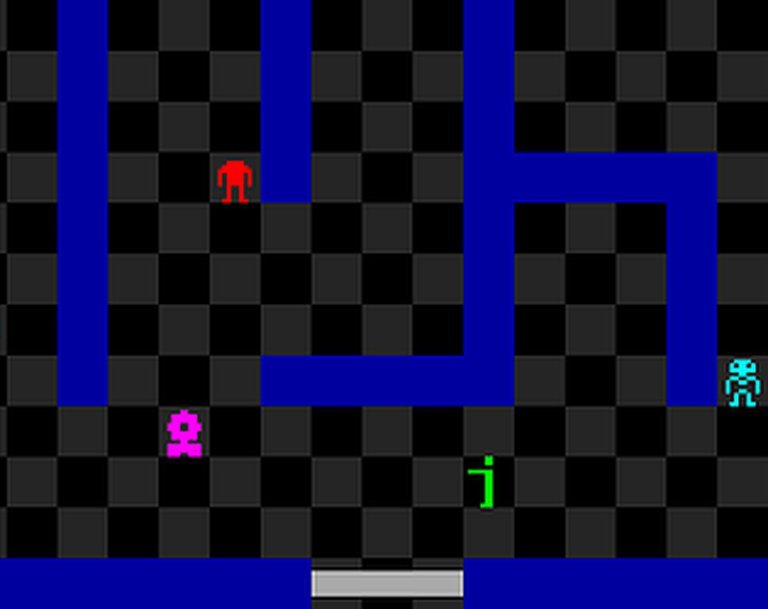
Berzerk Roguelike is a turn-based, sci-fi roguelike fangame inspired by the classic arcade title Berzerk. Players navigate electrified mazes while battling hostile robots with a laser gun, aiming for high scores or escaping through portals across multiple levels. The game offers three modes: Classic (endless survival), Maze Escape (8-level challenge), and Daily Quest (randomized daily mazes). With its retro aesthetic and strategic gameplay, it blends nostalgic arcade action with modern roguelike mechanics.
Berzerk Roguelike Reviews & Reception
dualshockers.com (89/100): Spiritfall is the type of game that typically flies under the radar and may have been overlooked by most players, but certainly not by the eyes of the critics, as the game opens our list of highest-rated roguelike titles ever.
Berzerk Roguelike: A Modern Homage to a Classic Arcade Legend
Introduction
In the vast, ever-evolving landscape of video games, few genres have proven as enduring and adaptable as the roguelike. Born from the dungeon-crawling depths of Rogue (1980), the genre has sprawled into countless iterations, each adding its own twist to the formula of permadeath, procedural generation, and punishing difficulty. Yet, amidst this sea of innovation, there exists a rare breed of games that pay homage to the past while carving out their own identity. Berzerk Roguelike (2019), developed by Hijong Park, is one such title—a love letter to the arcade classic Berzerk (1980), reimagined through the lens of modern roguelike design.
Berzerk Roguelike is not just a nostalgic throwback; it is a thoughtful reinterpretation of a game that left an indelible mark on arcade history. The original Berzerk, designed by Alan McNeil and released by Stern Electronics, was a groundbreaking title in its own right. It was one of the first games to feature synthesized speech, a relentless AI in the form of Evil Otto, and a unique blend of maze navigation and shooter mechanics. It was also, infamously, the first arcade game to be blamed for the death of a player—a dark legend that only added to its mystique.
Hijong Park’s Berzerk Roguelike takes these elements and transposes them into a turn-based, procedurally generated experience. The result is a game that feels both familiar and fresh, a bridge between the golden age of arcades and the modern indie scene. But what makes Berzerk Roguelike worthy of attention? Is it a mere curiosity, or does it stand as a legitimate entry in the roguelike pantheon? This review will delve deep into the game’s development, mechanics, narrative, and legacy to answer these questions.
Development History & Context
The Legacy of Berzerk
To understand Berzerk Roguelike, one must first grasp the significance of its inspiration. Berzerk (1980) was a product of its time, emerging during the golden age of arcade gaming. Designed by Alan McNeil, a programmer with a background in network-based games and a passion for creative concepts, Berzerk was a departure from the norm. McNeil drew inspiration from Fred Saberhagen’s Berserker series, a collection of science fiction novels about sentient, genocidal machines. This literary influence is evident in the game’s premise: a humanoid intruder navigating a maze filled with hostile robots, all while being pursued by the relentless Evil Otto.
The development of Berzerk was not without its challenges. Initially conceived as a black-and-white game, Stern Electronics made a last-minute decision to add color using a four-bit overlay system—a move that, while technically impressive, resulted in some visual quirks. The game’s most notable innovation, however, was its use of speech synthesis. McNeil incorporated a speech chip that allowed the robots to taunt players with phrases like “Intruder alert!” and “Chicken! Fight like a robot!” This feature, though rudimentary by today’s standards, was revolutionary at the time and added a layer of immersion that few games could match.
Berzerk was a commercial success, selling around 15,000 arcade units. It also gained notoriety for its difficulty and the urban legends surrounding it, including the tragic deaths of players Jeff Dailey and Peter Bukowski. While these stories were later debunked or exaggerated, they contributed to the game’s enduring mystique.
The Birth of Berzerk Roguelike
Fast forward to 2019, and the roguelike genre has evolved into a sprawling ecosystem of games, each offering its own take on procedural generation and permadeath. Hijong Park, a developer with a penchant for retro-inspired titles, saw an opportunity to revisit Berzerk through the lens of modern roguelike design. The result was Berzerk Roguelike, a turn-based reinterpretation of the classic arcade game.
Developed using GameMaker, Berzerk Roguelike was created in just three days—a testament to Park’s efficiency and the simplicity of the original Berzerk’s design. The game was released as freeware, a nod to the indie spirit that has long defined the roguelike genre. Park’s goal was not to replicate Berzerk but to capture its essence in a new form, blending the tension of the original with the strategic depth of turn-based gameplay.
The Roguelike Genre in 2019
By 2019, the roguelike genre had undergone significant evolution. The term “roguelike” itself had become a subject of debate, with some purists insisting on strict adherence to the genre’s original mechanics (e.g., turn-based gameplay, grid-based movement) and others embracing a broader definition that included real-time action games like Hades and Dead Cells. This tension was reflected in the community’s reception of games that blurred the lines between traditional roguelikes and their more action-oriented cousins, often dubbed “roguelites.”
Berzerk Roguelike arrived at a time when the genre was flourishing. Games like Slay the Spire (2019) and Hades (2020) were redefining what a roguelike could be, while titles like Dwarf Fortress and Dungeon Crawl Stone Soup continued to cater to hardcore fans. Park’s game, with its turn-based mechanics and retro aesthetic, aligned more closely with the traditionalist camp. Yet, its accessibility and modern sensibilities made it appealing to a broader audience.
Narrative & Thematic Deep Dive
The Plot: A Minimalist Approach
Berzerk Roguelike does not attempt to weave a complex narrative. Like its arcade predecessor, it relies on a simple premise: the player controls a humanoid intruder navigating a series of mazes filled with hostile robots. The goal varies depending on the game mode—surviving as long as possible in Classic mode, escaping through eight levels in Maze Escape, or tackling a daily challenge in Daily Quest.
The lack of a traditional story is not a flaw but a deliberate choice. Berzerk Roguelike is a game about mechanics, tension, and strategy. The narrative is implied rather than explicit, with the player’s actions—dodging robot fire, outmaneuvering Evil Otto, and escaping electrified walls—telling the story of survival against overwhelming odds. This minimalist approach is reminiscent of classic arcade games, where gameplay was king and narrative was secondary.
Characters and Dialogue
The characters in Berzerk Roguelike are archetypal, drawing directly from the original Berzerk. The player character is a faceless humanoid, a cipher for the player’s own struggles. The robots, while visually simple, are imbued with personality through their taunts and behavior. Evil Otto, the game’s iconic antagonist, remains as terrifying as ever, his relentless pursuit a constant reminder of the game’s high stakes.
Dialogue in Berzerk Roguelike is sparse but effective. The robots’ taunts, lifted from the original game, add a layer of tension and immersion. Phrases like “Intruder alert!” and “Chicken! Fight like a robot!” are not just nostalgic callbacks but integral to the game’s atmosphere. They reinforce the player’s role as an outsider in a hostile world, a theme that resonates throughout the game.
Themes: Survival and Futility
At its core, Berzerk Roguelike explores themes of survival and futility. The player is constantly outnumbered, outgunned, and pursued by an unstoppable force. Every decision matters, and every mistake can be fatal. This sense of desperation is amplified by the game’s turn-based mechanics, which force the player to carefully consider each move.
The game also touches on the theme of futility. No matter how skilled the player becomes, Evil Otto is always lurking, ready to end the run. This inevitability is a hallmark of the roguelike genre, where death is not just a possibility but a certainty. Yet, it is this very futility that makes victory so satisfying. Each successful escape, each high score, is a temporary triumph in an otherwise unwinnable war.
The Influence of Berserker
The thematic underpinnings of Berzerk Roguelike can be traced back to Fred Saberhagen’s Berserker series. The robots in the game are not mindless drones but relentless, intelligent machines with a single purpose: to exterminate all biological life. This genocidal imperative is reflected in their behavior—they hunt the player with single-minded determination, their taunts a chilling reminder of their hostility.
Evil Otto, in particular, embodies the Berserker ethos. He is not just a villain but a force of nature, an unstoppable entity that exists solely to destroy. His presence elevates Berzerk Roguelike from a simple shooter to a survival horror experience, where the player is not just fighting for points but for their very existence.
Gameplay Mechanics & Systems
Core Gameplay Loop
Berzerk Roguelike distills the essence of Berzerk into a turn-based roguelike experience. The core gameplay loop revolves around navigating procedurally generated mazes, avoiding or destroying robots, and escaping before Evil Otto catches up. The turn-based mechanics add a layer of strategy absent from the original arcade game, forcing the player to think carefully about each move.
The game offers three distinct modes:
-
Classic Mode: An endless experience where the player aims to survive as long as possible and achieve a high score. This mode is the closest to the original Berzerk, with its focus on survival and score-chasing.
-
Maze Escape: A structured experience where the player must navigate eight levels to reach a portal. This mode introduces a sense of progression, with each level presenting new challenges and obstacles.
-
Daily Quest: A variation of Maze Escape with a unique seed for each day, encouraging competition among players. This mode adds replayability, as players can compare their performance against others on a daily basis.
Combat and Movement
Combat in Berzerk Roguelike is simple but strategic. The player can move in four directions and fire their laser in any of the eight cardinal directions. Unlike the original Berzerk, where movement and firing were tied to the joystick, Berzerk Roguelike separates these actions, allowing for more precise control.
The robots behave similarly to their arcade counterparts, moving toward the player and firing when in range. Their behavior is predictable but dangerous, especially when multiple robots are present. The player must constantly weigh the risks of engaging in combat versus fleeing, a dynamic that adds tension to every encounter.
Character Progression
Berzerk Roguelike does not feature traditional character progression in the form of leveling up or unlocking new abilities. Instead, progression is tied to the player’s skill and understanding of the game’s mechanics. Each run is a fresh start, with the player’s knowledge and reflexes being the only carryover.
This approach is in line with the roguelike philosophy, where mastery comes from repetition and adaptation rather than persistent upgrades. It also ensures that each run feels distinct, with the player’s success dependent on their ability to react to the game’s procedural challenges.
UI and Controls
The user interface in Berzerk Roguelike is minimalist and functional. The player’s health, score, and current level are displayed prominently, while the maze itself is rendered in a clean, retro aesthetic. The controls are intuitive, with keyboard and mouse support ensuring accessibility for a wide range of players.
One of the game’s strengths is its clarity. The player always knows their objectives, the location of exits, and the positions of enemies. This transparency is crucial in a game where split-second decisions can mean the difference between life and death.
Innovative and Flawed Systems
Berzerk Roguelike’s most innovative feature is its turn-based mechanics. By slowing down the action, the game allows for deeper strategic play, a departure from the twitch-based gameplay of the original Berzerk. This change makes the game more accessible to players who may struggle with the fast-paced nature of classic arcade games.
However, the turn-based mechanics are not without their flaws. The game’s difficulty can feel inconsistent, with some runs being trivial and others nearly impossible. This inconsistency is a common issue in roguelikes, where procedural generation can lead to unpredictable challenges. Additionally, the lack of persistent progression may deter players who prefer games with unlockable content or character growth.
World-Building, Art & Sound
Setting and Atmosphere
Berzerk Roguelike retains the sci-fi setting of its arcade predecessor. The player navigates a series of mazes filled with robots, electrified walls, and the ever-present threat of Evil Otto. The game’s atmosphere is one of tension and desperation, with the player constantly on the verge of death.
The procedural generation ensures that no two runs are alike, adding to the game’s replayability. The mazes are varied in layout, with some featuring tight corridors and others offering more open spaces. This variety keeps the gameplay fresh, as the player must adapt to each new environment.
Visual Direction
The visual style of Berzerk Roguelike is a loving homage to the original Berzerk. The game features a retro aesthetic, with pixelated graphics and a limited color palette. The robots are rendered as simple sprites, while Evil Otto retains his iconic smiley face design.
Despite its simplicity, the game’s visuals are effective. The mazes are easy to read, with clear distinctions between walls, floors, and enemies. The player’s position is always visible, ensuring that navigation is intuitive. The retro aesthetic also serves as a nostalgic callback, appealing to fans of classic arcade games.
Sound Design
Sound design in Berzerk Roguelike is minimal but impactful. The game features a handful of sound effects, including the player’s laser fire, robot taunts, and the ominous hum of Evil Otto. These sounds are functional, providing feedback for the player’s actions and enhancing the game’s atmosphere.
The lack of a full soundtrack is notable but not detrimental. The silence between actions adds to the tension, making each sound effect more pronounced. The absence of music also allows the player to focus on the gameplay, a design choice that aligns with the game’s minimalist philosophy.
Reception & Legacy
Critical and Commercial Reception
Berzerk Roguelike was released as freeware, which likely limited its commercial impact. However, the game has garnered a small but dedicated following, particularly among fans of retro games and roguelikes. Its reception has been generally positive, with players praising its faithful adaptation of Berzerk’s mechanics and its strategic depth.
Critics have noted the game’s simplicity and accessibility, making it an excellent entry point for players new to the roguelike genre. The turn-based mechanics have been particularly well-received, as they allow for a more deliberate and tactical approach to gameplay. However, some have criticized the game’s lack of persistent progression and its occasional difficulty spikes.
Influence on Subsequent Games
While Berzerk Roguelike has not had a significant impact on the broader gaming industry, it serves as an example of how classic arcade games can be reimagined for modern audiences. Its turn-based mechanics and retro aesthetic have inspired other indie developers to explore similar adaptations, blending old and new in innovative ways.
The game’s legacy is also tied to its status as a fan-made homage. Berzerk Roguelike is a testament to the enduring appeal of Berzerk and the creativity of indie developers. It stands as a reminder that even the simplest games can be reimagined in ways that feel fresh and exciting.
Evolution of Its Reputation
Since its release, Berzerk Roguelike has maintained a steady reputation as a niche but enjoyable title. It has not achieved the same level of fame as other roguelikes like Hades or Dead Cells, but it has carved out its own space in the genre. Its status as freeware has ensured that it remains accessible to a wide audience, contributing to its longevity.
The game’s reputation has also benefited from its association with Berzerk. Fans of the original arcade game have embraced Berzerk Roguelike as a modern interpretation, praising its faithfulness to the source material while appreciating its innovative mechanics. This dual appeal has helped the game maintain relevance in a crowded genre.
Conclusion
Berzerk Roguelike is a remarkable achievement—a game that successfully bridges the gap between the golden age of arcades and the modern indie scene. Hijong Park’s turn-based reinterpretation of Berzerk captures the tension, strategy, and desperation of the original while adding its own unique twist. The game’s minimalist narrative, strategic depth, and retro aesthetic make it a standout title in the roguelike genre.
While Berzerk Roguelike may not have the polish or scope of larger indie darlings like Hades or Dead Cells, it offers something equally valuable: a pure, unadulterated roguelike experience that rewards skill, patience, and adaptability. Its turn-based mechanics make it accessible to players who may struggle with the fast-paced nature of classic arcade games, while its procedural generation ensures that no two runs are alike.
In the grand tapestry of video game history, Berzerk Roguelike may not be a landmark title, but it is a testament to the enduring appeal of Berzerk and the creativity of indie developers. It stands as a reminder that even the simplest games can be reimagined in ways that feel fresh and exciting, and that the spirit of the arcade is alive and well in the modern era.
For fans of roguelikes, retro games, or strategic gameplay, Berzerk Roguelike is a hidden gem worth exploring. It may not change the genre, but it offers a unique and enjoyable experience that pays homage to one of the most iconic arcade games of all time. In a world where games are increasingly complex and sprawling, Berzerk Roguelike is a refreshing return to simplicity—and a reminder that sometimes, the most compelling experiences are the ones that strip away the excess and focus on what truly matters: gameplay.
Final Verdict: 8/10 – A faithful and innovative homage to a classic, Berzerk Roguelike is a must-play for fans of retro-inspired roguelikes.