
- Release Year: 2004
- Platforms: Windows
- Publisher: Akella, DreamCatcher Interactive Inc.
- Developer: Primal Software
- Genre: Strategy, Tactics
- Perspective: Diagonal-down
- Game Mode: Online Co-op, Online PVP, Single-player
- Gameplay: City building, Deformable terrain, Hero units, Real-time strategy, Resource gathering, Siege Warfare
- Setting: Fantasy, Germanic, Mythology: Norse
- Average Score: 59/100
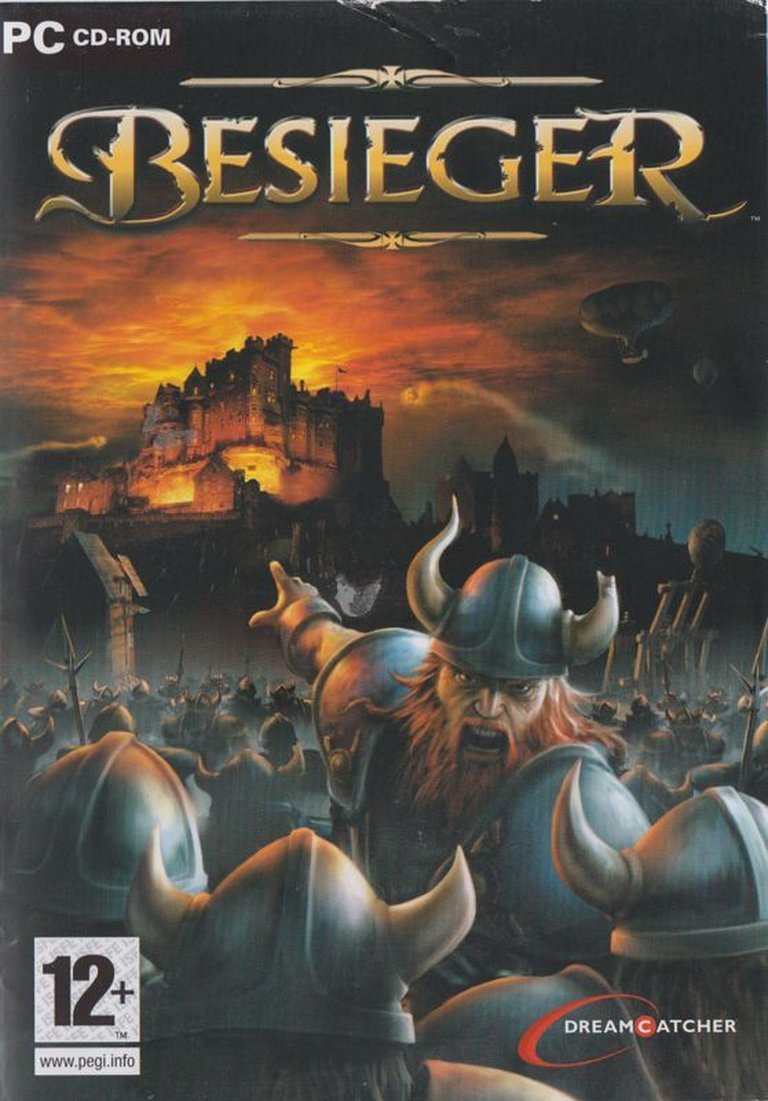
Description
Besieger is a real-time strategy game set in a fantasy world where players can choose to fight as Vikings, Cimmerians, or the returning king Korin. The game features three distinct single-player campaigns and multiplayer modes, including siege battles where players defend or attack fortresses. With hero units possessing special abilities and various skirmish modes, Besieger offers a mix of traditional RTS gameplay and unique tactical challenges.
Gameplay Videos
Besieger Free Download
Cracks & Fixes
Patches & Updates
Guides & Walkthroughs
Reviews & Reception
metacritic.com (56/100): Where the game shines is in its siege warfare tactics and deformable terrain.
ign.com (65/100): I was having a good time with this game until I encountered my first town wall, which was actually my town wall.
gamewatcher.com : The game looks pretty good, there’s no question about that.
gamingnexus.com : But the actual play of the game, hindered by poor AI, clunky camera control, and bland units leaves Besieger firmly mired in RTS mediocrity.
Besieger: A Forgotten Gem of Fantasy RTS
Introduction
In the crowded landscape of early 2000s real-time strategy (RTS) games, Besieger (2004) emerged as a title that promised to carve out its own niche. Developed by Primal Software and published by DreamCatcher Interactive and Akella, Besieger set itself apart with a focus on siege warfare, deformable terrain, and a unique blend of Norse and Cimmerian mythology. Despite its ambitious vision, the game received mixed reviews and has since faded into relative obscurity. This review aims to revisit Besieger, dissecting its development, narrative, gameplay mechanics, and lasting impact on the RTS genre.
Development History & Context
The Studio and Its Vision
Primal Software, the development studio behind Besieger, was a relatively unknown entity in the gaming industry. The team aimed to create a fantasy RTS that emphasized siege tactics and strategic depth, drawing inspiration from the likes of Warcraft III and Stronghold. The game’s setting was heavily influenced by Norse and Cimmerian mythology, offering a refreshing departure from the typical medieval or historical settings prevalent in RTS games at the time.
Technological Constraints and the Gaming Landscape
Released in 2004, Besieger was developed during a transitional period for the RTS genre. The early 2000s saw the rise of Warcraft III, which had set a high bar for RTS games with its polished mechanics, engaging narrative, and robust multiplayer features. Besieger sought to differentiate itself by focusing on siege warfare and deformable terrain, features that were not commonly emphasized in other RTS titles. However, the game’s development was hampered by technical limitations, particularly in terms of AI pathfinding and camera controls, which would later become significant points of criticism.
Narrative & Thematic Deep Dive
Plot and Characters
Besieger‘s narrative revolves around the conflict between the Vikings and the Cimmerians, two factions caught in a power struggle. The story begins with Korin, the rightful king of the Cimmerians, embarking on a quest to find a fabled magic sword. In his absence, his sister Mara seizes power using dark magic, leading to a conflict that draws in the Vikings. The game’s campaign allows players to experience the conflict from multiple perspectives, including that of the Vikings, the Cimmerians, and Korin himself.
The narrative is relatively straightforward, with a clear good-versus-evil dichotomy. Mara serves as the primary antagonist, her dark magic and ruthless tactics making her a formidable foe. The Vikings, led by Earl Barlamay, are portrayed as noble warriors seeking to restore balance. Korin, the exiled king, represents the hope for redemption and justice. While the story is not particularly groundbreaking, it provides a compelling backdrop for the game’s strategic gameplay.
Themes and Dialogue
The game explores themes of power, betrayal, and redemption. Mara’s rise to power through dark magic serves as a cautionary tale about the corrupting influence of ambition. The Vikings’ quest to restore balance highlights the importance of honor and loyalty. The dialogue, while serviceable, is often hammy and over-the-top, reflecting the game’s fantasy setting. The voice acting, while not exceptional, adds a layer of immersion to the narrative.
Gameplay Mechanics & Systems
Core Gameplay Loops
Besieger follows the traditional RTS formula of resource gathering, base building, and unit training. Players must manage resources such as wood, stone, and iron to construct buildings and train units. The game introduces a unique mechanic where workers can be converted into military units and vice versa, adding a layer of strategic depth to unit management.
Combat and Character Progression
Combat in Besieger is characterized by its emphasis on siege warfare. Players can construct fortifications, including walls and towers, to defend their bases. Siege units, such as battering rams and catapults, are essential for breaking through enemy defenses. The game features hero units with special abilities, similar to Warcraft III, which can turn the tide of battle.
Unit progression is tied to experience points gained through combat. As units gain experience, they become more powerful, with increased health and damage output. This mechanic encourages players to keep their units alive and invest in their development.
User Interface and Innovative Systems
The user interface in Besieger is functional but somewhat clunky. The camera controls, in particular, have been criticized for being unresponsive and difficult to manage. The game’s pathfinding AI is another significant flaw, with units often getting stuck on terrain or failing to navigate through gates and other obstacles.
Despite these issues, Besieger introduces several innovative systems. The deformable terrain allows players to alter the landscape to their advantage, creating chokepoints or defensive positions. The game’s siege mechanics are also noteworthy, offering a unique twist on traditional RTS gameplay.
World-Building, Art & Sound
Setting and Atmosphere
Besieger is set in a fantasy world inspired by Norse and Cimmerian mythology. The game’s maps feature a variety of environments, including forests, mountains, and deserts, each with its own unique visual style. The world is populated by a mix of human and mythical creatures, including ogres, werewolves, and centaurs, adding to the game’s fantasy aesthetic.
Visual Direction
The game’s visuals are a mix of strengths and weaknesses. The 3D environments are detailed and immersive, with well-rendered landscapes and buildings. However, the unit models are somewhat blocky and lack the polish seen in other RTS titles of the era. The game’s day-night cycle adds a dynamic element to the visuals, with lighting effects that enhance the atmosphere.
Sound Design
The sound design in Besieger is a mixed bag. The background music is epic and fitting for the game’s fantasy setting, but the voice acting is often over-the-top and cheesy. The sound effects are generally well-executed, with satisfying combat sounds and environmental ambiance that enhance the gameplay experience.
Reception & Legacy
Critical and Commercial Reception
Besieger received mixed reviews upon its release, with critics praising its unique siege mechanics and visuals but criticizing its flawed AI, pathfinding issues, and clunky controls. The game’s average critic score on Metacritic was 56, indicating a mixed reception. Players were somewhat more forgiving, with an average user score of 6.1.
Commercially, Besieger struggled to make a significant impact. The game’s lack of a strong multiplayer community and its technical issues contributed to its relatively low sales and limited lasting appeal.
Influence on Subsequent Games
Despite its shortcomings, Besieger has had a lasting influence on the RTS genre. Its emphasis on siege warfare and deformable terrain has been echoed in later titles, such as Elven Legacy: Siege and Stronghold. The game’s unique mechanics, while flawed, demonstrated the potential for innovation in the RTS genre.
Conclusion
Besieger is a game that, despite its flaws, deserves recognition for its ambitious vision and innovative mechanics. Its focus on siege warfare and deformable terrain set it apart from other RTS titles of its time, and its narrative, while straightforward, provided a compelling backdrop for the gameplay. However, the game’s technical issues, particularly its AI and pathfinding problems, ultimately held it back from achieving widespread acclaim.
In the grand tapestry of RTS history, Besieger remains a forgotten gem, a title that dared to innovate but was ultimately hampered by its own shortcomings. Its legacy lies in its influence on subsequent games and its role in pushing the boundaries of the RTS genre. For fans of strategy games and those interested in the evolution of the genre, Besieger is a title worth revisiting, if only to appreciate its bold ambitions and the lessons it offers for future game developers.