
- Release Year: 2020
- Platforms: Windows
- Publisher: S.A.D. Software Vertriebs- und Produktions GmbH
- Genre: Compilation
- Average Score: 80/100
Description
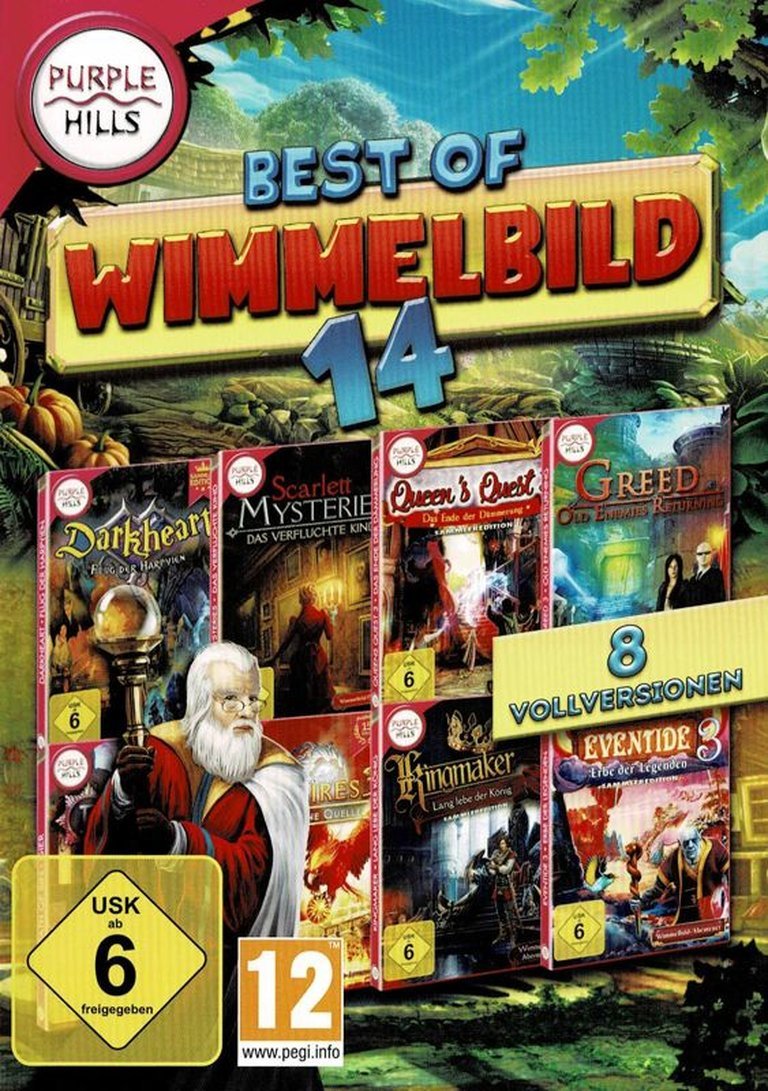
Best of Wimmelbild 14 is a compilation of hidden object games that offers a variety of engaging puzzles and intriguing storylines. This collection includes popular titles such as Queen’s Quest 3: The End of Dawn, Lost Grimoires 3: The Forgotten Well, and Eventide 3: Legacy of Legends, providing hours of entertainment for fans of the genre. Each game within the compilation features detailed artwork and immersive narratives, making it a must-have for those who enjoy the challenge of finding hidden items in beautifully crafted scenes.
Best of Wimmelbild 14 Reviews & Reception
ign.com (80/100): Vanillaware games have always looked great, but 13 Sentinels is the first time the studio has put a bulk of its focus on storytelling.
Best of Wimmelbild 14: A Comprehensive Legacy Review
Introduction
In the bustling landscape of casual gaming, where hidden object adventures and narrative-driven puzzles thrive, Best of Wimmelbild 14 (2020) stands as a monument to accessibility and nostalgia. This Windows-exclusive compilation, part of a long-running German series by S.A.D. Software, bundles eight Collector’s Editions of beloved point-and-click titles, from Queen’s Quest 3: The End of Dawn to Darkheart: Flight of the Harpies. While lacking the bombast of AAA epics, Wimmelbild 14 offers a curated portal into a genre defined by meticulous world-building and relaxed gameplay. My thesis? This anthology is a time capsule of casual gaming’s golden age—a flawed but earnest celebration of storytelling through clutter, perfect for genre devotees but unlikely to convert skeptics.
Development History & Context
Studio Vision & Technological Constraints
Developed by S.A.D. Software Vertriebs- und Produktions GmbH, a German publisher specializing in budget-friendly compilations, Best of Wimmelbild 14 follows a formula perfected since 2009. The series name (“Wimmelbild”) references Wimmelbilderbücher—German “teeming picture books” where intricate illustrations hide countless details. This ethos translates to games that reward patience and observation, often eschewing reflexes for cerebral exploration.
Released in November 2020, the compilation arrived amid a gaming landscape dominated by sprawling open worlds (Ghost of Tsushima) and cinematic narratives (The Last of Us Part II). Yet Wimmelbild 14 catered to an underserved demographic: casual players seeking bite-sized adventures without demanding hardware. Built for mid-2000s PCs and distributed via DVD-ROM, it prioritized accessibility over innovation, leveraging the genre’s timeless appeal.
Narrative & Thematic Deep Dive
A Tapestry of Mysteries
The compilation’s eight titles share a common DNA: fantasy-infused mysteries solved through object hunting and light puzzle-solving. For example:
– Queen’s Quest 3: The End of Dawn pits players against a shadowy conspiracy in a medieval kingdom, blending royal intrigue with supernatural threats.
– Lost Grimoires 3: The Forgotten Well explores familial legacy through alchemy and time travel, echoing Life is Strange’s emotional beats in a more whimsical vein.
– Eventide 3: Legacy of Legends merges Slavic folklore with environmental stewardship themes, asking players to heal a cursed forest.
While narratives lack the depth of Disco Elysium or Planescape: Torment, they excel in atmospheric cohesion. Each game delivers self-contained arcs with archetypal heroes (plucky inventors, tormented monarchs) and villains (greedy sorcerers, vengeful spirits). Dialogues are functional but rarely transcendent, prioritizing clarity over nuance—a strength for players seeking relaxation over existential musing.
Gameplay Mechanics & Systems
The Loop of Discovery
Core mechanics revolve around a seek-solve-progress loop:
1. Hidden Object Scenes: Scour cluttered environments for listed items, often with thematic ties (e.g., herbal ingredients in Path of Sin: Greed).
2. Inventory Puzzles: Combine found objects to unlock paths, à la Myst but with fewer logic gates.
3. Mini-Games: Variants include jigsaw puzzles (Kingmaker: Rise to the Throne) and tile-matching (Scarlett Mysteries: Cursed Child).
Innovations & Flaws
– UI Simplicity: Clean interfaces with drag-and-drop functionality ensure minimal friction. Hint systems recharge passively, preventing frustration.
– Repetition: Over-reliance on static scenes risks monotony; Greed: Old Enemies Returning particularly suffers from recycled assets.
– Pacing: With no fail states, progression feels frictionless—ideal for casual play but lacking stakes for veteran adventurers.
World-Building, Art & Sound
Aesthetic Diversity
Each title boasts a distinct visual identity:
– Queen’s Quest 3’s painterly castles evoke Dragon Age’s grandeur on a smaller scale.
– Darkheart: Flight of the Harpies leans into gothic horror, with muted palettes and jagged landscapes reminiscent of Amnesia: The Dark Descent.
– Eventide 3’s vibrant forests feel ripped from a Studio Ghibli film.
Ambiance Through Audio
Soundtracks blend orchestral scores (Lost Grimoires 3) with ambient noise (Scarlett Mysteries’ creaking mansions). While voice acting is sparse, environmental SFX—howling winds, clinking potions—ground players in each world’s ethos.
Reception & Legacy
Critical Silence, Niche Devotion
Best of Wimmelbild 14 garnered no major reviews—a reflection of its budget origins and target audience. Yet its commercial success in European markets underscores the enduring appeal of hidden-object compilations.
Industry Influence
While not groundbreaking, the Wimmelbild series preserved a genre often overshadowed by mainstream hits. Its legacy lies in democratizing game design: proving that small-scale narratives, when polished, can captivate as powerfully as cinematic epics. Later titles like Hidden Folks (2017) owe a debt to its foundational mechanics.
Conclusion
Best of Wimmelbild 14 is neither a masterpiece nor a relic. It’s a comfort-food anthology—flawed, repetitive, yet undeniably charming. For casual players, it delivers eight worlds of escapism, each rich enough to justify an evening’s dive. For historians, it exemplifies a subgenre that thrived on simplicity amid an era of excess.
Final Verdict: A 7/10 experience—best enjoyed with tea, patience, and tempered expectations. In the pantheon of gaming narratives, it’s no Silent Hill 2, but as a testament to quiet, clutter-filled adventures, it’s unforgettable.