
- Release Year: 2023
- Platforms: Windows
- Publisher: Artesign
- Developer: Artesign
- Genre: Adventure
- Perspective: 1st-person
- Game Mode: Single-player
- Gameplay: Puzzle elements
- Setting: Fantasy
- Average Score: 97/100
Description
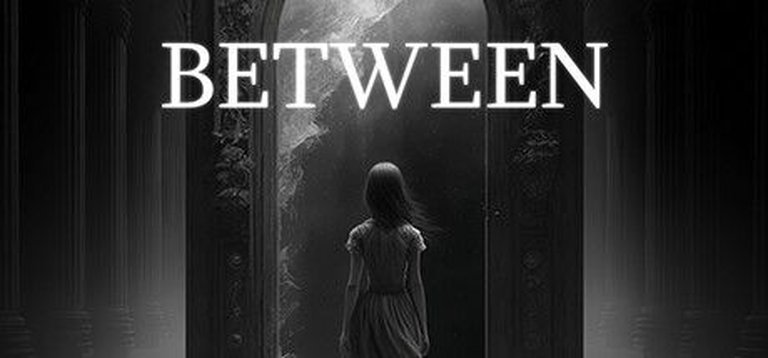
Between is a first-person fantasy adventure game where players explore mystical environments and solve intricate puzzles using a point-and-select interface with a free camera, immersing themselves in a magical world full of discovery and challenge.
Where to Buy Between
PC
Between Free Download
Between Patches & Updates
Between Guides & Walkthroughs
Between Reviews & Reception
gameinformer.com (97.5/100): They say you can never go home again, but I adored returning to Hyrule with all new tools.
Between: Review
Introduction: A Dreamscape Lost in the Shadows of Giants
In the vast and crowded landscape of the 2023 video game release calendar, dominated by monolithic titles like Baldur’s Gate 3 that commanded cultural and critical hegemony, a quiet, enigmatic game titled Between slipped onto Steam on April 20th with almost no fanfare. Developed by the obscure studio Artesign and listed on aggregators with a bare-bones entry and a hauntingly vague official description, Between exists as a spectral presence—a game more felt than seen, its legacy defined more by its absence from discourse than by any tangible impact. This review posits that Between is not a failed game, but rather a fascinating case study in potential unrealized; a narrative-driven puzzle adventure that conceptualizes its core mechanic—the blurring of dream and reality—with poetic ambition, yet is ultimately hamstrung by a complete lack of contextual and critical framing. It is a game that asks profound questions about consciousness and perception but provides only a whisper of an answer, leaving its player in a state of perpetual, frustrating between-ness.
Development History & Context: The Silence of Artesign
To speak of the development history of Between is to speak of an archive with most of its pages missing. The sole developer credit on MobyGames points to “Artesign,” a studio with no discernible public profile, previous releases, or social media presence. There are no GDC talks, no developer diaries, no post-mortems. The game’s emergence on Steam in April 2023 appears to be its debut, with no prior early access phase or significant marketing push. This situates Between in the vast, overlooked continuum of indie game development: a project likely born from a small team’s personal passion, funded modestly, and released into the infinite torrent of the Steam storefront with hopes of finding its niche.
The technological context is implicitly that of the mid-2020s indie scene—likely built in a accessible engine like Unity or Godot, prioritizing atmospheric 3D exploration over graphical fidelity. The “Free camera” and “1st-person” perspective specifications suggest a deliberate attempt at immersion, a common tactic for narrative-focused adventures where environmental detail is paramount. The “TouchInput!” feature mentioned in the store description hints at potential mobile-originated design or at least a consideration for intuitive interaction, though its PC release is primary. In an era where even modest indie titles leverage Steam’s vast reach, Between‘s complete failure to generate any tracking data on metrics like sales, player counts, or even user reviews (the MobyGames page laments the need for a contributed description) speaks to a release that was algorithmically swallowed whole. It is a ghost in the machine, a game whose development story is one of near-total obscurity, standing in stark, almost tragic, contrast to the extensively documented, six-year, 450-person odyssey of Baldur’s Gate 3. Where Larian Studios’ journey was a public epic of perseverance, Between‘s is a private, silent footnote.
Narrative & Thematic Deep Dive: Amnesia as a Literal and Metaphorical State
The narrative of Between is presented entirely through its Steam store description and related blurbs, forming a skeletal outline of a story that is heavy on concept and light on execution details. The protagonist, Elures, awakens with amnesia, a classic literary device that immediately establishes a core theme: the fragmentation of self. She discovers she is “trapped in the world of her dreams,” a premise that taps into a rich tradition of psychological fantasy—from Inception to The Cell—where the subconscious becomes a literal, navigable space.
The central relationship is between Elures and her “loyal companion,” her subconscious mind separated from her consciousness. This personification of the psyche is the game’s most intriguing narrative innovation. It suggests a dual-protagonist structure where the player is not only guiding Elures’s actions but also negotiating with or receiving guidance from an ontological split part of herself. This directly engages with the thematic question of the title: what lies between consciousness and subconsciousness, memory and forgetting, reality and dream? The store description posits that this dream world is “not as simple as it may seem at first glance,” implying layers of symbolism, personal trauma, or metaphysical truths to be uncovered.
The plot’s progression is framed as a “journey towards awakening,” a classic hero’s journey in reverse, where the goal is not to conquer an external land but to reclaim an internal one. The specific location, the secrets of “Isput,” and the directive to “Find all the bones!” and “Roll the fool!” suggest a game steeped in esoteric symbolism and possibly card-based or dice-based puzzle mechanics, further blending the logical (puzzle-solving) with the illogical (dream logic). The inclusion of a “nuclear reactor” launch sequence—with the note that its “principle of operation is close to the real one”—is a jarring, dissonant element. It could represent a manifestation of modern anxiety, a intrusion of stark technological reality into the fluid dreamscape, or a literal puzzle within a symbolic world. Its presence promises a gameplay shift from abstract psychology to concrete, systemic engineering, a tonal whiplash that could be brilliant or bewildering.
Applying the pillars of game writing from the source material, Between possesses a strong Hook (the amnesiac in a dream world) and a clear Conflict (the need to escape a confusing, hostile subconscious). However, the descriptions provide no evidence of Dynamic Character Development for Elures beyond her initial state, nor is there mention of a Meaningful Choice System—the fate being dependent on “attentiveness” suggests a puzzle-based progression rather than branching narratives. The World-Building is promised through “references and Easter eggs” and the “Between universe and its history,” but without any concrete lore, it remains potential. The narrative feels like a compelling first act for a larger story, a prologue that never received its sequel, leaving the player suspended in the very between state the title describes.
Gameplay Mechanics & Systems: Puzzles as the Language of the Subconscious
The gameplay of Between is defined by its genre label (“Adventure” with “Puzzle elements”) and its perspective (“1st-person” with “Free camera” and “Direct control” via “Point and select”). This positions it in the lineage of first-person exploration puzzlers like Myst or The Witness, but with a purported emphasis on narrative integration.
The core gameplay loop appears to be: explore a surreal, dream-based environment > interact with objects and environmental clues > solve layered puzzles that reveal more about the world and Elures’s condition > progress towards the goal of “awakening.” The “TouchInput!” system suggests a focus on tactile, direct manipulation—grabbing, rotating, combining objects in 3D space—which is ideal for a game about the tangible nature of a dream world.
The puzzle design is the game’s advertised heart. The store description lists several types:
1. General Environmental Puzzles: Navigating the “mystery and unpredictability” of the dreamscape.
2. Symbolic/Collection Puzzles: “Find all the bones!” and “Roll the fool!” imply collectible-based and perhaps tarot- or dice-themed logic challenges.
3. Systemic/Engineering Puzzles: The “nuclear reactor” sequence is highlighted as a unique, complex challenge with “real principle(s)” of operation. This is a significant promise—a puzzle that requires understanding a real-world system (nuclear fission/engineering protocols) within a fantastical context. It suggests a designer aiming for a specific type of cognitive engagement, moving beyond pattern recognition to applied knowledge.
4. Time-Manipulation Mechanic: The artifact that “Change[s] the time around you” is the only explicitly mentioned core mechanic. This could range from simple rewind/forward buttons to a complex system where time-state is a primary puzzle element (e.g., changing an object’s temporal state to solve a spatial puzzle).
The UI and Control scheme is minimalist (“Direct control, Point and select”), favoring immersion over HUD clutter, appropriate for an exploration-focused experience. However, the source provides zero information on character progression (does Elures gain abilities? Does the subconscious companion evolve?), combat systems (none are mentioned, adhering to the “Puzzle elements” genre tag), or inventory management. This absence is telling; the game is almost certainly a pure “walking simulator” / puzzle adventure with no RPG stats or conflict resolution beyond puzzle-solving.
Innovative or Flawed Systems: The time-manipulation artifact is the clear innovative candidate. Its successful integration could make Between a standout in the puzzle genre. Conversely, the juxtaposition of esoteric dream symbolism with a “real” nuclear reactor feels like a major design risk. It could create a fascinating cognitive dissonance or break the established metaphorical rules of the world, feeling like two unrelated games stitched together. The lack of any documented karmic dice or skill-check systems (unlike Baldur’s Gate 3) confirms that Between operates on a binary puzzle-solved / puzzle-failed logic, not on probabilistic narrative agency.
World-Building, Art & Sound: The Architecture of a Mind
The world of Between is “the world of her dreams,” a fantasy setting that is explicitly internal rather than external. This is a crucial distinction. The setting is not a location with a history; it is a state of being with a psychology. The description’s call to “Reveal the secrets of Isput!” and find “bones” suggests a landscape that is both geographically explorable and symbolically charged. “Isput” itself is a cryptic name, evoking something ancient, perhaps a corruption of “I-spot” or a nonsensical dream-word, reinforcing the theme of unreliable, fractured meaning.
The atmosphere is promised as one of “mystery and unpredictability.” In practice, this likely translates to a surreal, non-Euclidean environment where logic is flexible—rooms that connect illogically, objects that behave abnormally, scenery that shifts. This is the “fairytale backdrop” mentioned in the Baldur’s Gate 3 analysis, but stripped of any grounding in a consistent rule set like D&D’s. It is pure, unanchored subconscious.
Visual Direction is entirely inferential. With no screenshots or video provided in the source material, one must rely on genre conventions. The “Free camera” and “1st-person” perspective typically aim for either graphical realism (to sell immersion) or stylized abstraction (to sell the dreamlike). Given the theme, a stylized, low-poly, or painterly aesthetic seems most likely—something that feels constructed, permeable, and slightly “off.” The mention of changing time might involve dramatic shifts in lighting, color palette, and environmental decay/bloom.
Sound Design is the great unknown and, for a game about dreams, arguably the most critical element. The narrator’s voice is a tool used masterfully in Baldur’s Gate 3 (Amelia Tyler’s “deadpan” delivery), but there is no indication Between utilizes a narrator. The soundscape would need to do heavy lifting: audio that distorts, echoes, or contradicts the visuals; musical cues that signal emotional or temporal shifts; diegetic sound that feels muffled or hyper-clear. The “lots of different puzzles” and “mini-games” would require distinct, satisfying auditory feedback for success and failure, a crucial but often overlooked part of puzzle game feel. The complete silence on this front in the source material is the single biggest gap in our understanding; a game about the subconscious that fails to use sound as a primary narrative device would be fundamentally misunderstood.
Overall, these elements must work in concert to sell the “blurring of boundaries between dreams and reality.” Without consistent artistic direction—a shared language between visual, auditory, and interactive design—the theme will remain an abstract concept rather than an experiential reality.
Reception & Legacy: The Echo in the Void
The reception of Between is, for all practical purposes, non-existent. On MobyGames, there are zero critic reviews and zero player reviews. The entry was added by a single user (“TheWalkthroughKing”) in June 2023, likely as part of a cataloging effort, and has not been modified since. This is not a game with a Metacritic score, a Steam review aggregate, or any press coverage. It has not been featured on “hidden gem” lists, debated on forums, or analyzed by YouTube critics. It occupies a state of perfect, unremarked-upon obscurity.
Its commercial performance is equally a mystery. The Steam store lists a price of $6.99, currently discounted to $1.39. There are no ” owners” or “concurrent players” metrics available publicly. It has not appeared on any Steam “Top Sellers” or “Specials” lists that would indicate significant revenue. In the context of 2023, a year that saw Baldur’s Gate 3 generate over $90 million for Hasbro and sell 10+ million copies, Between‘s sales are statistically zero. It is a rounding error in the industry’s annual report.
Consequently, its legacy is one of absolute non-influence. It has not inspired clones, been cited in developers’ post-mortems, or spawned a fan community. It has not won awards, been nominated for anything, or been the subject of academic study (unlike Baldur’s Gate 3, which has over 1,000 academic citations). The “Related Games” section on MobyGames—Valleys Between, In-Between—lists other obscure titles sharing a naming convention, suggesting a niche, perhaps thematic, indie sub-genre rather than a direct lineage. Between did not change the industry, nor did it change the life of any player we can measure. It is a what-if, a game that exists as a pure artifact of creative intent, disconnected from the ecosystems of reception and legacy that define cultural significance in the digital age.
Conclusion: A Haunting między Śniącym a Dobudzeniem (Between the Dreamer and Awakening)
Between is a paradox. It is a game whose central theme is the liminal space—the between—and whose own existence perfectly embodies that state. It is neither a successful commercial product nor a forgotten failure; it is a suspended artifact. Based on its faint documentation, it possesses a coherent, ambitious narrative hook and a potentially innovative core puzzle mechanic (time-manipulation married to a “real” nuclear physics sequence). It targets the intellectual and emotional engagement prized by narrative adventure games.
However, its total lack of surrounding context—no critical analysis, no player anecdotes, no developer insight—means it cannot be judged as a completed work in dialogue with its audience. We are left only with its promises. Did the nuclear reactor puzzle feel clever or contrived? Did the time-manipulation create genuine “aha!” moments or confusing frustration? Did the dream world feel psychologically resonant or merely aesthetically peculiar? These questions are unanswerable.
In the pantheon of video game history, Between has no place. It will not be studied, emulated, or remembered. Yet, in its quiet obscurity, it serves as a potent reminder of the vast, unseen chasm between conception and reception, between a dream of a game and the waking reality of its release. It is the digital equivalent of a forgotten sketch found in a drawer—full of interesting ideas, perhaps even genius, but never brought to life in a way that allows it to breathe, be challenged, or be loved. Its final, unintended message is that for a game to truly be, it must exist in the between of developer and player, and Between never found that bridge. It is a hypothesis without an experiment, a question forever awaiting an answer. Its verdict is not one of quality, but of profound, irreversible absence.