
- Release Year: 2001
- Platforms: Android, iPad, iPhone, PlayStation 2, Windows
- Publisher: 1C Company, Anuman Interactive SA, Cryo Interactive Entertainment, DreamCatcher Interactive Inc., JoWooD Productions Software AG
- Developer: Cryo Interactive Entertainment
- Genre: Adventure
- Perspective: 1st-person
- Game Mode: Single-player
- Gameplay: Puzzle elements
- Setting: Futuristic, Sci-fi
- Average Score: 74/100
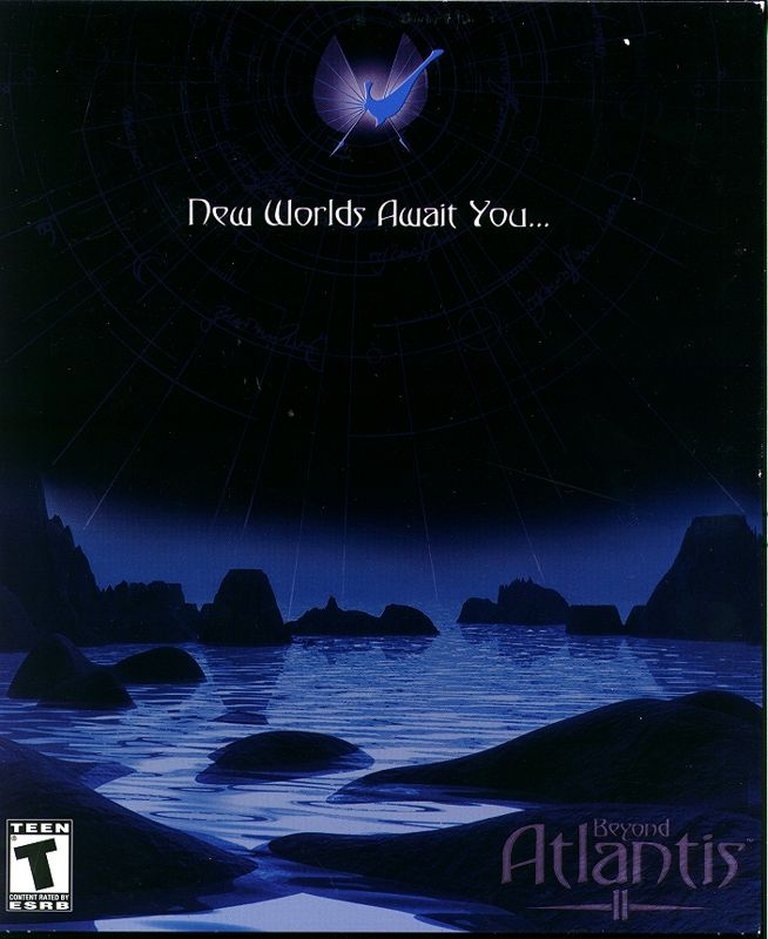
Description
Beyond Atlantis II is a fantasy adventure game set in the year 2020, where a young Egyptologist and her companion embark on a quest to uncover an ancient Egyptian site in the desert. Their journey evolves into a search for the legendary Lost City of Atlantis, filled with intricate puzzles and mysteries. The game features a first-person perspective, a sci-fi/futuristic setting, and a narrative steeped in detective-style mystery, all rendered in beautifully detailed 3D graphics with engaging cut-scenes.
Gameplay Videos
Where to Buy Beyond Atlantis II
PC
Beyond Atlantis II Free Download
Beyond Atlantis II Patches & Updates
Beyond Atlantis II Guides & Walkthroughs
Beyond Atlantis II Reviews & Reception
metacritic.com (75/100): Beautiful graphics and sounds, a wonderful engaging storyline and complicated yet solvable puzzles make this game one of the best adventure games I’ve seen this year.
mobygames.com (66/100): This is the first game I bought this year and I am very pleased with it. I enjoyed the story, the music, the actress and the puzzles.
brasslantern.org : The game had its good points, but they were buried in an avalanche of poor acting, poor scripting, poor puzzles, and poor gameplay.
ign.com (83/100): It not only goes beyond Atlantis but beyond most adventure games as well.
Beyond Atlantis II: A Flawed but Fascinating Journey Through Myth and Mystery
Introduction: The Legacy of a Misunderstood Sequel
Beyond Atlantis II (2001), also known as Atlantis III: The New World, is a game that exists in the shadow of its own contradictions. Developed by Cryo Interactive and published under various titles across regions, it is the third entry in the Atlantis series—a franchise that, despite its name, has always been more about mythological exploration than the sunken city itself. This review aims to dissect the game’s ambitions, its execution, and its place in the pantheon of early 2000s adventure games.
At its core, Beyond Atlantis II is a point-and-click adventure that attempts to blend Egyptian mythology, sci-fi futurism, and detective mystery into a cohesive narrative. Yet, as we will explore, it is a game that often stumbles over its own aspirations, delivering a experience that is as frustrating as it is fascinating.
Development History & Context: Cryo’s Vision and the Era’s Constraints
The Studio and Its Legacy
Cryo Interactive, a French studio founded in 1992, was known for its ambitious, visually rich adventure games. The Atlantis series was one of its flagship franchises, beginning with Atlantis: The Lost Tales (1997) and followed by Beyond Atlantis (1999). Beyond Atlantis II was developed during a period when the adventure genre was in flux, with studios like Cryo attempting to modernize the formula while retaining the core elements that defined the genre.
The game was directed by Eric Mallet and produced by Rémi Herbulot, Jean-Martial Lefranc, and Philippe Ulrich, with Johan K. Robson handling the script and dialogue. The artistic direction was led by Claudine Roussard Vignes and Olivier Train, while the soundtrack was composed by Pierre Estève. The team was large—166 people contributed to the Windows version alone—reflecting the scope of Cryo’s ambitions.
Technological Constraints and Innovations
Beyond Atlantis II was built using Cryo’s proprietary Omni3D engine, which allowed for pre-rendered 3D environments with 360-degree panoramic views. This technology was cutting-edge for its time, enabling the game to deliver immersive, cinematic environments that were a step above the static backgrounds of earlier adventure games. However, the engine also had limitations, particularly in terms of loading times and the seamless integration of full-motion video (FMV) sequences.
The game was released on CD-ROM, requiring players to swap discs frequently—a common frustration in the era. The Windows version demanded a Pentium II 233 MHz processor, 32 MB of RAM, and 70 MB of hard drive space, specifications that were modest by today’s standards but pushed the limits of mid-range PCs in 2001.
The Gaming Landscape of 2001
The early 2000s were a transitional period for adventure games. The genre, which had dominated the 1990s with titles like Myst and The Longest Journey, was beginning to wane in popularity as action-oriented games and first-person shooters rose to prominence. Beyond Atlantis II arrived at a time when adventure games were struggling to find their footing in a market increasingly dominated by faster-paced experiences.
Despite this, Cryo Interactive remained committed to the genre, and Beyond Atlantis II was part of a broader strategy to keep adventure games relevant. The studio’s approach was to blend traditional puzzle-solving with richer narratives and more immersive visuals, a formula that had worked for Myst but was becoming harder to sustain.
Narrative & Thematic Deep Dive: A Story of Myth, Mystery, and Missed Opportunities
Plot Overview
Beyond Atlantis II follows the journey of a young Egyptologist in the year 2020 as she searches for an ancient Egyptian site in the desert. Her quest quickly evolves into a hunt for the Lost City of Atlantis, a premise that is both intriguing and misleading, given the series’ tenuous connection to the actual myth of Atlantis.
The game’s narrative is divided into three main acts, each set in a different mythological or historical context:
1. Egyptian Desert: The protagonist begins her journey in a futuristic yet archaic desert landscape, uncovering clues that point to a deeper mystery.
2. Mythological Realms: The story shifts to a series of surreal, dreamlike environments inspired by Egyptian mythology, where the protagonist encounters gods, spirits, and ancient artifacts.
3. Atlantis: The final act culminates in the discovery of Atlantis, though the city itself is more of a MacGuffin than a fully realized location.
Characters and Dialogue
The protagonist is voiced and modeled after Chiara Mastroianni, daughter of French actress Catherine Deneuve. While her presence adds a layer of star power, her performance is often criticized for being wooden and lacking emotional depth. The supporting cast, including various mythological figures and NPCs, fares slightly better, with some characters standing out as memorable or even humorous.
However, the dialogue is frequently criticized for being stilted and unnatural. Conversations often feel rushed, with little room for meaningful interaction. The game’s attempt to blend detective-style interrogation with mythological storytelling results in a narrative that feels disjointed and underdeveloped.
Themes and Symbolism
Beyond Atlantis II explores themes of discovery, the clash between ancient and modern worlds, and the search for hidden truths. The game’s use of Egyptian mythology is particularly notable, drawing on symbols like the Book of the Dead, the concept of the afterlife, and the idea of a lost civilization.
Yet, the game’s thematic depth is often overshadowed by its narrative inconsistencies. The story’s reliance on surreal, dreamlike sequences can make it difficult to follow, and the lack of a strong central conflict or villain weakens the overall impact.
Gameplay Mechanics & Systems: Puzzles, Progression, and Frustration
Core Gameplay Loop
Beyond Atlantis II is a classic point-and-click adventure, with players navigating pre-rendered environments, interacting with objects, and solving puzzles to progress. The game’s interface is simple, with a cursor that changes contextually to indicate possible actions (e.g., examining, picking up, or using an item).
The gameplay is divided into three main components:
1. Exploration: Players move through environments by clicking on hotspots, which trigger panoramic rotations or scene transitions.
2. Puzzle-Solving: The game features a variety of puzzles, ranging from inventory-based challenges to environmental manipulation and dialogue-driven interactions.
3. Dialogue: Conversations with NPCs are handled through a branching dialogue system, though the choices often feel superficial.
Puzzle Design: A Mixed Bag
The puzzles in Beyond Atlantis II are a major point of contention. On one hand, the game offers a variety of puzzle types, including logic puzzles, pattern recognition challenges, and inventory-based conundrums. Some puzzles are cleverly designed and integrate well with the narrative, such as deciphering ancient scripts or aligning celestial bodies.
On the other hand, many puzzles are criticized for being overly obscure or illogical. The game’s lack of in-game hints or clues can lead to frustration, particularly in sequences where trial-and-error is the only viable strategy. Some puzzles, such as the infamous “bird chirping” sequence, are notorious for their arbitrary solutions and lack of feedback.
Combat and Character Progression
Beyond Atlantis II is not a combat-heavy game, though it does feature a few sequences where the protagonist must evade or outsmart enemies. These moments are handled through quick-time events or simple stealth mechanics, but they are not a major focus of the gameplay.
Character progression is minimal, with the protagonist gaining access to new abilities or items as the story progresses. However, there is no traditional leveling system or skill tree, and the game’s focus remains squarely on puzzle-solving and exploration.
UI and Technical Issues
The game’s user interface is functional but unremarkable. The inventory system is straightforward, allowing players to examine and combine items with ease. However, the lack of a built-in hint system or journal can make it difficult to keep track of objectives, particularly in the game’s more complex sequences.
Technical issues are another common complaint. The game’s reliance on CD-ROMs leads to frequent disc swapping, and the lack of an auto-detect video mode can cause graphical and audio stuttering on some systems. The installation process is also criticized for being outdated and cumbersome.
World-Building, Art & Sound: A Feast for the Senses
Visual Direction and Atmosphere
Beyond Atlantis II is a visually stunning game, with pre-rendered 3D environments that are rich in detail and atmosphere. The game’s art direction is heavily influenced by Egyptian mythology, with environments ranging from sun-scorched deserts to surreal, dreamlike realms.
The use of color and lighting is particularly effective, with each location having a distinct visual identity. The game’s cutscenes are also well-crafted, though they suffer from the limitations of the era’s FMV technology.
Sound Design and Music
The game’s soundtrack, composed by Pierre Estève, is one of its strongest assets. The music is atmospheric and evocative, with each location featuring its own unique theme. The use of ethnic instruments, such as harps and percussion, adds to the game’s mythological ambiance.
The sound design is equally impressive, with ambient effects that enhance the game’s immersive qualities. However, the voice acting is a weak point, with Chiara Mastroianni’s performance often criticized for being flat and unengaging.
Reception & Legacy: A Game Caught Between Praise and Criticism
Critical Reception
Beyond Atlantis II received mixed reviews upon its release. Critics praised the game’s visuals, soundtrack, and atmospheric world-building, but many were critical of its puzzles, narrative inconsistencies, and technical issues.
- IGN gave the game an 8.3/10, calling it “one of the best adventure games I’ve seen this year” and praising its “beautiful graphics and sounds.”
- GameSpot was less enthusiastic, scoring it 5.6/10 and criticizing its “obtuse puzzles” and “awkward dialogue.”
- Adventure Gamers awarded it 4/5, commending its “graphically rich presentation” but noting its “linear structure.”
The game’s Metacritic score of 75/100 reflects this divide, with critics acknowledging its strengths while lamenting its flaws.
Commercial Performance
Despite its mixed reception, Beyond Atlantis II was a commercial success, selling over 180,000 units in its first two months. The game’s strong sales in Europe, particularly in France, helped solidify Cryo Interactive’s reputation as a leading developer of adventure games.
Legacy and Influence
Beyond Atlantis II is often remembered as a flawed but ambitious entry in the adventure genre. Its blend of mythology, sci-fi, and detective elements was innovative for its time, and its visuals and soundtrack remain highlights of the era.
However, the game’s legacy is also marked by its shortcomings. Its puzzles, narrative inconsistencies, and technical issues have made it a polarizing title, with some players praising its creativity and others dismissing it as a frustrating mess.
Conclusion: A Game of Contradictions
Beyond Atlantis II is a game that defies easy categorization. It is a visual and auditory masterpiece, with environments and music that immerse players in a world of myth and mystery. Yet, it is also a game that stumbles over its own ambitions, with puzzles that frustrate and a narrative that often feels disjointed.
For adventure game enthusiasts, Beyond Atlantis II is a fascinating artifact of its era—a game that pushes the boundaries of the genre while also highlighting its limitations. It is not a perfect game, but it is one that rewards patience and perseverance, offering a journey that is as challenging as it is beautiful.
Final Verdict: 7/10 – A flawed but fascinating adventure that is worth experiencing for its visuals, soundtrack, and ambitious storytelling, despite its frustrating puzzles and narrative inconsistencies.