
- Release Year: 2021
- Platforms: Windows
- Publisher: Brytenwalda Studios S.L.
- Developer: Brytenwalda Studios S.L.
- Genre: Action RPG, Role-playing (RPG), Shooter
- Perspective: 1st-person
- Game Mode: Single-player
- Gameplay: Action RPG, Shooter
- Setting: Futuristic, Post-apocalyptic, Sci-fi
- Average Score: 30/100
Description
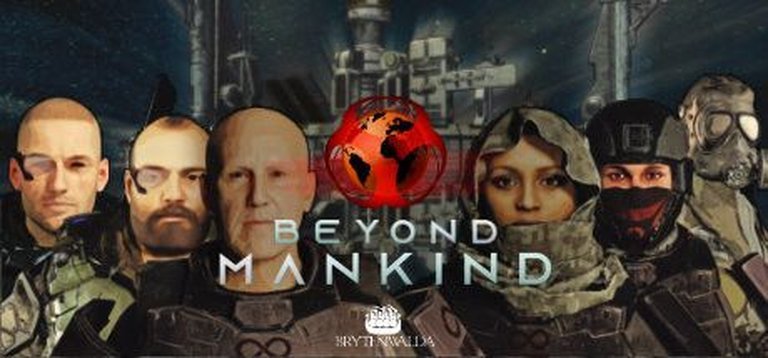
Beyond Mankind is an action RPG set in a post-apocalyptic world ravaged by nuclear winter, where humanity faces extinction amid evolving megafauna and frozen ruins. Players awaken as a genetically engineered being, navigating existential dilemmas, tense combat, and a deep narrative that explores humanity’s struggle for survival or surrender. The game blends immersive RPG mechanics with rich exploration in a harsh, sci-fi landscape.
Gameplay Videos
Where to Buy Beyond Mankind
PC
Beyond Mankind Free Download
Beyond Mankind Patches & Updates
Beyond Mankind Guides & Walkthroughs
Beyond Mankind Reviews & Reception
opencritic.com (20/100): Beyond Mankind: The Awakening has few redeeming qualities. The story is nothing new, the gameplay has pacing issues, and the presentation is generations out of date.
metacritic.com (30/100): Beyond Mankind: The Awakening has few redeeming qualities. The story is nothing new, the gameplay has pacing issues, and the presentation is generations out of date.
screenrant.com : It’s admirable that the small team at Brytenwalda got anywhere near Bethesda’s work on Fallout 3 in their new RPG, Beyond Mankind: The Awakening. Unfortunately, reminding the player of a decade-old classic is about the best praise that applies to this buggy, unpolished experience, which is ultimately dragged down by its flaws in spite of its appealing ambition.
thumbculture.co.uk (40/100): While the setting in Beyond Mankind was well thought out, it fell short when executed. While playing I felt the game looks and feels like it had been made in 2001 rather than 2021.
Beyond Mankind: A Flawed but Ambitious Post-Apocalyptic RPG
Introduction
Beyond Mankind: The Awakening is a game that dares to ask profound questions about humanity’s future while stumbling over its own execution. Developed by the small but passionate team at Brytenwalda Studios, this indie action RPG thrusts players into a frozen, irradiated Earth in the year 2121, where the remnants of civilization grapple with existential dilemmas. The game’s premise is undeniably compelling: after a nuclear winter, humanity is divided between those who wish to reclaim Earth (the United Colonies) and those who believe in genetically enhanced “post-humans” (H.O.P.E.) as the next evolutionary step. Players awaken as a newly born H.O.P.E. soldier, engineered in a “Techno-Womb” with implanted memories, tasked with navigating this morally gray world.
At its core, Beyond Mankind is an homage to classic RPGs like Fallout and Deus Ex, blending deep narrative choices, survival mechanics, and tactical combat. However, while its ambitions are lofty, its execution often falls short, leaving players with a game that feels trapped between its inspirations and its limitations. This review will dissect Beyond Mankind’s strengths and weaknesses, exploring its narrative depth, gameplay mechanics, and technical shortcomings to determine whether it succeeds as a modern indie RPG or remains a well-intentioned but flawed experiment.
Development History & Context
The Studio Behind the Game
Brytenwalda Studios is a small, distributed team with roots in modding. The studio’s origins trace back to a total conversion mod for Mount & Blade, which garnered enough attention to secure a commercial release with Viking Conquest. This transition from modding to full-fledged development is a testament to the team’s passion, but it also highlights their limitations. With only 12 members spread across Spain, the U.S., and Denmark, Brytenwalda Studios lacks the resources of larger studios, which becomes evident in Beyond Mankind’s technical and design choices.
The studio’s philosophy revolves around “high education value of entertainment,” aiming to create games that are not just fun but also thought-provoking. This is evident in Beyond Mankind’s mature themes, which tackle questions of human evolution, morality, and survival. However, the team’s ambition often outpaces their ability to deliver a polished experience, resulting in a game that feels simultaneously innovative and outdated.
The Gaming Landscape at Release
Beyond Mankind launched on August 31, 2021, into a crowded market of post-apocalyptic RPGs. Games like Fallout 4, The Outer Worlds, and Metro Exodus had already set high standards for world-building, narrative depth, and gameplay mechanics. Meanwhile, indie darlings like Disco Elysium and Wasteland 3 proved that smaller teams could deliver rich, narrative-driven experiences without AAA budgets.
Unfortunately, Beyond Mankind arrived at a time when players expected more than just a nostalgic throwback to the early 2000s. The game’s use of the Unity engine, while accessible for indie developers, also contributed to its dated visuals and clunky mechanics. In an era where even indie games like Hades and Hollow Knight boast fluid animations and responsive controls, Beyond Mankind’s stiff movement and awkward combat feel like relics of a bygone era.
Technological Constraints
The game’s technical limitations are perhaps its most glaring issue. Loading times are painfully slow, often requiring players to sit through multiple screens before resuming gameplay. The inventory system, a critical component of any RPG, is clunky and unintuitive, making simple tasks like equipping grenades or managing resources a frustrating chore. These issues are compounded by the game’s linear design, which contrasts sharply with the open-ended exploration promised by its marketing.
Despite these flaws, Beyond Mankind’s development history is a story of perseverance. Brytenwalda Studios’ journey from modders to commercial developers is admirable, and their commitment to storytelling is evident. However, the game’s reception—mixed reviews on Steam and lukewarm critical responses—suggests that ambition alone isn’t enough to carry a game in today’s competitive market.
Narrative & Thematic Deep Dive
A Story of Existential Dilemmas
Beyond Mankind’s narrative is its strongest asset. Set in 2121, the game presents a world where Earth is recovering from a nuclear winter, and humanity is divided into two factions: the United Colonies (UC), who believe in preserving traditional human values, and H.O.P.E., a militarized group that sees genetically enhanced “post-humans” as the future. Players take on the role of a H.O.P.E. soldier, born from a “Techno-Womb” with implanted memories of a past soldier. This premise allows the game to explore themes of identity, free will, and the ethical implications of genetic engineering.
The story begins with a prologue that introduces the game’s central conflict: a mysterious tablet containing dangerous knowledge. This MacGuffin sets the stage for the larger narrative, which jumps between the past and present, gradually revealing the origins of the UC and H.O.P.E. The writing is mature and thought-provoking, tackling questions like:
– Is humanity worth saving, or has it proven itself too destructive?
– What does it mean to be human in a world where genetic enhancement is the norm?
– Can violence ever be justified in the name of progress?
These themes are reinforced through environmental storytelling, such as diaries and logs scattered throughout the game world. While some of these entries feel like padding, others provide genuine insight into the game’s lore and characters.
Characters and Dialogue
The game’s characters are a mixed bag. The protagonist, HOPE279, is a blank slate designed for player customization, but their lack of personality makes it difficult to form an emotional connection. Supporting characters, such as fellow H.O.P.E. soldiers and UC representatives, fare better, with some standing out thanks to solid voice acting. However, many NPCs feel underdeveloped, serving as little more than quest dispensers or exposition dumps.
Dialogue options are present but often feel superficial. While the game promises “personality-based kinship, loyalty, and even romance,” these interactions rarely have meaningful consequences. The romance system, in particular, feels tacked on, with attraction scores changing based on dialogue choices but little else. This lack of depth is disappointing, especially given the game’s emphasis on moral dilemmas.
Themes of Humanity and Evolution
Beyond Mankind’s central theme is the tension between preservation and evolution. The UC represents the old guard, clinging to the idea of humanity as it once was, while H.O.P.E. embodies a ruthless, forward-thinking mentality. This conflict is mirrored in the game’s setting, where the frozen, irradiated Earth serves as a metaphor for humanity’s self-destructive tendencies.
The game’s title itself—Beyond Mankind—hints at its core question: What comes after humanity? The answer isn’t straightforward, and the game doesn’t shy away from presenting morally ambiguous choices. For example, players may be forced to decide between saving a group of survivors or securing a strategic advantage for H.O.P.E., with no clear “right” answer.
However, the game’s exploration of these themes is often hampered by its linear storytelling. While the narrative is engaging, it rarely allows players to meaningfully influence the world or its characters. This lack of agency undermines the game’s philosophical depth, leaving players to ponder its questions without the satisfaction of shaping their outcomes.
Gameplay Mechanics & Systems
Combat and Exploration
Beyond Mankind’s gameplay is a blend of first-person shooting, RPG mechanics, and survival elements. Combat is serviceable but unremarkable, with a mix of firearms, melee weapons, and limited tactical options. The game’s gunplay feels stiff and unresponsive, lacking the weight and impact of modern shooters. Enemies often spawn unpredictably, leading to frustrating ambushes that feel more like cheap tricks than genuine challenges.
Exploration is similarly flawed. While the game promises a “rich and dynamic world,” its environments are often linear and empty. The post-apocalyptic setting is atmospheric, but the lack of meaningful interaction with the world makes exploration feel hollow. The game’s survival mechanics—such as hunger, thirst, and psychological state—are present but underdeveloped, adding little to the experience beyond occasional inventory management.
Character Progression and Customization
Character creation in Beyond Mankind is tied to the game’s themes of genetic engineering. Players select a DNA profile and cultural background, which influence their starting stats and abilities. This system is a clever nod to the game’s lore, but it lacks the depth of similar systems in games like Fallout or Cyberpunk 2077.
Leveling up grants access to perks and skills, but these upgrades feel generic and uninspired. The game’s skill tree is shallow, with most perks offering simple stat boosts rather than unique abilities. This lack of depth extends to the game’s crafting and inventory systems, which are clunky and unintuitive. The 3D inventory management, while an interesting idea, is poorly implemented, making it difficult to organize and access items.
UI and Technical Issues
The game’s user interface is one of its biggest weaknesses. Menus are confusing, and basic actions—such as accessing grenades or managing equipment—are needlessly complicated. The game’s technical issues, such as slow loading times and frequent respawns, further detract from the experience. These problems are compounded by the game’s lack of autosaving, forcing players to manually save their progress to avoid losing hours of gameplay.
World-Building, Art & Sound
A Frozen, Irradiated Earth
Beyond Mankind’s setting is one of its strongest aspects. The game’s post-apocalyptic Earth is a bleak, frozen wasteland, with ruined cities and mutated wildlife. The art direction is atmospheric, evoking the desolation of nuclear winter. However, the game’s visuals are held back by its technical limitations. Textures are dated, character models lack detail, and animations are stiff and lifeless.
The game’s sound design is similarly uneven. The voice acting for major characters is solid, but environmental sounds and music are underwhelming. The game’s score fails to enhance the atmosphere, and the sound effects for weapons and enemies lack impact. These issues contribute to the game’s overall sense of being trapped in the past, unable to match the production values of modern RPGs.
Reception & Legacy
Critical and Commercial Reception
Beyond Mankind’s reception has been mixed at best. On Steam, the game holds a “Mixed” rating, with only 42% of user reviews being positive. Critics have praised the game’s ambitious narrative and themes but criticized its clunky gameplay, dated visuals, and technical issues. Screen Rant’s review summed up the general consensus: “Beyond Mankind: The Awakening has few redeeming qualities. The story is nothing new, the gameplay has pacing issues, and the presentation is generations out of date.”
The game’s commercial performance has been similarly underwhelming. Despite its low price point ($19.99), Beyond Mankind has struggled to find an audience, with only a handful of players documenting their experiences on platforms like MobyGames.
Influence and Legacy
Beyond Mankind’s legacy is likely to be that of a well-intentioned but flawed experiment. While the game’s themes and narrative are compelling, its execution falls short of its ambitions. It serves as a reminder of the challenges faced by small indie studios attempting to compete in a market dominated by AAA titles.
However, the game’s development history—from modding to commercial release—is a testament to the passion and perseverance of its creators. Brytenwalda Studios’ journey is an inspiring one, and their commitment to storytelling is evident in Beyond Mankind’s mature themes. If the studio can address its technical and design shortcomings in future projects, they may yet deliver a game that lives up to their vision.
Conclusion
Beyond Mankind: The Awakening is a game of contradictions. Its narrative is ambitious and thought-provoking, tackling themes of humanity, evolution, and morality with maturity. However, its gameplay is clunky, its visuals are dated, and its technical issues are frustrating. The game feels like a relic of the early 2000s, unable to match the production values or polish of modern RPGs.
Despite its flaws, Beyond Mankind is not without merit. Its story and themes are engaging, and its post-apocalyptic setting is atmospheric. For players willing to overlook its technical shortcomings, there is a compelling experience to be found. However, for most, the game’s flaws will outweigh its strengths, leaving it as a well-intentioned but ultimately flawed experiment.
Final Verdict: 6/10 – A bold but flawed indie RPG with a compelling narrative hampered by outdated mechanics and technical issues.
Beyond Mankind is a game that asks important questions but struggles to provide satisfying answers. It’s a reminder that ambition alone isn’t enough—execution matters just as much. For now, it remains a curiosity, a game that could have been great but falls short of its potential.