
- Release Year: 2015
- Platforms: Windows
- Publisher: Praxia Entertainment Inc
- Developer: Praxia Entertainment Inc
- Genre: Action, Strategy, Tactics
- Perspective: Top-down
- Gameplay: Alliances, City building, Combat, Empire building, Fleet Management, Open World, Resource Mining, Space combat
- Setting: Futuristic, Sci-fi
- Average Score: 82/100
Description
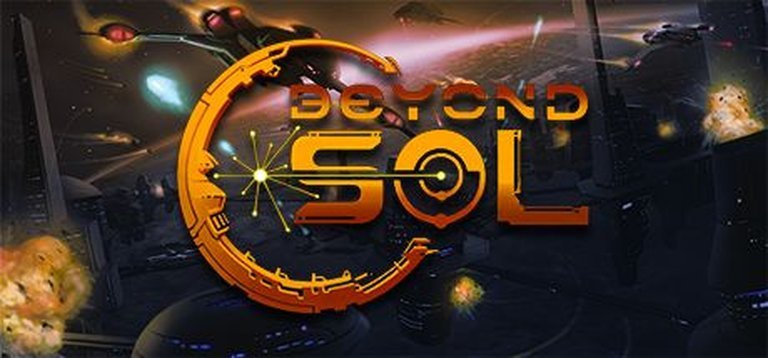
Beyond Sol is an ambitious sci-fi strategy game that blends top-down space combat with empire building in an open world. Players begin by mining resources to build and manage cities, construct and upgrade fleets, form alliances, and engage in real-time battles to expand and defend their empire, all set against a futuristic backdrop.
Gameplay Videos
Where to Buy Beyond Sol
PC
Beyond Sol Guides & Walkthroughs
Beyond Sol Reviews & Reception
opencritic.com (80/100): Beyond Sol is a very good blend of RTS and action game rolled into a package that has a rather unique approach to games taking place in space.
metacritic.com (83/100): I’d be hard pressed to remember a time I found a game so relaxing, yet stimulating at the same time.
cgmagonline.com (85/100): It’s a game that’s far too easy to lose far too many hours to.
steamcommunity.com : This game is Alpha and early access, it is fun to play for awhile even though it has many faults.
powerupgaming.co.uk : A vast expanse of nothing has never felt so lonely.
Beyond Sol: A Singular Ambition in the Space Genre, Adrift in a Vacuum
Introduction
In the mid-2010s, a golden age for space-themed video games seemed to dawn. Titles like Elite Dangerous, Star Citizen, and No Man’s Sky promised vast, persistent universes. Into this ambitious climate stepped Beyond Sol, a game that dared to fuse the managerial depth of a 4X strategy title with the hands-on, action-oriented piloting of a space combat sim. Developed by the small Canadian indie studio Praxia Entertainment and released in October 2015 after a period of Early Access, Beyond Sol presented a vision unlike any other: you are not a distant emperor issuing orders from a throne room, but the literal commander on the bridge, piloting your flagship while simultaneously managing colonies, fleets, and interstellar diplomacy. The thesis of this review is that Beyond Sol is a fascinating and deeply ambitious curio, a game whose core mechanical synthesis was genuinely innovative but whose execution was ultimately hamstrung by a crippling lack of content, persistent AI flaws, and a development scope that could not match its grand design. It stands not as a classic, but as a compelling case study of a noble genre hybrid that burned brightly before fizzling into obscurity.
Development History & Context
Praxia Entertainment, a small independent studio, was the sole developer and publisher of Beyond Sol. The game was built in the Unity engine, a common choice for indies seeking flexibility but one that also presented its own constraints regarding large-scale simulation and persistent worlds. The project appears to have grown from a more focused concept, possibly influenced by earlier titles in the informal “Sol” series (such as Sol: Exodus), but aimed for a unique niche.
The game emerged from a significant Early Access period on Steam, beginning well before its official v1.0 release in late September/early October 2015. Developer Proteus505 was notably active on the Steam forums, directly engaging with player feedback and implementing changes rapidly. This period was crucial for shaping the game’s final form, but it also exposed its foundational instabilities. Player reviews from July 2015 highlight a game in flux, where core systems like AI fleet behavior, diplomacy, and economic balance were being rewritten. The official release, however, still bore the hallmarks of an alpha build, with the developer promising future content that largely never materialized. Beyond Sol was released into a crowded field of space games, but its specific blend of real-time action and grand strategy had few direct competitors, leaving it without a clear audience. Its subsequent disappearance from active development and storefronts (like its removal from the German Steam store due to lacking a USK age rating) cemented its status as a forgotten, niche title.
Narrative & Thematic Deep Dive
Beyond Sol presents a minimalist narrative framework that serves primarily as a justification for its gameplay rather than a driving force. The premise is a familiar post-collapse sci-fi trope: humanity’s homeworld, Earth, has been destroyed or rendered uninhabitable, forcing the remnants of civilization to flee to the “Rim” of the solar system to survive and rebuild. This sets a tone of desperate frontier survival and political fragmentation.
The world-building is procedural and systemic, not scripted. The solar system is populated by rival human factions (cities), each with its own name and minor aesthetic differences, but no unique leaders, histories, or story arcs. The “narrative” is therefore entirely emergent, generated by the player’s interactions: a brutal war of extermination against a neighboring faction, a tense trade agreement forged over scarce Helium-3, or a desperate alliance formed against a piratical scourge. The theme is pure social Darwinism in space—survival through resource control, technological superiority, and merciless opportunism.
There is no traditional character development or dialogue trees. The player’s identity is the anonymous “Commander,” defined solely by their flagship and the city that supports it. Relationships with other factions are abstracted into a simple reputation number influenced by trade, war, and proximity. The most profound “story” in Beyond Sol is the player’s own saga of empire-building against the odds, a testament to the “civilization game” tradition where the player creates their own history. This lack of authored narrative is both a weakness, depriving the game of memorable personalities and stakes, and a strength, allowing the systemic gameplay to take center stage without distraction.
Gameplay Mechanics & Systems
Beyond Sol‘s core innovation is its dual-layer command structure. The player controls a flagship in real-time action-game fashion (WASD/click-to-move, aiming, weapon cooldowns) from a close, top-down perspective. Simultaneously, this ship is the mobile capital of a fledgling empire. This creates an unparalleled sense of personal involvement and constant, multitasking pressure, a feeling captured well by the comparison to the classic Sega Genesis game Herzog Zwei.
Core Gameplay Loops:
1. Founding & Expansion: You begin with only your command cruiser. You must manually mine asteroids (using your ship’s tractor beam) for base resources (Carbon, Silicates, Metals, etc.) to found your first city. Once established, you issue build orders for city districts ( Housing, Commerce, Industry) and outposts (Mining, Radar, Military) from a menu, which construct automatically over time.
2. Resource Economy: Six primary resources plus credits are essential. They are harvested manually (from asteroids/nebulas) or automatically (via city/outpost buildings). Resources are tradable with other factions, making trade routes and control of resource-rich sectors vital.
3. Fleet Management: Cities with Hangars can produce warships, which are organized into fleets with a “Command Point” limit. The flagship is automatically part of the active fleet. You can have multiple fleets, but only one (your flagship’s) is directly controlled in action. Fleets can patrol, guard cities, or be sent on missions.
4. Combat: Direct action combat is simplistic but frantic. You pilot your ship into range, target enemies, and manage weapon cooldowns (e.g., lasers, missiles, area-effect bombs). Fleet AI follows your ship in a loose formation. Combat is often criticized as awkward and unsatisfying, lacking the finesse of dedicated combat sims and the tactical depth of proper RTS engagements. It is a means to an end (conquest/defense), not a highlight.
5. Victory & Diplomacy: The game supports typical 4X victory conditions: Domination, Economic, or Diplomatic (influencing all factions). However, as noted in user reviews, the AI diplomacy system was notoriously bare-bones and erratic in Early Access. Relations were heavily influenced by proximity, leading to inevitable, often suicidal, wars from neighbors. Trading and treaties existed but felt shallow.
Innovative Systems:
* The Commander-as-Flagship: This is the game’s defining and most brilliant idea. It prevents the “god-view” detachment of most strategy games, making every resource and ship personally invested.
* Procedural World & Dynamic AI: Each game’s map and faction placements are unique. AI factions would automatically expand, build, and attack, creating a living world.
* Persistent Profile: Ship and weapon unlocks carried between single-player and multiplayer sessions, a neat feature for character progression.
Flawed Systems:
* AI Exploits & Behavior: As exhaustively detailed by Steam user “Rantul” and confirmed by developer responses, the AI suffered from game-breaking issues: fleets could teleport across the map, expand without ships, build fleets with no physical infrastructure (hangars), and operated with an unlimited supply of ships and credits due to flawed resource logic. A critical bug gave AI a hidden +20 command point bonus, making their fleets artificially large. Victory conditions were shared among all enemy factions, making a war against one a de facto war against all.
* Pacing & Scale: The fixed, close camera and lack of a strategic zoom (noted by Power Up Gaming) forced constant micro-management. The galaxy felt small and claustrophobic, not vast. The list of buildable structures and ships was extremely limited, creating a “vacuum of content” that made empire-building feel repetitive after a few hours.
* User Interface: Managing the economy, fleets, and construction was done through clunky menus. Keeping track of multiple fronts and resource needs was challenging and often overwhelming.
World-Building, Art & Sound
Beyond Sol‘s aesthetic is one of utilitarian sci-fi minimalism. The visual style uses clean, simple 2D sprites for ships, stations, and planetoids against a stark black starfield. There is no attempt at graphic fidelity; the charm lies in the clear readability of icons and the satisfying visual feedback of explosions and construction. The art direction successfully conveys a functional, frontier technology vibe—nothing is sleek or polished, everything looks welded together and practical. However, this minimalist approach also contributes to a feeling of blandness and lack of personality.
The sound design is functional but sparse. The ambient soundtrack, as noted by Power Up Gaming, is appropriately futuristic and tense, helping to establish the lonely, vast atmosphere of the Rim. Weapon sounds are punchy, and construction has a satisfying clunk. But there are no memorable leitmotifs or a dynamic score that reacts to gameplay. The audio serves its purpose without elevating the experience.
The greatest contribution to atmosphere is procedural. The random generation of asteroid fields, nebulas, and faction placements creates moments of emergent beauty—a dense metallic field glittering under a distant sun, a pirate ambush emerging from a gas cloud. Yet, the fixed camera and lack of environmental variety (no planets to orbit, just empty sectors and rock clusters) severely limit the sense of awe. The universe feels like a vast, empty parking lot, not a living cosmos.
Reception & Legacy
Upon its v1.0 release in October 2015, Beyond Sol received a mixed-to-positive critical reception that consistently pinpointed the same paradox: a brilliant core idea shackled to a thin package.
- Metacritic Score: 83 (Generally Favorable) based on 4 critic reviews.
- CGMagazine (8.5/10): Praised it as an “incredibly rewarding” genre fusion that was “a departure from what I was expecting… overwhelming at first, but… one of the freshest and most satisfying takes on the space-based RTS.” They highlighted its punishing, methodical depth.
- TheSixthAxis (8/10): Called it “a very good blend of RTS and action,” but noted it “would be improved by having more variety.”
- Power Up Gaming (5/10): Delivered a scathing counterpoint, labeling it “a vacuum of content” with “irritating combat” and a world that felt “intimate” rather than grand due to a lack of buildings, ships, and a strategic zoom. This review crystallized the fear that the game’s ambition exceeded its content budget.
- User Reception (Steam): Polarized. Early Access users like “Rantul” were frustrated by broken AI but hopeful due to developer responsiveness. Others, like “christörhead,” saw immense potential. The developer’s engagement was a major plus, with Proteus505 implementing community suggestions (like changing pirate attacks from destruction to raids) within days. However, the pace of meaningful content updates seemed to slow after release.
The game’s legacy is one of a cult classic that faded. It found a small, dedicated audience who cherished its unique “pilot-emperor” gameplay loop. Its direct influence is hard to trace; few games have attempted the exact synthesis of direct-action flagship piloting with real-time 4X empire building. Elements can be seen in later hybrid games, but Beyond Sol remains a singular experiment. Its most lasting impact may be as a cautionary tale about the perils of scope for small indie teams: a visionary design can be undermined by insufficient content, unpolished systems, and the immense challenge of creating believable, balanced AI for a complex strategy game. Its removal from sale on certain storefronts and lack of updates for years have rendered it a digital relic, preserved primarily by its small but passionate community and its listing on databases like MobyGames.
Conclusion
Beyond Sol is a game that lives up to its name: it is beyond the conventional solutions of its genre, and it is now largely adrift in the solipsistic void of abandoned software. It is a game of profound contradictions. Its central premise—piloting your command ship as the heart of your empire—is a stroke of genius that creates tension, immersion, and a unique strategic identity. Yet, this brilliance is reflected in a cracked lens. The world it builds is empty, the AI that populates it is often nonsensical, and the variety of tools to shape that world is frustratingly scant.
The critical divide between CGMagazine’s enthusiastic 8.5 and Power Up Gaming’s damning 5/10 is not about quality, but about tolerance for jank and appetite for abstraction. For the patient strategist willing to look past the simplistic combat, the limited tech tree, and the often-broken AI, there is a deeply engaging and intellectually demanding experience. The constant triage of managing resources, defending under-siege outposts, and piloting your flagship into the fray creates a uniquely hectic form of “busybody” gameplay. For the player seeking a polished, content-rich, and visually spectacular space opera, Beyond Sol will feel like a hollow and frustrating tease.
Its place in video game history is not as a landmark, but as a fascinating footnote. It stands as a testament to the creative risks possible in the indie space and the harsh realities of executing a grand vision with limited resources. Beyond Sol tried to boldly go where no game had gone before—into the cockpit of a 4X ruler—and while it ultimately burned up on re-entry, the smoke it left behind is the intriguing blueprint for a genre fusion that still, to this day, remains remarkably underexplored. It is, ultimately, a flawed and incomplete masterpiece of concept over content, remembered more for its audacious “what if” than for the game it became.
Final Verdict: 7/10 – A Flawed Visionary.
An essential experience for genre scholars and masochistic strategists, but a deeply frustrating and ultimately unrewarding one for the mainstream player. Its legacy is its idea, not its execution.