
- Release Year: 2018
- Platforms: Macintosh, Windows
- Publisher: Iperurania Arts s.r.l.s.
- Developer: Iperurania Arts s.r.l.s.
- Genre: Adventure
- Perspective: 3rd-person
- Game Mode: Single-player
- Gameplay: Graphic adventure, Point and select, Puzzle elements
- Setting: Fantasy
- Average Score: 86/100
Description
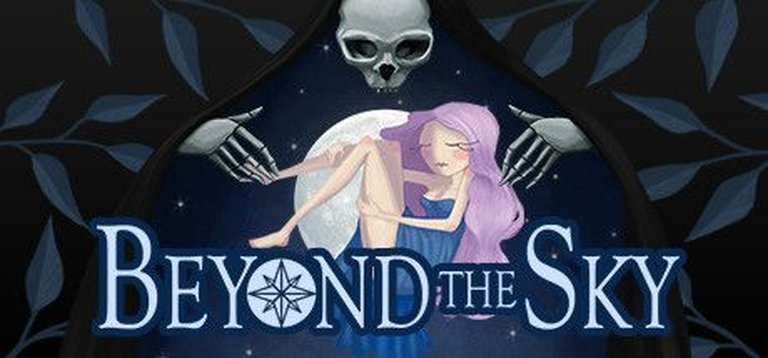
Beyond the Sky is a fantasy-themed point-and-click adventure game where players guide Selene through a mysterious dark forest, solving intricate puzzles to overcome her fears. Set in a gothic, atmospheric world, the game blends a compelling narrative with challenging yet logical puzzles, all seamlessly integrated into its fairy-tale-inspired story. With a female protagonist, a hauntingly beautiful soundtrack, and a mix of 2D visuals and 3rd-person perspective, the game offers a unique and immersive experience for fans of classic adventure games.
Where to Buy Beyond the Sky
PC
Beyond the Sky Guides & Walkthroughs
Beyond the Sky Reviews & Reception
metacritic.com (90/100): With its brain-bending puzzles, delightful story, and all around impressive fairy-tale-ness, Beyond the Sky is a point-and-click adventure not to be missed.
store.steampowered.com (80/100): With its brain-bending puzzles, delightful story, and all around impressive fairy-tale-ness, Beyond the Sky is a point-and-click adventure not to be missed.
Beyond the Sky: A Modern Fairy Tale of Fear, Growth, and Logic
Introduction: A Journey Beyond the Veil
Beyond the Sky (2018) is a hidden gem in the point-and-click adventure genre, a game that dares to blend the whimsy of classic fairy tales with the intellectual rigor of logic puzzles. Developed by the Italian indie studio Iperurania Arts, this title is a love letter to the golden age of adventure games, wrapped in a dark, atmospheric narrative that explores themes of fear, self-discovery, and the power of perception. At its core, Beyond the Sky is a story about Selene, a young woman who ventures into a mysterious forest to chase her dream of reaching the moon, only to find herself ensnared in a labyrinth of psychological and philosophical challenges.
What sets Beyond the Sky apart from its contemporaries is its unwavering commitment to its fairy-tale aesthetic and its innovative approach to puzzle design. The game’s narrative is presented not through traditional dialogue but through prose-rich text boxes that evoke the feeling of reading an illustrated storybook. Meanwhile, its puzzles—often complex and logic-based—are seamlessly integrated into the world, forcing players to engage with the game’s themes on a deeper level. The result is an experience that is as intellectually stimulating as it is emotionally resonant.
This review will delve into every facet of Beyond the Sky, from its development history and narrative depth to its gameplay mechanics, artistic design, and lasting legacy. By the end, it will be clear why this game, despite its niche appeal, deserves a place in the pantheon of great adventure games.
Development History & Context: Crafting a Fairy Tale for the Modern Age
The Studio Behind the Curtain: Iperurania Arts
Iperurania Arts is a small indie studio based in Italy, and Beyond the Sky is their debut title. The studio’s name, derived from the Greek hyperouranios (meaning “beyond the heavens”), hints at their ambition to create games that transcend the ordinary. According to interviews and developer notes, the team was inspired by a mix of classic literature, mythology, and the golden age of point-and-click adventures, particularly games like The Secret of Monkey Island and Myst. Their goal was to craft a game that felt like an interactive fairy tale, blending timeless themes with modern gameplay sensibilities.
The development of Beyond the Sky was a labor of love, with the team handling everything from the hand-drawn art to the intricate puzzle design. The game was built using the Unity engine, which allowed for the layered, parallax-scrolling environments that give the game its storybook aesthetic. The studio’s small size meant that every aspect of the game was carefully curated, resulting in a cohesive and immersive experience.
The Gaming Landscape in 2018: A Renaissance for Adventure Games
Beyond the Sky was released on November 14, 2018, a time when the adventure game genre was experiencing a renaissance. Titles like Return of the Obra Dinn, The Red Strings Club, and Gris were pushing the boundaries of narrative-driven gameplay, proving that there was still a hungry audience for games that prioritized story and puzzle-solving over action. However, Beyond the Sky stood out by embracing the classic point-and-click formula while infusing it with a dark, literary tone.
The game’s release on Steam and itch.io positioned it squarely within the indie gaming ecosystem, where it could find an audience appreciative of its niche appeal. The lack of a major marketing push meant that Beyond the Sky flew under the radar for many players, but those who discovered it were treated to a game that felt like a lost classic from the ’90s, updated for modern sensibilities.
Technological Constraints and Creative Solutions
Given its indie roots, Beyond the Sky was developed with modest technological constraints. The game’s art style—a mix of hand-drawn illustrations and paper cutout aesthetics—was not just a creative choice but a practical one, allowing the small team to craft a visually striking world without the need for high-end 3D modeling or animation. The Unity engine provided the tools necessary to create the game’s layered environments, which feature parallax scrolling to give a sense of depth and dimensionality.
The game’s sound design also reflects its indie origins. While the soundtrack is atmospheric and emotionally resonant, the lack of voice acting is notable. Instead, the game relies on text-based narration, which, as we’ll explore later, becomes one of its defining features. The ambient soundscapes, while occasionally uneven (as noted by some critics), contribute to the game’s eerie, fairy-tale atmosphere.
Narrative & Thematic Deep Dive: The Story of Selene and the Dark Forest
Plot Summary: A Classic Fairy Tale with a Twist
Beyond the Sky begins with Selene, a young woman who dreams of reaching the moon. Lured into a dark forest by a mysterious wolf, she finds herself abandoned and alone, her magical talisman—an adularia stone—stolen. The forest is a liminal space, a place where reality bends and the boundaries between the mundane and the mystical blur. Selene’s journey through this forest is not just a physical one but a psychological and emotional odyssey.
As Selene explores the forest, she encounters a cast of bizarre and enigmatic characters, each of whom represents a different facet of her psyche or the challenges she must overcome. These include:
- The Minstrel: A wandering storyteller who imparts wisdom and hints through his tales.
- The Knight: A chess piece come to life, embodying strategic thinking and the rules of engagement.
- Death: A spectral figure who presides over a seashore, offering Selene a chance to confront her mortality.
- The Alchemist: A reclusive figure who teaches Selene the art of transformation and the power of knowledge.
- The Ogre: A monstrous guardian who tests Selene’s courage and resolve.
Each encounter is a puzzle in itself, requiring Selene to use her wits, her growing arsenal of abilities, and her understanding of the world around her to progress. The ultimate goal is to reclaim her adularia stone from the wolf and, in doing so, conquer her deepest fears.
Themes: Fear, Growth, and the Power of Perception
Beyond the Sky is a game that wears its themes on its sleeve. At its heart, it is a story about fear—how it paralyzes us, how it shapes our perceptions, and how we can overcome it. The dark forest is a metaphor for the unknown, a place where Selene’s fears manifest as physical obstacles. Her journey is one of self-discovery, as she learns to “see beyond the veil of appearances” and confront the truths that lie beneath.
The game also explores themes of trust and prejudice, particularly in Selene’s interactions with the forest’s inhabitants. Many of the characters she meets are initially frightening or off-putting, but as she learns to listen and empathize, she discovers that they are not what they seem. This theme is reinforced by the game’s mechanics, which often require Selene to look beyond surface impressions to solve puzzles.
Life and death are recurring motifs, embodied by characters like Death and the Alchemist. The game does not shy away from the inevitability of mortality but instead presents it as a natural part of existence, something to be understood rather than feared. This philosophical undercurrent elevates Beyond the Sky beyond a simple adventure game, making it a meditation on the human condition.
Character Analysis: Selene’s Evolution
Selene is a compelling protagonist because she is flawed and relatable. At the beginning of the game, she is naive and fearful, easily manipulated by the wolf and overwhelmed by the forest’s mysteries. However, as she progresses, she gains confidence and wisdom, unlocking new abilities that reflect her growth:
- Listen: The ability to hear the hidden truths in the world around her.
- Touch/Pick Up: The power to interact with objects and gather tools.
- Speak and Sing: The capacity to communicate and influence her environment.
These abilities are not just mechanical tools but narrative devices, representing Selene’s journey from passivity to agency. By the game’s end, she is no longer a victim of her fears but a master of her destiny.
The supporting cast, while often surreal, serves as mirrors for Selene’s internal struggles. The Knight, for example, embodies the rigid, rule-bound thinking that Selene must learn to navigate, while the Alchemist represents the transformative power of knowledge. Even the wolf, the game’s primary antagonist, is more than a simple villain—he is a manifestation of Selene’s doubts and insecurities, a force that she must confront and overcome to achieve her goals.
Dialogue and Narration: A Literary Approach
One of the most striking aspects of Beyond the Sky is its approach to storytelling. Instead of traditional dialogue boxes or voice acting, the game presents its narrative through prose-rich text that appears in the corners of the screen. This choice gives the game the feel of an illustrated storybook, with Selene’s thoughts and feelings conveyed in a way that is more intimate and introspective than typical game dialogue.
For example, when Selene first enters the forest, the text might read:
“The trees loomed like silent sentinels, their branches twisting into grotesque shapes that seemed to whisper secrets in the wind. Selene’s heart pounded in her chest, but she steeled herself. She had come this far; she would not turn back now.”
This literary approach allows the game to delve deeply into Selene’s psychology, making her journey feel personal and immersive. It also reinforces the fairy-tale aesthetic, as the text often reads like a classic Grimm or Andersen tale, albeit with a darker, more modern edge.
Gameplay Mechanics & Systems: Puzzles, Progression, and Player Agency
Core Gameplay Loop: Exploration and Puzzle-Solving
Beyond the Sky is, at its core, a point-and-click adventure game. Players guide Selene through the forest, interacting with objects and characters to uncover clues and solve puzzles. The game’s interface is simple and intuitive, with a “verb coin” appearing when Selene clicks on an interactive object. This coin presents the player with a list of possible actions (e.g., “Look,” “Listen,” “Touch,” “Speak”), which expand as Selene gains new abilities.
The game’s structure is non-linear in the sense that players can explore the forest’s various paths in any order, but progression is gated by Selene’s abilities. Early puzzles often require only basic interaction, but as the game progresses, players must combine multiple abilities and pieces of information to overcome challenges. This creates a satisfying sense of growth, as Selene’s expanding toolkit allows her to tackle increasingly complex obstacles.
Puzzle Design: Logic, Lateral Thinking, and Literary References
The puzzles in Beyond the Sky are the game’s standout feature. Unlike many modern adventure games, which often rely on inventory-based or environmental puzzles, Beyond the Sky leans heavily into logic-based challenges that require players to parse complex statements, deduce relationships, and apply abstract reasoning.
Some of the most memorable puzzles include:
-
The Knight’s Chessboard: Selene encounters a knight who is trying to reconstruct a chess battle. The puzzle involves placing chess pieces on a board based on a series of logical statements (e.g., “No one was farther south than one of the rooks”). The challenge lies in interpreting these statements correctly and testing hypotheses until the board is correctly arranged. The game mitigates frustration by allowing players to check their progress, with correctly placed pieces highlighted in green.
-
The Alchemist’s Potion: This multi-step puzzle requires Selene to identify alchemical ingredients based on cryptic descriptions and then combine them in the correct order to create a potion. The puzzle is a test of memory and deduction, as players must cross-reference information from multiple sources.
-
The Labyrinth of Ariadne: A maze-like challenge that requires Selene to follow a series of clues based on Greek mythology (e.g., “Follow the footprints of Ariadne”). The puzzle is as much about cultural literacy as it is about spatial reasoning.
-
The Songs of the Spirits: One of the game’s most abstract puzzles involves interpreting the songs of four spirits (an old man, a woman, a child, and an elder) to determine their names and the symbols associated with them. This puzzle is notable for its lack of hand-holding, as the journal does not record the spirits’ names, forcing players to take their own notes.
These puzzles are not just mechanical challenges but narrative devices. Each one is tied to the game’s themes, requiring Selene (and the player) to think critically, question assumptions, and look beyond the obvious. The game’s literary references—ranging from Greek mythology to classical art—add an extra layer of depth, rewarding players who are familiar with these cultural touchstones.
Ability Progression: A Metaphor for Growth
Selene’s journey is marked by the gradual unlocking of new abilities, each of which corresponds to a stage in her emotional and psychological development:
- Listen: The first ability Selene acquires, representing her willingness to engage with the world around her and hear its hidden truths.
- Touch/Pick Up: The power to interact with objects, symbolizing her growing agency and ability to shape her environment.
- Speak: The capacity to communicate, reflecting her confidence in expressing her thoughts and desires.
- Sing: The culmination of her abilities, representing her mastery over her emotions and her ability to influence the world through creativity and empathy.
These abilities are not just tools for solving puzzles but narrative milestones. Each new ability opens up new paths in the forest, allowing Selene to revisit old locations with fresh perspectives. This design choice reinforces the game’s themes of growth and transformation, as Selene’s evolving abilities mirror her internal journey.
The Journal System: A Double-Edged Sword
Beyond the Sky features an in-game journal that automatically records critical information, such as puzzle clues, character dialogue, and environmental details. The journal is presented as a scroll-like interface, with entries that can be opened, closed, and rearranged on the screen. This system is a godsend for players who prefer not to take physical notes, as it keeps track of the game’s many logic statements and hints.
However, the journal is not without its flaws. While it records most puzzle-related information, it occasionally omits key details, such as the names of the spirits in the “Songs of the Spirits” puzzle. This oversight can lead to frustration, as players may find themselves stuck without realizing that they need to rely on their own note-taking. Additionally, the journal cannot be accessed while interacting with the environment, meaning that players must memorize or transcribe information before attempting to solve a puzzle.
Despite these issues, the journal is a well-implemented feature that enhances the game’s accessibility. Its ability to display multiple entries simultaneously is particularly useful for cross-referencing information, a necessity in a game that thrives on complex logic puzzles.
UI and Controls: Simplicity and Elegance
The game’s user interface is minimalist and elegant, designed to immerse players in the fairy-tale world without distracting them with unnecessary clutter. The verb coin is intuitive and responsive, and the inventory system—while unconventional—is streamlined to avoid the “pixel-hunting” that plagues many classic adventure games.
One notable design choice is the lack of a traditional inventory screen. Instead, when Selene acquires an item, it is automatically added to her verb coin, appearing as an option when she interacts with relevant objects. This design eliminates the need for players to manually combine items, instead focusing their attention on the puzzle at hand.
The game’s controls are equally straightforward, with point-and-click navigation that feels smooth and responsive. The lack of voice acting is mitigated by the game’s literary narration, which appears in text boxes that are easy to read and follow.
World-Building, Art & Sound: Crafting a Dark Fairy Tale
Setting and Atmosphere: The Forest as a Character
The dark forest in Beyond the Sky is more than just a backdrop—it is a character in its own right, a living, breathing entity that reflects Selene’s emotional state. The forest is a liminal space, a place where reality is fluid and the laws of physics bend to the whims of the narrative. Trees whisper secrets, shadows shift unpredictably, and the very air seems charged with magic.
The game’s setting is rich with symbolism. The forest is a metaphor for the subconscious, a place where Selene’s fears and desires manifest as physical obstacles. The various paths she can take represent the choices she must make, each leading to a different challenge or revelation. The labyrinth, the seashore, the ogre’s cave—each location is a test, a trial that Selene must overcome to grow.
Visual Design: A Handcrafted Storybook
Beyond the Sky’s art style is one of its most striking features. The game’s environments are crafted entirely by hand, with a paper cutout aesthetic that gives the world a tactile, storybook quality. Characters and objects are rendered as layered illustrations, with parallax scrolling creating a sense of depth and dimensionality.
The color palette is dark and moody, with deep blues, purples, and blacks dominating the visual landscape. This choice reinforces the game’s gothic fairy-tale tone, evoking the eerie beauty of classic tales like Little Red Riding Hood or Snow White. The use of light and shadow is particularly effective, with pools of moonlight and flickering torches illuminating the forest’s secrets.
The character designs are equally impressive, with each figure possessing a unique, almost surreal quality. The Minstrel, with his flowing robes and enigmatic smile, looks like he stepped out of a Renaissance painting, while the Knight’s chess-piece aesthetic is both whimsical and unsettling. Even the wolf, the game’s primary antagonist, is rendered with a haunting beauty, his glowing eyes and sleek form embodying the duality of danger and allure.
Sound Design: The Symphony of the Forest
The game’s sound design is a masterclass in atmospheric storytelling. The ambient soundscape is rich and immersive, with the rustling of leaves, the distant howl of the wind, and the occasional creak of a tree branch creating a sense of unease and wonder. The soundtrack, composed by the game’s developers, is equally evocative, with orchestral pieces that range from haunting melodies to triumphant crescendos.
One of the standout tracks is the game’s main theme, a melancholic piano piece that underscores Selene’s journey. The music swells and recedes in tandem with the narrative, heightening the emotional impact of key moments. The lack of voice acting is a deliberate choice, one that allows the game’s sound design to take center stage, immersing players in the world without the distraction of spoken dialogue.
That said, the ambient sounds are not without their flaws. Some critics have noted that certain sound effects, such as the rustling of the forest, can be overwhelming or even distracting, with one reviewer comparing it to “someone enthusiastically crumpling up plastic garbage bags.” However, these issues are minor and do not detract significantly from the overall experience.
Themes in Art and Sound: A Cohesive Vision
The game’s art and sound design work in tandem to reinforce its themes. The dark, moody visuals reflect Selene’s initial fear and uncertainty, while the gradual introduction of lighter colors and more uplifting music mirrors her growth and confidence. The use of classical and literary references in the art—such as the labyrinth’s nods to Greek mythology—adds depth to the world, rewarding players who are familiar with these cultural touchstones.
The sound design, too, is thematically resonant. The ambient noises of the forest create a sense of isolation and mystery, while the orchestral score underscores the game’s emotional beats. The lack of voice acting, while unusual, allows the game’s literary narration to shine, giving players the space to imagine Selene’s voice and emotions for themselves.
Reception & Legacy: A Cult Classic in the Making
Critical Reception: Praise for Puzzles and Prose
Beyond the Sky was met with critical acclaim upon its release, earning a 90% score from Adventure Gamers and a Metascore of 83 on Metacritic. Critics praised the game’s innovative puzzle design, its literary approach to storytelling, and its atmospheric world-building.
Adventure Gamers’ review, in particular, highlighted the game’s strengths:
“With its brain-bending puzzles, delightful story, and all around impressive fairy-tale-ness, Beyond the Sky is a point-and-click adventure not to be missed.”
The review also noted the game’s unique narration style, which eschews traditional dialogue in favor of prose-rich text boxes, as well as its progressive introduction of abilities, which ties into Selene’s character arc.
However, the game was not without its detractors. Some critics found the logic puzzles overwhelming, particularly the more abstract challenges like the “Songs of the Spirits” puzzle. Others noted that the ambient sound design could be distracting, with certain sound effects feeling out of place.
Commercial Reception: A Niche Success
Commercially, Beyond the Sky was a modest success. The game’s niche appeal and lack of a major marketing push meant that it did not achieve blockbuster sales, but it found a dedicated audience among fans of classic adventure games and literary narratives. On Steam, the game has maintained a “Positive” rating, with 83% of user reviews recommending it.
The game’s price point—$12.99 at launch, with frequent discounts—made it accessible to a wide range of players, and its inclusion in bundles and indie game showcases helped it reach a broader audience. While it may not have been a commercial juggernaut, Beyond the Sky has carved out a place for itself as a cult classic, beloved by those who appreciate its unique blend of storytelling and puzzle-solving.
Evolution of Reputation: From Hidden Gem to Modern Classic
In the years since its release, Beyond the Sky has gained a reputation as a modern classic in the adventure game genre. Its influence can be seen in subsequent indie titles that prioritize narrative depth and puzzle complexity, such as NORCO and The Roottrees are Dead. The game’s literary approach to storytelling has also inspired other developers to experiment with non-traditional narration techniques, moving away from voice acting and dialogue trees in favor of prose-rich text.
The game’s legacy is also evident in its community. On Steam and other platforms, players continue to discuss the game’s puzzles, share walkthroughs, and debate its themes. The game’s lack of a demo has been a point of contention for some, but its dedicated fanbase has ensured that it remains a topic of conversation in adventure game circles.
Influence on the Genre: A Return to Logic-Based Puzzles
Beyond the Sky’s most significant contribution to the adventure game genre is its revival of logic-based puzzles. In an era where many adventure games rely on inventory management or environmental interaction, Beyond the Sky stands out for its emphasis on abstract reasoning and deduction. This approach has influenced other indie developers, who have begun to incorporate more complex puzzles into their games, challenging players to think critically and engage with the narrative on a deeper level.
The game’s use of a journal system has also had an impact, with other titles adopting similar features to help players keep track of clues and information. The ability to cross-reference multiple journal entries, in particular, has become a staple of modern adventure games, allowing for more intricate and interconnected puzzles.
Conclusion: A Masterpiece of Modern Adventure Gaming
Beyond the Sky is a game that defies easy categorization. It is at once a classic point-and-click adventure, a dark fairy tale, and a philosophical meditation on fear and growth. Its innovative puzzle design, literary narration, and atmospheric world-building combine to create an experience that is as intellectually stimulating as it is emotionally resonant.
The game’s strengths lie in its commitment to its themes and its willingness to challenge players. The logic puzzles, while occasionally overwhelming, are a testament to the developers’ faith in their audience’s intelligence. The lack of voice acting, far from being a weakness, allows the game’s prose-rich narration to shine, immersing players in Selene’s journey in a way that traditional dialogue could not.
That said, Beyond the Sky is not without its flaws. The ambient sound design can be uneven, and the journal system, while helpful, occasionally omits critical information. The game’s niche appeal also means that it may not resonate with players who prefer action-oriented gameplay or more straightforward narratives.
However, for those who appreciate a game that rewards patience, critical thinking, and a love of storytelling, Beyond the Sky is a masterpiece. It is a game that lingers in the mind long after the final puzzle is solved, a testament to the power of interactive storytelling.
Final Verdict: 9/10 – A Modern Classic
Beyond the Sky is a triumph of indie game development, a title that proves that adventure games can still innovate and captivate in an era dominated by open-world epics and first-person shooters. Its blend of literary narration, complex puzzles, and atmospheric world-building makes it a standout title, one that deserves a place in the library of any fan of the genre.
While it may not be for everyone, those who embark on Selene’s journey will find a game that is as rewarding as it is challenging, a fairy tale for the modern age that is not to be missed.
Pros:
– Innovative logic-based puzzles that challenge and reward players.
– A literary approach to storytelling that immerses players in Selene’s journey.
– Atmospheric art and sound design that create a hauntingly beautiful world.
– Thematic depth that explores fear, growth, and the power of perception.
Cons:
– Some ambient sound effects can be distracting or overwhelming.
– The journal system occasionally omits critical information, leading to frustration.
– The game’s niche appeal may not resonate with players who prefer action or simpler narratives.
Final Thought:
Beyond the Sky is a game that reminds us why adventure games are so special. It is a journey of the mind and the heart, a testament to the power of storytelling and the joy of discovery. For those willing to take the plunge, it is an experience that will stay with them long after the credits roll.