
- Release Year: 2002
- Platforms: Windows
- Publisher: Infogrames, Inc.
- Developer: GamesGang
- Genre: Simulation, Sports
- Perspective: 1st-person
- Game Mode: Single-player
- Gameplay: Racing, Shooting
- Setting: Sports, Winter
- Average Score: 36/100
Description
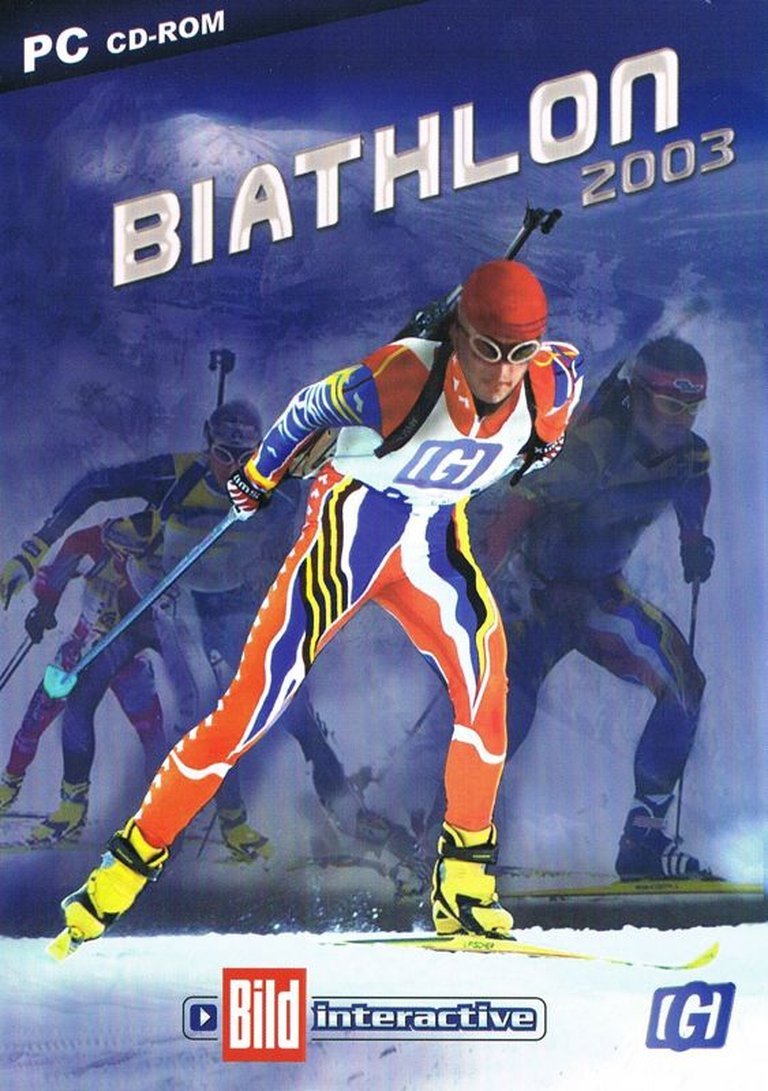
Biathlon 2003 is a sports simulation game that combines cross-country skiing and rifle shooting, offering a unique blend of racing and precision challenges. Players can compete in ten World Cup events, create custom avatars with adjustable statistics, and experience commentary by German TV spokesman Wilfried Hark. The game tests endurance and accuracy, as excessive energy use during skiing affects performance in the shooting segments.
Biathlon 2003 Cracks & Fixes
Biathlon 2003 Patches & Updates
Biathlon 2003 Mods
Biathlon 2003 Reviews & Reception
mobygames.com (18/100): A unique mixture of racing and shooting.
retro-replay.com : Biathlon 2003 delivers a compelling, high-stakes experience that pushes your skills to the limit.
vgtimes.com (55/100): A third-person simulator with a touch of sports game.
Biathlon 2003: A Deep Dive into a Forgotten Winter Sports Simulation
Introduction
In the vast landscape of sports simulations, few games have dared to tackle the niche yet exhilarating world of biathlon—a sport that combines the endurance of cross-country skiing with the precision of rifle shooting. Biathlon 2003, developed by GamesGang and published by Infogrames, is one such title. Released in December 2002, it stands as the second installment in the Biathlon series, following Biathlon 2002. While it may not have achieved widespread acclaim or commercial success, Biathlon 2003 offers a unique glimpse into the challenges and intricacies of simulating a sport that demands both physical stamina and mental focus.
This review aims to provide an exhaustive analysis of Biathlon 2003, exploring its development history, gameplay mechanics, narrative elements, and its place in the broader context of sports simulations. By examining its strengths and weaknesses, we can better understand why this game remains a curiosity in the annals of gaming history.
Development History & Context
The Studio and Creators’ Vision
Biathlon 2003 was developed by GamesGang, a studio that specialized in sports simulations. The game was published by Infogrames, a well-known publisher in the early 2000s, responsible for a wide range of titles across various genres. The Biathlon series was an attempt to bring the unique blend of skiing and shooting to the PC gaming audience, a niche that had not been extensively explored at the time.
The creators’ vision for Biathlon 2003 was to create a realistic and engaging simulation of the biathlon sport. The game aimed to capture the duality of the sport—balancing the high-intensity skiing segments with the precise, measured shooting segments. This duality is at the heart of the biathlon experience, and the developers sought to translate it into a gameplay loop that would challenge players both physically and mentally.
Technological Constraints of the Era
Released in 2002, Biathlon 2003 was developed during a period of significant technological advancement in the gaming industry. However, it also faced the limitations of the hardware available at the time. The game was designed to run on Windows PCs, and its graphical capabilities were constrained by the technology of the early 2000s. While it featured real-time 3D environments, the textures and character models were modest by modern standards.
The game’s physics engine was another area where technological constraints were evident. The skiing mechanics, while functional, lacked the fluidity and realism that modern physics engines can provide. Similarly, the shooting mechanics, while innovative for the time, were limited by the input devices available to players.
The Gaming Landscape at the Time of Release
In 2002, the gaming landscape was dominated by a mix of established franchises and emerging genres. Sports simulations were a popular category, with titles like FIFA, NBA Live, and Madden NFL leading the way. However, niche sports like biathlon had not yet found a significant foothold in the gaming market.
Biathlon 2003 entered this landscape as a unique offering, catering to a specific audience of winter sports enthusiasts. Its release was met with mixed reactions, with some critics praising its innovative approach to simulating the biathlon sport, while others criticized its technical limitations and lack of polish.
Narrative & Thematic Deep Dive
Plot and Characters
Biathlon 2003 does not feature a traditional narrative or story-driven campaign. Instead, it focuses on the competitive aspect of the biathlon sport, offering players the opportunity to participate in ten official World Cup events. The game’s “story” unfolds through the player’s progression, as they strive to improve their skills and achieve better results in each event.
The game allows players to create their own avatar, customizing their athlete’s appearance and attributes. This customization adds a personal touch to the gameplay experience, allowing players to feel a sense of ownership over their virtual athlete. However, the game lacks the depth of character development found in more narrative-driven sports simulations.
Dialogue and Commentary
One of the standout features of Biathlon 2003 is its commentary by German TV spokesman Wilfried Hark. Hark’s commentary adds a layer of authenticity to the game, providing players with real-time updates and insights into their performance. While the commentary lines are sometimes brief, they contribute to the game’s immersive atmosphere, making each race feel like a broadcast event.
The dialogue in Biathlon 2003 is minimal, focusing primarily on the commentary and in-game feedback. There are no scripted cutscenes or character interactions, which may leave some players wanting more in terms of narrative depth. However, the game’s focus on the competitive aspect of biathlon means that the lack of a traditional story is not necessarily a detriment.
Underlying Themes
At its core, Biathlon 2003 explores themes of endurance, precision, and competition. The game challenges players to balance their stamina and accuracy, reflecting the real-world demands of the biathlon sport. The tension between pushing oneself to the limit during the skiing segments and maintaining composure during the shooting segments is a central theme of the game.
The game also touches on themes of progression and improvement. As players participate in more events and refine their skills, they experience a sense of growth and achievement. This progression is reflected in the game’s stat system, which allows players to fine-tune their athlete’s attributes and improve their performance over time.
Gameplay Mechanics & Systems
Core Gameplay Loops
The core gameplay loop of Biathlon 2003 revolves around the dual disciplines of cross-country skiing and rifle shooting. Players must navigate a series of skiing segments, managing their stamina and speed to reach the shooting range in the best possible condition. Once at the shooting range, players must steady their aim and take precise shots at targets, with missed shots resulting in time penalties.
The balance between skiing and shooting is crucial to success in Biathlon 2003. Players must learn to pace themselves during the skiing segments, avoiding overexertion that could lead to shaky aim during the shooting segments. This balance is a key challenge of the game, requiring players to develop a strategic approach to each event.
Combat and Character Progression
While Biathlon 2003 does not feature traditional combat mechanics, the shooting segments can be seen as a form of combat against the clock. Players must take accurate shots under pressure, with each missed shot adding valuable seconds to their overall time. The shooting mechanics are designed to be intuitive yet challenging, requiring players to time their shots carefully and account for factors like wind and heart rate.
Character progression in Biathlon 2003 is handled through a stat system that allows players to customize their athlete’s attributes. Players can allocate points to nine different statistics, including endurance, shooting stability, and recovery rate. This customization adds a layer of strategy to the game, allowing players to tailor their athlete to their preferred playstyle.
UI and Innovative Systems
The user interface in Biathlon 2003 is straightforward and functional, providing players with clear feedback on their performance. The game features a stamina bar that indicates the player’s current energy level, as well as a heart rate meter that affects shooting accuracy. These UI elements are essential for managing the balance between skiing and shooting.
One of the innovative systems in Biathlon 2003 is its dynamic commentary system, which provides real-time updates on the player’s performance. This system adds a layer of immersion to the game, making each race feel like a live broadcast event. However, the commentary can sometimes be repetitive, detracting from the overall experience.
Flawed Systems
Despite its innovative features, Biathlon 2003 is not without its flaws. The game’s skiing mechanics can feel stiff and unresponsive, with players often struggling to navigate tight turns and obstacles. The shooting mechanics, while functional, lack the precision and feedback found in more modern shooting games.
The game’s AI opponents are another area of concern. While they provide a competitive challenge, their behavior can sometimes be unpredictable, leading to frustrating moments during races. Additionally, the game’s lack of a robust tutorial system means that new players may struggle to grasp the nuances of the gameplay mechanics.
World-Building, Art & Sound
Setting and Atmosphere
Biathlon 2003 takes place in a series of winter sports venues, each with its own unique terrain and weather conditions. The game’s environments are designed to reflect the real-world settings of biathlon events, with tracks winding through snow-covered forests, open plains, and mountain passes. The atmosphere is immersive, with the game capturing the chilly, competitive spirit of winter sports.
The game’s setting is enhanced by its sound design, which includes the crunch of snow under skis, the wind rushing past, and the distant cheers of virtual crowds. These audio cues contribute to the game’s immersive atmosphere, making players feel like they are truly participating in a biathlon event.
Visual Direction
Visually, Biathlon 2003 strikes a balance between detail and functionality. The game’s environments are rendered in real-time 3D, with textures and lighting effects that reflect the early 2000s technological constraints. While the graphics may appear dated by modern standards, they are functional and serve the game’s simulation goals effectively.
The character models in Biathlon 2003 are modest, with fluid animations that capture the motion of skiing and shooting. The game’s UI is clean and uncluttered, providing players with essential information without overwhelming them. The visual direction is focused on clarity and functionality, ensuring that players can focus on the gameplay without distractions.
Sound Design
The sound design in Biathlon 2003 is a mixed bag. The game features a dynamic commentary system that provides real-time updates on the player’s performance, adding a layer of immersion to the experience. However, the commentary can sometimes be repetitive, detracting from the overall atmosphere.
The game’s background music is another area of concern. The techno-inspired tracks that play during the skiing segments can feel out of place, clashing with the game’s otherwise immersive atmosphere. The sound effects, such as the crunch of snow and the wind rushing past, are more successful, contributing to the game’s sense of realism.
Reception & Legacy
Critical and Commercial Reception
Biathlon 2003 received mixed reviews upon its release. Critics praised the game’s innovative approach to simulating the biathlon sport, but many also highlighted its technical limitations and lack of polish. The game’s stiff skiing mechanics, repetitive commentary, and outdated graphics were common points of criticism.
Commercially, Biathlon 2003 did not achieve significant success. Its niche appeal and technical shortcomings limited its audience, and it failed to make a lasting impact on the sports simulation genre. However, the game has since gained a small following among retro gaming enthusiasts, who appreciate its unique take on the biathlon sport.
Evolution of Reputation
Over the years, Biathlon 2003 has evolved from a forgotten niche title to a curiosity in the annals of gaming history. While it may not be remembered as a classic, it is recognized for its innovative approach to simulating a sport that had not been extensively explored in video games. The game’s focus on the dual disciplines of skiing and shooting remains a unique selling point, and its customization options add a layer of depth that is still appreciated by fans.
Influence on Subsequent Games
Biathlon 2003 did not have a significant influence on subsequent games in the sports simulation genre. However, its approach to balancing stamina and precision has been echoed in other endurance-based sports simulations. The game’s customization system, which allows players to fine-tune their athlete’s attributes, has also been adopted by other sports games, albeit in more polished forms.
The Biathlon series continued with Biathlon 2004 and subsequent installments, but none achieved the same level of innovation or critical acclaim as Biathlon 2003. The series remains a niche offering, catering to a specific audience of winter sports enthusiasts.
Conclusion
Biathlon 2003 is a unique and ambitious attempt to simulate the niche sport of biathlon. While it may not have achieved widespread acclaim or commercial success, it offers a compelling glimpse into the challenges and intricacies of combining cross-country skiing with rifle shooting. The game’s innovative approach to balancing stamina and precision, along with its customization options, makes it a standout title in the sports simulation genre.
However, Biathlon 2003 is not without its flaws. The game’s stiff skiing mechanics, repetitive commentary, and outdated graphics detract from the overall experience. Despite these shortcomings, the game remains a curiosity in the annals of gaming history, appreciated by retro gaming enthusiasts for its unique take on the biathlon sport.
In the broader context of sports simulations, Biathlon 2003 serves as a reminder of the importance of innovation and niche appeal. While it may not be remembered as a classic, it is a testament to the creativity and ambition of its developers, who sought to bring the thrill of biathlon to the PC gaming audience. For fans of winter sports and retro gaming, Biathlon 2003 is a title worth exploring, offering a unique and challenging experience that stands out in the crowded landscape of sports simulations.