
- Release Year: 2015
- Platforms: Android, Linux, Macintosh, Windows Apps, Windows, Xbox One
- Publisher: The Light Sword Team
- Developer: The Light Sword Team
- Genre: Role-playing (RPG)
- Perspective: Top-down
- Game Mode: Single-player
- Gameplay: Puzzle elements
- Setting: Fantasy, Medieval
- Average Score: 60/100
Description
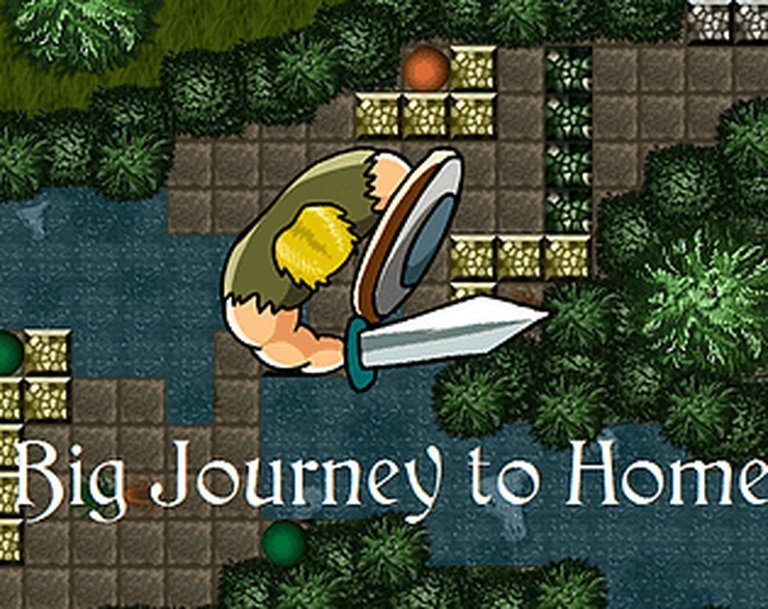
Big Journey to Home is a top-down RPG where you play as Jake, an ordinary man who finds himself lost in a perilous fantasy world filled with creatures like roaches, scorpions, and lizards. To return home, you must navigate through diverse environments—from forests and deserts to underground caves—using strategy, a trusty blade, and puzzle-solving skills. The game features a cooperative mode for two players, a level editor for custom content, and a hardcore difficulty setting that demands constant vigilance. With achievements, leaderboards, and user-generated levels, the adventure offers both challenge and creativity.
Gameplay Videos
Where to Buy Big Journey to Home
PC
Big Journey to Home Patches & Updates
Big Journey to Home Reviews & Reception
steambase.io (40/100): Big Journey to Home has earned a Player Score of 40 / 100.
metacritic.com (100/100): One of the best games i ever seen.
niklasnotes.com (41/100): 41% Mixed
Big Journey to Home: A Deep Dive into an Overlooked Indie Gem
Introduction
In the vast ocean of indie games, Big Journey to Home (2015) stands as a curious artifact—a labor of love that defies easy categorization. Developed over five years by a rotating team of passionate creators, this top-down puzzle-RPG hybrid is a testament to the enduring appeal of meticulous, turn-based gameplay. While it may not have achieved mainstream recognition, its unique blend of strategic combat, environmental puzzles, and cooperative play makes it a fascinating case study in indie game design. This review will explore the game’s development history, narrative depth, gameplay mechanics, and lasting legacy, arguing that Big Journey to Home is a hidden gem worthy of rediscovery.
Development History & Context
The Light Sword Team: A One-Man Army
Big Journey to Home was developed by The Light Sword Team, a small indie studio led by Vyacheslav “Silver Sword” Mironov. The game’s development spanned five years (2010–2015), with contributions from various artists and designers who came and went over time. By the end of the project, Mironov was the sole remaining developer, a testament to his dedication.
The game was built using GameMaker Studio, a popular engine for indie developers due to its accessibility. Despite its modest tools, Big Journey to Home showcases what can be achieved with creativity and perseverance.
The Gaming Landscape of 2015
Released in August 2015, Big Journey to Home entered a crowded market dominated by high-profile indie darlings like Undertale and The Witcher 3. Its top-down, turn-based puzzle-RPG design was a throwback to classics like The Legend of Zelda and Deadly Rooms of Death (DROD), but its lack of marketing and niche appeal meant it flew under the radar for many players.
Platform Expansion & Post-Launch Support
Initially launched on Windows, macOS, Linux, and Android, the game later expanded to Xbox One (2018) with redesigned controls and local achievements. Mironov continued supporting the game with updates, including Discord integration, save system improvements, and bug fixes, even years after release.
Narrative & Thematic Deep Dive
The Story of Jake: A Simple Guy in a Complex World
Players assume the role of Jake, an ordinary man who finds himself lost in a fantastical world filled with monsters, traps, and ancient mechanisms. The narrative is minimalist, focusing on environmental storytelling rather than lengthy cutscenes. Jake’s journey home is framed as a metaphor for perseverance, with each level representing a new challenge to overcome.
Themes of Isolation and Cooperation
The game explores themes of isolation (Jake is alone in a hostile world) and cooperation (the optional co-op mode lets players team up with a friend). The “Hardcore” mode amplifies tension by removing the ability to stand still safely, forcing players to think strategically.
Dialogue & Character Depth
While Big Journey to Home lacks deep character interactions, its environmental design tells a story. The creatures Jake encounters—roaches, scorpions, lizards, and even hamsters—are not just obstacles but part of a living ecosystem. The game’s puzzle mechanics reinforce the idea that survival requires adaptation and cleverness.
Gameplay Mechanics & Systems
Core Gameplay Loop: Strategy Meets Puzzle-Solving
At its heart, Big Journey to Home is a turn-based strategy game where players must plan each move carefully. Monsters only attack when Jake moves, creating a chess-like dynamic where positioning is key.
- Combat: Jake’s well-sharpened blade can defeat most enemies, but timing and positioning are crucial.
- Puzzles: Levels are filled with traps, switches, and environmental hazards that require logical thinking.
- Hardcore Mode: Removes the safety of standing still, making every decision critical.
Cooperative Play: A Unique Twist
The co-op mode introduces a separate story where Jake and his brother must work together. Monsters behave differently, and players can use built-in chat and markers to coordinate. This mode is a standout feature, offering a fresh challenge for those who master the single-player experience.
Level Editor & Community Content
One of the game’s most ambitious features is its built-in level editor, allowing players to create and share custom puzzles. This extends the game’s lifespan significantly, though the community around it remains small.
UI & Controls
The game’s top-down perspective and fixed flip-screen visuals give it a retro feel. Controls are direct and responsive, though some players have reported crashes on Linux and other technical issues.
World-Building, Art & Sound
A Medieval Fantasy Setting
Big Journey to Home takes place in a medieval fantasy world, with Jake traversing forests, deserts, ice caves, and underground dungeons. The pixel-art aesthetic is charming, though not as polished as some contemporaries.
Atmosphere & Sound Design
The game’s soundtrack is understated but effective, enhancing the sense of adventure. The ambient sounds—rustling leaves, distant monster growls—immerse players in Jake’s perilous journey.
Reception & Legacy
Critical & Commercial Reception
Big Journey to Home received mixed reviews on Steam, with a 40/100 Player Score based on 45 reviews. Critics praised its unique puzzle mechanics but noted its steep learning curve and lack of polish.
- Positive Aspects:
- “Seriously simplistic, creative, and fun” – The Stoned Gamer (8.4/10)
- “Unusual puzzles and original storylines” – SirStaff (7.2/10)
- Negative Aspects:
- Technical issues (crashes, Linux compatibility)
- Requires a third-party account for Steam features (a controversial design choice)
Influence & Lasting Impact
While Big Journey to Home did not spawn a major franchise, its level editor and co-op mode influenced later indie puzzlers. Mironov’s later project, Spectrubes Infinity, built on these ideas with Steam Workshop support.
Conclusion: A Hidden Gem Worth Rediscovering
Big Journey to Home is not a perfect game, but it is a fascinating experiment in puzzle-RPG design. Its strategic depth, cooperative play, and level editor make it a standout in the indie scene. While it may have been overshadowed by bigger releases, its dedicated fanbase and post-launch support prove that passion can outweigh polish.
Final Verdict: 7.5/10 – A flawed but brilliant indie gem that rewards patience and strategic thinking.
For those willing to look past its rough edges, Big Journey to Home offers a unique and rewarding adventure—one that deserves a place in the annals of indie gaming history.