
- Release Year: 2009
- Platforms: Windows
- Publisher: S.A.D. Software Vertriebs- und Produktions GmbH
- Developer: DayTerium
- Genre: Action
- Perspective: 3rd-person (Other)
- Game Mode: Single-player
- Gameplay: Mini-games, Time management
- Average Score: 80/100
Description
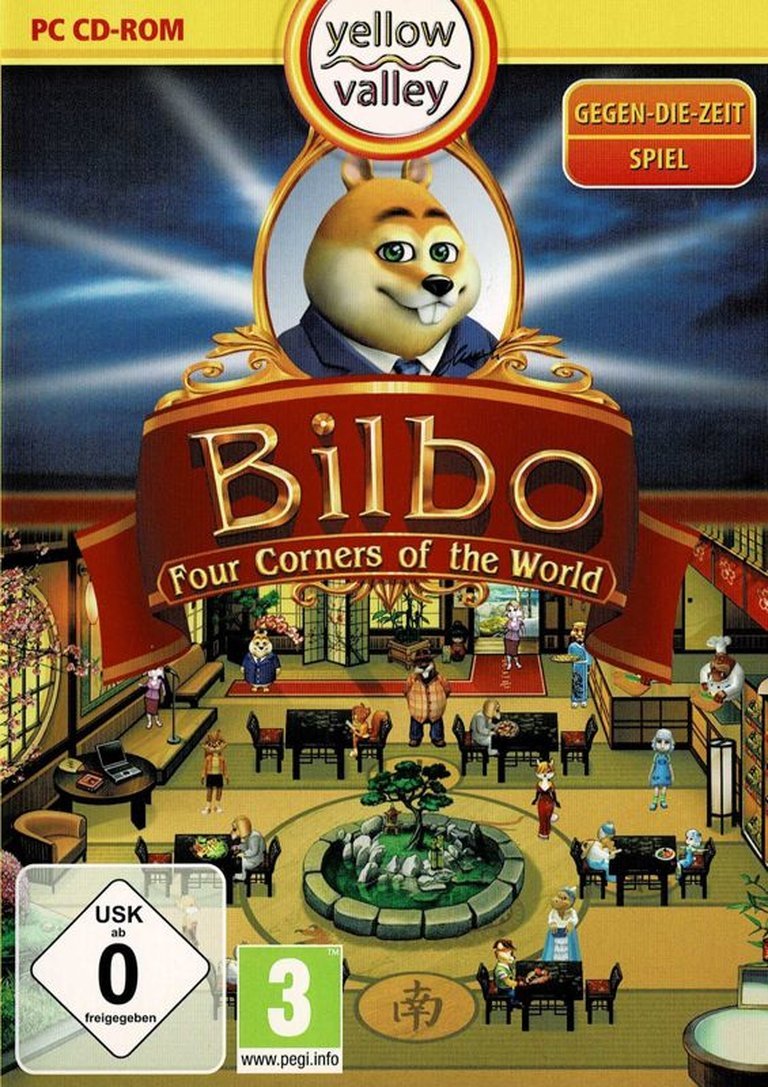
In Bilbo: The Four Corners of the World, players assist the titular character in his quest to become a successful restaurateur and win the heart of his true love by managing dining establishments across diverse global locales. This time management game involves seating guests, taking orders, serving meals, and cleaning tables based on customer preferences, all while earning tips to purchase upgrades like additional tables and decor. Featuring 40 levels across four unique restaurants, 14 mini-games, and 50 upgrades, the game immerses players in a charming world of animated animal characters as they multitask to keep patrons satisfied and expand Bilbo’s culinary empire.
Gameplay Videos
Bilbo: The Four Corners of the World Free Download
Bilbo: The Four Corners of the World Reviews & Reception
gamezebo.com : the recipe of Bilbo – The Four Corners of the World adds a soupcon of Cooking Mama, a dash of Diner Dash and cup of originality.
Bilbo: The Four Corners of the World: Review
Introduction
In the bustling landscape of casual gaming, few titles blend whimsy, romance, and culinary ambition quite like Bilbo: The Four Corners of the World. Released in 2009 by developer DayTerium and publisher Alawar Entertainment, this time management simulator casts players as Bilbo—a hamster smitten with a Parisian restaurateur’s daughter. To win her hand, he must transform a humble eatery into a global empire, navigating four distinct culinary capitals. While overshadowed by genre titans like Diner Dash, Bilbo emerges as a charming, albeit flawed, artifact of the casual gaming boom. This review argues that the game succeeds through its delightful artistry, accessible mechanics, and heartfelt narrative, despite technical quirks and repetitive design. It stands as a testament to the era’s focus on accessible, story-driven gameplay, offering a unique blend of Cooking Mama-style micro-games and Diner Dash-style management.
Development History & Context
Bilbo was crafted by DayTerium, a Russian studio specializing in casual games, and published by Alawar Entertainment—a powerhouse in the Eastern European casual market since 1999. The game emerged during a pivotal period for PC gaming, where digital portals like Big Fish Games, iWin, and Shockwave dominated distribution. With a PEGI 3 rating and minimal hardware requirements (a 600 MHz CPU, 256 MB RAM, DirectX 7.0), it targeted a broad audience, including children and casual players. Developers explicitly designed it with female players in mind, emphasizing romance, customization, and lighthearted storytelling over high-stakes competition. Kirill Plotnikov, Alawar’s vice president of publishing, noted the game’s focus on “lighthearted romantic story” and “amusing mini-games,” reflecting a deliberate shift from hardcore gaming toward inclusive, bite-sized experiences. Technologically, the game eschewed 3D complexity for a fixed/flip-screen visual style, prioritizing performance and accessibility—a pragmatic choice for the era’s reliance on CD-ROM distribution and low-spec PCs. Its release coincided with the peak of Flash-based web games (as evidenced by its later preservation on Flash Museum), bridging downloadable and browser-based casual gaming.
Narrative & Thematic Deep Dive
The narrative centers on Bilbo’s quest for love and validation. A humble student in Paris, he falls for the daughter of a stern restaurateur who dismisses his “modest means.” Spurred by rejection, Bilbo secures a loan to open a tiny two-table diner, vowing to build an empire to win her hand. The plot unfolds across four locations—Paris, Rio de Janeiro, Tokyo, and Amsterdam—each representing a phase of his growth. Between levels, cutscenes reveal his journey: after conquering Paris, he travels to Hawaii, discovers a ring with a map to an ancient Norwegian recipe, and expands his business. Themes of ambition and perseverance permeate the story, framing success as both personal fulfillment and a path to romance. Bilbo’s character embodies underdog charm, while supporting characters like Chef Walrus (a walrus) and animal patrons (pandas, foxes, beavers) add warmth. Dialogue is sparse but effective, focusing on goal-driven interactions (e.g., “Serve 12 guests while making them happy”). Though the narrative lacks depth, it excels in relatability—turning a small-scale dream into a global adventure. The romance subplot, while simplistic, provides emotional glue, making each restaurant upgrade feel like a step toward Bilbo’s happy ending.
Gameplay Mechanics & Systems
Bilbo’s core loop is a streamlined time management experience, eschewing complex resource management for tactile, click-based actions. Each level begins with menu customization: players select dishes based on guest preferences (e.g., pandas dislike spicy food), ensuring tips are maximized. Once seated, patrons display thought bubbles indicating requests (food, drinks, or mini-games). Clicking these prompts Bilbo to scurry across the screen—no drag-and-drop required—a deliberate design choice to streamline pacing. Key systems include:
– Seating & Service: Players seat guests, take orders, serve meals, and clear tables using simple point-and-click controls. Chaining actions (e.g., serving multiple identical dishes) yields bonuses, mimicking genre conventions but with added efficiency.
– Mini-Games: Fourteen micro-games inject variety. In Paris, players assemble dumplings by clicking dots or craft crepes by selecting ingredients. Rio features ice-cream scooping with a slider-based timing mechanic. These puzzles, while rudimentary, break up repetition and reward precision.
– Progression: Forty levels span four restaurants, each with unique challenges (e.g., Norway’s nautical theme involves serving live fish). Between levels, players spend earned currency on 50 upgrades—new tables, decor, or skills—that enhance restaurant ratings and unlock new dishes.
– UI & Pacing: A clean, icon-driven interface (money for payments, trash for cleanup) keeps focus on action. Real-time pacing demands speed, but Bilbo’s animations ensure he never feels sluggish. However, the game suffers from arbitrary goals (“Serve Mr. Fox 10 times” despite limited appearances) and windowed mode glitches, introducing frustration.
World-Building, Art & Sound
Bilbo’s world is a vibrant, cartoonish microcosm of global cuisine. Each restaurant is meticulously themed: Paris evokes chic bistros with croissants and karaoke; Rio leans tropical with leis, ice cream, and barbecue; Tokyo blends sushi with sushi-making puzzles; Amsterdam offers nautical fish markets. Settings are rendered in a fixed/flip-screen style, with colorful, hand-drawn backgrounds that emphasize charm over realism. Characters—Bilbo, Chef Walrus, and animal patrons—are animated with exaggerated, endearing movements (e.g., pandas sticking their tongues out at bad food). Sound design is less documented but inferred to be upbeat and ambient, with chimes for actions and light music reflecting each locale. While the art style lacks sophistication, its consistency and whimsy create an inviting atmosphere. The absence of voice acting relies on musical cues and visual gags (e.g., karaoke-dancing patrons), reinforcing the game’s family-friendly appeal.
Reception & Legacy
Upon release, Bilbo achieved moderate commercial success through digital portals like Big Fish Games and iWin, where it offered a free trial. Critical reception was muted; Metacritic lists no critic scores, but user reviews on platforms like Gamezebo highlight its strengths and weaknesses. Gamezebo scored it 70/100, praising its “charming art” and “accessible controls” while criticizing “impossible goals” and repetitive design. IGN’s coverage focused on its target audience (“created primarily for female players”), acknowledging its niche appeal. Over time, Bilbo has faded from mainstream discourse but retains cult status among casual gamers. Its legacy is evident in its influence on later time management games like Delicious – Emily’s Taste of Fame, which similarly blend romance and culinary progression. Preserved on platforms like Flash Museum and the Internet Archive, it serves as a snapshot of 2009’s casual gaming ethos—simpler, story-driven, and globally themed.
Conclusion
Bilbo: The Four Corners of the World is a time capsule of casual gaming’s golden age. It delivers a heartfelt, charming experience through its accessible mechanics, whimsical art, and sweet romance narrative. While flawed—technical glitches and repetitive design prevent it from reaching genre greatness—its strengths in world-building and player engagement make it a delightful footnote in game history. For fans of Diner Dash or Cooking Mama, it offers a unique hamster-sized adventure. As a product of its era, it embodies the industry’s shift toward inclusive, bite-sized storytelling, proving that even the smallest heroes can leave a big footprint. In the pantheon of time management games, Bilbo may not reign supreme, but it remains a warm, inviting world worth revisiting.