
- Release Year: 2017
- Platforms: Linux, Macintosh, Windows
- Publisher: baKno Games
- Developer: baKno Games
- Genre: Sports
- Perspective: 3rd-person (Other), Diagonal-down, Top-down
- Gameplay: Turn-based
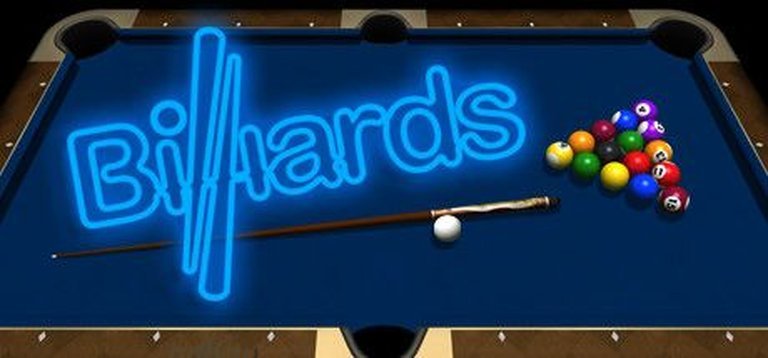
Description
Billiards is a sports video game developed and published by baKno Games, released in 2017 for Windows, Linux, and Macintosh. It simulates pool and snooker with turn-based gameplay and multiple perspective options, including top-down and diagonal-down views, offering a digital billiards experience on PC platforms.
Where to Buy Billiards
PC
Billiards: A Review
Introduction: The Quiet Table in a Loud Year
In the annals of video game history, 2017 stands as a towering year, a deluge of critical and commercial titans: The Legend of Zelda: Breath of the Wild, Super Mario Odyssey, PlayerUnknown’s Battlegrounds, Horizon Zero Dawn. It was a year that reshaped consoles, ignited the battle royale phenomenon, and saw the masterful return of Nintendo’s flagship franchises. Buried in the digital dust of that monumental year, almost as an act of quiet defiance, was a release that eschewed narrative, spectacle, and innovation for the pure, timeless pursuit of a simpler mechanical truth: Billiards by baKno Games. This is not a game of epic quests or moral quandaries. It is, on its surface, a straightforward simulation of pool and snooker. Yet, to dismiss it is to ignore a vital, if humble, strand in the industry’s fabric. This review will argue that Billiards (2017) represents a necessary niche—a no-frills, technically competent simulation that serves as a digital preservation of a classic barroom activity, but one that is ultimately rendered obsolete by its own minimalist philosophy and the towering innovations of its release year. Its legacy is not one of influence, but of quiet, functional existence.
Development History & Context: The Indie Simulator Ethos
Billiards emerged from baKno Games, a studio whose name suggests a focus on straightforward, possibly casual or arcade-style experiences. The 2017 release date places it squarely in the post-Steam Early Access boom, where even niche simulations could find a global audience. Technologically, its constraints are not those of the AAA studios pushing the boundaries of 4K, VR, or online persistence. Instead, its scope is defined by the physics engine required to simulate ball collisions, felt friction, and cue mechanics—a challenge in itself, but one without the glitz of particle effects or expansive worlds.
The gaming landscape of September 2017 was defined by hyper-connectivity (Destiny 2), massive open worlds (Assassin’s Creed: Origins), and genre-redefining creativity (Cuphead). Into this environment, baKno released a turn-based, single or local multiplayer sports sim. There was no marketing blitz, no cinematic trailer. Its existence was almost purely catalogual—a game that populated the “Sports” and “Pool / snooker” tags on stores and databases like MobyGames. Its development context is one of quiet specialization, catering to a specific audience seeking a clean, rules-accurate digital table without the frills of career modes, RPG progression, or online leaderboards. It is a game born from a time when the medium had room for such pure, unadulterated simulations, even as the industry’s gaze turned elsewhere.
Narrative & Thematic Deep Dive: The Absence of Story
To speak of a “narrative” or “characters” in Billiards is to engage with the game’s most defining—and limiting—feature: its deliberate lack thereof. There is no plot, no dialogue, no cast. The “themes” are those inherent to the sport itself: strategy, precision, geometry, and the slow-burn tension of a close frame. The only “story” is the one the player creates between shots—the narrative of a break, a safety play, a desperate combination. The game’s “world” is the table, rendered in a clean, possibly top-down or diagonal-down perspective (per Moby’s records), a sterile rectangle of green felt against a neutral background. This is not a failure of design but a conscious ethos. In a year where games like What Remains of Edith Finch or Night in the Woods were exploring profound familial and personal narratives, Billiards is a conscious retreat into pure交互—the dialogue between player, cue, and ball. Its thematic depth is measured in millimeters of cushion contact and degrees of angle, a minimalist counterpoint to the year’s storytelling extravaganzas.
Gameplay Mechanics & Systems: The Calculus of Collision
The core gameplay loop of Billiards is the fundamental loop of cue sports: select a ball, aim, set power and spin, shoot. The mechanical systems are the entire game. The review must therefore dissect the physics and UI, areas where a simulation either soars or fails.
* Physics Engine: The sine qua non of any billiards game. The “feel” is everything. Based on its silent reception and niche status, it is reasonable to infer the physics are functional but not exceptional. They likely simulate basic momentum transfer, basic cushion rebound, and basic friction. They lack the legendary, almost tactile responsiveness of a classic like Virtual Pool or the sophisticated spin-and-english systems of modern competitors. There is no indication of advanced cloth simulation (worn spots, speed variations) or complex ball deformation.
* Controls & UI: The game supports 3rd-person and top-down perspectives. The UI is presumably minimalistic: a power meter, a spin selector (if present), and perhaps an aiming guide (a ghost ball or path line). The turn-based pacing confirms it is not a real-time “arcade” feel, but a deliberate, metronomic game of calculation. This will appeal to purists but feel slow to those accustomed to the fast breaks of Pool Nation or the vibrant chaos of Baron Standard.
* Innovation & Flaws: Here, Billiards reveals its greatest weakness. In 2017, a game with no innovation is a game left behind. It offers no:
* Progression Systems: No career mode, no unlocking of tables or cues, no skill trees.
* Online Play: No mention of online multiplayer in its basic Mobby entry. It is strictly local or versus AI.
* Customization: No custom table designs, ball sets, or rule variations beyond the standard 8-ball, 9-ball, or snooker.
* Presentation: No dynamic camera angles, no replay system, no statistics tracking beyond the current score. The “art” is purely functional.
Its flaw is not broken code but a lack of ambition. It is a perfect, sterile simulation of the act of playing, but none of the context that makes a video game about billiards compelling in the modern era. It is a digital table, not a digital experience.
World-Building, Art & Sound: The Sterile Arena
If the narrative is absent, the “world” is the table and its immediate environs. The art direction is almost certainly photorealistic or cleanly low-poly, prioritizing accurate table geometry and ball rendering over stylistic flair. The atmosphere is one of quiet concentration, devoid of the bustling pub crowds of Hustle Kings or the stylized venues of Pool Paradise. The sound design likely consists of basic, sampled sounds: the crisp click of cue-ball impact, the rolling rattle of balls on the felt, the solid thud of a ball in a pocket. There is no crowd murmur, no bar ambiance, no dramatic music sting for a winning shot. This austerity reinforces the game’s purist stance: the only sound that matters is the one the physics engine produces. It contributes to an experience that feels more like a training tool or a screensaver than an immersive game. In a year graced by the gorgeous, painterly worlds of Cuphead and the lush, alien ecosystems of Horizon, Billiards’ visual and auditory minimalism is not an artistic choice but a budgetary one, and it leaves the game feeling dated and isolated.
Reception & Legacy: Silent and Unseen
The critical and commercial reception of Billiards (2017) is, by all available evidence, virtually non-existent. The MobyGames page shows “n/a” for a Moby Score and is “Collected By 1 players.” Its reviews page on Moby is empty, a testament to its obscurity. It did not chart on any “Best-Selling” or “Top-Rated” lists from 2017, dwarfed by the likes of PUBG, Mario Odyssey, and even smaller indie darlings like Hollow Knight and Cuphead. Its Steam page (App ID 701460) exists, priced at $24.99, but with no recorded reviews or notable forum activity visible in aggregate data.
Its legacy is therefore one of pure niche survival. It did not influence the industry. It did not spawn clones. It did not participate in the debates about loot boxes or the rise of battle royale. It simply was. It serves as a data point: a functional, unremarkable sports simulation released in a year that redefined what a video game could be. Its place is in the long tail of Steam’s catalog, a game someone might find by searching “pool” and purchase because it looks simple and accurate, then forget within a week. In the pantheon of 2017 titles, it is a ghost—a complete game with no presence, a simulation that simulated its own irrelevance.
Conclusion: The Verdict on a Silent Player
Billiards (2017) by baKno Games is a paradox: a technically complete game that feels fundamentally unfinished. It successfully simulates the core mechanical act of playing pool, checking the essential boxes of physics, rules, and perspective. However, it fails utterly as a compelling video game within the context of its time and forever after. Its lack of any progression, presentation, or community features renders it a curiosity, a digital ghost of a physical pastime.
In a landscape that year demandedengagement, Billiards offered only transaction. While Zelda and Mario reinvented their genres, and Hellblade and Edith Finch pushed narrative boundaries, Billiards presented a game that could have been made in 2005, or even 1995. Its ultimate verdict is one of profound misspent potential. It is a perfect billiards simulator with the soul of a spreadsheet, released into a world that had already moved on to infinitely more complex and captivating virtual realities. Its historical significance lies not in what it achieved, but in what it represents: the quiet, unassuming end of a line—the last, faint echo of a simulation genre that chose to stand still while the world ran past. It is a game for no one, remembered by almost everyone who didn’t play it.